

 Preview
 Send
Send Share
Share
 Details

 Download
 Similars
 X-Ray
X-Ray Diaporama
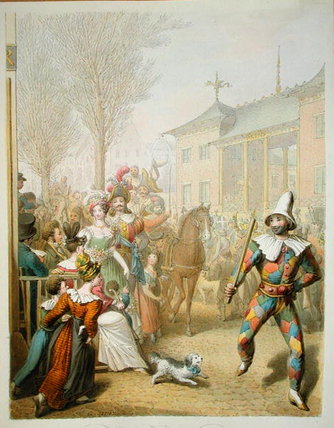
Mardi-gras, Boulevard Des Italiens,

 Read More
Purchase a high-resolution, enhanced digital image, far superior to the online preview.
Each file is meticulously prepared by our in-house specialists using advanced tools and expert manual retouching. We ensure every image has exceptional clarity, precise color accuracy, and fine detail.
The final file is delivered via email within 72 hours, optimized for immediate use in professional, editorial, and print environments. This is the same quality trusted by top-tier design studios, publishers, and galleries.
Digital Image
Download a high-resolution file for personal display, printing, and creative projects. ( Buy Print Buy Hand Made Painting)
Included in Every Digital Image Order
Expert Digital Delivery, Guaranteed
When you choose ArtsDot.com, you're not just getting an image - you're receiving a professionally enhanced digital artwork, crafted with precision and backed by a satisfaction guarantee. Here's everything that comes with your order, automatically:

Fast Email Delivery
Your high-resolution digital image file will be emailed to you within 72 hours of ordering - ready for immediate use.

AI-Enhanced Digital File
Your artwork is professionally optimized using advanced AI tools and manual editing, ensuring maximum detail, clarity, and color accuracy.

Free Lifetime Re-Delivery
Accidentally deleted or lost your file? No worries - we'll resend it to you anytime, free of charge.

No Import Fees - Ever
Enjoy your artwork instantly with zero customs, duties, or delivery fees - digital downloads are always tax-free.

Color Accuracy Guarantee
We ensure your digital image reflects the original colors as closely as possible using professional tools and color management.

60-Day Satisfaction Guarantee
If you're not satisfied with your digital image, we'll revise it or refund 100% within 60 days - no questions asked.

100% Money-Back Guarantee
Not satisfied? Get a full refund within 60 days of receiving your digital file - no questions asked.

Bulk Order Discounts
Buy 3 images, save 10% - Buy 5, save 15% - Buy 10+, save 20%. Great for creative projects, galleries, and agencies.
Related Artworks
Artist Biography
The Bohemian Visionary: The Life and Art of George Emmanuel Opitz
In the grand tapestry of nineteenth-century European art, few threads are as delicately woven as those left by George Emmanuel Opitz. Born in the culturally vibrant city of Prague in 1775, Opitz emerged from a lineage steeped in intellectual curiosity. His father, Johann Ferdinand Opiz, was a man of letters and a correspondent of the legendary Giacomo Casanova, providing a domestic atmosphere where art, literature, and global connection intersected. This early exposure to the pulse of European thought likely nurtured the keen observational skills that would later define Opitz’s career. While his formal education began at the Academy of Fine Arts in Prague—where he absorbed the disciplined structures of Neoclassicism—his spirit was inherently drawn toward the burgeoning Romantic movement, a shift that would eventually lead him away from the rigid traditions of his homeland toward the luminous streets of France.
The trajectory of Opitz’s life took a transformative turn around 1803 when he relocated to Paris. This move was far more than a change in geography; it was an immersion into the very heart of the modern world. In Paris, Opitz found himself surrounded by a sensory explosion of light, movement, and social complexity. He did not merely observe this new environment from a distance but became a chronicler of its soul. His training at the Dresden Academy under Giovanni Battista Casanova had prepared him for technical precision, yet it was the Parisian atmosphere that breathed life into his brushwork. As he navigated the bustling boulevards and the intimate corners of local cafes, Opitz developed a style that bridged the gap between the meticulous detail of the old masters and the atmospheric sensitivity of the coming generations.
A Chronicler of the Parisian Pulse
What distinguishes the work of Opitz from his contemporaries is his profound commitment to the beauty of the everyday. While other Romantic painters sought solace in epic myths or dramatic, heroic landscapes, Opitz found his muse in the rhythmic pulse of urban life. He possessed a rare ability to elevate the mundane into the magnificent. His canvases serve as windows into a bygone era, capturing the convivial energy of crowded restaurants, the lively chatter within sun-drenched cafes, and the organized chaos of Parisian streets teeming with pedestrians. There is a palpable sense of presence in his work; one can almost hear the clinking of glassware and the murmur of conversation echoing through his painted halls.
Technically, Opitz’s mastery lay in his delicate handling of light and color. He utilized a luminous palette to render the atmospheric effects of the city—the way morning light filters through a street awning or how the glow of a lamp illuminates a corner of a bistro. His approach was characterized by:
- Meticulous Realism: An unwavering dedication to capturing the textures of fabric, the sheen of polished wood, and the intricate details of urban architecture.
- Atmospheric Sensitivity: A profound understanding of how light and shadow interact to create depth and mood within a crowded scene.
- Social Observation: A focus on the human element, portraying ordinary citizens engaged in the simple, shared joys of communal life.
Through these techniques, Opitz achieved a level of intimacy that makes his work feel remarkably modern. He was not interested in the idealized or the unreachable; he sought the truth found in the fleeting moments of daily existence.
Legacy and Historical Significance
Though history sometimes overlooks those who do not adhere to the most dramatic narratives, the legacy of George Emmanuel Opitz remains vital for our understanding of the transition from Neoclassicism to Romanticism. He stands as a pivotal figure who helped pave the way for the observational intimacy that would later define movements like Impressionism. By turning his gaze toward the street and the cafe, he helped shift the focus of fine art from the monumental to the momentary.
His contributions extend beyond the canvas into the realm of literature and graphic arts, as evidenced by his work under the pseudonym Bohemus, where he explored historical narratives. This multidisciplinary approach reflects a mind that saw no boundary between the visual and the written word. Today, when we look upon an Opitz painting, we are not just viewing a landscape or a portrait; we are witnessing a preserved fragment of history, a beautifully rendered heartbeat of nineteenth-century Paris that continues to resonate with anyone who finds wonder in the simple elegance of life.
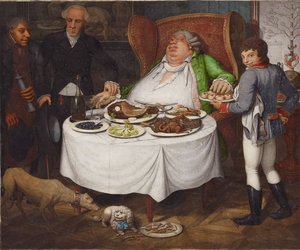
george emmanuel opitz
1775 - 1841 , Czech Republic
Quick Facts
- Artistic Movement Or Style: Parisian Romanticism
- Artists Or Movements Influenced By This Artist: ['Romantic Painting']
- Artists Who Influenced This Artist: ['Caspar David Friedrich']
- Date Of Birth: April 4, 1775
- Date Of Death: July 12, 1841
- Full Name: George Emmanuel Opitz
- Nationality: Czech German
- Notable Artworks:
- The Markets at Les Halles,
- In The Bazaar,
- Mardi-gras, Boulevard Des Italiens.
- Place Of Birth: Prague, Czech Republic

