 Preview
 Send
Send Share
Share
 Details

 Download
 Similars
 X-Ray
X-Ray Diaporama
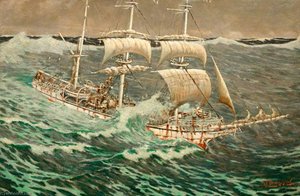
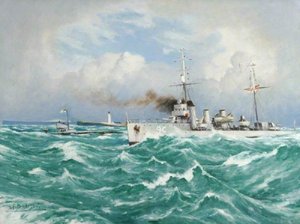
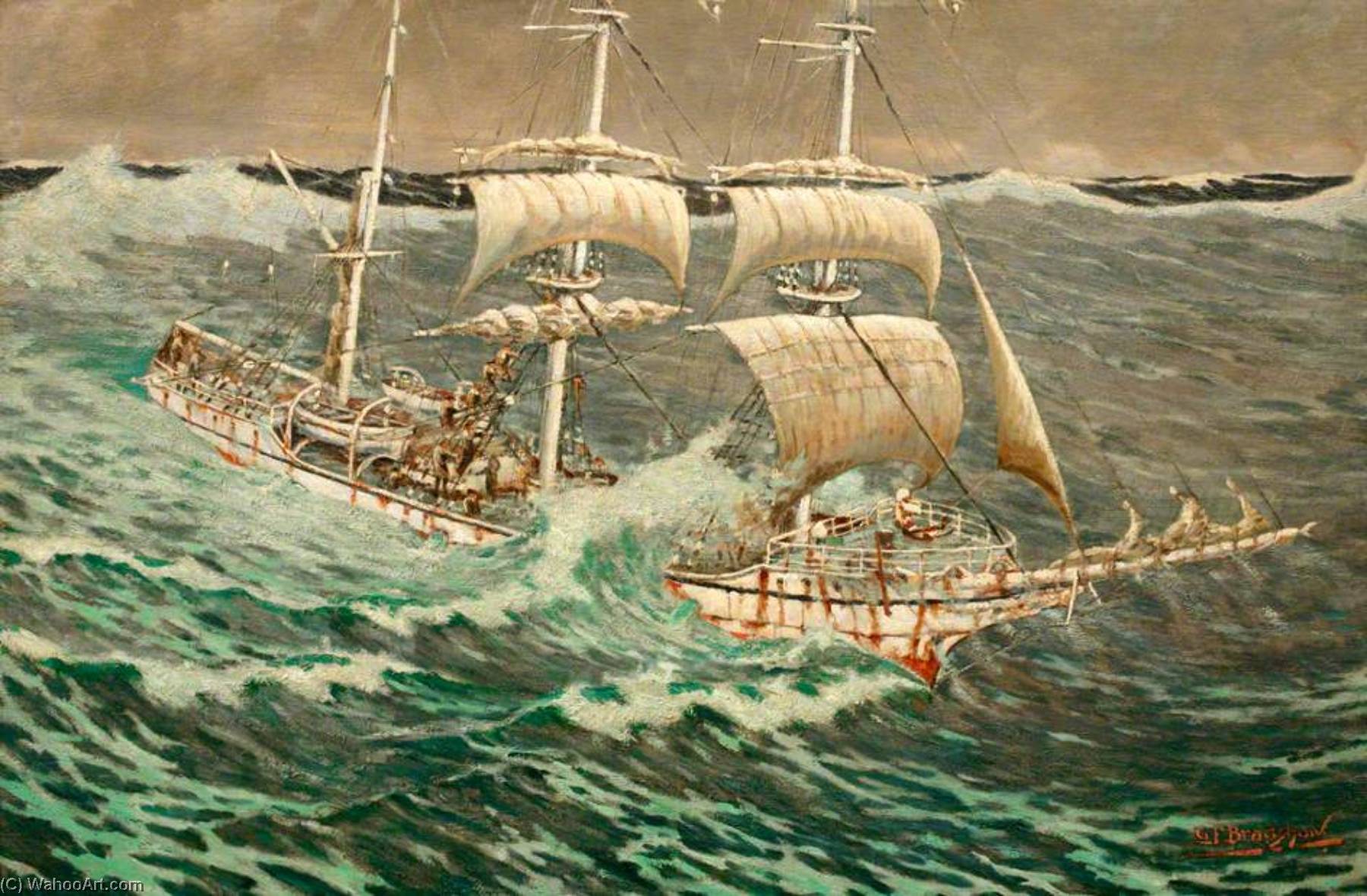
The White Barque
 118.0 x 169.0 cm
 Read More
Giclée / Art Print
Museum-quality giclée or canvas print with fast production and flexible finish options. ( Buy Hand Made Painting Buy Image)




































Pick from our preset sizes that match the artwork's original proportions.

You may enter your own dimensions to fit a specific frame or space. If your selected size does not match the original image's proportions, we will either crop the artwork or extend the image with a mirrored or solid-fill edge. A digital mockup will be sent for your approval before production begins.
Please note that the on-screen preview does not reflect the actual cropping or extension. Only the mockup will accurately show the final composition.
While custom sizes are available, we recommend selecting a dimension from the predefined list to preserve the original proportions.
Worldwide Delivery () in 2 weeks instead of standard 4/5 weeks. (21 August)

Free Worldwide Express Shipping

High-Quality Linen Canvas

Full Shipping Insurance

Customs Tax Refund Guarantee

True Color Matching Guarantee

60-Day Return Policy (Defects Only)

100% Money-Back Guarantee

Bulk Discount Offer
 Glass option is only available in size under 110 CM

The White Barque
Giclée / Art Print
Reproduction Size
-


Total Price
$ 63
Related Artworks










Artist Biography
George Fagan Bradshaw: A Submarine Commander’s Brush – Painting the Cornish Coast
George Fagan Bradshaw, a figure both intriguing and somewhat obscured by the tides of art history, was far more than simply a marine painter. Born in Belfast in 1887 into a family with a distinguished naval lineage, his life unfolded across continents and through disparate roles—a submarine commander during World War I, a resident of St Ives, Cornwall, and ultimately, a dedicated artist deeply rooted in the traditions of the region’s art colony. His story is one of unexpected transitions, marked by both triumph and hardship, culminating in a unique artistic voice that captured the rugged beauty and volatile spirit of the Cornish coast. Bradshaw's early life was shaped by naval service; he joined the Royal Navy at fifteen and rose through the ranks, earning a Distinguished Service Order (DSO) for his bravery during the sinking of U-boat UC-43 – an event shrouded in some mystery to this day. This experience instilled within him a profound understanding of maritime life, discipline, and the power of observation—qualities that would later inform his artistic approach. A less celebrated but equally significant chapter involved a court martial following the loss of submarine K-15 in 1921, an incident that cast a shadow over his career and contributed to his eventual financial struggles.St Ives and the St Ives Society of Artists
Following his discharge from the Navy in 1921, Bradshaw sought refuge and inspiration in St Ives, a town already renowned for its vibrant artistic community. It was here that he encountered Kathleen Marion Slatter, whom he married in 1922, and began to establish himself as an artist. Crucially, he became deeply involved with the nascent St Ives Society of Artists (STISA), initially under the guidance of Charles Walter Simpson. Bradshaw’s contribution extended beyond mere membership; he was instrumental in its formation in 1927, alongside Herbert Truman, shaping its early direction and establishing a strong commitment to traditional painting techniques. His role within the society was multifaceted, encompassing responsibilities such as secretary, vice-president, and chairman, reflecting his dedication and leadership. Bradshaw’s artistic style evolved significantly during his time in St Ives, moving away from the stark realism of his naval days towards a more expressive and evocative approach that captured the drama of the Cornish seas. His paintings are characterized by bold brushstrokes, vibrant colors, and a keen awareness of light and atmosphere—elements he undoubtedly absorbed from the region’s landscape and the influence of artists like Simpson and Frank Bramley.A Distinctive Style – Storms, Light, and the Cornish Landscape
Bradshaw's artistic output is remarkably diverse, encompassing a wide range of subjects within the maritime realm. He frequently depicted scenes of stormy seas, powerful waves, and dramatic skies—a testament to his naval background and an undeniable fascination with the raw power of nature. However, he was equally adept at capturing the quieter moments of coastal life, portraying harbors, fishing boats, and the quaint cottages that dotted the shoreline. His paintings are often imbued with a sense of melancholy and introspection, reflecting perhaps the personal challenges he faced throughout his life. Despite his association with the STISA, Bradshaw maintained a somewhat independent spirit, occasionally clashing with the more avant-garde tendencies emerging within the society in the 1940s. He remained steadfast in his commitment to traditional painting methods, earning him the reputation of a “feisty old painter of storms at sea.” His work is notable for its skillful use of color and texture, creating a palpable sense of atmosphere and immediacy. The influence of artists like John Piper and William Wetton can be discerned in his compositions and palette, yet Bradshaw developed a distinctly personal style that set him apart.Later Years and Legacy
In the later years of his life, Bradshaw continued to paint prolifically, establishing the Society of Marine Artists alongside figures like John Park and Charles Pears. Despite facing financial difficulties and a growing sense of disillusionment with the changing art world, he remained dedicated to his craft until his death in Truro Infirmary in 1961. His legacy is inextricably linked to the St Ives Society of Artists, whose success was largely due to Bradshaw’s early leadership and unwavering commitment. Today, his paintings are held in public collections across Cornwall, including the Royal Navy Submarine Museum in Gosport and the Royal Cornwall Museum in Truro, ensuring that his unique artistic vision continues to be appreciated. The recent exhibition at St Ives Museum, “Creating a Splash,” has brought renewed attention to Bradshaw’s work and his pivotal role in shaping the town's artistic identity. His life story—a blend of naval service, personal struggles, and a profound connection to the Cornish coast—offers a compelling portrait of an artist who defied expectations and left an enduring mark on the region’s art scene.Further Resources
- George Fagan Bradshaw - Submariner and Marine Artist - and the St Ives Society of Artists (https://www.stivesart.info/bradshaw-biography/)
- George BRADSHAW | 47 Artworks | MutualArt (https://www.mutualart.com/Artist/George-Fagan-Bradshaw/025066114ADAC9CB/Artworks)
george fagan bradshaw
1888 - 1961
Quick Facts
- Artistic Movement Or Style: Marine painting, Surreal landscapes
- Artists Or Movements Influenced By This Artist: ['St Ives Society of Artists']
- Artists Who Influenced This Artist: ['Charles Walter Simpson']
- Date Of Birth: 1887
- Date Of Death: 1961
- Full Name: George Fagan Bradshaw
- Nationality: Irish
- Notable Artworks:
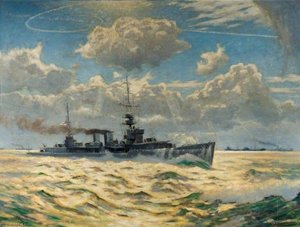
- HMS Delhi
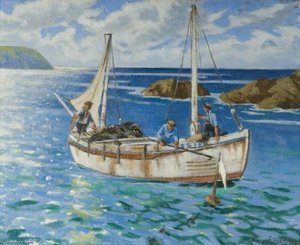
- Lobster Fishing
- HMS Alecto
- Place Of Birth: Belfast, Ireland