 Preview
 Send
Send Share
Share
 Details

 Download
 Similars
 X-Ray
X-Ray Diaporama
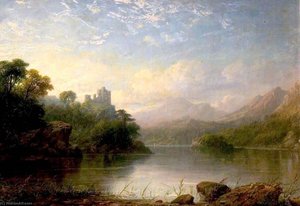
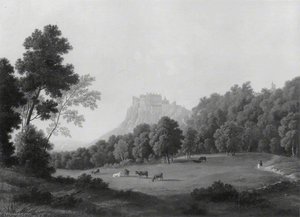
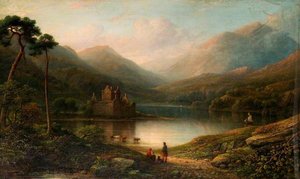
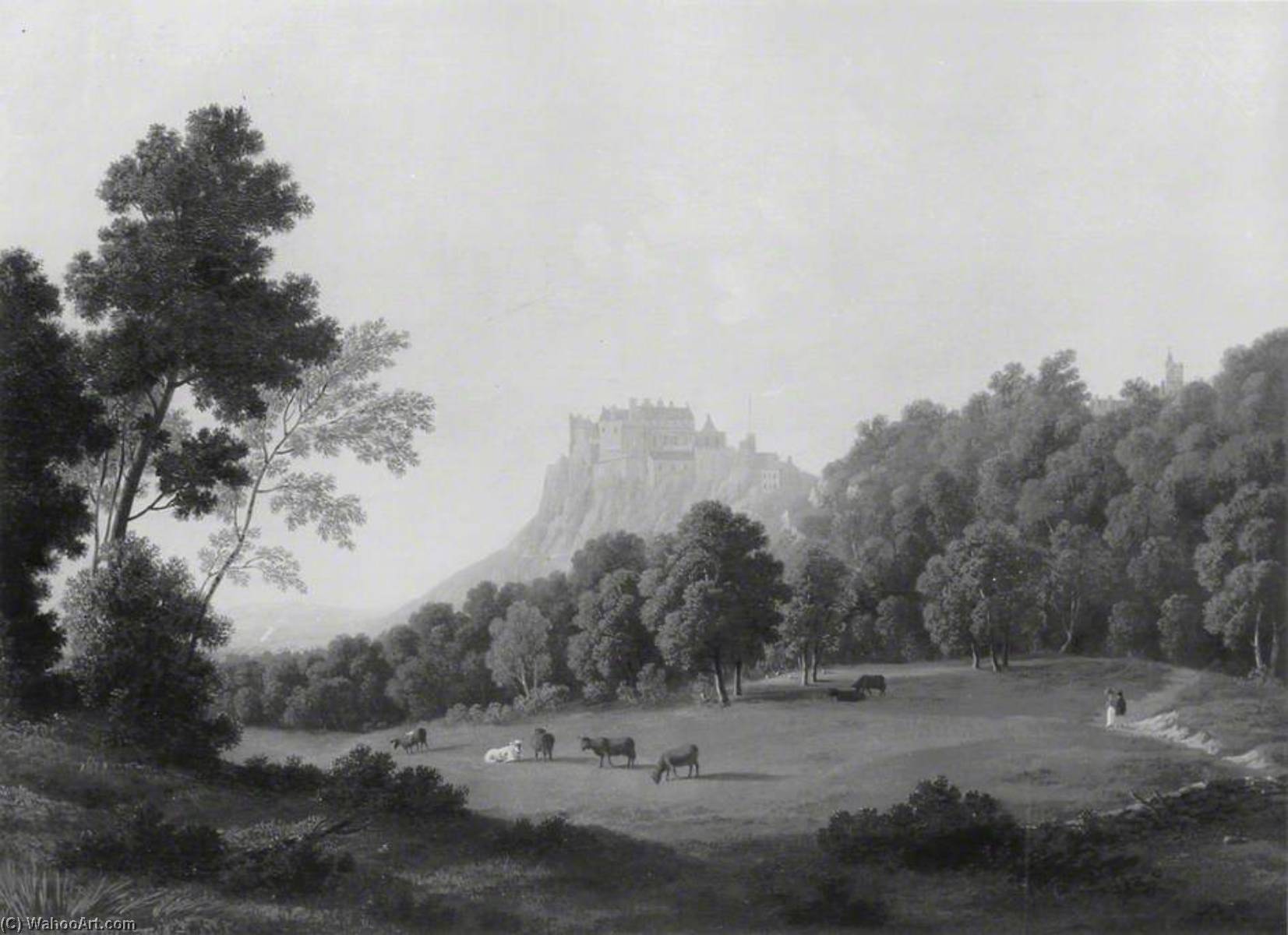
Stirling Castle
 1850
1850 56.0 x 77.0 cm
 Government Art Collection
 Read More
Hand Made Oil Reproduction
Hand-painted oil on canvas in your size and frame, made to order by our artists. ( Buy Print Buy Image)




































Pick from our preset sizes that match the artwork's original proportions.

You may enter your own dimensions to fit a specific frame or space. If your selected size does not match the original image's proportions, we will either crop the artwork or extend the painting with additional hand-painted elements. A digital mockup will be sent for your approval before production begins.
Please note that the on-screen preview does not reflect the actual cropping or extension. Only the mockup will accurately show the final composition.
While custom sizes are available, we recommend selecting a dimension from the predefined list to preserve the original proportions.
After order, ArtsDot.com team will email client for instructions and provide a mockup preview
Worldwide Delivery () in 3/4 weeks instead of standard 5 weeks. (23 August). No compromise on quality.

Free Worldwide Express Shipping

High-Quality Linen Canvas

Full Shipping Insurance

Customs Tax Refund Guarantee

True Color Matching Guarantee

60-Day Return Policy (Defects Only)

100% Money-Back Guarantee

Bulk Discount Offer
 Glass option is only available in size under 110 CM

Stirling Castle
Reproduction Medium
Reproduction Size
-


Total Price
$ 288
Related Artworks







Artist Biography
The Soul of the Scottish Highlands: The Life and Art of George Frederick Buchanan
In the quiet, mist-shrouded valleys of the nineteenth century, a particular kind of magic was being captured on canvas by an artist who preferred the whispers of nature to the clamor of the city. George Frederick Buchanan (1800–1864) emerged as a vital voice within the Romantic movement, a painter whose work serves as a window into the tranquil, enduring beauty of the Lake District and the Scottish Highlands. While history often reserves its brightest spotlights for the tempestuous drama of J.M.W. Turner or the rugged realism of John Constable, Buchanan carved out a unique sanctuary in the art world through his devotion to serenity, light, and the profound stillness of the natural landscape.
Born in Kendal, Cumbria, into a family deeply rooted in the Quaker tradition, Buchanan’s early life was shaped by values of integrity and a quiet, observant intellect. His upbringing instilled in him a reverence for the world around him, though his path to formal artistry was not without hesitation. The moral convictions of his youth initially made him wary of the pursuit of formal training; however, his innate curiosity eventually led him to the Newcastle upon Tyne Art Academy. It was there that he encountered the profound influence of John Sell Cotman, a master of landscape whose delicate handling of light and structure would leave an indelible mark on Buchanan’s developing aesthetic.
A Journey Through Light and Water
The true metamorphosis of Buchanan’s style occurred when he relocated to Keswick in 1835. This move placed him at the very heart of his greatest inspiration: the breathtaking scenery of Derwentwater and Bassenthwaite Lake. The dramatic topography of the region—characterized by towering, verdant mountains and shimmering, mirror-like waters—became the primary protagonist in his oeuvre. Buchanan did not merely seek to document these locations; he sought to translate their emotional resonance. Through a meticulous, layered technique, often beginning with precise underdrawings followed by delicate washes of color, he achieved a luminous quality that made the atmosphere feel almost tangible.
His mastery was particularly evident in his ability to balance the monumental with the intimate. In works such as Landscape with a Lake and a Shepherd, Buchanan weaves human presence into the vastness of nature without disrupting its peace. The inclusion of a shepherd and his dogs near the water's edge provides a sense of scale and life, grounding the epic landscape in a moment of pastoral quietude. His palette, often favoring muted and earthy hues, reflected the subdued grandeur of the English and Scottish landscapes, avoiding unnecessary flash in favor of a sophisticated, tonal harmony that invites the viewer into a state of contemplation.
Legacy of the Romantic Landscape
As his career progressed, Buchanan’s reputation grew through exhibitions at prestigious institutions such as the Royal Academy and the British Institution. His ability to capture the essence of specific locales—from the iconic Kilchurn Castle on Loch Awe to the serene vistas of Derwentwater—ensured that his work became a vital part of the British landscape tradition. Even as the art world moved toward new movements, Buchanan remained steadfast in his commitment to the Romantic ideal: the belief that nature is a source of spiritual renewal and profound emotional truth.
Today, the significance of George Frederick Buchanan lies in his role as a chronicler of a vanishing tranquility. His paintings remain much more than mere topographical records; they are poetic meditations on the permanence of the earth against the fleeting passage of time. To look upon a Buchanan landscape is to experience a moment of stillness, a breath held in reverence of the mountains and lakes that continue to define the spirit of the North.
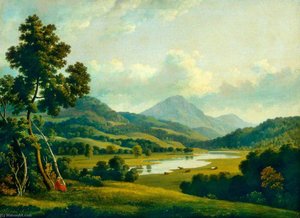
george frederick buchanan
1800 - 1864
Quick Facts
- Artistic Movement Or Style: Romantic Landscape
- Date Of Death: 1864
- Full Name: George Frederick Buchanan
- Nationality: British
- Notable Artworks: ['Derwentwater']
- Place Of Birth: Keswick, England