 Preview
 Send
Send Share
Share
 Details

 Download
 Similars
 X-Ray
X-Ray Diaporama
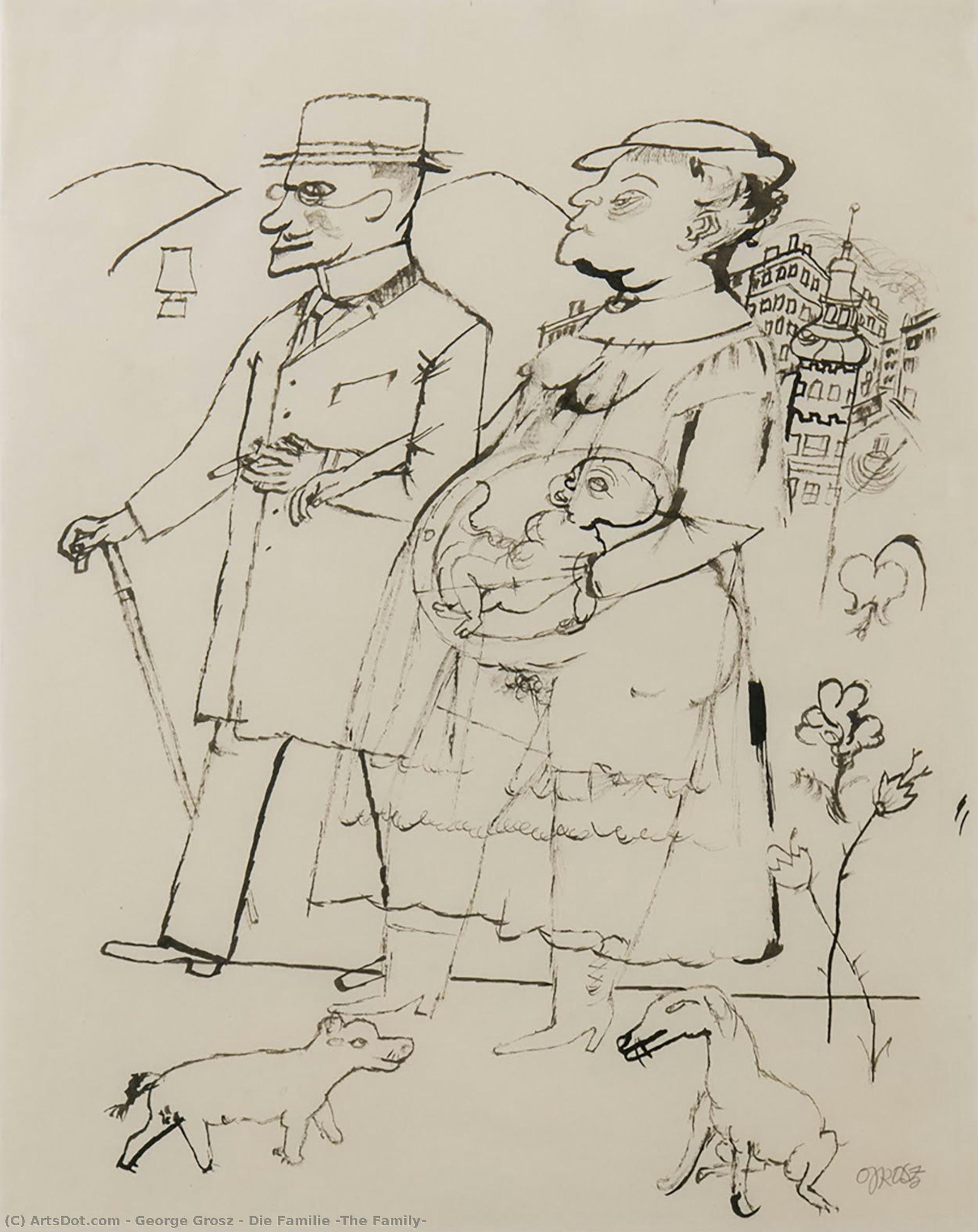
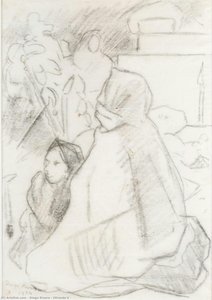
Die Familie (The Family)
 Acrylic On Canvas
- WallArt
- Social Realism
 1916
1916- 19th Century
 Patrick and Beatrice Haggerty Museum of Art
 Read More
Hand Made Oil Reproduction
Hand-painted oil on canvas in your size and frame, made to order by our artists. ( Buy Print Buy Image)




P118B $10

P118H $10

P118W $10

P438Z $10

P508JH $12

P508YH $12

P805H $10

P805Z $10

P919BZ $10

P919G $10

P919XJ $10

P959ZH $10

P968JZ $12

W106C $8

W218G $10

W218JH $8

W218Y $10

W307PJ $10

W316G $10

W316PJ $8

W316Y $10

W398PJ $8

W4111J $10

W500HY $15

W500JH $15

W692G $12

W849H $8

W940BG $15

W953PJ $8




Pick from our preset sizes that match the artwork's original proportions.

You may enter your own dimensions to fit a specific frame or space. If your selected size does not match the original image's proportions, we will either crop the artwork or extend the painting with additional hand-painted elements. A digital mockup will be sent for your approval before production begins.
Please note that the on-screen preview does not reflect the actual cropping or extension. Only the mockup will accurately show the final composition.
While custom sizes are available, we recommend selecting a dimension from the predefined list to preserve the original proportions.
After order, ArtsDot.com team will email client for instructions and provide a mockup preview
Worldwide Delivery () in 3/4 weeks instead of standard 5 weeks. (1 September). No compromise on quality.

Free Worldwide Express Shipping

High-Quality Linen Canvas

Full Shipping Insurance

Customs Tax Refund Guarantee

True Color Matching Guarantee

60-Day Return Policy (Defects Only)

100% Money-Back Guarantee

Bulk Discount Offer
 Glass option is only available in size under 110 CM

Die Familie (The Family)
Reproduction Medium
Reproduction Size
-


Total Price
$ 263
George Grosz's "The Family": A Stark Portrait of Weimar Society
George Grosz’s “The Family,” completed in 1916, is more than just a drawing; it’s a brutal and unflinching indictment of the burgeoning bourgeois values within Germany during the tumultuous years of the Weimar Republic. Born in Berlin in 1893, Grosz emerged as a pivotal figure in early 20th-century art, his work characterized by a stark social realism that relentlessly exposed the moral decay he perceived beneath the surface of German society. This piece, rendered in meticulous black and white lines, exemplifies his signature style – a deliberate rejection of academic conventions in favor of a raw, almost violent, approach to depicting the anxieties and contradictions of his time.
- Subject Matter: The central figures are a seemingly idyllic couple strolling through a mountainous landscape. However, this apparent tranquility is immediately undercut by Grosz’s deliberate exaggeration and caricature.
- Technique: Grosz's technique relies heavily on sharp, angular lines and a flattened perspective, creating a sense of unease and distortion. The lack of shading further emphasizes the two-dimensionality of the scene, stripping away any illusion of depth or comfort.
- Historical Context: Created in 1916, during the height of World War I, “The Family” reflects the growing disillusionment with traditional values and the rise of militarism that would ultimately contribute to Germany’s downfall.
Symbolic Layers and Social Critique
Grosz masterfully employs symbolism to amplify his critique. The couple's attire – the man in a fitted walking coat and celluloid collar, the woman in a dirndl – represents the ostentatious materialism of the middle class. Crucially, Grosz reveals the woman’s pregnancy through a transparent adaptation of the South German folk costume, a shocking visual metaphor for the continuation of a flawed lineage and the perpetuation of societal ills. The two dogs, one on either side of the couple, can be interpreted as symbols of loyalty and obedience – qualities that Grosz clearly viewed with suspicion within the context of his social commentary.
The umbrella, positioned near the top left corner, adds another layer of complexity. It could represent protection from the harsh realities of the world, or perhaps a futile attempt to shield oneself from the moral corruption depicted in the scene. The mountainous landscape itself suggests an imposing and potentially overwhelming societal structure – a burden carried by this seemingly contented family.
The Artist's Vision: A Legacy of Discomfort
George Grosz’s artistic trajectory was shaped by his early life amidst Prussian militarism, fostered by his mother’s role managing officers’ messes. This exposure instilled in him a deep skepticism towards authority and a profound understanding of social hierarchies. Initially trained in traditional Dutch styles under Eduard von Grützner, he quickly abandoned these techniques to forge his own distinctive voice – one that prioritized emotional impact over technical precision. “The Family” stands as a testament to this radical shift, demonstrating Grosz’s unwavering commitment to exposing the uncomfortable truths of his time and solidifying his place as a key figure in the development of social realism.
This artwork continues to resonate today, offering a timeless commentary on themes of wealth, status, and societal responsibility. Its stark aesthetic and powerful message make it a compelling addition to any collection, inviting viewers to confront uncomfortable questions about the nature of human behavior and the potential for corruption within seemingly respectable institutions.
Related Artworks
Artist Biography
A Satirist of Shattered Worlds: The Life and Art of George Grosz
George Grosz, born Georg Ehrenfried Groß in Berlin in 1893, was a visual chronicler of societal decay and political upheaval. His art wasn’t merely *of* its time—the tumultuous Weimar Republic and the rise of fascism—it was a visceral reaction to it, a furious indictment rendered in jagged lines and grotesque caricatures. Grosz didn't simply depict Berlin; he dissected it, exposing its moral rot with unflinching honesty. The early years of his life were marked by instability following his father’s death, an event that propelled his mother into managing an officers’ mess, placing the young Georg amidst a world of Prussian militarism and rigid social hierarchies—a world he would later relentlessly satirize. His formal artistic training began with meticulous copies of traditional Dutch masters like Eduard von Grützner, honing technical skill before he abandoned academic conventions for a far more provocative path. This early discipline, however, provided the foundation upon which his uniquely expressive style would be built.Dada, New Objectivity, and the Birth of a Critical Vision
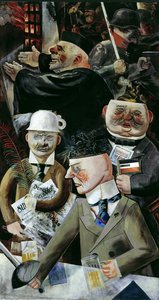
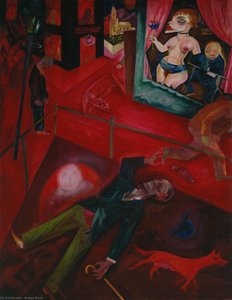
Grosz’s artistic development was inextricably linked to the avant-garde movements that flourished in post-World War I Germany. He became a central figure in Berlin Dada, embracing its nihilistic spirit and anti-establishment fervor. However, unlike some of his Dadaist contemporaries who reveled in pure absurdity, Grosz channeled Dada's rebellious energy into pointed social commentary. His work during this period—pieces like *The Pit* (1921) and *The Pillars of Society* (1926)—are searing indictments of the German bourgeoisie, the military elite, and the corrupt political system that led the nation to disaster. He wasn’t interested in aesthetic beauty; he sought to shock, provoke, and expose hypocrisy. This commitment to social critique evolved into his participation in *Neue Sachlichkeit* (New Objectivity), a movement characterized by its realistic yet unsentimental depiction of contemporary life. While sharing New Objectivity's focus on realism, Grosz infused it with a uniquely biting satire that distinguished him from other artists associated with the group. His paintings and drawings weren’t simply representations of reality; they were distorted reflections of a society teetering on the brink of collapse.Exile and Transformation: A New World, A Shifting Style
The ascent of Nazism forced Grosz into exile in 1933. He found refuge in the United States, becoming a naturalized citizen in 1938. This relocation marked a significant turning point in his artistic career. Removed from the immediate context that fueled his most potent work, and confronted with a different set of social and political realities, Grosz’s style began to shift. The overtly aggressive caricatures gave way to more subdued landscapes and portraits, often tinged with a sense of melancholy and disillusionment. While he continued to exhibit and teach at the Art Students League in New York, his work lacked the raw urgency of his Berlin period. He struggled to find his footing in a new environment, grappling with feelings of alienation and artistic uncertainty. The apocalyptic visions that emerged during this time—paintings depicting desolate landscapes and fragmented figures—reflected not only the horrors unfolding in Europe but also his own internal turmoil.Legacy and Enduring Relevance
George Grosz returned to Berlin in 1959, shortly before his death, a poignant return to the city that had both inspired and haunted him. His legacy extends far beyond the historical context of Weimar Germany. He remains a powerful example of an artist who dared to confront uncomfortable truths and challenge societal norms. His work serves as a cautionary tale about the dangers of political extremism, social injustice, and unchecked power.- Satirical Power: Grosz’s masterful use of caricature continues to inspire artists and commentators today.
- Social Commentary: His unflinching critique of societal ills remains remarkably relevant in a world still grappling with inequality, corruption, and political polarization.
- Historical Witness: His art provides invaluable insight into the social and political climate of interwar Germany, offering a visceral understanding of the forces that led to World War II.
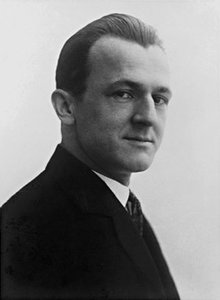
George Grosz
1893 - 1959 , Germany
Quick Facts
- Artistic Movement Or Style: Dada, New Objectivity
- Date Of Birth: July 26, 1893
- Date Of Death: July 6, 1959
- Full Name: George Grosz
- Nationality: German
- Notable Artworks:
- The Pit
- The Agitator
- Pillars of Society
- Place Of Birth: Berlin, Germany
Related Articles

Giclée Prints: Archival Quality & Aesthetic Nuances for the Discerning Collector
Explore the world of giclée prints with ArtsDot. Learn about archival quality, aesthetic nuances & investment potential. Expert guidance for discerning art collectors seeking museum-quality reproductions and lasting value.

Dark Masterpieces: 10 Iconic Paintings Dominated by Black Tones |
Explore 10 iconic paintings dominated by black tones, from Rembrandt’s chiaroscuro to Goya's dark expressions. Discover the stories behind these masterpieces & find museum-quality art reproductions for your home at .
Romantic Realism's Finest: 10 Masterpieces for Your Home | ArtsDot
Explore 10 defining masterpieces of Romantic Realism! Discover Courbet, Millet & Daumier's powerful paintings—capturing emotion and social realities. Find museum-quality reproductions for your home at ArtsDot.com.

The Enduring Legacy of Fine Art Prints: Technique, History & Aesthetic Impact
Explore the rich history & techniques of fine art prints. Discover investment potential, assess authenticity, and learn how to preserve your collection with expert guidance. Trusted insights for discerning collectors.

Echoes of Time: Exploring the Enduring Appeal & Historical Context of Vintage Art Prints
Explore the captivating world of vintage art prints! Discover their history, collecting tips & enduring appeal. Expert insights on chromolithography and building a legacy collection with ArtsDot.