 Preview
 Send
Send Share
Share
 Details

 Download
 Similars
 X-Ray
X-Ray Diaporama
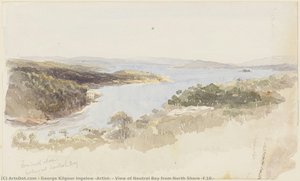
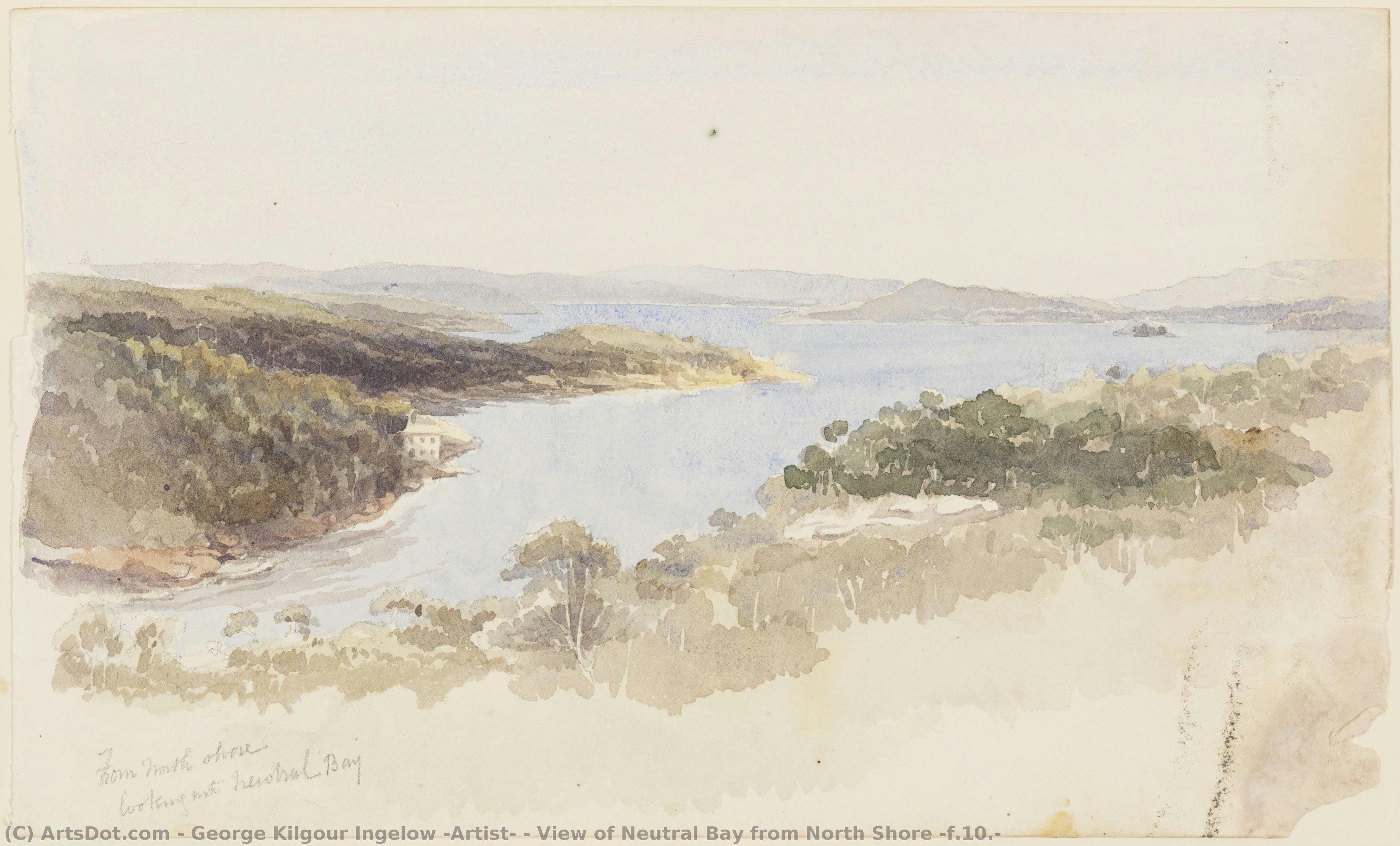
View of Neutral Bay from North Shore (f.10.)

 Read More
Giclée / Art Print
Museum-quality giclée or canvas print with fast production and flexible finish options. ( Buy Hand Made Painting Buy Image)




































Pick from our preset sizes that match the artwork's original proportions.

You may enter your own dimensions to fit a specific frame or space. If your selected size does not match the original image's proportions, we will either crop the artwork or extend the image with a mirrored or solid-fill edge. A digital mockup will be sent for your approval before production begins.
Please note that the on-screen preview does not reflect the actual cropping or extension. Only the mockup will accurately show the final composition.
While custom sizes are available, we recommend selecting a dimension from the predefined list to preserve the original proportions.
Worldwide Delivery () in 2 weeks instead of standard 4/5 weeks. (4 September)

Free Worldwide Express Shipping

High-Quality Linen Canvas

Full Shipping Insurance

Customs Tax Refund Guarantee

True Color Matching Guarantee

60-Day Return Policy (Defects Only)

100% Money-Back Guarantee

Bulk Discount Offer
 Glass option is only available in size under 110 CM

View of Neutral Bay from North Shore (f.10.)
Giclée / Art Print
Reproduction Size
-


Total Price
$ 63
Related Artworks









Artist Biography
A Quiet Observer of Victorian Sydney
George Kilgour Ingelow (1821 – 1865) remains a somewhat elusive figure in the annals of Victorian art history, often overshadowed by the literary fame of his sister, the celebrated poet Jean Ingelow. Yet, for those who look closely at his sketches and watercolors, he reveals himself to be much more than a mere relative of a literary star; he was a meticulous chronicler of the natural world. Born in Boston, Lincolnshire, Ingelow’s life was defined by movement and observation. While pursuing a professional career as a bank clerk, he traversed vast landscapes, from the vibrant terrains of India and Singapore to his eventual settlement in Sydney, New South Wales. This nomadic existence provided him with an unparalleled breadth of visual experience, allowing him to capture the shifting light and unique topographies of the British Empire's expanding frontiers.
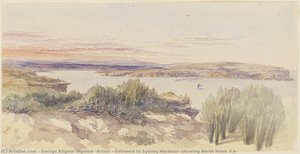
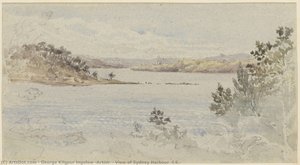
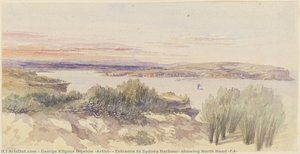
His artistic practice, primarily active between 1845 and 1862, was characterized by a profound dedication to the truth of the landscape. Unlike many of his contemporaries who sought to impose grand, dramatic narratives or idealized romanticism upon their subjects, Ingelow practiced a form of quiet, disciplined observation. He possessed a keen eye for the minute details of the Australian bush and the intricate marine life of Sydney Harbour. His work does not demand attention through spectacle; rather, it invites the viewer into a state of contemplation. Through his sketches, one can witness the serene beauty of the Nepean River, the rugged majesty of North Head, and the tranquil reaches of Neutral Bay, all rendered with a precision that speaks to a deep respect for the visual reality before him.
Technique, Influence, and the Romantic Legacy
The stylistic DNA of Ingelow’s work is deeply rooted in the traditions of 19th-century landscape painting, drawing subtle inspiration from the masters of British Romanticism. The influence of giants such as J.M.W. Turner and John Constable is evident in his approach to atmospheric effects and the use of color to convey mood. However, Ingelow’s hand was notably more restrained than Turner's. Where Turner might conjure turbulent, swirling skies and tempestuous seas, Ingelow preferred the clarity of soft light and the stillness of a calm afternoon. He mastered the delicate balance required for marine painting, capturing the subtle interplay between water, sky, and shoreline without sacrificing the structural integrity of his compositions.
This restraint reflects a broader cultural transition occurring during the Victorian era—a shift toward valuing the quietude of nature as a space for personal reflection. His ability to translate the textures of the Australian landscape into watercolor and sketch allowed him to document a specific historical moment in the development of colonial identity. His technical achievements can be seen in several key areas:
- Atmospheric Precision: The masterful rendering of light filtering through coastal mists and the soft shadows of the bushland.
- Marine Accuracy: A sophisticated understanding of water movement and the reflective qualities of Sydney’s various bays and harbors.
- Topographical Detail: An unwavering commitment to documenting specific landmarks, such as the entrance to Sydney Harbour and the Bathurst Plains, with geographic fidelity.
Historical Significance and Legacy
Though his life was cut short in 1865, Ingelow’s contribution to the visual record of the mid-nineteenth century is significant. His collection of watercolours serves as a vital historical document, offering a window into the landscapes of Australia and beyond before the rapid urbanization of the late Victorian period. Through his eyes, we see a Sydney that was still intimately connected to its wilder, more untamed surroundings. His work provides a bridge between the classical landscape traditions of Europe and the emerging aesthetic of the Australian colonial art scene.
Today, the legacy of George Kilgour Ingelow lives on through the preservation of his sketches in esteemed institutions like the Dixson Library at the State Library of New South Wales. He remains a testament to the power of the observant eye—an artist who found profound beauty not in the invention of new worlds, but in the faithful and tender recording of the one he inhabited. His life reminds us that even within the structured confines of a professional career, there exists the capacity for a lifelong devotion to the pursuit of artistic truth.
george kilgour ingelow (artist)
1821 - 1865 , United Kingdom
Quick Facts
- Artistic Movement Or Style: Sketching Technique
- Date Of Birth: 1821
- Full Name: George Kilgour Ingelow
- Nationality: British
- Notable Artworks: ['Sydney Harbour']
- Place Of Birth: Boston, Lincolnshire, England