 Preview
 Send
Send Share
Share
 Details

 Download
 Similars
 X-Ray
X-Ray Diaporama
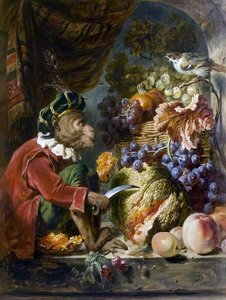
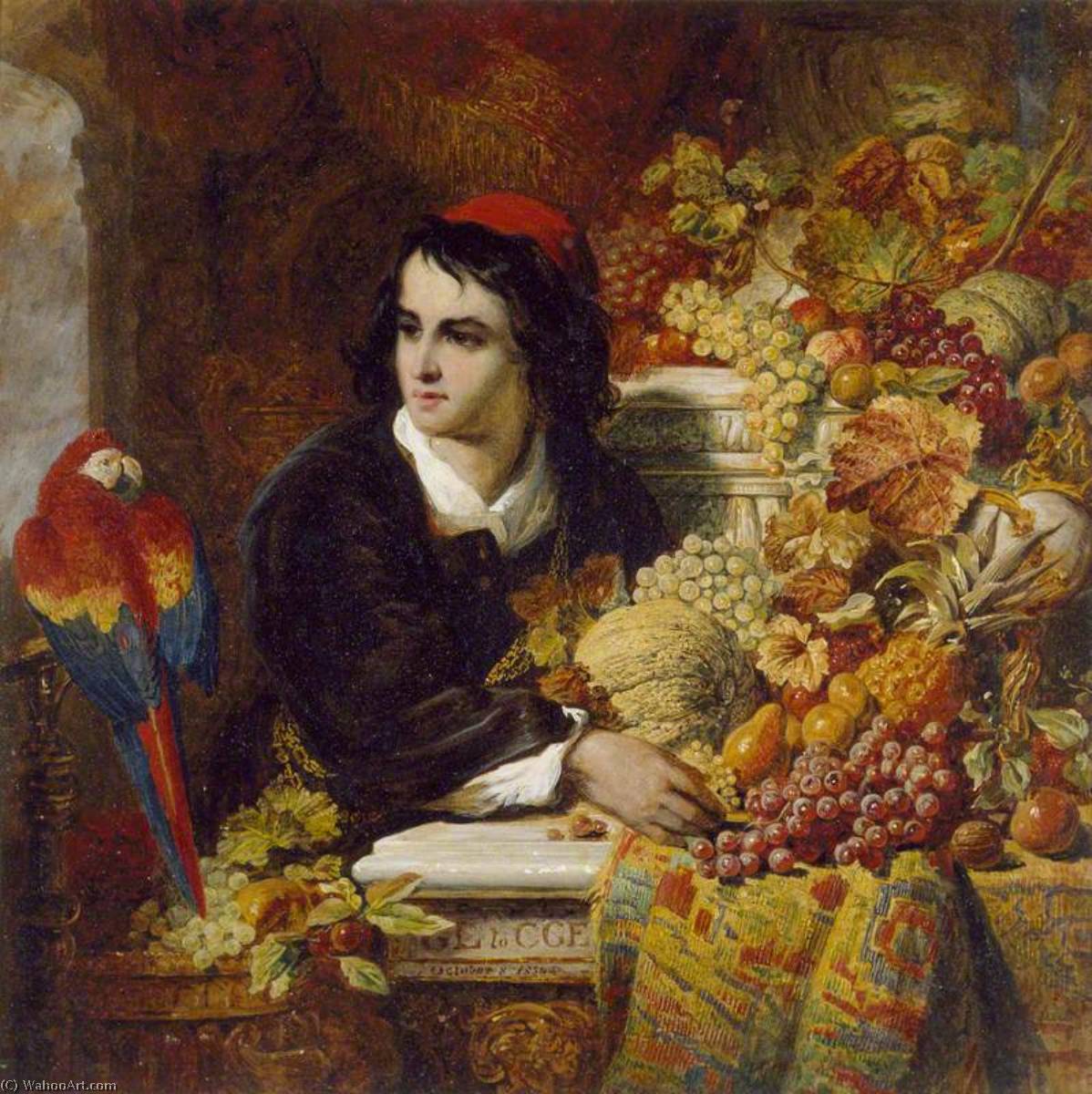
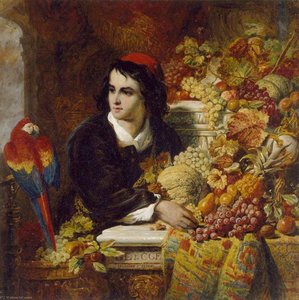
Still Life of Fruits with the Figure of a young Man
 Oil
Oil- WallArt
- Baroque
 1854
1854- 19th Century
 31.0 x 30.0 cm
 The Ashmolean Museum of Art And Archaeology
 Read More
Giclée / Art Print
Museum-quality giclée or canvas print with fast production and flexible finish options. ( Buy Hand Made Painting Buy Image)




P118B $10

P118H $10

P118W $10

P438Z $10

P508JH $12

P508YH $12

P805H $10

P805Z $10

P919BZ $10

P919G $10

P919XJ $10

P959ZH $10

P968JZ $12

W106C $8

W218G $10

W218JH $8

W218Y $10

W307PJ $10

W316G $10

W316PJ $8

W316Y $10

W398PJ $8

W4111J $10

W500HY $15

W500JH $15

W692G $12

W849H $8

W940BG $15

W953PJ $8




Pick from our preset sizes that match the artwork's original proportions.

You may enter your own dimensions to fit a specific frame or space. If your selected size does not match the original image's proportions, we will either crop the artwork or extend the image with a mirrored or solid-fill edge. A digital mockup will be sent for your approval before production begins.
Please note that the on-screen preview does not reflect the actual cropping or extension. Only the mockup will accurately show the final composition.
While custom sizes are available, we recommend selecting a dimension from the predefined list to preserve the original proportions.
Worldwide Delivery () in 2 weeks instead of standard 4/5 weeks. (6 September)

Free Worldwide Express Shipping

High-Quality Linen Canvas

Full Shipping Insurance

Customs Tax Refund Guarantee

True Color Matching Guarantee

100-Day Return Policy (Defects Only)

100% Money-Back Guarantee

Bulk Discount Offer
 Glass option is only available in size under 110 CM

Still Life of Fruits with the Figure of a young Man
Giclée / Art Print
Reproduction Size
-


Total Price
$ 63
A Symphony of Abundance: The Captivating World of George Lance
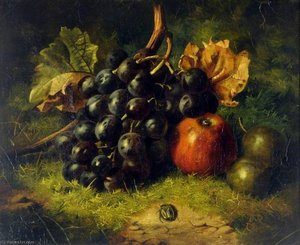
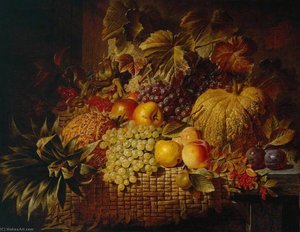
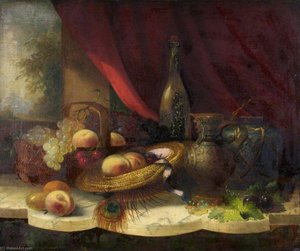
In the delicate interplay of light and shadow, Still Life of Fruits with the Figure of a young Man emerges as a breathtaking testament to the Victorian era's fascination with abundance and human connection. Painted in 1854 by the master of English still life, George Lance, this work transcends the boundaries of a traditional genre painting. It is not merely a study of organic matter, but a dramatic narrative where the vitality of nature meets the quiet introspection of the human spirit. The composition draws the viewer into an intimate space, where the vibrant hues of ripe oranges, deep crimson apples, and lush grapes create a sensory feast that feels almost tactile in its execution.
The artistry of Lance is most evident in his masterful command of texture and light. Each piece of fruit is rendered with such precision that one can almost sense the weight of the citrus and the crisp skin of the apples. The way the light dances across the surface of the grapes, highlighting their translucent skins, speaks to a technique refined through years of dedicated study under the influence of greats like Charles Landseer. This painting utilizes a rich, painterly approach characteristic of the mid-19th century, where the interplay between the bright, saturated colors of the fruit and the more muted, atmospheric tones of the background creates a profound sense of depth and three-dimensionality.
Symbolism and the Human Element
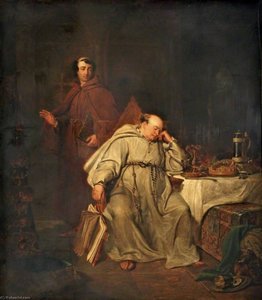
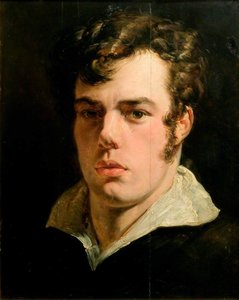
What distinguishes this particular work from a standard botanical study is the inclusion of the young man, whose presence introduces a layer of psychological complexity. Clad in a striking red headdress, his gaze serves as an emotional anchor for the entire piece. There is a subtle tension between the ephemeral nature of the ripening fruit—a classic memento mori symbol representing the fleeting passage of time—and the enduring, watchful presence of the figure. The bird perched quietly in the upper corner adds another layer of naturalistic charm, suggesting a harmonious, albeit transient, moment captured in time.
For the discerning collector or interior designer, this painting offers more than just aesthetic beauty; it provides a focal point of conversation and character. The composition’s balance of warm tones and organic shapes makes it an ideal centerpiece for a sophisticated study, a classic dining room, or a curated gallery wall. It evokes a sense of timeless luxury and classical elegance, making it a perfect choice for those looking to infuse their spaces with the warmth of history and the richness of the Victorian tradition. To possess a reproduction of such a piece is to bring a fragment of 19th-century splendor into the modern home, celebrating a legacy of craftsmanship that continues to inspire awe.
Related Artworks
Artist Biography
A Legacy of Light and Abundance: The Life of George Lance
The history of Victorian art is often defined by grand narratives and sweeping landscapes, yet within the intimate confines of a single canvas, George Lance captured the profound vitality of the natural world. Born in 1802 at the old manor-house in Little Easton, Essex, Lance’s early life was marked by an unconventional lineage—the son of an adjutant in the Essex Yeomanry and a mother whose romantic elopement from boarding school added a touch of drama to his very origins. Though his path was briefly diverted by the harsh realities of industrial labor in a Leeds factory, a chance encounter at the British Museum would forever alter the course of his destiny. It was there that he crossed paths with the celebrated Charles Landseer, a moment of serendipity that ignited a lifelong passion for the meticulous study of form and color.
Under the tutelage of Landseer and the guidance of Benjamin Haydon, Lance underwent a transformative seven-year apprenticeship. This period was not merely about learning to hold a brush; it was an immersion into the rigorous traditions of the Royal Academy, where he learned to observe the subtle nuances of light and texture. His development as an artist was characterized by a disciplined approach to foundational practice. Notably, while contemplating the epic scale of Homer’s Iliad, Lance chose to ground his ambitions in the humble reality of the earth, beginning with painstaking studies of fruits and vegetables. This dedication to the small-scale allowed him to master the interplay of shadow and luster, a skill that would eventually elevate him to the status of a pioneer in English still life painting.
Mastery of the Still Life and the Victorian Spirit
As his reputation grew, Lance transitioned from a student of detail to a master of atmosphere. His work became a symphony of abundance, reflecting the Victorian era's fascination with prosperity and the sensory delights of nature. He possessed a rare ability to breathe life into inanimate objects; in his hands, a cluster of grapes appeared translucent and heavy with juice, while the skin of an apple seemed to possess a crisp, tactile reality. This mastery was not limited to botanical accuracy but extended to a dramatic use of light that echoed the traditions of the Dutch Golden Age, creating compositions that felt both opulent and deeply intimate.
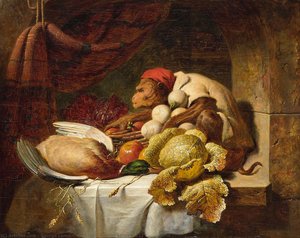
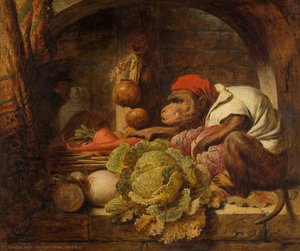
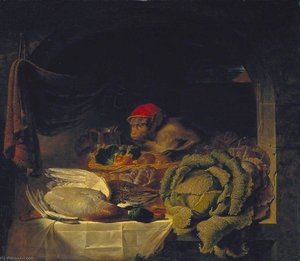
< Red Cap: A vibrant and celebrated work where Lance’s skill as a colorist shines through the depiction of a monkey in a striking red hat, surrounded by the earthy textures of carrots and turnips.Still Life of Fruits with the Figure of a Young Man: An evocative piece from 1854 that transcends simple genre painting, introducing a layer of psychological depth where human introspection meets the vitality of ripe oranges and lush grapes.
Commissions for the Aristocracy: His ability to capture the splendor of nature earned him prestigious patrons, including the Duke of Bedford, for whom he created magnificent fruit paintings to adorn the summerhouse at Woburn Abbey.
Beyond the mere depiction of food, Lance’s work often carried a narrative weight. Whether through the inclusion of a wandering figure or the symbolic arrangement of harvest bounty, his paintings served as meditations on the connection between humanity and the natural world. His ability to blend the Baroque sense of drama with a uniquely British sensibility ensured that his work resonated far beyond the galleries of London. Through his meticulous brushwork and an unwavering commitment to the beauty of the everyday, George Lance secured his place in art history as a painter who found the extraordinary within the ordinary.
george lance
1802 - 1864
Quick Facts
- Artistic Movement Or Style: Still Life Painting
- Artists Or Movements Influenced By This Artist: ['Benjamin Haydon']
- Artists Who Influenced This Artist: ['Charles Landseer']
- Date Of Birth: 1802
- Date Of Death: 1864
- Full Name: George Lance
- Nationality: English
- Notable Artworks: ['Red cap']
- Place Of Birth: Little Easton, Essex
Related Articles
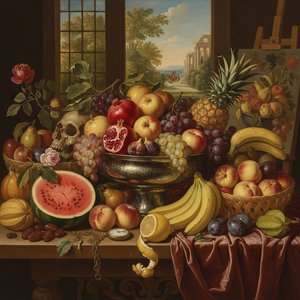
The Bountiful Still Life: Symbolism & Artistic Representation of Fruit Across Art History
Explore the rich history of still life painting & the symbolism of fruit across art movements. Discover masterpieces from Caravaggio to Cézanne with ArtsDot – expert guidance & museum-quality reproductions.

Crimson Threads of Narrative: Exploring Symbolism & Representation in Artworks Featuring the Red Dress
Explore the rich symbolism of the red dress in art history! From ancient power displays to iconic portraits like Cézanne’s 'Madame Cezanne', discover the cultural and artistic significance behind this captivating color. Expert analysis & insights.
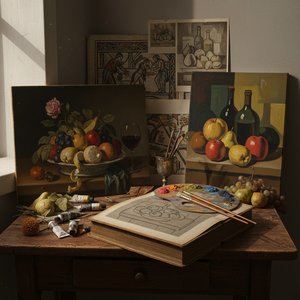
Silent Narratives: Exploring the Enduring Appeal of Still Life Painting Across Centuries
Explore the rich history of still life painting with ArtsDot. Discover Dutch Masters, decode vanitas symbolism & learn about collecting timeless art. Expert insights and museum-quality reproductions.
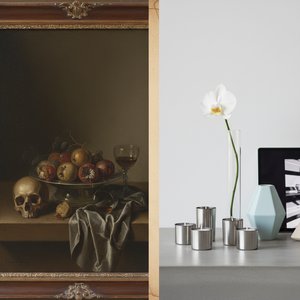
The Enduring Appeal of Still Life: A Historical & Contemporary Exploration
Explore the rich history & symbolism of still life painting with ArtsDot. Discover masterpieces from the Dutch Golden Age, learn about vanitas art, and find expert guidance for collecting timeless artworks.
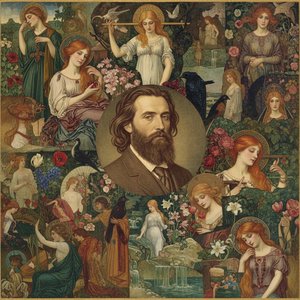
Dante Gabriel Rossetti's 25 Masterpieces: A Journey Through Victorian Art & Symbolism | ArtsDot
Explore 25 iconic artworks by Dante Gabriel Rossetti, a leading Pre-Raphaelite artist. Discover the stories behind masterpieces like 'Proserpine' & 'Beata Beatrix'. Find museum-quality art reproductions and elevate your home decor with ArtsDot.com.