 Preview
 Send
Send Share
Share
 Details

 Download
 Similars
 X-Ray
X-Ray Diaporama
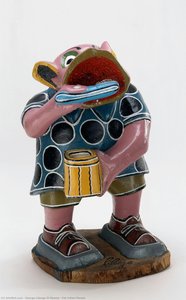
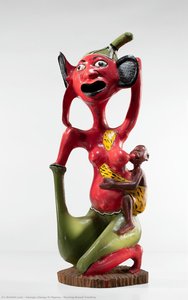
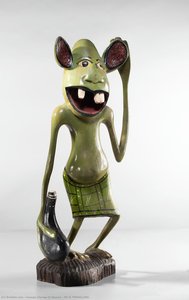
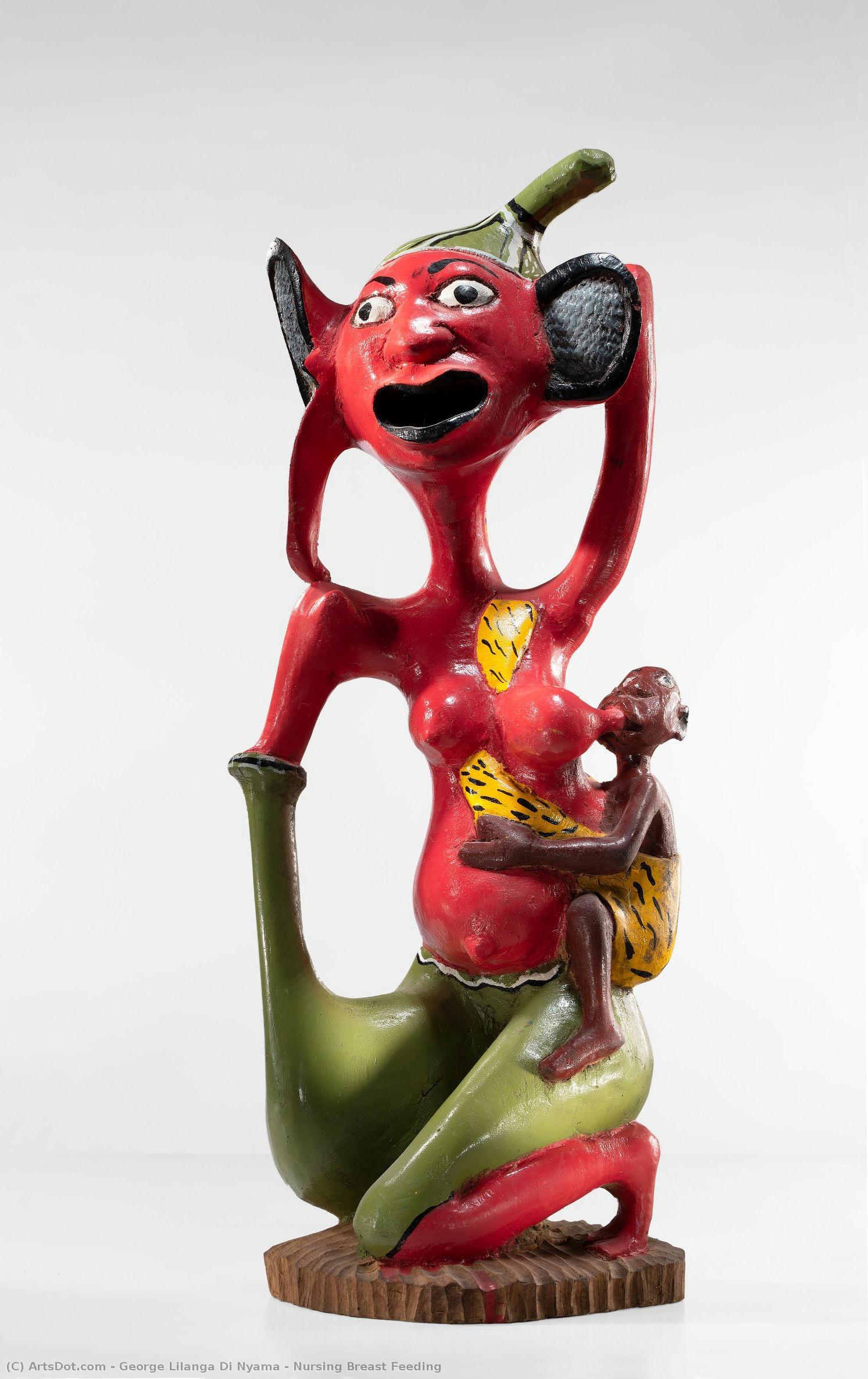
Nursing Breast Feeding
 2000
2000 47.0 x 20.0 cm
 Read More
Hand Made Oil Reproduction
Hand-painted oil on canvas in your size and frame, made to order by our artists. ( Buy Print Buy Image)




































Pick from our preset sizes that match the artwork's original proportions.

You may enter your own dimensions to fit a specific frame or space. If your selected size does not match the original image's proportions, we will either crop the artwork or extend the painting with additional hand-painted elements. A digital mockup will be sent for your approval before production begins.
Please note that the on-screen preview does not reflect the actual cropping or extension. Only the mockup will accurately show the final composition.
While custom sizes are available, we recommend selecting a dimension from the predefined list to preserve the original proportions.
After order, ArtsDot.com team will email client for instructions and provide a mockup preview
Worldwide Delivery () in 3/4 weeks instead of standard 5 weeks. (21 August). No compromise on quality.

Free Worldwide Express Shipping

High-Quality Linen Canvas

Full Shipping Insurance

Customs Tax Refund Guarantee

True Color Matching Guarantee

60-Day Return Policy (Defects Only)

100% Money-Back Guarantee

Bulk Discount Offer
 Glass option is only available in size under 110 CM

Nursing Breast Feeding
Reproduction Medium
Reproduction Size
-


Total Price
$ 263
Artwork Description
Related Artworks




Artist Biography
The Vibrant Legacy of George Lilanga di Nyama
Born in 1934 in the Masasi district of Tanzania, George Lilanga di Nyama emerged as a transformative force in the landscape of contemporary African art. A member of the Makonde people, his early life was rooted in the rich cultural traditions of his heritage, yet his artistic journey would eventually lead him far beyond the boundaries of traditional sculpture. After beginning his formal training as a sculptor in 1961, Lilanga moved to Dar es Salaam in 1972, a pivotal transition that placed him at the heart of Tanzania's burgeoning urban art scene. It was here, through his association with the legendary Nyumba ya Sanaa (House of Arts), that his creative spirit underwent a profound metamorphosis.
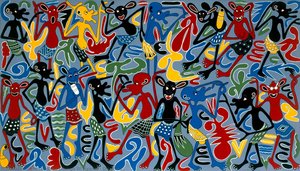
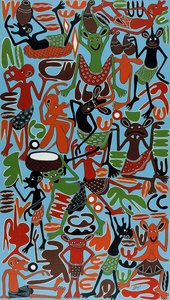
The Nyumba ya Sanaa served as more than just a gallery; it was a crucible of modernism where Lilanga encountered a diverse array of contemporary artists and techniques. This exposure catalyzed his evolution from the tactile, three-dimensional world of Makonde woodcarving into the expressive realm of two-dimensional media, including painting, etching, and panel work. His style became a brilliant tapestry of color and irony, capturing the rhythmic pulse of Tanzanian life with an unmistakable wit. He possessed a rare ability to blend the ancestral echoes of his Makonde roots with the chaotic, vibrant energy of urban street scenes and bustling marketplaces.
The Spirit of the Shetani
At the heart of Lilanga’s visual vocabulary lies the Shetani—the mischievous, often surreal devil figures that are a cornerstone of modern Makonde sculpture. In his paintings, these figures transcend their carved origins to become fluid, dancing entities that populate his dreamlike landscapes. These characters are not merely decorative; they serve as vessels for storytelling, reflecting the complexities, humor, and spiritual nuances of East African life. Through his brush, the Shetani become part of a larger narrative about human existence, blending the whimsical with the profound.
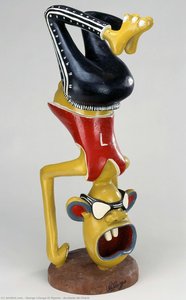
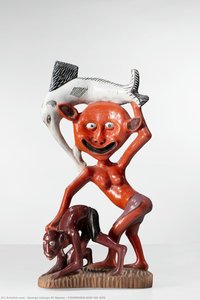
His compositions often invite the viewer into a world where the boundaries between reality and myth are blurred. Whether depicting the quiet intimacy of Fisherman and his Son or the kinetic energy found in works like Acrobate de Cirque, Lilanga’s technique remains strikingly consistent in its ability to evoke emotion through bold lines and saturated palettes. His work serves as a visual chronicle of a nation, documenting the essence of Tanzanian culture through a lens that is both deeply personal and universally accessible.
Global Recognition and Artistic Significance
The impact of George Lilanga di Nyama extends far beyond the borders of Tanzania, earning him a prestigious place in the international art canon. His work has been featured in significant global exhibitions, such as Africa Remix 2004 and African Art Now in 2005, showcasing his mastery to a worldwide audience. The presence of his pieces in institutions like the Gwynedd Museum and Art Gallery in Wales underscores the enduring resonance of his vision.
Lilanga’s historical significance lies in his role as a bridge between tradition and modernity. He did not merely preserve Makonde motifs; he reimagined them for a contemporary global stage, ensuring that the spirit of his people would continue to evolve. His legacy is defined by:
- Cultural Synthesis: The seamless integration of traditional Makonde sculptural elements into modern painting and printmaking.
- Narrative Innovation: Using the Shetani figures to explore themes of urban life, social irony, and everyday Tanzanian struggles.
- Artistic Pioneering: His foundational role within the Nyumba ya Sanaa movement, which helped shape the trajectory of East African contemporary art.
Through his colorful, often surrealist depictions, George Lilanga di Nyama remains a towering figure whose work continues to inspire awe and curiosity, inviting every viewer to witness the vibrant soul of Tanzania.
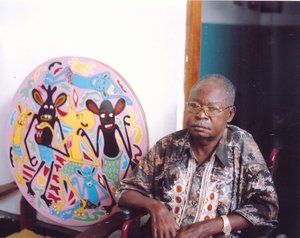
george lilanga di nyama
1934 - 2005 , Tanzania
Quick Facts
- Artistic Movement Or Style: Contemporary African art, colorful & ironic
- Date Of Birth: 1934
- Date Of Death: 2005
- Full Name: George Lilanga di Nyama
- Nationality: Tanzanian
- Notable Artworks:
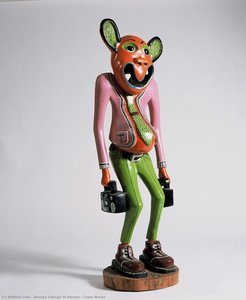
- He is travelling
- Fisherman and his son
- Acrobate de cirque
- Place Of Birth: Masasi, Tanzania