 Preview
 Send
Send Share
Share
 Details

 Download
 Similars
 X-Ray
X-Ray Diaporama
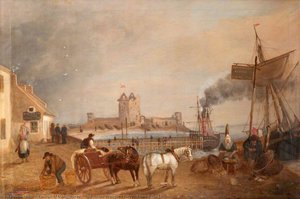
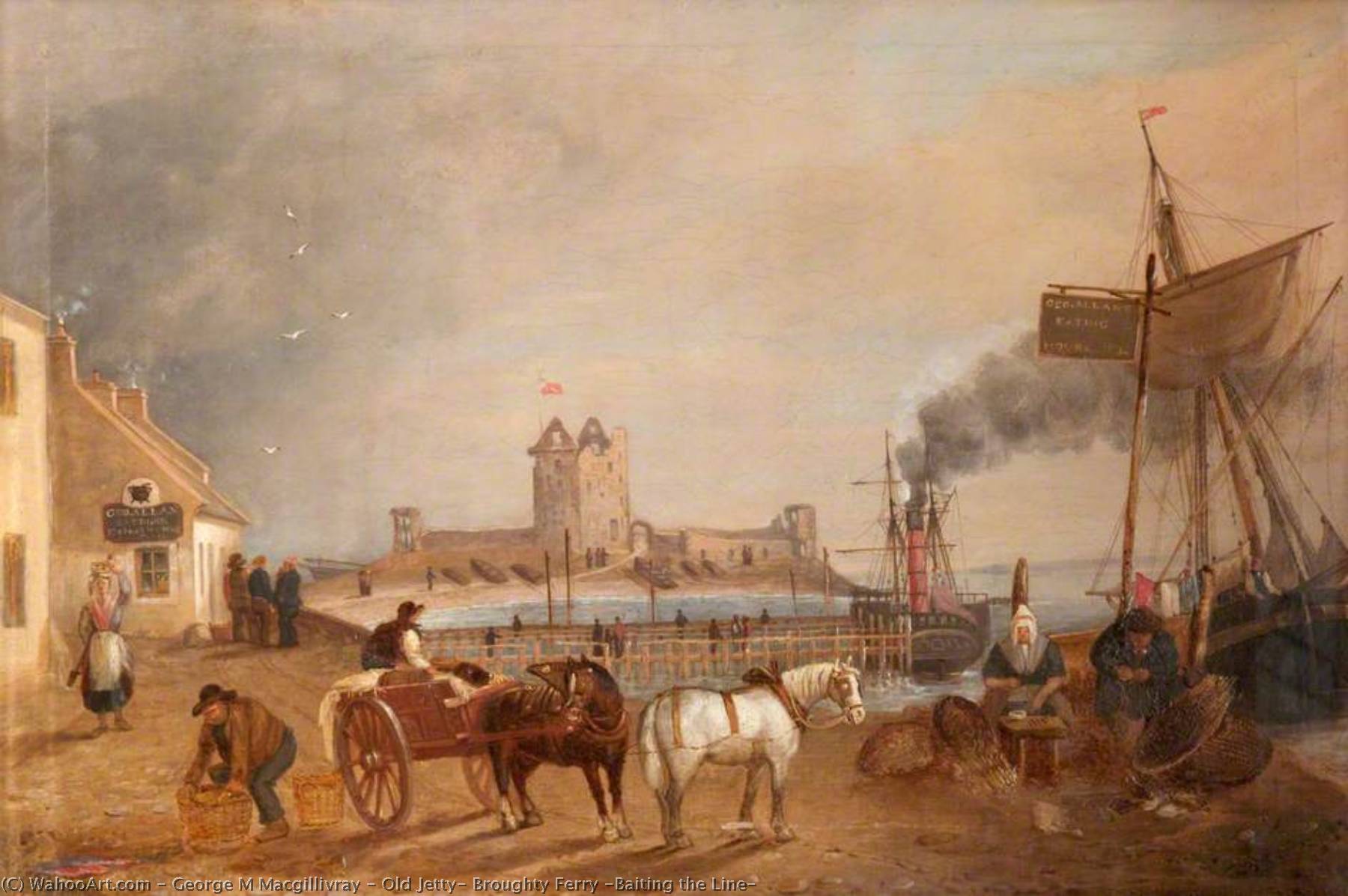
Old Jetty, Broughty Ferry (Baiting the Line)
 39.0 x 59.0 cm
 Read More
Hand Made Oil Reproduction
Hand-painted oil on canvas in your size and frame, made to order by our artists. ( Buy Print Buy Image)




































Pick from our preset sizes that match the artwork's original proportions.

You may enter your own dimensions to fit a specific frame or space. If your selected size does not match the original image's proportions, we will either crop the artwork or extend the painting with additional hand-painted elements. A digital mockup will be sent for your approval before production begins.
Please note that the on-screen preview does not reflect the actual cropping or extension. Only the mockup will accurately show the final composition.
While custom sizes are available, we recommend selecting a dimension from the predefined list to preserve the original proportions.
After order, ArtsDot.com team will email client for instructions and provide a mockup preview
Worldwide Delivery () in 3/4 weeks instead of standard 5 weeks. (22 August). No compromise on quality.

Free Worldwide Express Shipping

High-Quality Linen Canvas

Full Shipping Insurance

Customs Tax Refund Guarantee

True Color Matching Guarantee

60-Day Return Policy (Defects Only)

100% Money-Back Guarantee

Bulk Discount Offer
 Glass option is only available in size under 110 CM

Old Jetty, Broughty Ferry (Baiting the Line)
Reproduction Medium
Reproduction Size
-


Total Price
$ 388
Related Artworks






Artist Biography
George M. MacGillivray: A Visionary of Newfoundland and Scottish Shores
George M. MacGillivray (born circa 1865, died 1945) stands as one of Canada’s most celebrated landscape painters, renowned for his masterful depictions of the rugged coastlines of Newfoundland and Scotland – scenes imbued with a profound sense of atmosphere and an unwavering dedication to capturing the sublime beauty of nature. His artistic journey began in Glasgow, Scotland, where he honed his skills under the tutelage of John Atkinson Grimshaw, a pivotal figure in establishing Impressionism within British art. This formative influence instilled in MacGillivray a commitment to observing light and color directly from life, mirroring the principles championed by artists like Claude Monet and Camille Pissarro.- Early Life & Artistic Training: MacGillivray’s childhood was marked by exposure to artistic pursuits within his family, fostering an innate appreciation for visual representation. Glasgow School Influence: His formal training at the Glasgow School solidified his connection to Impressionistic techniques and cemented his fascination with capturing fleeting moments of beauty.
The Newfoundland Landscape: A Celebration of Light and Texture
MacGillivray’s artistic focus swiftly gravitated towards Newfoundland, where he established himself as a prolific painter documenting the dramatic landscapes of Labrador and Newfoundland. Unlike many artists of his era who relied on sketches or watercolors for preliminary studies, MacGillivray undertook extensive expeditions to Newfoundland, meticulously observing the interplay of light upon the turbulent Atlantic waters and the weathered granite cliffs. His canvases pulsate with vibrant hues—deep blues mirroring the ocean’s depths, fiery oranges illuminating rocky outcrops—reflecting a masterful understanding of color theory and an unparalleled ability to convey emotional resonance.- Expeditions & Observation: MacGillivray undertook numerous expeditions to Newfoundland, documenting the region's geological formations and maritime environment.
- Color Palette & Technique: He employed a bold color palette—primarily blues, oranges, and reds—combined with textured brushstrokes to create canvases that powerfully evoke the grandeur of Newfoundland’s coastline.
Scottish Inspirations: Echoes of Turner and Constable
Beyond Newfoundland, MacGillivray drew inspiration from the landscapes of Scotland, particularly those dominated by towering mountains and expansive lochs. His artistic sensibilities aligned closely with those of J.M.W. Turner and John Constable—artists who similarly sought to depict nature’s power and majesty through atmospheric perspective and dramatic lighting effects. Like Turner, MacGillivray skillfully manipulated tonal gradations to convey the feeling of wind-swept hillsides and misty valleys, capturing the essence of Scottish scenery with remarkable accuracy.- Turner & Constable Influence: MacGillivray admired Turner’s expressive use of light and color and Constable’s meticulous attention to detail—artists who championed Romantic ideals within British art.
Notable Achievements & Legacy
Throughout his career, MacGillivray produced over 300 paintings, many of which are housed in prominent museums across Canada and internationally. His works exemplify the apex of Impressionistic landscape painting, securing his place among Canada’s artistic luminaries. Furthermore, MacGillivray's dedication to preserving Newfoundland’s heritage extended beyond his art—he served as Director of the Newfoundland Museum from 1930 until his death in 1945, ensuring that future generations would appreciate the enduring beauty of his beloved region. His legacy continues to inspire artists and scholars alike, cementing George M. MacGillivray's reputation as a visionary painter who captured the sublime spirit of two distinct landscapes—Newfoundland and Scotland—with unparalleled artistry and conviction.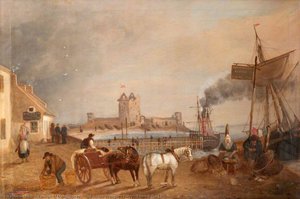
Quick Facts
- Artistic Movement Or Style: Romanticism
- Artists Or Movements Influenced By This Artist: ['Romanticism']
- Artists Who Influenced This Artist: ['Turner']
- Date Of Death: Living
- Full Name: George MacGillivray
- Nationality: Scottish
- Notable Artworks:
- The Opening of the Dundee and Arbroath Railway, 1838
- Pile Lighthouse, Tayport
- Old Jetty, Broughty Ferry (Baiting the Line)
- Place Of Birth: Glasgow, Scotland