

 Preview
 Send
Send Share
Share
 Details

 Download
 Similars
 X-Ray
X-Ray Diaporama
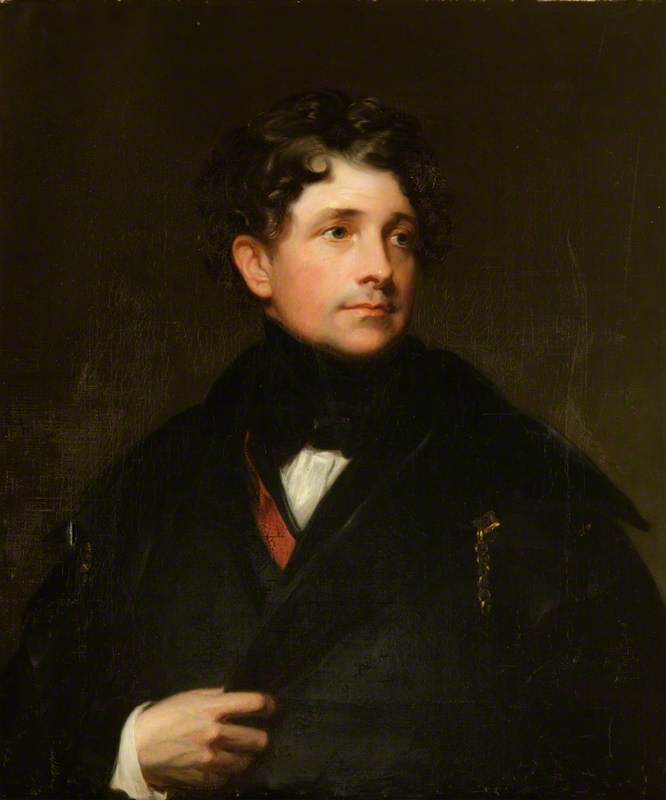
Lieutenant General Sir Thomas Bradford (1777–1853)
 75.0 x 63.0 cm
 The National Trust For Scotland
 Read More
Purchase a high-resolution, enhanced digital image, far superior to the online preview.
Each file is meticulously prepared by our in-house specialists using advanced tools and expert manual retouching. We ensure every image has exceptional clarity, precise color accuracy, and fine detail.
The final file is delivered via email within 72 hours, optimized for immediate use in professional, editorial, and print environments. This is the same quality trusted by top-tier design studios, publishers, and galleries.
Digital Image
Download a high-resolution file for personal display, printing, and creative projects. ( Buy Print Buy Hand Made Painting)
Included in Every Digital Image Order
Expert Digital Delivery, Guaranteed
When you choose ArtsDot.com, you're not just getting an image - you're receiving a professionally enhanced digital artwork, crafted with precision and backed by a satisfaction guarantee. Here's everything that comes with your order, automatically:

Fast Email Delivery
Your high-resolution digital image file will be emailed to you within 72 hours of ordering - ready for immediate use.

AI-Enhanced Digital File
Your artwork is professionally optimized using advanced AI tools and manual editing, ensuring maximum detail, clarity, and color accuracy.

Free Lifetime Re-Delivery
Accidentally deleted or lost your file? No worries - we'll resend it to you anytime, free of charge.

No Import Fees - Ever
Enjoy your artwork instantly with zero customs, duties, or delivery fees - digital downloads are always tax-free.

Color Accuracy Guarantee
We ensure your digital image reflects the original colors as closely as possible using professional tools and color management.

60-Day Satisfaction Guarantee
If you're not satisfied with your digital image, we'll revise it or refund 100% within 60 days - no questions asked.

100% Money-Back Guarantee
Not satisfied? Get a full refund within 60 days of receiving your digital file - no questions asked.

Bulk Order Discounts
Buy 3 images, save 10% - Buy 5, save 15% - Buy 10+, save 20%. Great for creative projects, galleries, and agencies.
Related Artworks








Artist Biography
The Dignity of the Brush: The Life and Legacy of George Sanders
In the grand tapestry of nineteenth-century British art, few threads capture the quiet majesty of the Victorian era as delicately as the work of George Sanders. Born in Edinburgh in 1774, Sanders emerged from the heart of Scotland to become a master of portraiture, a painter whose brush possessed the rare ability to translate social standing into visual permanence. His life and career were defined by a profound commitment to capturing the essence of his subjects, moving beyond mere likeness to evoke the very soul of the aristocracy he so frequently depicted. Through his meticulous technique, Sanders did not simply paint faces; he painted the weight of lineage, the grace of nobility, and the structured elegance of a vanishing age.
The foundations of Sanders’ artistic prowess were laid in the classical traditions of his homeland. While much of his early biography remains shrouded in the soft mists of history, it is widely understood that his technical discipline was forged under the guidance of John Ramsay. As a prominent Scottish landscape painter steeped in Neoclassical ideals, Ramsay provided Sanders with a rigorous education in composition and the importance of careful observation. This early training instilled in him a reverence for established conventions, a trait that would later allow him to navigate the demanding expectations of his wealthy patrons with unparalleled skill. His ability to balance classical structure with a subtle, emotive realism became the hallmark of his developing style.
A Master of Character and Composition
The oeuvre of George Sanders is a testament to his versatility and his deep respect for the masters who preceded him. While he gained significant renown for his portraits of the Scottish and English elite—rendering Earls, Dukes, and Lords with a palpable sense of dignity—he was also a scholar of the Dutch Golden Age. His skillful executions of works in the style of Rembrandt and Vermeer reveal an artist deeply engaged with the interplay of light and shadow, or chiaroscuro, using tonal subtlety to create depth and atmosphere. This mastery of light allowed him to breathe life into his subjects, making the opulent fabrics of their attire and the richly decorated interiors of their estates feel tangibly present to the viewer.
Beyond the formal boundaries of aristocratic portraiture, Sanders demonstrated a remarkable sensitivity to the nuances of genre painting. He possessed a unique talent for capturing moments of domestic life, imbuing even the most quiet scenes with a sense of realism and emotional resonance. His work often incorporated subtle symbolic elements, such as clan affiliations or familial emblems, which served to anchor his subjects within their historical and social contexts. This layered approach meant that a Sanders painting was never just a static image; it was a narrative piece, rich with the cultural identifiers of the time.
Historical Significance and Enduring Presence
The enduring importance of George Sanders is perhaps best measured by the prestigious locations where his work continues to reside. His presence within the National Gallery serves as a powerful validation of his contribution to the British canon. To walk among his canvases is to encounter the very architecture of Victorian social hierarchy and aspiration. He captured a period of transition, documenting the faces of a class that stood at the pinnacle of influence, preserving their postures and expressions for posterity.
Today, the legacy of Sanders remains vital for those seeking to understand the visual language of the nineteenth century. His achievements can be summarized through several key artistic contributions:
- Technical Precision: The seamless integration of Neoclassical discipline with the atmospheric techniques of the Dutch Masters.
- Sociological Documentation: The creation of a visual record of the British aristocracy, capturing the dignity and social nuances of the era.
- Versatility of Genre: An ability to move effortlessly between formal, high-status portraiture and the intimate, detailed realism of genre scenes.
- Cultural Preservation: The use of symbolic elements to reflect the complex clan identities and familial histories of his Scottish subjects.
As we look back upon the career of George Sanders, we see more than a mere chronicler of faces; we see an artist who understood that true portraiture is an act of preservation. Through his dedication to craftsmanship and his profound respect for his subjects, he ensured that the elegance and gravity of his age would never truly fade into obscurity.

george sanders
1774 - 1846
Quick Facts
- Artistic Movement Or Style: Portraiture
- Date Of Birth: 1774
- Date Of Death: 1846
- Full Name: George Sanders
- Nationality: Scottish
- Notable Artworks: ['Lord MacDonald of Sleat']
- Place Of Birth: Scotland

