

 Preview
 Send
Send Share
Share
 Details

 Download
 Similars
 X-Ray
X-Ray Diaporama
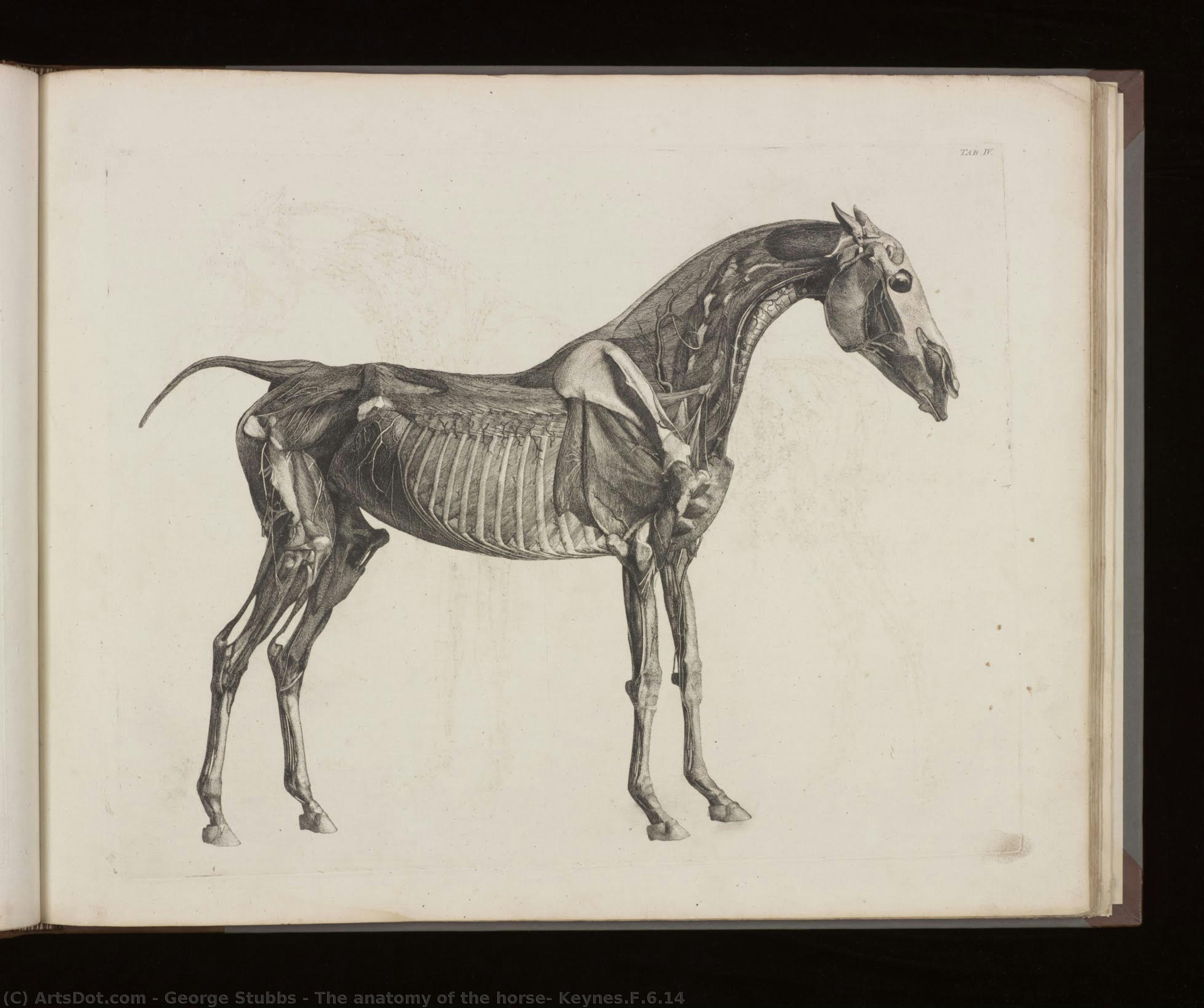
The anatomy of the horse, Keynes.F.6.14


 Read More
Purchase a high-resolution, enhanced digital image, far superior to the online preview.
Each file is meticulously prepared by our in-house specialists using advanced tools and expert manual retouching. We ensure every image has exceptional clarity, precise color accuracy, and fine detail.
The final file is delivered via email within 72 hours, optimized for immediate use in professional, editorial, and print environments. This is the same quality trusted by top-tier design studios, publishers, and galleries.
Digital Image
Download a high-resolution file for personal display, printing, and creative projects. ( Buy Print Buy Hand Made Painting)
Included in Every Digital Image Order
Expert Digital Delivery, Guaranteed
When you choose ArtsDot.com, you're not just getting an image - you're receiving a professionally enhanced digital artwork, crafted with precision and backed by a satisfaction guarantee. Here's everything that comes with your order, automatically:

Fast Email Delivery
Your high-resolution digital image file will be emailed to you within 72 hours of ordering - ready for immediate use.

AI-Enhanced Digital File
Your artwork is professionally optimized using advanced AI tools and manual editing, ensuring maximum detail, clarity, and color accuracy.

Free Lifetime Re-Delivery
Accidentally deleted or lost your file? No worries - we'll resend it to you anytime, free of charge.

No Import Fees - Ever
Enjoy your artwork instantly with zero customs, duties, or delivery fees - digital downloads are always tax-free.

Color Accuracy Guarantee
We ensure your digital image reflects the original colors as closely as possible using professional tools and color management.

60-Day Satisfaction Guarantee
If you're not satisfied with your digital image, we'll revise it or refund 100% within 60 days - no questions asked.

100% Money-Back Guarantee
Not satisfied? Get a full refund within 60 days of receiving your digital file - no questions asked.

Bulk Order Discounts
Buy 3 images, save 10% - Buy 5, save 15% - Buy 10+, save 20%. Great for creative projects, galleries, and agencies.
A Study in Bone: George Stubbs's "The Anatomy of the Horse"
George Stubbs’s “The Anatomy of the Horse,” executed in 1766, is not merely a drawing; it’s a revelation. A meticulously rendered black and white study of equine skeletal structure, this work represents a pivotal moment in art history – a radical departure from the stylized depictions of animals prevalent at the time. Created by one of Britain's most celebrated animal painters, Stubbs was driven by an almost obsessive desire to understand the true form of the horse, believing that accurate representation demanded a deep engagement with anatomical knowledge.
- The Anatomical Pursuit: Born in Liverpool in 1724, Stubbs’s artistic journey began humbly, apprenticed initially to his father. However, it was his subsequent immersion into the world of anatomy under surgeon Charles Atkinson at York County Hospital that truly shaped his work. This intensive study, coupled with his own meticulous dissections – documented for a remarkable 18 months – fueled his ambition to capture the horse’s musculature and skeletal framework with unprecedented realism.
- A Revolutionary Style: Stubbs's approach was revolutionary. He rejected the traditional, flattened representations of animals favored by many contemporary artists, opting instead for a dynamic, three-dimensional portrayal that captured the animal in motion. This is evident in the horse’s posture – head turned as if surveying a vast landscape – and the detailed rendering of its bones, conveying a sense of power and grace.
- Contextual Significance: The work emerged during a period of burgeoning scientific interest in anatomy and natural history. Stubbs's dedication to accurate representation aligned with this intellectual shift, reflecting a growing desire to understand the world through observation and empirical study. It’s important to note that this wasn't simply an artistic endeavor; it was a serious investigation into the mechanics of animal movement.
Technique and Materials
The drawing itself is executed with remarkable precision, utilizing charcoal on paper. Stubbs employed a layering technique, building up tones gradually to create depth and volume. The stark contrast between light and shadow emphasizes the skeletal structure, highlighting the intricate network of bones that define the horse’s form. The artist's hand is clearly visible in the subtle variations of tone and texture, adding to the drawing's sense of authenticity and immediacy. This level of detail speaks volumes about Stubbs's dedication and skill.
Symbolism and Emotional Impact
Beyond its technical brilliance, “The Anatomy of the Horse” carries a profound symbolic weight. The horse itself has long been associated with power, nobility, and freedom – qualities that are powerfully evoked in this drawing. Stubbs’s focus on anatomical accuracy suggests a desire to reveal the ‘true nature’ of the animal, stripping away any romanticized or idealized notions. The image evokes a sense of awe and respect for the natural world, inviting viewers to contemplate the beauty and complexity of life.
A Legacy of Realism
George Stubbs's "The Anatomy of the Horse" stands as a testament to his artistic vision and scientific curiosity. It profoundly influenced subsequent generations of animal artists, paving the way for more realistic depictions of animals in art. Today, this drawing remains a captivating example of anatomical study combined with artistic skill, offering a unique window into the mind of one of Britain’s greatest painters.
Related Artworks
Artist Biography
early life and training
george stubbs, a renowned english painter, was born on august 25, 1724, in liverpool, united kingdom. his early life was marked by a sparse record of his activities until the age of 35, with most information sourced from ozias humphry's memoirs, based on conversations with stubbs in 1794. stubbs began his artistic journey at the age of 15, initially working under his father, a currier or leather-dresser. he later approached hamlet winstanley, a lancashire painter and engraver, for a brief apprenticeship. this short stint allowed him to study the collection at knowsley hall.artistic development and notable works
stubbs's passion for anatomy led him to move to york in 1744, where he studied under surgeon charles atkinson at york county hospital. one of his earliest surviving works is a set of illustrations for john burton's textbook on midwifery, published in 1751. in 1756, stubbs rented a farmhouse in lincolnshire and spent 18 months dissecting horses, assisted by his common-law wife, mary spencer. this led to the publication of the anatomy of the horse in 1766, with original drawings now housed at the royal academy. stubbs's work was soon recognized by leading aristocratic patrons, including the 3rd duke of richmond, who commissioned three large pictures in 1759. this marked the beginning of his successful career, with works produced for several dukes and lords, culminating in the purchase of a house in marylebone, london.legacy and notable paintings
stubbs's most famous work, whistlejacket, a painting of a prancing horse commissioned by the 2nd marquess of rockingham, is now housed at the national gallery in london. this and two other paintings for rockingham break with convention, featuring plain backgrounds.- whistlejacket, a thoroughbred race horse rising on his hind legs, showcases stubbs's unparalleled skill in capturing the essence of horses.
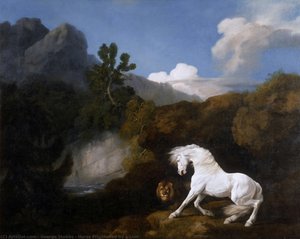
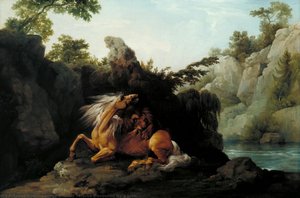
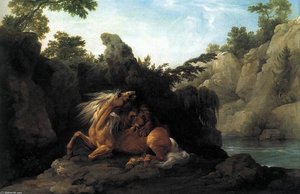
- stubbs's series of paintings on a lion attacking a horse are early examples of the romantic movement, demonstrating his influence on 18th-century art.
- view stubbs's artwork at https://ArtsDot.com/@/george_stubbs
- explore the national gallery in london's collection, featuring stubbs's notable works, at /en/art/show/art-8xyffg-en/
- learn more about stubbs's life and work on wikipedia at https://en.wikipedia.org/wiki/george_stubbs
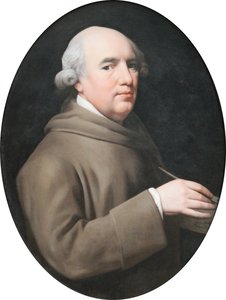
George Stubbs
1724 - 1806 , United Kingdom
Quick Facts
- Artistic Movement Or Style: Romanticism, Equine Art
- Artists Or Movements Influenced By This Artist: ['Joshua Reynolds']
- Artists Who Influenced This Artist: ['Hamlet Winstanley']
- Date Of Birth: August 25, 1724
- Date Of Death: July 10, 1806
- Full Name: George Stubbs
- Nationality: British
- Notable Artworks:
- Whistlejacket
- Lion & Horse
- A Lion and Tiger
- Place Of Birth: Liverpool, UK

