 Preview
 Send
Send Share
Share
 Details

 Download
 Similars
 X-Ray
X-Ray Diaporama
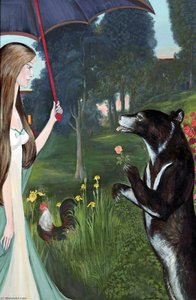
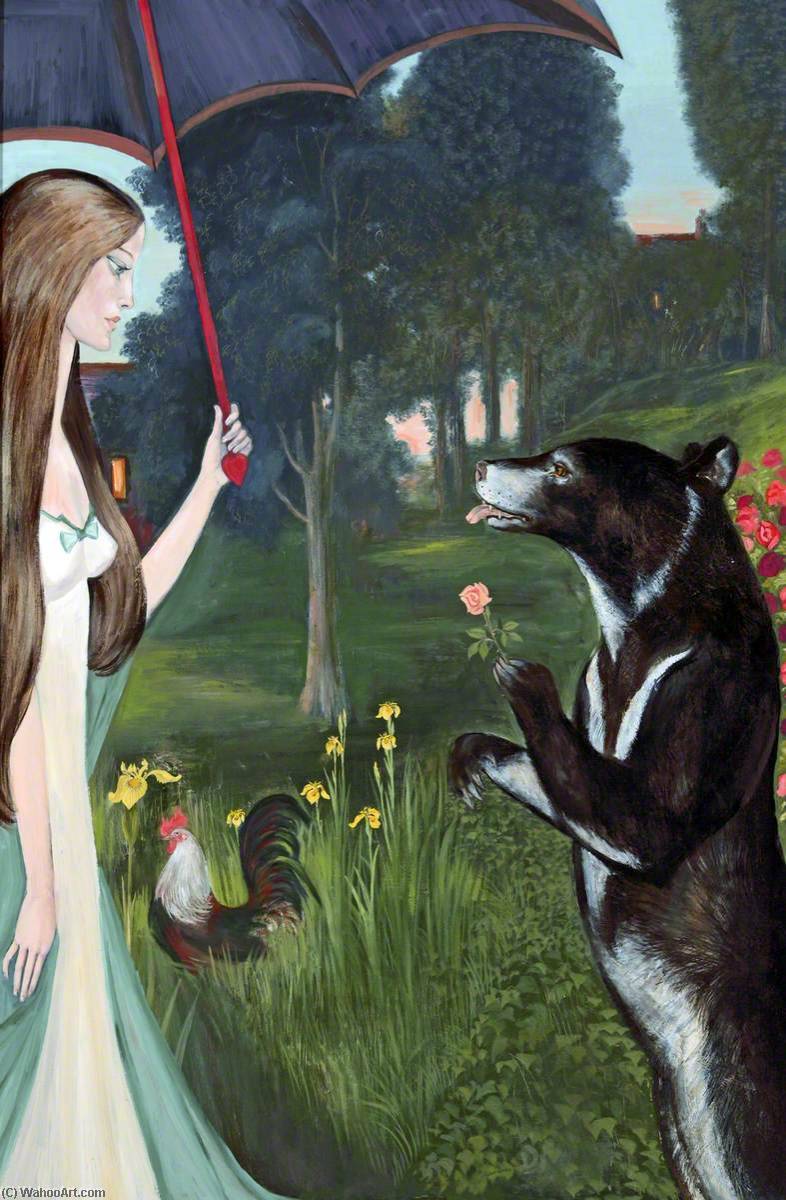
Beauty and the Beast
 Surrealism
 91.0 x 61.0 cm
 Read More
Hand Made Oil Reproduction
Hand-painted oil on canvas in your size and frame, made to order by our artists. ( Buy Print Buy Image)




































Pick from our preset sizes that match the artwork's original proportions.

You may enter your own dimensions to fit a specific frame or space. If your selected size does not match the original image's proportions, we will either crop the artwork or extend the painting with additional hand-painted elements. A digital mockup will be sent for your approval before production begins.
Please note that the on-screen preview does not reflect the actual cropping or extension. Only the mockup will accurately show the final composition.
While custom sizes are available, we recommend selecting a dimension from the predefined list to preserve the original proportions.
After order, ArtsDot.com team will email client for instructions and provide a mockup preview
Worldwide Delivery () in 3/4 weeks instead of standard 5 weeks. (23 August). No compromise on quality.

Free Worldwide Express Shipping

High-Quality Linen Canvas

Full Shipping Insurance

Customs Tax Refund Guarantee

True Color Matching Guarantee

60-Day Return Policy (Defects Only)

100% Money-Back Guarantee

Bulk Discount Offer
 Glass option is only available in size under 110 CM

Beauty and the Beast
Reproduction Medium
Reproduction Size
-


Total Price
$ 288
Related Artworks
Artist Biography
A Surrealist Vision of Landscape and Memory
George Wallace Jardine (1920–2002) remains a singular figure in British surrealism, celebrated for his evocative depictions of the Scottish Highlands and his masterful manipulation of printmaking techniques. Born in Glasgow, Jardine’s artistic journey began with formative years spent studying at Wallasey School of Art and furthering his education at the Royal College of Art under luminaries like Paul Nash and Stanley Spencer. These masters, whose own explorations into abstraction profoundly impacted his stylistic sensibilities, helped cement Jardine's dedication to capturing the essence of nature through dreamlike imagery. His work established him as one of Scotland’s foremost landscape painters, blending the tangible reality of the natural world with the intangible whispers of the subconscious.
The genesis of Jardine’s unique aesthetic was shaped by a diverse array of artistic impulses, ranging from the delicate precision of Indian miniature painting to the pioneering, fragmented approach of Max Ernst. In his early explorations, he embraced collage techniques—assembling fragments of newspaper, sweet wrappers, and advertisements—to create layered compositions that conveyed complex emotional states and challenged conventional perceptions of reality. This experimental period allowed him to develop a visual language where the mundane could be transformed into something profound and unsettling, laying the groundwork for his later, more polished surrealist landscapes.
The Sublime Landscapes of Cumbria and Beyond
A pivotal moment in Jardine’s career arrived in 1944 when his return to Cumbria immersed him in the dramatic vistas of the Lake District. This profound connection to the landscape fueled a prolific period of artistic output, resulting in numerous paintings characterized by luminous color palettes and meticulous attention to impasto texture. His works, such as The Tarns, strive to distill the sublime beauty of the terrain into symbolic representations, where a winter landscape is not merely a depiction of frost and stone, but a meditation on stillness and serenity.
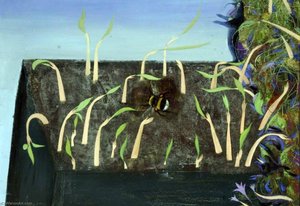
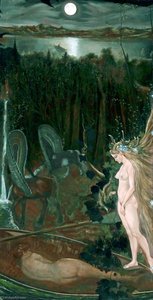
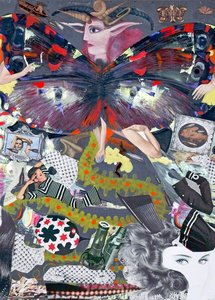
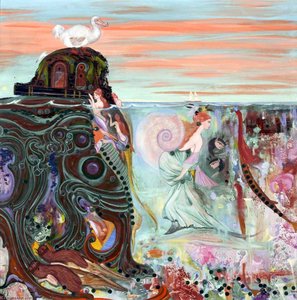
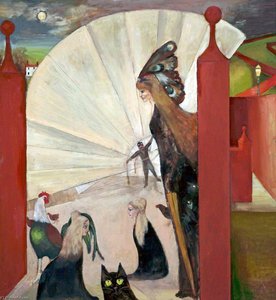
Jardine’s ability to weave narrative into nature is perhaps most evident in his more whimsical or fantastical works. In pieces like Beauty and the Beast, he utilizes a rich, symbolic style to present a dreamlike encounter between a woman and a bear, while Unfinished Nest offers a captivating fantasy illustration of children and nature. Through these compositions, he explores themes of innocence, metamorphosis, and the ethereal connection between living beings and their environment, often utilizing oil paint to achieve a sense of depth and atmospheric weight.
Technical Mastery and Lasting Legacy
Beyond the canvas, Jardine achieved significant renown as a master printmaker, particularly through his expertise in etching and aquatint. His prints possessed an unparalleled ability to convey atmosphere and texture, mirroring the tonal qualities found in his larger oil paintings. A notable highlight of his graphic work includes the Levitation Act series, which captures ethereal forms suspended against stark backgrounds—a testament to his lifelong fascination with illusion and the boundary between the physical and the spectral. His ability to manipulate light and shadow through printmaking allowed him to explore even more subtle nuances of movement, as seen in the flowing, rhythmic energy of Zephyrs.
The historical significance of George Wallace Jardine lies in his ability to bridge the gap between traditional landscape painting and the avant-garde surrealist movement. By infusing the rugged beauty of the British Isles with the psychological depth of dream imagery, he created a body of work that is both deeply rooted in place and universally evocative of the human imagination. His legacy continues to resonate through his unique ability to transform the seen world into a landscape of memory and myth.
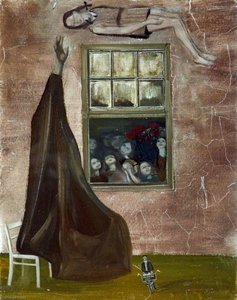
george wallace jardine
1920 - 2002
Quick Facts
- Artistic Movement Or Style: Surrealism
- Artists Or Movements Influenced By This Artist: ['Indian miniature painting']
- Artists Who Influenced This Artist: ['Max Ernst']
- Date Of Death: 2002
- Full Name: George Wallace Jardine
- Nationality: British
- Notable Artworks:
- Levitation Act
- Night Moths
- Beauty and the Beast
- Unfinished Nest
- Place Of Birth: Wallasey, Cheshire
Related Articles

Georges Braque's Masterpieces: 25 Paintings That Defined Cubism & Modern Art | ArtsDot
Explore 25 iconic Georges Braque paintings that revolutionized Cubism & modern art. Discover the stories behind his masterpieces, from Fauvism to Analytical Cubism. Find museum-quality reproductions & elevate your home decor with ArtsDot.com.

Georges Seurat's Masterpieces: 25 Paintings That Defined Pointillism | ArtsDot
Explore 25 iconic Georges Seurat paintings & discover the brilliance of Pointillism. From 'La Grande Jatte' to his harbor scenes, delve into art history with ArtsDot.com. Find museum-quality reproductions for your home decor. Explore the full collection online!
Animalia: Exploring the Enduring Presence of Animals in Art & Interior Design
Explore the rich history of animal symbolism in art, from ancient mythology to modern masterpieces. Discover how animals have inspired artists for centuries and learn how to incorporate these powerful motifs into your home décor.

Level Up Your Art: Transform Personal Photos into High-Octane Action Anime Masterpieces with AI-Driven Oil Painting
Transform your favorite photos into high-octane action anime masterpieces. Using proprietary AI and master artists, we turn digital memories into hand-painted oil on canvas legacies. Experience the perfect fusion of pop culture energy and timeless fine artistry at ArtsDot.com.

The Enduring Legacy of Oil on Canvas: Technique, History & Aesthetic Impact
Explore the rich history & techniques of oil painting – from Renaissance masters to Impressionism. Discover pigments, layering methods, and why this timeless medium endures. Expert insights for artists & art enthusiasts.