

 Preview
 Send
Send Share
Share
 Details

 Download
 Similars
 X-Ray
X-Ray Diaporama
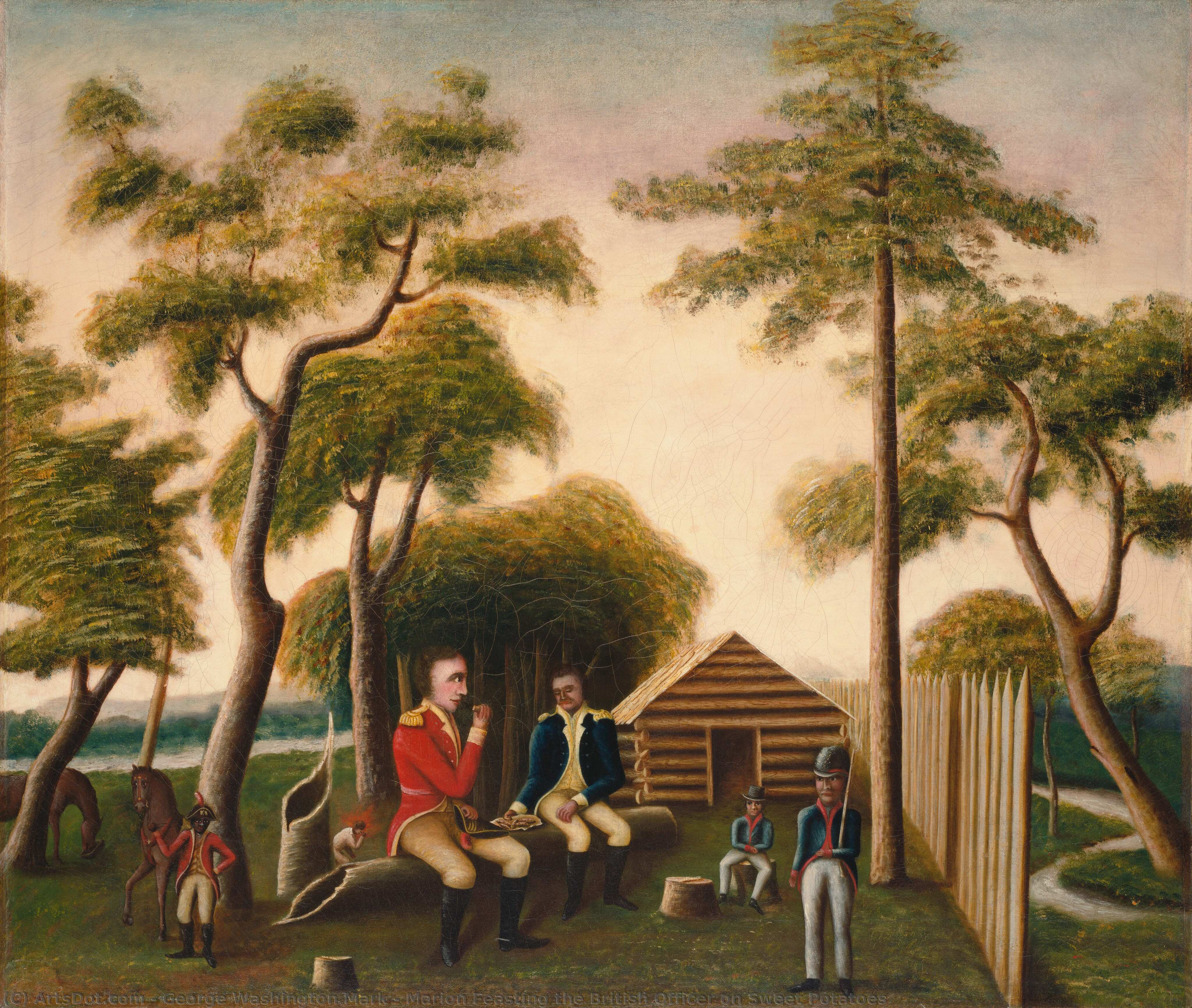
Marion Feasting the British Officer on Sweet Potatoes
 1848
1848 104.0 x 119.0 cm
 Read More
Purchase a high-resolution, enhanced digital image, far superior to the online preview.
Each file is meticulously prepared by our in-house specialists using advanced tools and expert manual retouching. We ensure every image has exceptional clarity, precise color accuracy, and fine detail.
The final file is delivered via email within 72 hours, optimized for immediate use in professional, editorial, and print environments. This is the same quality trusted by top-tier design studios, publishers, and galleries.
Digital Image
Download a high-resolution file for personal display, printing, and creative projects. ( Buy Print Buy Hand Made Painting)
Included in Every Digital Image Order
Expert Digital Delivery, Guaranteed
When you choose ArtsDot.com, you're not just getting an image - you're receiving a professionally enhanced digital artwork, crafted with precision and backed by a satisfaction guarantee. Here's everything that comes with your order, automatically:

Fast Email Delivery
Your high-resolution digital image file will be emailed to you within 72 hours of ordering - ready for immediate use.

AI-Enhanced Digital File
Your artwork is professionally optimized using advanced AI tools and manual editing, ensuring maximum detail, clarity, and color accuracy.

Free Lifetime Re-Delivery
Accidentally deleted or lost your file? No worries - we'll resend it to you anytime, free of charge.

No Import Fees - Ever
Enjoy your artwork instantly with zero customs, duties, or delivery fees - digital downloads are always tax-free.

Color Accuracy Guarantee
We ensure your digital image reflects the original colors as closely as possible using professional tools and color management.

60-Day Satisfaction Guarantee
If you're not satisfied with your digital image, we'll revise it or refund 100% within 60 days - no questions asked.

100% Money-Back Guarantee
Not satisfied? Get a full refund within 60 days of receiving your digital file - no questions asked.

Bulk Order Discounts
Buy 3 images, save 10% - Buy 5, save 15% - Buy 10+, save 20%. Great for creative projects, galleries, and agencies.
Related Artworks








Artist Biography
A Life Painted in the Fabric of Early America
George Washington Mark, a name perhaps less familiar than his presidential namesake, nevertheless occupies a fascinating niche within the landscape of 19th-century American folk art. Born in Charlestown, New Hampshire, in 1795, Mark’s early life hinted at a restless spirit—a period spent aboard a schooner before settling in Greenfield, Massachusetts, around 1817. It was in this western Massachusetts town that he would establish himself not merely as a painter, but as a local character, a flamboyant tradesman whose work reflected the burgeoning American identity of the era. Mark wasn’t simply *a* painter; he was a house painter, sign maker, furniture decorator, and carriage artist—a versatile artisan who applied his skills to nearly every facet of domestic life. His reputation grew through consistent advertising in local newspapers, establishing him as a reliable and sought-after craftsman.From Practicality to Artistic Expression
Initially, Mark’s paintings were largely functional – signs for businesses, decorative flourishes on furniture. However, around the 1830s and 40s, he began to explore more ambitious artistic endeavors, turning his hand to landscapes and historical subjects. This transition wasn't a sudden leap but rather a natural evolution of his skills and an increasing desire for creative expression. In the early 1840s, Mark boldly opened his own gallery in Greenfield, showcasing what would become considered his masterpiece: “Opening the Door.” The painting, now held by The Henry Ford museum, exemplifies his unique style—a blend of naive realism and a keen eye for detail that captured the essence of everyday life. It’s a work imbued with a quiet dignity, portraying a scene that feels both familiar and deeply personal. Mark's paintings weren't born from formal training; they were products of observation, intuition, and a deep connection to his surroundings.A Brushstroke of Local History
Mark’s life wasn’t solely defined by his art. His personal history, revealed through newspaper postings and local records, paints a picture of a man deeply embedded in the community. His marriage to Mary Ann Skinner in 1818 brought a period of domestic stability, though her death from cancer in 1860 clearly affected him profoundly—his public thank you to the “Ladies of all the Religious Societies” for their kindness during her illness speaks volumes about his character. A subsequent marriage to the widow Mary Diana (Torrey) Ball further solidified his place within Greenfield society. Beyond his artistic pursuits, Mark was a man who valued connection and community support. His work often reflected scenes from local life, capturing the spirit of New England in a way that resonated with those around him.Technique and Influences
Pinpointing specific influences on Mark’s style is challenging, given his largely self-taught nature. However, one can discern echoes of English folk art traditions—particularly in his use of vibrant colors and simplified forms. His grain painting, especially the figured maple doors he executed for homes in Greenfield, demonstrates a mastery of faux-painting techniques, creating illusions of expensive wood grains with remarkable skill. William Flynt, a retired architectural conservator at Historic Deerfield, recognized these doors as examples of Mark’s “finest faux-painting,” highlighting their rarity and artistic merit. The recent discovery of a portrait depicting a hound resting on hunting gear further illuminates his range—a work that showcases his ability to capture the personality of both animal and landscape with equal finesse. While he wasn't formally part of any established art school or movement, Mark’s paintings share affinities with other self-taught American artists who sought to depict their world with honesty and directness.Legacy and Historical Significance
George Washington Mark died in Greenfield, Massachusetts, in 1879 at the age of 84. Though he may not be a household name, his work offers a valuable glimpse into the artistic sensibilities of early America. His paintings are more than just decorative objects; they are windows into a bygone era—testaments to the lives, values, and landscapes of 19th-century New England. The recent rediscovery of works like the hound portrait underscores the importance of continued research and preservation efforts. Mark’s legacy lies not in grand pronouncements or revolutionary techniques, but in his ability to capture the spirit of a community—to paint a vivid picture of life as it was lived, with all its simplicity, dignity, and enduring charm. His art serves as a reminder that artistic expression can flourish outside the confines of formal institutions, rooted instead in the everyday experiences and observations of a dedicated craftsman and keen observer of the world around him. He remains an important figure for understanding the development of American folk art.
Quick Facts
- Date Of Death: Living
- Full Name: George Washington Mark
- Notable Artworks: ['Marion Feasting the British Officer on Sweet Potatoes']

