 Preview
 Send
Send Share
Share
 Details

 Download
 Similars
 X-Ray
X-Ray Diaporama
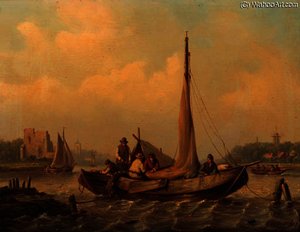
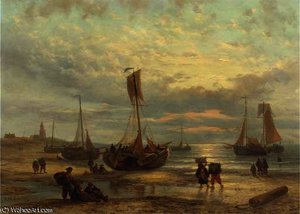
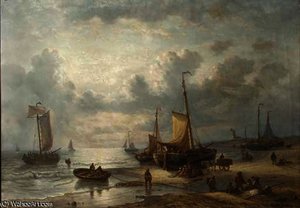
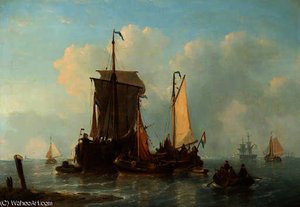
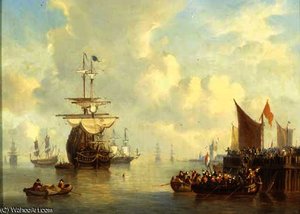
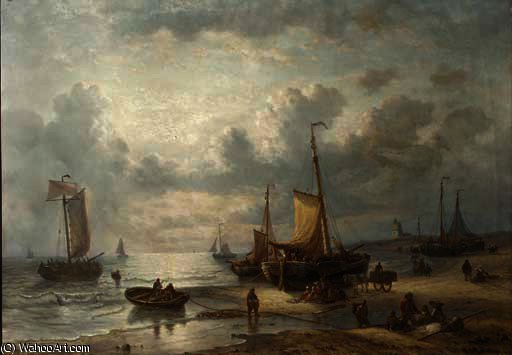
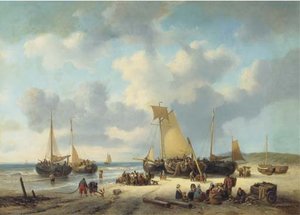
Unloading the catch
 Read More
Hand Made Oil Reproduction
Hand-painted oil on canvas in your size and frame, made to order by our artists. ( Buy Print Buy Image)




































Pick from our preset sizes that match the artwork's original proportions.

You may enter your own dimensions to fit a specific frame or space. If your selected size does not match the original image's proportions, we will either crop the artwork or extend the painting with additional hand-painted elements. A digital mockup will be sent for your approval before production begins.
Please note that the on-screen preview does not reflect the actual cropping or extension. Only the mockup will accurately show the final composition.
While custom sizes are available, we recommend selecting a dimension from the predefined list to preserve the original proportions.
After order, ArtsDot.com team will email client for instructions and provide a mockup preview
Worldwide Delivery () in 3/4 weeks instead of standard 5 weeks. (18 August). No compromise on quality.

Free Worldwide Express Shipping

High-Quality Linen Canvas

Full Shipping Insurance

Customs Tax Refund Guarantee

True Color Matching Guarantee

60-Day Return Policy (Defects Only)

100% Money-Back Guarantee

Bulk Discount Offer
 Glass option is only available in size under 110 CM

Unloading the catch
Reproduction Medium
Reproduction Size
-


Total Price
$ 263
Related Artworks
Artist Biography
George Willem Opdenhoff: A Master of Dutch Coastal Realism
George Willem Opdenhoff (1807-1873) stands as a significant, yet often overlooked, figure in 19th-century Dutch art. Primarily known for his meticulously rendered maritime scenes and evocative depictions of coastal life, Opdenhoff’s work offers a captivating glimpse into the industriousness and beauty of the Netherlands' waterways during a period of profound transformation. His legacy rests not just on the sheer technical skill displayed in his paintings – a testament to years of dedicated study under masters like Andreas Schelfhout and Johannes Christiaan Schotel – but also on his ability to capture the spirit of a nation deeply intertwined with its sea.
Born in Fulda, Germany, Opdenhoff’s artistic journey began in Rotterdam. Initially apprenticed to a painter there, he quickly gravitated towards maritime subjects, influenced by the bustling harbor and the constant flow of ships that defined the city's identity. This early exposure laid the foundation for his future career, shaping his understanding of ship design, rigging, and the rhythms of seafaring life. He later moved to France, absorbing elements of Romanticism’s emphasis on dramatic light and atmosphere, before settling permanently in The Hague around 1842. It was here that he established himself as a respected artist, exhibiting regularly at local galleries and developing a distinctive style.
The Language of the Sea: Style and Technique
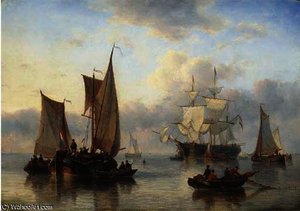
Opdenhoff’s artistic approach can be characterized by an extraordinary level of detail and realism. He wasn't merely depicting ships; he was meticulously reconstructing them – from the weathered planks of their hulls to the intricate folds of their sails, all rendered with painstaking accuracy. This commitment to precision is evident in works like “A Vis Hoeker and Other Dutch Fishing Ships Riding at Anchor,” where dozens of vessels are arranged with remarkable clarity and spatial awareness. His use of light and shadow is particularly noteworthy; he masterfully employed atmospheric perspective to create a sense of depth and distance, conveying the subtle shifts in weather conditions over the water.
Influenced by Schelfhout’s balanced compositions and Schotel's expertise in marine painting, Opdenhoff developed his own unique voice. He frequently depicted scenes of bustling harbors, fishing fleets returning with their catch, and solitary vessels navigating choppy waters. His palette was generally subdued, dominated by blues, greens, and grays – colors that perfectly mirrored the moods of the sea. However, he skillfully introduced bursts of color through the sails, clothing, and details of the ships themselves, adding vibrancy and visual interest to his compositions.
Subjects and Themes: A Window into Dutch Life
Opdenhoff’s subject matter was deeply rooted in the everyday realities of Dutch coastal communities. He wasn't interested in grand historical narratives or mythological scenes; instead, he focused on the lives of fishermen, shipbuilders, and merchants – individuals whose livelihoods were inextricably linked to the sea. His paintings offer a poignant portrayal of a nation reliant on maritime trade and industry, capturing the hard work, resilience, and quiet dignity of its people.
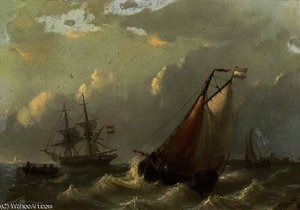
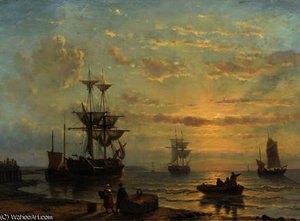
Recurring motifs in his oeuvre include the “vis hoeker,” a type of fishing vessel common in the Scheldt estuary, and scenes of shipping activity along Dutch rivers and harbors. He frequently depicted the changing seasons – from the bright, sunny days of summer to the stormy conditions of winter – reflecting the cyclical nature of life on the coast. His painting "A Calm - A Busy Day Near a Coast" exemplifies this, showcasing a vibrant harbor scene teeming with activity, while “Shipping Activity In A River Estuary” captures the serene beauty of a riverine landscape.
Legacy and Significance
Despite not achieving widespread fame during his lifetime, George Willem Opdenhoff’s work has gained increasing recognition in recent decades. His meticulous realism, coupled with his ability to capture the essence of Dutch coastal life, makes him a valuable contributor to the nation's artistic heritage. His paintings serve as a powerful reminder of the Netherlands’ long and complex relationship with the sea – a connection that continues to shape its identity today.
Opdenhoff’s influence can be seen in subsequent generations of Dutch marine artists, and his works are now held in prominent collections throughout the country. His legacy endures as a testament to the enduring appeal of realistic depictions of everyday life and the captivating beauty of the natural world – a world rendered with remarkable skill and sensitivity by one of Holland’s most accomplished painters.
george willem opdenhoff
1807 - 1873 , Netherlands
Quick Facts
- Artistic Movement Or Style: Seascape, coastal
- Artists Who Influenced This Artist:
- Andreas Schelfhout
- Johannes Christiaan Schotel
- Date Of Birth: 1807
- Date Of Death: 1873
- Full Name: George Willem Opdenhoff
- Nationality: Dutch
- Notable Artworks:
- A Calm - A Busy Day Near a Coast
- A Vis Hoeker and other dutch fishing ships riding at anchor
- Shipping Activity In A River Estuary
- Place Of Birth: Fulda, Netherlands