 Preview
 Send
Send Share
Share
 Details

 Download
 Similars
 X-Ray
X-Ray Diaporama
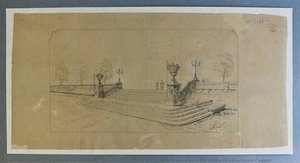
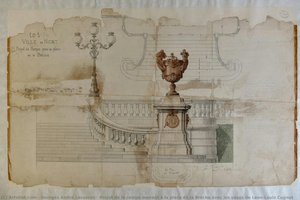
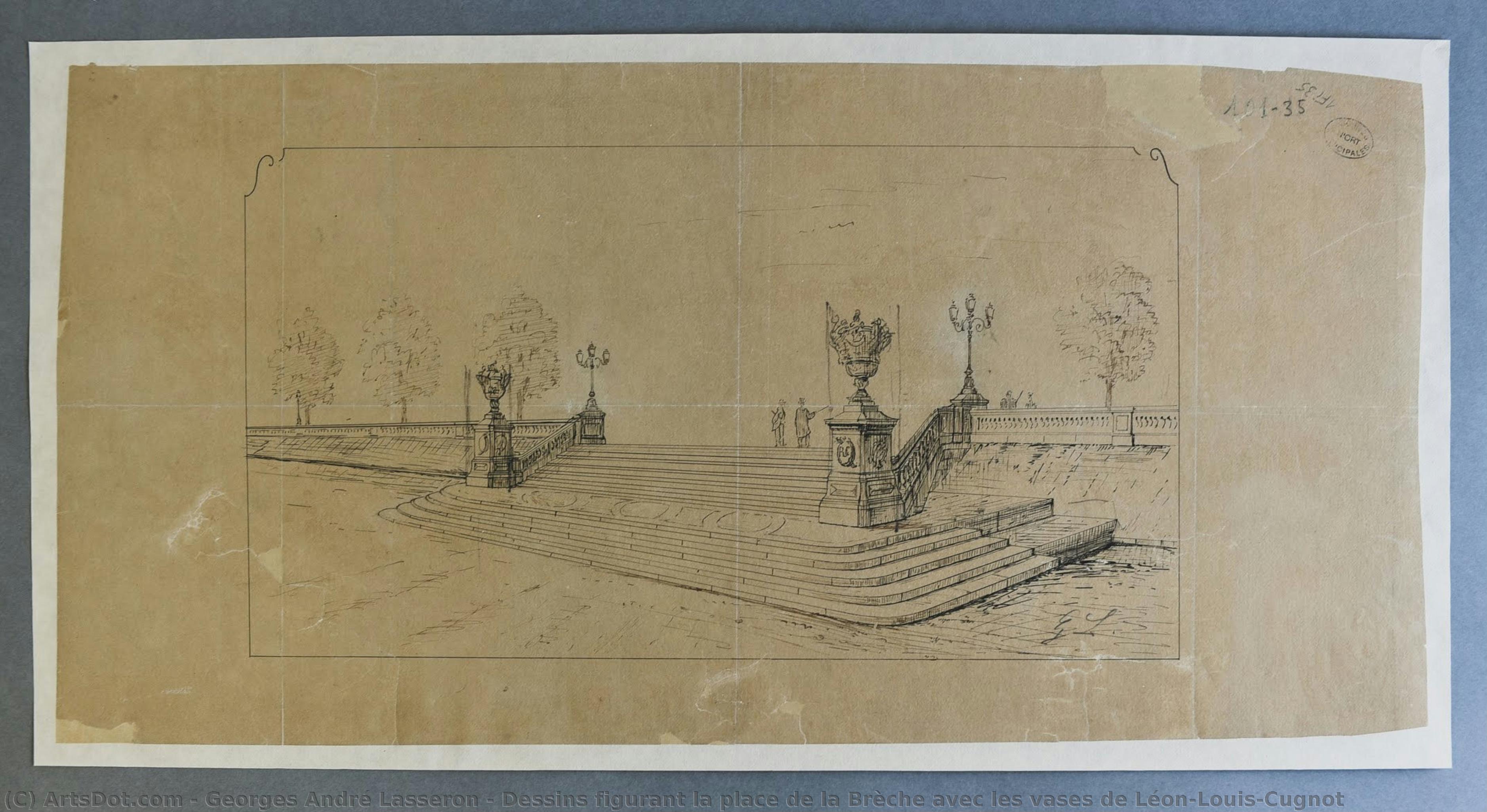
Dessins figurant la place de la Brèche avec les vases de Léon-Louis-Cugnot


 Read More
Giclée / Art Print
Museum-quality giclée or canvas print with fast production and flexible finish options. ( Buy Hand Made Painting Buy Image)




































Pick from our preset sizes that match the artwork's original proportions.

You may enter your own dimensions to fit a specific frame or space. If your selected size does not match the original image's proportions, we will either crop the artwork or extend the image with a mirrored or solid-fill edge. A digital mockup will be sent for your approval before production begins.
Please note that the on-screen preview does not reflect the actual cropping or extension. Only the mockup will accurately show the final composition.
While custom sizes are available, we recommend selecting a dimension from the predefined list to preserve the original proportions.
Worldwide Delivery () in 2 weeks instead of standard 4/5 weeks. (26 August)

Free Worldwide Express Shipping

High-Quality Linen Canvas

Full Shipping Insurance

Customs Tax Refund Guarantee

True Color Matching Guarantee

60-Day Return Policy (Defects Only)

100% Money-Back Guarantee

Bulk Discount Offer
 Glass option is only available in size under 110 CM

Dessins figurant la place de la Brèche avec les vases de Léon-Louis-Cugnot
Giclée / Art Print
Reproduction Size
-


Total Price
$ 63
Related Artworks









Artist Biography
Mary Stevenson Cassatt: A Pioneer of American Impressionism
Mary Stevenson Cassatt, born in Allegheny City (now part of Pittsburgh), Pennsylvania, on May 21, 1844, stands as a pivotal figure in the transition of American art from academic tradition to the vibrant innovations of the late 19th century. Her journey was one of persistent dedication and artistic evolution, marked by a profound engagement with European artistic movements while simultaneously forging a distinctly personal style. Initially studying at the Pennsylvania Academy of the Fine Arts, Cassatt’s early training reflected the prevailing norms of the time – meticulous draftsmanship and adherence to classical forms. However, her experiences in Paris, beginning in 1865, proved transformative, exposing her to the burgeoning world of Impressionism and profoundly shaping her artistic trajectory. Unlike many American artists who sought a direct imitation of French styles, Cassatt skillfully integrated these influences into a uniquely American sensibility, focusing on intimate scenes of domestic life, motherhood, and female relationships—subjects often overlooked by her male contemporaries.Early Life and Parisian Influences
Cassatt’s childhood was marked by a close relationship with her family, particularly her sister Lydia, who became a lifelong muse and confidante. This familial bond deeply informed her artistic vision, as evidenced in numerous paintings depicting mothers and children—a recurring theme that resonated with the changing social landscape of the era. Her initial studies in Paris were largely shaped by Jean-Léon Gérôme, a prominent academic painter, providing her with technical skills and an understanding of traditional techniques. However, it was her interactions with other artists, including Edgar Degas and Claude Monet, who truly ignited her artistic spirit. Degas, in particular, became a mentor, offering invaluable critiques and encouraging her to explore new approaches to composition and brushwork. Cassatt’s time in Paris wasn't simply about absorbing French styles; she actively sought out the studios of other artists, studying their methods and experimenting with different techniques—a testament to her intellectual curiosity and commitment to artistic growth. She also spent considerable time copying works by masters like Velázquez and Rubens, meticulously analyzing their compositions and color palettes, a practice that significantly influenced her own work.The Impressionist Movement and Distinctive Style
Cassatt’s arrival in Paris coincided with the rise of Impressionism, a movement characterized by its emphasis on capturing fleeting moments of light and atmosphere. While she never formally joined the official Impressionist group, Cassatt embraced many of their core principles—loose brushwork, vibrant color palettes, and an interest in depicting everyday life. However, her style diverged from that of some of her male counterparts. She often employed a more delicate touch, favoring pastel over oil paint for certain works, and she was particularly adept at capturing the subtle nuances of emotion and gesture. Her compositions frequently featured asymmetrical arrangements and cropped perspectives, creating a sense of intimacy and immediacy. Unlike Degas’s focus on dancers and social scenes, Cassatt's subjects often centered around quiet domestic moments—a mother nursing her child, a woman reading to her daughter, or a young girl playing with a doll. These seemingly simple scenes were imbued with profound psychological depth, reflecting the complexities of female experience in a rapidly changing world.Major Works and Artistic Development
Cassatt’s artistic output spanned several decades, encompassing paintings, pastels, prints, and drawings. Some of her most celebrated works include *The Child's Bath* (1879), *Little Breeches* (1880), and *The Older Sister* (1886). These pieces exemplify her signature style—characterized by a delicate palette, intimate compositions, and a keen observation of human emotion. Her series of prints depicting the Parisian ballet dancers, created in collaboration with Degas, are particularly noteworthy for their innovative use of etching techniques and their insightful portrayal of the dancers’ lives. Throughout her career, Cassatt continued to experiment with new materials and approaches, pushing the boundaries of American art while remaining true to her own artistic vision. Her later works, such as *Little Girl* (1892) and *Portrait of Madame X* (1884), demonstrate a growing confidence and a willingness to explore more complex themes—including social commentary and the challenges faced by women in society.Legacy and Historical Significance
Mary Cassatt’s contribution to American art is undeniable. As one of the few female artists to achieve international recognition during her time, she paved the way for future generations of women painters. Her work challenged traditional notions of femininity and provided a fresh perspective on domestic life—subjects that were often marginalized in the male-dominated art world. Cassatt’s influence can be seen in the works of later American Impressionists, such as John Singer Sargent and Childe Hassam. She remains an important figure in the history of art, celebrated for her artistic skill, her innovative spirit, and her enduring portrayal of the human experience. Her legacy continues to inspire artists today, reminding us of the power of observation, empathy, and a commitment to expressing one’s unique vision.
georges andré lasseron
1844 - 1932 , France
Quick Facts
- Artistic Movement Or Style: Impressionism
- Artists Or Movements Influenced By This Artist: ['Post-Impressionism']
- Artists Who Influenced This Artist:
- Edgar Degas
- Édouard Manet
- Date Of Birth: 1844
- Date Of Death: 1926
- Full Name: Mary Stevenson Cassatt
- Nationality: American
- Notable Artworks:
- The Child's Bath
- Little Girl in a Blue Armchair
- Mother and Child
- Place Of Birth: Allegheny City, PA, USA