 Preview
 Send
Send Share
Share
 Details

 Download
 Similars
 X-Ray
X-Ray Diaporama
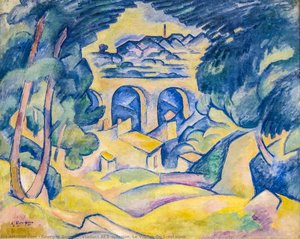
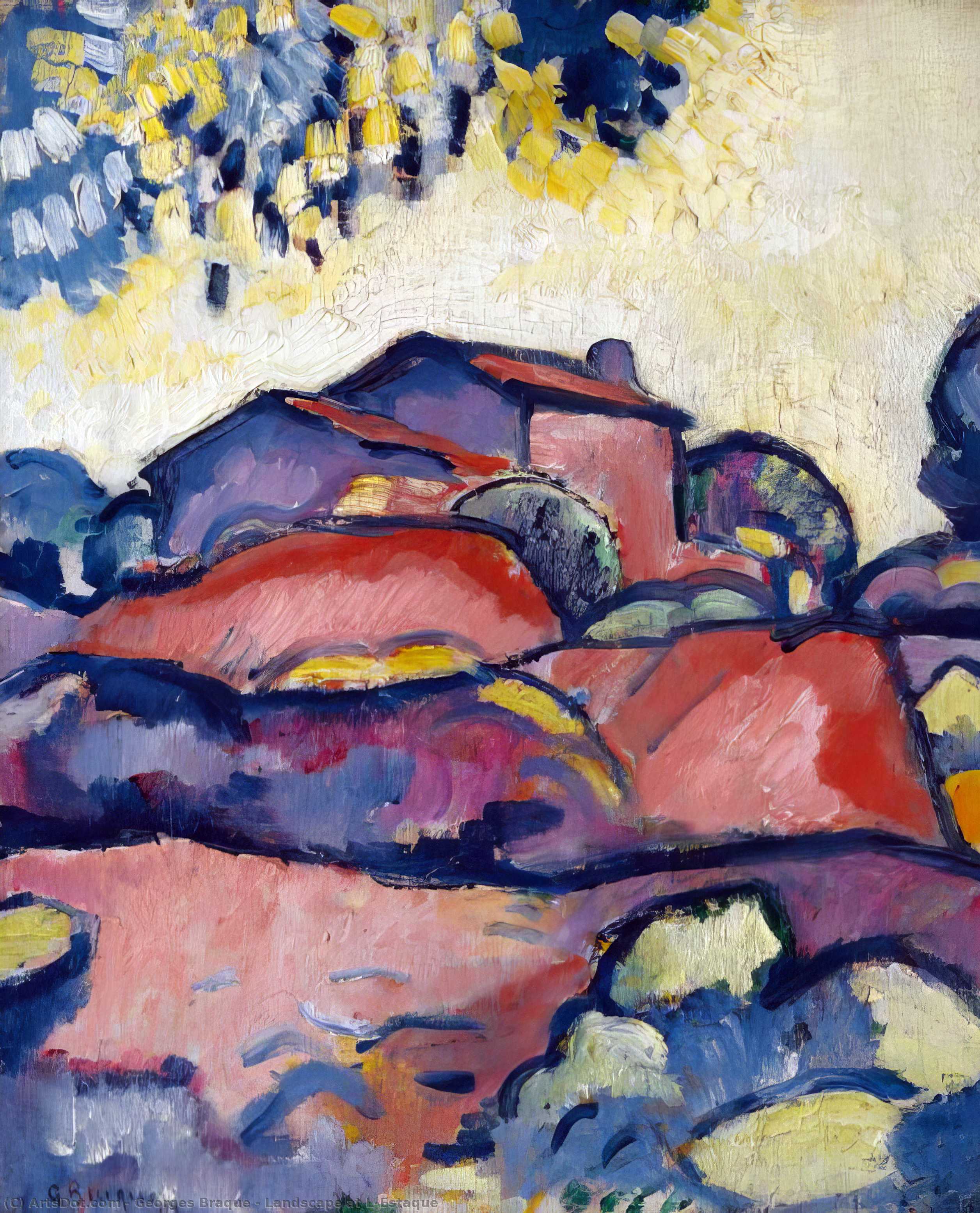
Landscape at L'Estaque
 Oil On Canvas
- WallArt
- Cubism
 1907
1907- Modern
 46.0 x 38.0 cm
 Read More
Giclée / Art Print
Museum-quality giclée or canvas print with fast production and flexible finish options. ( Buy Hand Made Painting Buy Image)




































Pick from our preset sizes that match the artwork's original proportions.

You may enter your own dimensions to fit a specific frame or space. If your selected size does not match the original image's proportions, we will either crop the artwork or extend the image with a mirrored or solid-fill edge. A digital mockup will be sent for your approval before production begins.
Please note that the on-screen preview does not reflect the actual cropping or extension. Only the mockup will accurately show the final composition.
While custom sizes are available, we recommend selecting a dimension from the predefined list to preserve the original proportions.
Worldwide Delivery () in 2 weeks instead of standard 4/5 weeks. (17 August)

Free Worldwide Express Shipping

High-Quality Linen Canvas

Full Shipping Insurance

Customs Tax Refund Guarantee

True Color Matching Guarantee

60-Day Return Policy (Defects Only)

100% Money-Back Guarantee

Bulk Discount Offer
 Glass option is only available in size under 110 CM

Landscape at L'Estaque
Giclée / Art Print
Reproduction Size
-


Total Price
$ 63
Collectible Description
Landscape at L'Estaque: A Fauvist Revelation
Georges Braque’s Landscape at L’Estaque stands as a cornerstone of modern art, embodying the audacious spirit and groundbreaking innovations of the Fauvist movement. Painted in 1907, this oil on canvas – measuring precisely 46 x 38 cm – transcends mere depiction; it's an impassioned exploration of color and form that continues to resonate with artists and collectors alike. The painting’s genesis lies within a burgeoning artistic dialogue between Braque and Henri Matisse, both fervent champions of rejecting academic conventions in favor of subjective expression.The Artistic Context: Fauvism – Boldness Unleashed
Fauvism emerged as a defiant reaction against Impressionism's subtle tonal gradations. Artists like Matisse and Picasso sought to liberate color from its descriptive role, prioritizing emotional impact above realistic representation. They achieved this through the use of unmixed pigments applied with energetic brushstrokes—a deliberate rejection of traditional blending techniques. Landscape at L’Estaque perfectly encapsulates this ethos, mirroring the movement's core belief that art should communicate feeling rather than simply mirroring reality. The artist deliberately eschewed naturalistic hues, opting for vibrant reds, yellows, blues, and greens to convey a sense of immediacy and passion.Compositional Dynamics: Harmony Amidst Geometric Forms
The painting’s visual arrangement is equally striking. Dominating the canvas is a hillside landscape punctuated by a prominent red building perched atop a crest—a bold architectural element that immediately draws the eye. Surrounding this focal point are trees and distant buildings rendered in cooler tones, creating depth and perspective while simultaneously emphasizing the vibrancy of the foreground. A solitary figure adds human scale to the scene, subtly grounding the expansive vista and inviting contemplation. Braque’s masterful use of geometric shapes—particularly rectangles and triangles—contributes to a dynamic composition that defies conventional spatial illusions.Palette & Technique: Pointillism's Radiant Embrace
The artist skillfully employs a diverse palette – blues for the sky and distant hills, yellows for sunlight filtering through foliage, pinks and oranges for architectural accents – blending them harmoniously to generate an unforgettable visual experience. Furthermore, Braque utilizes “pointillism,” a technique pioneered by Georges Seurat, applying tiny dots of color to build up tonal variations and textures. This method imbues the painting with remarkable luminosity and depth, transforming it into a tapestry of shimmering hues that capture the essence of L’Estaque's atmosphere.Legacy & Influence: Seeds of Cubism
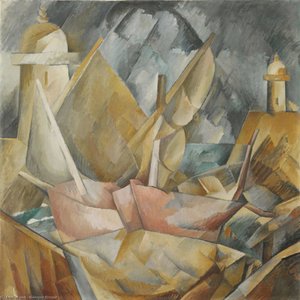
Landscape at L’Estaque holds immense significance beyond its aesthetic merits; it served as a crucial stepping stone toward Picasso’s development of Cubism. Braque’s experimentation with fractured perspectives and flattened planes foreshadowed the revolutionary stylistic innovations that would reshape European art in the subsequent decade. Its enduring appeal lies not only in its visual beauty but also in its pioneering spirit—a testament to Braque's unwavering commitment to artistic exploration and his indelible contribution to the canon of modern art.- Museum Collections: Little Bay at La Ciotat (Musée National d’Art Moderne Centre Georges Pompidou, Paris)
Related Artworks
Artist Biography
Early Life and Artistic Foundations
Georges Braque, born in Argenteuil, France, in 1882, embarked on a path deeply intertwined with the evolving landscape of modern art. His upbringing within a family of house painters and decorators instilled in him not only a technical mastery of materials but also an early appreciation for form and structure. Though initially following in his father’s trade, Braque's inherent artistic inclinations soon led him to formal training at the École des Beaux-Arts in Le Havre, marking the beginning of his journey toward becoming one of the most influential painters of the 20th century. This foundation—a blend of practical craftsmanship and academic study—would prove crucial as he later deconstructed and reimagined traditional artistic conventions.
Moving to Paris in 1902, Braque continued his studies at the Académie Humbert, immersing himself in the vibrant artistic milieu of the city. It was here that he encountered artists like Marie Laurencin and Francis Picabia, forging connections that would shape his early development. His initial works reflected the prevailing influences of Impressionism and Post-Impressionism, but a pivotal encounter with the bold colors and expressive freedom of Fauvism in 1905 ignited a new direction in his artistic exploration.
The Embrace of Fauvism and the Dawn of Cubism
Braque’s adoption of Fauvist principles—characterized by intense, non-naturalistic color and emotional expression—is vividly exemplified in paintings like The Patience. This period saw him working alongside artists such as Henri Matisse and André Derain, experimenting with vibrant palettes and simplified forms. However, Braque's engagement with Fauvism was not merely imitative; he infused it with a unique sensibility, tempering the movement’s unrestrained exuberance with a more restrained and analytical approach.
A turning point arrived in 1907 with his exposure to the retrospective exhibition of Paul Cézanne's work. Cézanne’s emphasis on geometric forms and multiple perspectives profoundly impacted Braque, setting the stage for his groundbreaking collaboration with Pablo Picasso. Beginning in 1908, these two artistic titans embarked on a period of intense intellectual exchange that would give birth to Cubism—a revolutionary movement that shattered traditional notions of representation.
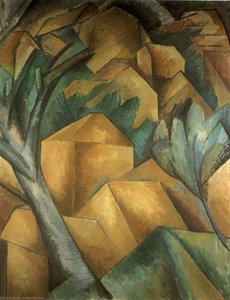
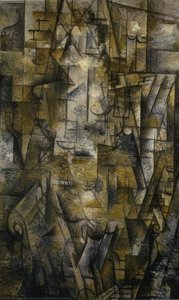
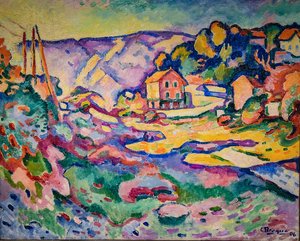
Together, Braque and Picasso developed Analytical Cubism, dissecting objects into fragmented geometric shapes and presenting multiple viewpoints simultaneously. Works like Houses at L'Estaque demonstrate this early phase, showcasing a radical departure from conventional perspective and a focus on the underlying structure of forms. Their palette became deliberately muted, emphasizing form over color, as they sought to represent the totality of an object’s presence rather than merely its appearance.
Innovation Through Fragmentation and Collage
The partnership between Braque and Picasso continued to push the boundaries of artistic expression, leading to the development of Synthetic Cubism around 1912. This phase saw the introduction of collage—the incorporation of real-world materials such as newspaper clippings, wallpaper, and fabric into paintings. This innovation challenged the traditional hierarchy between painting and sculpture, blurring the lines between art and life.
Braque’s pioneering use of *papier collé* (pasted paper) marked a significant turning point in his artistic evolution. By integrating fragments of everyday objects into his compositions, he disrupted the illusionistic space of traditional painting and introduced a new level of materiality and texture. This technique not only expanded the formal possibilities of art but also reflected a growing interest in the relationship between representation and reality.
The outbreak of World War I in 1914 brought an interruption to this intense collaboration, as Braque was called upon for military service. His wartime experiences profoundly affected his artistic vision, leading him to explore more personal and lyrical themes in his post-war work.
Later Years and Enduring Legacy
Following the war, Braque’s style evolved beyond the strict confines of Cubism, incorporating elements of classical composition and a renewed interest in still life. While retaining the geometric influences that had defined his earlier work, he developed a more nuanced and contemplative approach to painting. His later landscapes and interiors are characterized by their serene atmosphere and subtle harmonies of color.
Throughout his career, Braque remained committed to exploring the fundamental principles of form, space, and representation. He continued to experiment with different materials and techniques, pushing the boundaries of artistic expression until his death in 1963. His influence on subsequent generations of artists is immeasurable, shaping the course of modern art and inspiring countless painters, sculptors, and collagists.
Georges Braque’s legacy extends beyond his individual artworks; he fundamentally altered our understanding of how we perceive and represent the world around us. His collaborative spirit with Picasso, coupled with his own unique artistic vision, cemented his place as a true pioneer of modern art—a master who dared to challenge conventions and redefine the possibilities of painting.
Influences and Notable Works
- Influenced By: Henri Matisse, André Derain, Paul Cézanne
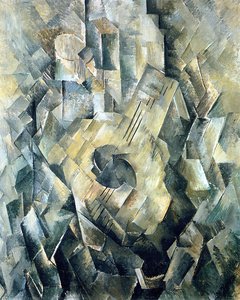
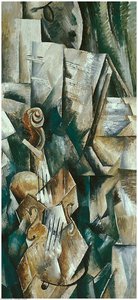
- Key Works: Houses at L'Estaque, The Patience, Violin and Palette, Mandola
- Impact on Art History: Revolutionized 20th-century art through Cubism; challenged traditional notions of perspective and representation.
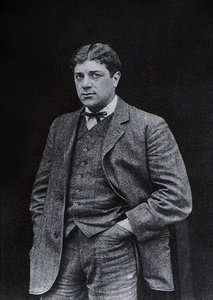
Georges Braque
1882 - 1963 , France
Quick Facts
- Artistic Movement Or Style: Cubism, Fauvism
- Artists Or Movements Influenced By This Artist:
- Pablo Picasso
- Modern Art
- Artists Who Influenced This Artist:
- Henri Matisse
- André Derain
- Paul Cézanne
- Date Of Birth: May 13, 1882
- Date Of Death: 1963
- Full Name: Georges Braque
- Nationality: French
- Notable Artworks:
- Houses at L'Estaque
- The Patience
- Violin and Palette
- Mandola
- Place Of Birth: Argenteuil, France
Related Articles

Georges Braque's Masterpieces: 25 Paintings That Defined Cubism & Modern Art | ArtsDot
Explore 25 iconic Georges Braque paintings that revolutionized Cubism & modern art. Discover the stories behind his masterpieces, from Fauvism to Analytical Cubism. Find museum-quality reproductions & elevate your home decor with ArtsDot.com.

Georges Seurat's Masterpieces: 25 Paintings That Defined Pointillism | ArtsDot
Explore 25 iconic Georges Seurat paintings & discover the brilliance of Pointillism. From 'La Grande Jatte' to his harbor scenes, delve into art history with ArtsDot.com. Find museum-quality reproductions for your home decor. Explore the full collection online!
Georges Braque: Pioneering Cubism & the Evolution of Modern Form
Explore the revolutionary art of Georges Braque, a pioneer of Cubism alongside Picasso. Discover his artistic evolution, key works, and lasting impact on modern art. A guide for discerning collectors.
Cubism's Revolution: 10 Masterpieces That Redefined Modern Art |
Journey through Cubism's evolution with 10 iconic masterpieces by Picasso, Braque & more. Explore the stories behind these revolutionary paintings and find museum-quality art reproductions to elevate your home decor at .
Deconstructing Reality: Cubism's Revolutionary Impact on 20th-Century Art
Explore the revolutionary world of Cubism with ArtsDot. Discover Picasso & Braque's groundbreaking techniques, its philosophical roots, and lasting impact on modern art. Expert insights for collectors.