

 Preview
 Send
Send Share
Share
 Details

 Download
 Similars
 X-Ray
X-Ray Diaporama
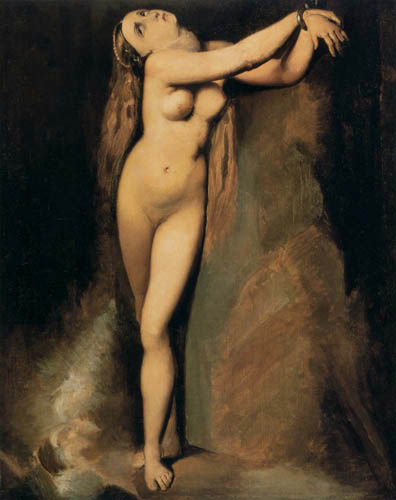
Angelica at the rock (After ingres)
 Oil On Canvas
- WallArt
- Post-Impressionism
 1878
1878 83.0 x 66.0 cm
 Read More
Purchase a high-resolution, enhanced digital image, far superior to the online preview.
Each file is meticulously prepared by our in-house specialists using advanced tools and expert manual retouching. We ensure every image has exceptional clarity, precise color accuracy, and fine detail.
The final file is delivered via email within 72 hours, optimized for immediate use in professional, editorial, and print environments. This is the same quality trusted by top-tier design studios, publishers, and galleries.
Digital Image
Download a high-resolution file for personal display, printing, and creative projects. ( Buy Print Buy Hand Made Painting)
Included in Every Digital Image Order
Expert Digital Delivery, Guaranteed
When you choose ArtsDot.com, you're not just getting an image - you're receiving a professionally enhanced digital artwork, crafted with precision and backed by a satisfaction guarantee. Here's everything that comes with your order, automatically:

Fast Email Delivery
Your high-resolution digital image file will be emailed to you within 72 hours of ordering - ready for immediate use.

AI-Enhanced Digital File
Your artwork is professionally optimized using advanced AI tools and manual editing, ensuring maximum detail, clarity, and color accuracy.

Free Lifetime Re-Delivery
Accidentally deleted or lost your file? No worries - we'll resend it to you anytime, free of charge.

No Import Fees - Ever
Enjoy your artwork instantly with zero customs, duties, or delivery fees - digital downloads are always tax-free.

Color Accuracy Guarantee
We ensure your digital image reflects the original colors as closely as possible using professional tools and color management.

60-Day Satisfaction Guarantee
If you're not satisfied with your digital image, we'll revise it or refund 100% within 60 days - no questions asked.

100% Money-Back Guarantee
Not satisfied? Get a full refund within 60 days of receiving your digital file - no questions asked.

Bulk Order Discounts
Buy 3 images, save 10% - Buy 5, save 15% - Buy 10+, save 20%. Great for creative projects, galleries, and agencies.
Collectible Description
A Romantic Echo: Delving into Seurat’s “Angelica at the Rock (After Ingres)”
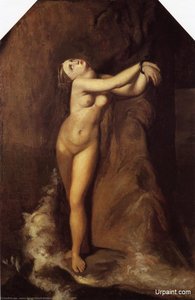
Georges Pierre Seurat, a name synonymous with Pointillism and Neo-Impressionism, surprises us with this evocative work – *Angelica at the Rock (After Ingres)*. Painted in 1878, it reveals a fascinating facet of his artistic development, demonstrating his early mastery of traditional techniques while foreshadowing his revolutionary style. This isn’t a typical Seurat; instead, it's a powerful study and reinterpretation of Jean-Auguste-Dominique Ingres’ iconic Romantic painting, “Angelica Chained to the Rock.”
Subject & Historical Context
- The Myth Reimagined: The artwork depicts Angelica, a heroine from Ludovico Ariosto's epic poem *Orlando Furioso*. She is portrayed at a moment of vulnerability and defiance, chained to a rock as a sacrifice intended to appease a sea monster. This scene has been a popular subject in art history, particularly during the Neoclassical and Romantic periods.
- Ingres’ Influence: Seurat directly engages with Ingres's version of this story, but rather than replicating it precisely, he infuses his own artistic sensibility. This work serves as a crucial study, demonstrating Seurat’s academic training and his ability to master the classical nude.
- A Turning Point: Created early in his career, before the development of Pointillism, this painting represents a transitional phase for Seurat. It showcases his grounding in traditional methods while hinting at the innovative path he would soon forge.
Style & Technique
- Loose Brushwork & Dramatic Lighting: Unlike the precise, dot-based technique Seurat later became famous for, *Angelica at the Rock* is characterized by loose, expressive brushstrokes. The dramatic chiaroscuro – a strong contrast between light and dark – heightens the emotional intensity of the scene.
- Impasto & Texture: The application of paint is notably thick (impasto), particularly in the background, creating a rich tactile quality that draws the viewer into the turbulent atmosphere. This textural depth adds to the painting’s overall drama and visual interest.
- Organic Lines & Curvilinear Forms: Seurat employs organic lines that follow the contours of Angelica's body, emphasizing her form and creating a sense of dynamic movement. The predominantly curvilinear shapes contribute to the painting’s flowing composition.
Symbolism & Emotional Impact
- Vulnerability & Defiance: Angelica's outstretched arms can be interpreted in multiple ways – as a gesture of surrender, or perhaps as a desperate reach for salvation. Her upward gaze suggests both anguish and hope.
- Romantic Sensibility: The painting embodies the core tenets of Romanticism: intense emotion, dramatic composition, and an exploration of human vulnerability in the face of overwhelming forces.
- The Power of the Nude: As a classical nude, the work engages with centuries of artistic tradition. However, Seurat’s interpretation moves beyond mere representation, imbuing the figure with psychological depth and emotional resonance. The historical context of the nude in art is rich, evolving from ideals of beauty to expressions of vulnerability.
- The swirling background evokes a sense of chaos and impending doom, mirroring Angelica's internal turmoil.
A Piece for Collectors & Designers
Measuring 83 x 66 cm, *Angelica at the Rock (After Ingres)* is a compelling artwork that would serve as a striking focal point in any collection. Its dramatic composition and rich textures make it particularly well-suited for interiors seeking a touch of Romantic grandeur. A high-quality reproduction captures the emotional depth and artistic skill evident in Seurat’s early work, offering an accessible way to bring this captivating piece into your space.
Related Artworks
Artist Biography
A Pioneer of Luminous Precision: The Life and Art of Georges Seurat
Georges Pierre Seurat, born in Paris on December 2, 1859, emerged as a pivotal figure in the transition from Impressionism to modern art. His brief but intensely focused career revolutionized painting through the development of Pointillism, a technique predicated on scientific principles and an unwavering pursuit of optical truth. Seurat’s story is one of meticulous observation, intellectual rigor, and a profound sensitivity to the nuances of light and color—qualities that set him apart from his contemporaries and continue to captivate audiences today. His early life, though seemingly conventional, laid the groundwork for his future artistic explorations. The family moved to Boulevard de Magenta shortly after his birth, and his father, Antoine Chrysostome Seurat, a former legal official turned property speculator, provided a comfortable upbringing that allowed young Georges access to art education. He began formal training at the École Municipale de Sculpture et Dessin under sculptor Justin Lequien, followed by enrollment at the prestigious École des Beaux-Arts in 1878, studying under Henri Lehmann. These formative years instilled in him a solid foundation in traditional techniques, yet even then, a unique artistic personality was beginning to take shape—a blend of delicate sensibility and an emerging fascination with systematic analysis.
From Academic Roots to Chromoluminarism
Seurat’s artistic development wasn't a sudden leap into innovation but rather a gradual evolution fueled by intellectual curiosity and rigorous experimentation. Initially, his work reflected the academic standards of the time, demonstrating proficiency in drawing and a respect for established compositional principles. However, he soon began to question these conventions, seeking a more scientific approach to painting. He immersed himself in the burgeoning field of color theory, studying the writings of scientists like Michel Eugène Chevreul and Ogden Rood, who explored the optical effects of juxtaposed colors. This research became the cornerstone of his revolutionary technique, chromoluminarism—the science of color—and its practical application, Pointillism. The core idea was deceptively simple: applying small, distinct dots of pure color to a canvas, relying on the viewer’s eye to optically blend them and create a vibrant, luminous effect. This wasn't merely about achieving brighter colors; it was about understanding how the human visual system perceived light and color, and harnessing that knowledge to create a more dynamic and engaging painting experience. He meticulously prepared for his large-scale compositions with Conté crayon drawings on rough paper, carefully mapping out the placement of each dot, demonstrating an almost mathematical precision in his artistic process.
Landmarks of Innovation: Major Works and Artistic Vision
The culmination of Seurat’s research and experimentation is perhaps best exemplified in A Sunday Afternoon on the Island of La Grande Jatte (1884-1886), a monumental work that marked the beginning of Neo-Impressionism. This iconic painting, depicting Parisians enjoying a leisurely afternoon by the Seine, showcases his pointillist technique to its fullest extent. The figures, rendered as carefully placed dots of color, seem to shimmer and vibrate with light, creating an atmosphere of serene stillness. Alfalfa, Saint-Denis (1886-1887), demonstrates his application of color theory to a rural landscape, while earlier works like Landscape at Saint-Ouen (1882-1883) reveal his evolving style and growing interest in capturing the effects of light and atmosphere. Even depictions of modern Parisian life, such as The Eiffel Tower (1889), were transformed through his unique technique, showcasing a harmonious blend of industrial modernity and artistic innovation. Bathers at Asnières (1884), another significant work, explored themes of leisure and modern life with his distinctive style, foreshadowing the more refined approach seen in *La Grande Jatte*. These paintings weren’t simply representations of scenes; they were carefully constructed visual experiments designed to explore the possibilities of color and perception.
A Lasting Legacy: Influence and Historical Significance
Despite a tragically short life—Seurat died at the age of 31 in 1891—his impact on the art world was profound and far-reaching. His work challenged traditional artistic conventions, paving the way for numerous subsequent movements. The emphasis on subjective expression and exploration of new techniques resonated with artists seeking to break free from academic constraints. Seurat’s influence can be seen in the works of Fauvists, who embraced bold colors and expressive brushwork; Cubists, who deconstructed forms into geometric shapes; and Abstract Expressionists, who prioritized emotional intensity and spontaneous gesture. His scientific approach to painting, while initially controversial, ultimately broadened the definition of artistic possibility. He demonstrated that art could be both intellectually rigorous and emotionally evocative, a synthesis that continues to inspire artists today. Seurat’s legacy extends beyond his technical innovations; he left behind a body of work that captures the essence of modern life with unparalleled precision and beauty, solidifying his place as a true pioneer of modern art. His paintings remain testaments to the power of observation, experimentation, and the enduring human desire to understand the world around us through the lens of artistic expression.
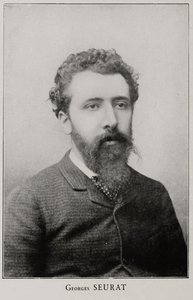
Georges Seurat
1859 - 1891 , France
Quick Facts
- Artistic Movement Or Style: Neo-Impressionism, Pointillism
- Artists Or Movements Influenced By This Artist:
- Fauvism
- Cubism
- Abstract Expressionism
- Artists Who Influenced This Artist:
- Michel Chevreul
- Ogden Rood
- Date Of Birth: December 2, 1859
- Date Of Death: March 29, 1891
- Full Name: Georges Pierre Seurat
- Nationality: French
- Notable Artworks:
- La Grande Jatte
- Bathers at Asnières
- Alfalfa, Saint-Denis
- Place Of Birth: Paris, France

