 Send
Send Share
Share
 Details

 Download
 Similars
 Diaporama
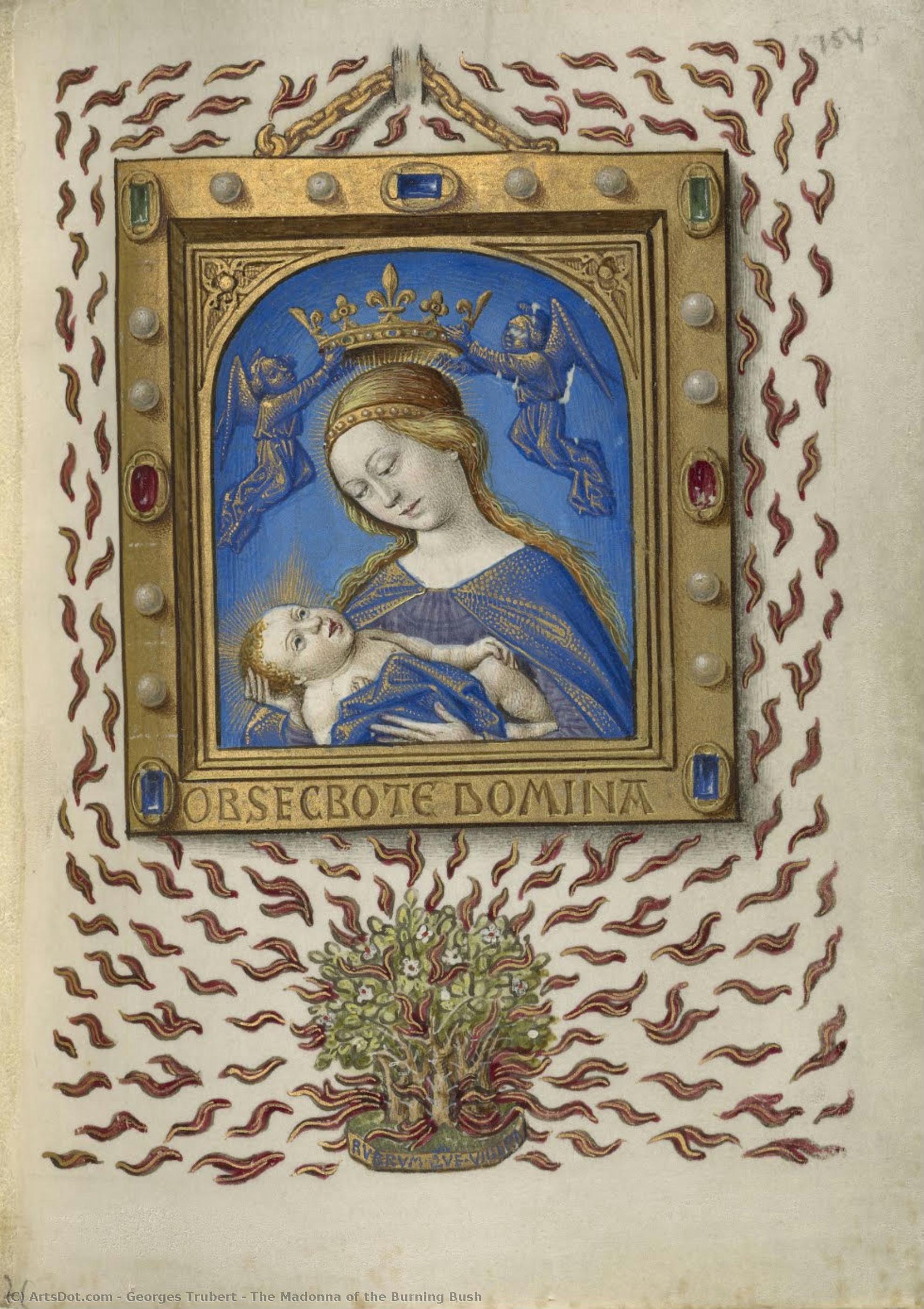
The Madonna of the Burning Bush
 Enamel
- Decor
- Renaissance Elegance
 1490
1490- Renaissance
 11.0 x 8.0 cm
 J. Paul Getty Museum
 Read More
Hand Made Oil Reproduction
Hand-painted oil on canvas in your size and frame, made to order by our artists. ( Buy Print Buy Image)




































Pick from our preset sizes that match the artwork's original proportions.

You may enter your own dimensions to fit a specific frame or space. If your selected size does not match the original image's proportions, we will either crop the artwork or extend the painting with additional hand-painted elements. A digital mockup will be sent for your approval before production begins.
Please note that the on-screen preview does not reflect the actual cropping or extension. Only the mockup will accurately show the final composition.
While custom sizes are available, we recommend selecting a dimension from the predefined list to preserve the original proportions.
After order, ArtsDot.com team will email client for instructions and provide a mockup preview
Worldwide Delivery () in 3/4 weeks instead of standard 5 weeks. (27 August). No compromise on quality.

Free Worldwide Express Shipping

High-Quality Linen Canvas

Full Shipping Insurance

Customs Tax Refund Guarantee

True Color Matching Guarantee

60-Day Return Policy (Defects Only)

100% Money-Back Guarantee

Bulk Discount Offer
 Glass option is only available in size under 110 CM

The Madonna of the Burning Bush
Reproduction Medium
Reproduction Size
-


Total Price
$ 263
Georges Trubert: A Pioneer of Limoges Enamel and Renaissance Elegance
Georges Trubert (1460 – 1538) stands as a pivotal figure in the history of French art, particularly renowned for his exceptional skill in Limoges enamelwork—a technique that elevated decorative arts to unparalleled heights during the fifteenth century. Born in Paris, Trubert’s artistic journey began amidst the burgeoning humanist spirit of the Renaissance, shaping him into one of its earliest champions on Gallic soil. His legacy resides not merely in the sheer beauty of his creations but also in his pioneering adoption of innovative stylistic approaches that would reverberate throughout European art circles. He wasn't just crafting beautiful objects; he was redefining artistic expression itself.The Madonna of the Burning Bush: A Symbol of Divine Protection
The artwork under discussion, “The Madonna of the Burning Bush,” exemplifies Trubert’s masterful command of Limoges enamel—a technique characterized by its meticulous layering of vitreous enamel onto metal substrates, resulting in shimmering surfaces adorned with intricate designs. This particular depiction within a Book of Hours speaks to a profound theological concern prevalent during the Renaissance: the safeguarding of Mary and Jesus from harm. The image itself portrays the Virgin Mary holding her child, bathed in a radiant gold leaf background—a deliberate choice reflecting the biblical narrative of Moses receiving divine illumination on Mount Sinai. The golden hue symbolizes holiness and grace, highlighting the Madonna’s role as intermediary between God and humanity.Technique and Craftsmanship: Mastering the Art of Champlevé Enamel
Trubert's technique involved champlevé enamel—a process where shallow recesses are carved into metal plates before being filled with enamel paste and fired repeatedly to achieve durable, luminous colors. This painstaking method demanded considerable precision and patience, showcasing Trubert’s dedication to artistic excellence. The resulting surface is remarkably smooth and reflective, capturing the subtle nuances of color and texture. Furthermore, the incorporation of silver paint adds depth and luminosity to the composition, enhancing the visual impact of the artwork. Careful attention to detail—evident in the delicate rendering of drapery folds and facial expressions—underscores Trubert’s commitment to realism within a stylized framework.Historical Context: Renaissance Spirituality and Artistic Innovation
“The Madonna of the Burning Bush” emerged during a period marked by significant intellectual and artistic transformations—the High Renaissance—where humanist ideals clashed with religious dogma. Artists like Trubert sought to express spiritual truths through visual language, drawing inspiration from classical art while simultaneously embracing new stylistic conventions. The Book of Hours itself served as a vehicle for disseminating Christian piety among the elite, reflecting the importance of devotional imagery in shaping cultural values during this era. Trubert’s work stands as a testament to the enduring power of artistic innovation to communicate profound beliefs and inspire contemplation.A Legacy Enduring Through Reproduction: Bringing Renaissance Beauty Home
Today, reproductions of “The Madonna of the Burning Bush” continue to captivate audiences worldwide—a testament to Trubert's enduring influence on European art history. ArtsDot.com offers high-quality giclee prints that faithfully capture the artwork’s original splendor, allowing collectors and interior designers alike to experience the beauty and symbolism of this iconic masterpiece in their own homes. Explore our curated collection and discover how you can bring a piece of Renaissance elegance into your space.Related Artworks

Artist Biography
The Emergence of a Renaissance Visionary
In the heart of Paris, amidst the burgeoning humanist spirit of the late fifteenth century, the artistic journey of Georges Trubert began. A figure poised at the threshold of the Renaissance, Trubert’s early years were shaped by an era of profound intellectual and aesthetic transformation. While much of his formative training remains shrouded in the mIsts of time, it is understood that he honed his craft within the prestigious atelier of the sculptor Jean Goujon. This connection proved vital, as Goujon’s mastery over stone, gilded bronze, and enamel provided the foundational vocabulary for Trubert's later triumphs. Through this lineage, Trubert did not merely learn a trade; he inherited a vision of how metal and pigment could be transmuted into objects of divine beauty.A Life Within the Royal Courts
Trubert’s career was a nomadic tapestry woven through the most influential courts of France. His presence was felt deeply in Provence, Anjou, and Lorraine, where his talent captured the attention of powerful patrons. Around 1467, he found himself at the court of Duke René I of Anjou, a sovereign whose historical accounts frequently celebrate Trubert’s contributions. The artist even earned the prestigious title of Valet de Chambre, a testament to his proximity to power and his esteemed status within the royal household. His travels were not limited to French soil; the pursuit of excellence led him to Rome, allowing him to absorb the classical grandeur that would later infuse his decorative works with a renewed sense of elegance. Following the passing of René I, Trubert continued his ascent, eventually serving René II, the Duke of Lorraine, ensuring that his artistic influence spanned generations and territories.The Alchemy of Champlevé Enamel
At the core of Trubert’s enduring legacy lies his unparalleled mastery of the champlevé technique. This was no mere decoration, but a painstaking process of alchemical precision. Trubert would meticulously carve shallow recesses into precious metal plates—typically silver or gold—creating a landscape of valleys within the metal. These hollows were then filled with molten glass pigments, which, when fired in the kiln, fused into vibrant, permanent hues. Unlike simpler vitreous enamels applied over smooth surfaces, this method allowed for:- Intricate Textural Depth: The ability to create complex patterns and imagery that seemed to pulse with life.
- Luminous Color Palettes: A spectrum of brilliant blues, deep reds, and radiant golds that captured the light in extraordinary ways.
- Narrative Complexity: The capacity to render detailed religious scenes with a clarity and nuance that rivaled the finest manuscript illuminations.
Sacred Symbolism and Eternal Grace
Trubert’s work often served as a bridge between the earthly and the divine. In masterpieces such as The Madonna of the Burning Bush, he utilized the brilliance of gold leaf to evoke the presence of God. The use of radiant backgrounds was not merely an aesthetic choice; it was a theological statement, symbolizing the divine illumination experienced by biblical figures. Through his delicate handling of enamel and precious metals, Trubert transformed liturgical objects into windows of spiritual contemplation. His ability to blend the decorative splendor of the Middle Ages with the emerging elegance of the Renaissance ensures that his name remains etched in the annals of art history—not just as a craftsman, but as a pioneer who redefined the boundaries of the decorative arts.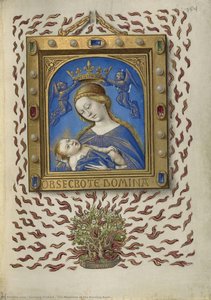
Georges Trubert
1460 - 1538 , France
Quick Facts
- Artistic Movement Or Style: Renaissance
- Artists Or Movements Influenced By This Artist: ['Limoges Enamel']
- Artists Who Influenced This Artist:
- Italian Renaissance artists
- Flemish School
- Date Of Birth: Paris, France (1460)
- Date Of Death: 1538
- Full Name: Georges Trubert
- Nationality: French
- Notable Artworks: ['The Madonna of the Burning Bush']
- Place Of Birth: Paris
Related Articles

Georges Braque's Masterpieces: 25 Paintings That Defined Cubism & Modern Art | ArtsDot
Explore 25 iconic Georges Braque paintings that revolutionized Cubism & modern art. Discover the stories behind his masterpieces, from Fauvism to Analytical Cubism. Find museum-quality reproductions & elevate your home decor with ArtsDot.com.

Georges Seurat's Masterpieces: 25 Paintings That Defined Pointillism | ArtsDot
Explore 25 iconic Georges Seurat paintings & discover the brilliance of Pointillism. From 'La Grande Jatte' to his harbor scenes, delve into art history with ArtsDot.com. Find museum-quality reproductions for your home decor. Explore the full collection online!

Giclée Prints: Archival Quality & Aesthetic Nuances for the Discerning Collector
Explore the world of giclée prints with ArtsDot. Learn about archival quality, aesthetic nuances & investment potential. Expert guidance for discerning art collectors seeking museum-quality reproductions and lasting value.

The Enduring Legacy of Fine Art Prints: Technique, History & Aesthetic Impact
Explore the rich history & techniques of fine art prints. Discover investment potential, assess authenticity, and learn how to preserve your collection with expert guidance. Trusted insights for discerning collectors.

Echoes of Time: Exploring the Enduring Appeal & Historical Context of Vintage Art Prints
Explore the captivating world of vintage art prints! Discover their history, collecting tips & enduring appeal. Expert insights on chromolithography and building a legacy collection with ArtsDot.