 Preview
 Send
Send Share
Share
 Details

 Download
 Similars
 X-Ray
X-Ray Diaporama
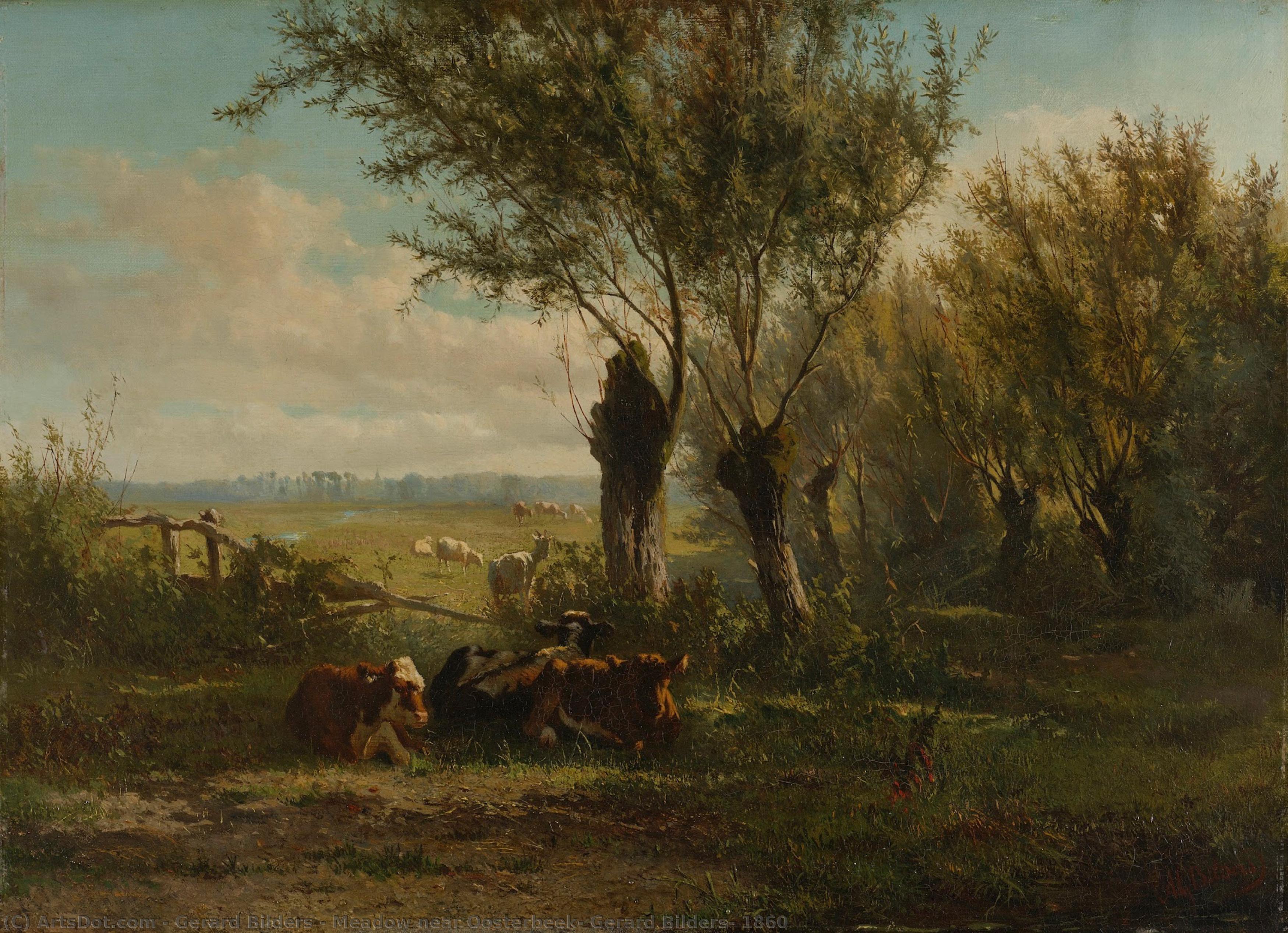
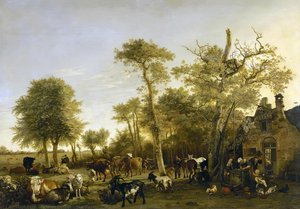
Meadow near Oosterbeek, Gerard Bilders, 1860
 1860
1860 39.0 x 55.0 cm
 Read More
Giclée / Art Print
Museum-quality giclée or canvas print with fast production and flexible finish options. ( Buy Hand Made Painting Buy Image)




































Pick from our preset sizes that match the artwork's original proportions.

You may enter your own dimensions to fit a specific frame or space. If your selected size does not match the original image's proportions, we will either crop the artwork or extend the image with a mirrored or solid-fill edge. A digital mockup will be sent for your approval before production begins.
Please note that the on-screen preview does not reflect the actual cropping or extension. Only the mockup will accurately show the final composition.
While custom sizes are available, we recommend selecting a dimension from the predefined list to preserve the original proportions.
Worldwide Delivery () in 2 weeks instead of standard 4/5 weeks. (25 August)

Free Worldwide Express Shipping

High-Quality Linen Canvas

Full Shipping Insurance

Customs Tax Refund Guarantee

True Color Matching Guarantee

60-Day Return Policy (Defects Only)

100% Money-Back Guarantee

Bulk Discount Offer
 Glass option is only available in size under 110 CM

Meadow near Oosterbeek, Gerard Bilders, 1860
Giclée / Art Print
Reproduction Size
-


Total Price
$ 63
Collectible Description
Related Artworks









Artist Biography
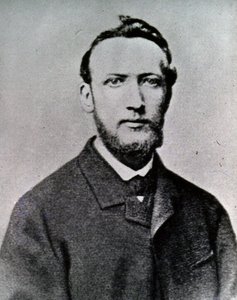
Gerard Bilders: A Life Immersed in Dutch Pastoral and Light
Gerard Bilders, born in Amsterdam in 1858, was a pivotal figure in the late Dutch Impressionist movement, though his artistic journey wasn’t one of immediate recognition. He initially pursued studies at the Rijksakademie van Beeldende Kunsten, following a conventional path for aspiring artists of the time. However, Bilders quickly found himself drawn away from the academic rigidity and towards a more personal exploration of light, atmosphere, and the Dutch landscape. His early works reflect this transition – a loosening of brushstrokes, a softening of form, and an increasing focus on capturing the ephemeral qualities of nature. Unlike many of his contemporaries who sought radical departures from tradition, Bilders’s innovation lay in refining existing themes—the idyllic countryside, intimate domestic scenes, and portraits—through the lens of Impressionist principles. He wasn't interested in shocking or dismantling artistic conventions; rather, he aimed to elevate them with a heightened sensitivity to color and light.The Influence of Barbizon and Early Impressionism
Bilders’s formative years were significantly shaped by exposure to the Barbizon school of painting during travels to France in the 1870s. The Barbizon artists, with their dedication to plein air painting and realistic depictions of rural life, resonated deeply with Bilders's own artistic inclinations. He absorbed their commitment to observing nature directly, but he also began to look towards the emerging Impressionist movement for further inspiration. While never fully embracing the radical techniques of Monet or Renoir, Bilders adopted their broken brushwork and vibrant palettes, adapting them to his distinctly Dutch sensibility. This resulted in a unique style characterized by a luminous quality and a subtle emotional depth. He found particular resonance with Johan Jongkind, whose atmospheric landscapes influenced Bilders’s treatment of skies and water. The influence wasn't merely technical; it was a shared pursuit of capturing the fleeting beauty of the natural world, imbued with a sense of quiet contemplation.A Master of Dutch Pastoral: Themes and Techniques
Bilders became renowned for his depictions of the Dutch countryside, particularly the regions surrounding Laren and Oosterbeek. His paintings are often characterized by scenes of farmers working in fields, women tending gardens, or families enjoying peaceful moments outdoors. These weren’t idealized portrayals; Bilders sought to capture the everyday realities of rural life with a sense of authenticity and respect. He masterfully employed a technique that involved layering thin washes of color to create a luminous effect, often focusing on the interplay of sunlight and shadow. His palette was typically restrained, favoring muted tones of greens, browns, and blues, punctuated by occasional bursts of brighter colors. The use of light is paramount in his work, transforming ordinary scenes into moments of poetic beauty. He also excelled at portraiture, often depicting members of his family and friends with a similar sensitivity to light and atmosphere. His portraits are not grand statements but rather intimate studies of character and personality.Recognition and Legacy: A Quiet Revolution
Despite consistently producing high-quality work, Bilders faced challenges in gaining widespread recognition during his lifetime. The Dutch art world was often slow to embrace new movements, and his subtle style didn’t always align with the prevailing tastes of the time. However, he gradually gained a following among collectors and critics who appreciated his refined technique and poetic sensibility. His work began to be exhibited more frequently in the late 1890s and early 1900s, and he eventually achieved a degree of critical acclaim. Today, Gerard Bilders is recognized as one of the most important Dutch Impressionists. His paintings are held in major museums throughout the Netherlands and beyond, and his legacy continues to inspire artists who seek to capture the beauty and tranquility of the natural world. He demonstrated that innovation doesn’t always require radical departures from tradition; sometimes, it lies in refining existing themes with a heightened sensitivity to light, color, and atmosphere. His quiet revolution—a subtle but profound shift in artistic perception—continues to resonate with audiences today.Major Achievements & Historical Significance
- Pioneering Dutch Impressionism: Bilders played a crucial role in introducing and adapting Impressionist principles to the Dutch landscape, creating a distinctly national style.
- Masterful Use of Light: His exceptional ability to capture the nuances of light and atmosphere set him apart from his contemporaries.
- Authentic Depictions of Rural Life: Bilders’s paintings offer a sensitive and realistic portrayal of everyday life in the Dutch countryside, avoiding romanticization or idealization.
- Influence on Later Generations: His work inspired subsequent generations of Dutch artists to explore the beauty and tranquility of their own surroundings.
- Preservation of Dutch Pastoral Tradition: Bilders’s paintings helped preserve a sense of connection to the traditional Dutch landscape, even as the country underwent rapid modernization.