

 Preview
 Send
Send Share
Share
 Details

 Download
 Similars
 X-Ray
X-Ray Diaporama
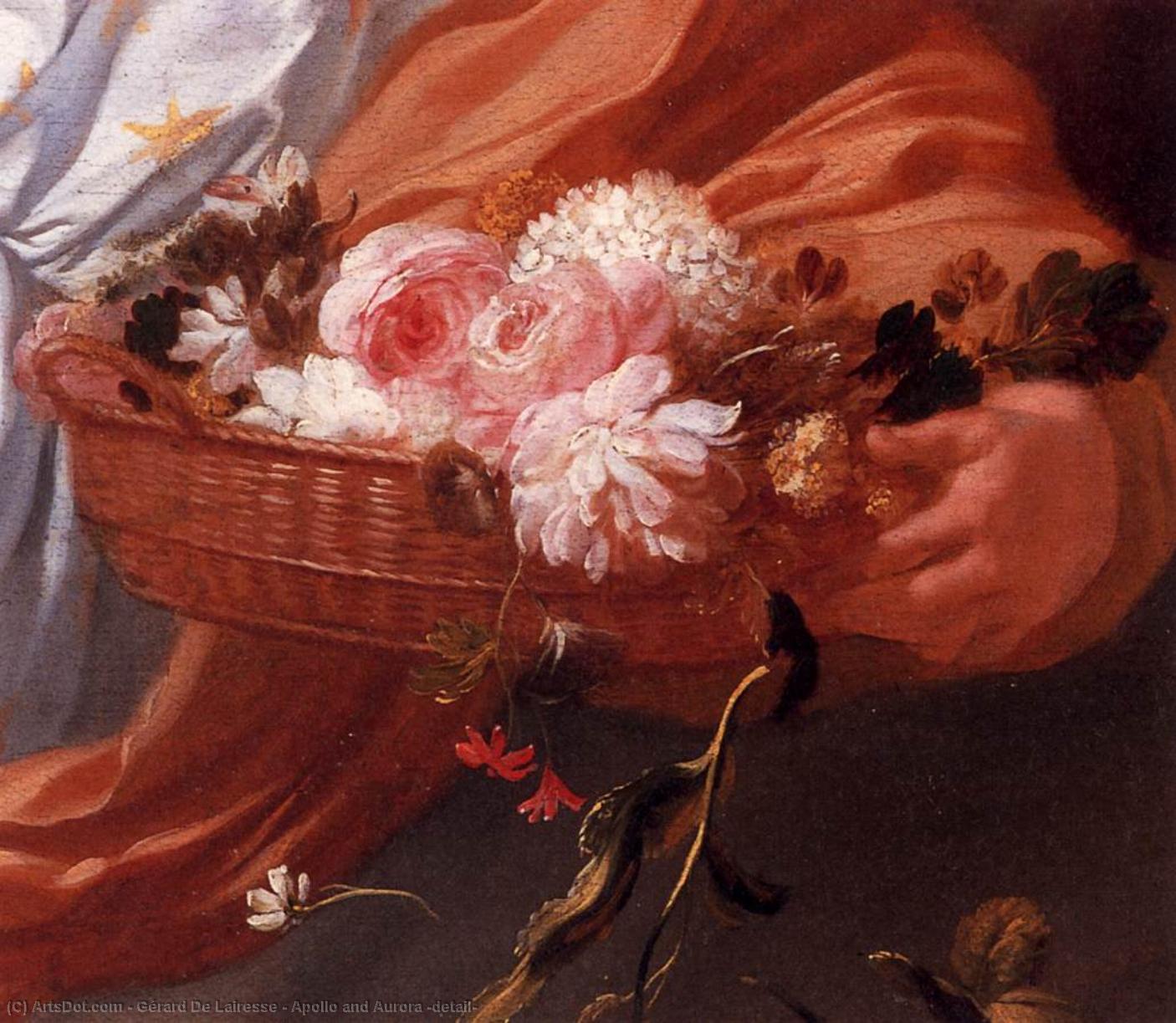
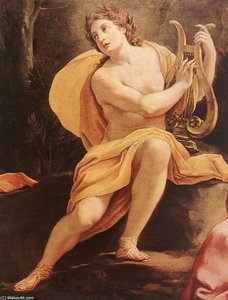
Apollo and Aurora (detail)


 Read More
Purchase a high-resolution, enhanced digital image, far superior to the online preview.
Each file is meticulously prepared by our in-house specialists using advanced tools and expert manual retouching. We ensure every image has exceptional clarity, precise color accuracy, and fine detail.
The final file is delivered via email within 72 hours, optimized for immediate use in professional, editorial, and print environments. This is the same quality trusted by top-tier design studios, publishers, and galleries.
Digital Image
Download a high-resolution file for personal display, printing, and creative projects. ( Buy Print Buy Hand Made Painting)
Included in Every Digital Image Order
Expert Digital Delivery, Guaranteed
When you choose ArtsDot.com, you're not just getting an image - you're receiving a professionally enhanced digital artwork, crafted with precision and backed by a satisfaction guarantee. Here's everything that comes with your order, automatically:

Fast Email Delivery
Your high-resolution digital image file will be emailed to you within 72 hours of ordering - ready for immediate use.

AI-Enhanced Digital File
Your artwork is professionally optimized using advanced AI tools and manual editing, ensuring maximum detail, clarity, and color accuracy.

Free Lifetime Re-Delivery
Accidentally deleted or lost your file? No worries - we'll resend it to you anytime, free of charge.

No Import Fees - Ever
Enjoy your artwork instantly with zero customs, duties, or delivery fees - digital downloads are always tax-free.

Color Accuracy Guarantee
We ensure your digital image reflects the original colors as closely as possible using professional tools and color management.

60-Day Satisfaction Guarantee
If you're not satisfied with your digital image, we'll revise it or refund 100% within 60 days - no questions asked.

100% Money-Back Guarantee
Not satisfied? Get a full refund within 60 days of receiving your digital file - no questions asked.

Bulk Order Discounts
Buy 3 images, save 10% - Buy 5, save 15% - Buy 10+, save 20%. Great for creative projects, galleries, and agencies.
Collectible Description
Apollo and Aurora: A Symphony of Light and Myth
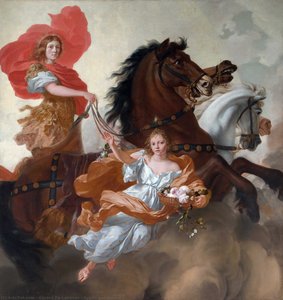
The painting “Apollo and Aurora” by Gérard de Lairesse, completed in 1671, stands as a testament to the flourishing Baroque aesthetic within Dutch art during its golden age. More than just a depiction of mythological figures—the sun god Apollo and his consort, Aurora, goddess of dawn—it embodies a profound exploration of light, color, and idealized beauty, reflecting the intellectual currents of the time and captivating viewers with its ethereal luminescence. Examining this artwork reveals not only artistic mastery but also a glimpse into the cultural values that shaped seventeenth-century Europe.A Bold Departure from Rembrandt’s Naturalism
De Lairesse's approach to painting diverged significantly from the prevailing naturalistic style championed by Rembrandt, marking a pivotal moment in Dutch art history. While Rembrandt sought to capture human emotion and psychological complexity with painstaking realism—a technique celebrated for its ability to convey inner turmoil—de Lairesse embraced an idealistic manner rooted in classical antiquity. This stylistic choice was driven by a fervent belief in the power of beauty to elevate the soul, mirroring the humanist ideals prevalent throughout Europe during this period. Scholars like Cesare Ripa and Jean Racine championed similar artistic principles, emphasizing harmony, proportion, and moral virtue.Technical Brilliance: Grisaille and Trompe-l'œil
The painting’s remarkable visual impact stems from de Lairesse’s masterful use of grisaille—a monochrome technique employing shades of gray—combined with trompe-l'œil illusionism. This innovative approach demanded meticulous attention to detail, creating an astonishingly convincing representation of light and shadow that transcends mere pigment application. The artist skillfully employed glazing techniques, layering translucent washes of color over a preparatory underpainting to achieve depth and luminosity—a technique perfected by artists like Nicolas Poussin and Claude Lorrain. Furthermore, the trompe-l'œil elements subtly manipulate perception, blurring the boundaries between painting and reality and inviting viewers into a dreamlike realm.Mythological Symbolism: Dawn’s Embrace
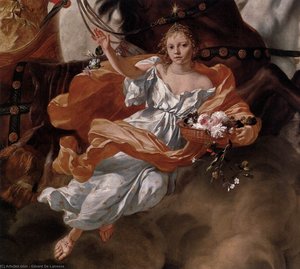
The composition itself is laden with mythological symbolism, reflecting the Renaissance fascination with classical narratives and philosophical concepts. Apollo, radiant in saffron robes—a color traditionally associated with royalty and divine illumination—dominates the scene, gazing intently at Aurora, who embodies the promise of renewal and enlightenment. Her flowing gown adorned with golden stars symbolizes celestial splendor and purity, while her outstretched arm signifies the dawn’s embrace of darkness. The inclusion of a “morning star,” or Venus stella, further reinforces this theme of cosmic harmony and spiritual aspiration—a motif frequently employed in Italian Baroque art to convey moral virtue and divine grace.Emotional Resonance: A Portrait of Ideal Beauty
Beyond its technical virtuosity and mythological references, "Apollo and Aurora" possesses an undeniable emotional resonance. The idealized faces of Apollo and Aurora—likely modeled on a young couple—capture the essence of beauty and youthful vigor, reflecting the Baroque preoccupation with portraying human figures in their most sublime form. De Lairesse’s meticulous rendering of skin tones and drapery imbues the painting with palpable warmth and vitality, transporting viewers to a realm of serene contemplation. The artwork serves as an enduring reminder of the power of art to inspire awe and elevate the spirit—a legacy that continues to captivate audiences centuries after its creation.Related Artworks


Artist Biography
Gérard de Lairesse: A Leading Figure of Belgian Baroque Art
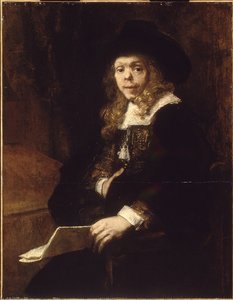
Gérard de Lairesse (1640-1711) was a prominent Belgian painter who significantly contributed to the development and flourishing of Baroque art during the 17th century. Born in Liège, Belgium, his career spanned a period of considerable artistic transformation across Europe, leaving behind a legacy marked by dramatic compositions, masterful use of light and shadow, and a distinct influence on subsequent generations of artists.
Early Life and Training: Foundations of an Artistic Career
- Birth and Origins: Gérard de Lairesse was born in Liège, Belgium, in 1640.
- Apprenticeship under Erasmus II Massius: His artistic journey began with training under the tutelage of Erasmus II Massius, a well-regarded painter from the region. This foundational experience provided him with essential technical skills and an introduction to the art world.
- Influence of Caravaggio and Rembrandt: De Lairesse was deeply inspired by the works of two giants of European painting – Caravaggio and Rembrandt. The dramatic use of light and shadow (tenebrism) championed by Caravaggio, and the psychological depth and masterful handling of light characteristic of Rembrandt, profoundly shaped his artistic style and technique.
Artistic Style and Key Contributions: Defining a Baroque Vision
- Baroque Characteristics: De Lairesse’s paintings are quintessential examples of Baroque art, characterized by their dynamic compositions, intense emotionality, and dramatic use of light and shadow (chiaroscuro).
- Mastery of Chiaroscuro: He expertly employed chiaroscuro to create a sense of volume, depth, and heightened drama in his works. This technique was central to the Baroque aesthetic.
- Notable Works: Among his most celebrated pieces are "The Martyrdom of Saint Sebastian" and "The Baptism of Christ," which showcase his exceptional command of color, form, and composition. These paintings exemplify his ability to convey powerful narratives with emotional intensity.
- Beyond Religious Subjects: While known for religious scenes, de Lairesse also explored mythological themes, portraits, and landscapes, demonstrating versatility within the Baroque style. Examples include "Apollo and Aurora," "Diana and Endymion" and “Allegory of the Five Senses”.
Influences and Legacy: Shaping Artistic Trends
- Utrecht Caravaggisti Influence: De Lairesse was heavily influenced by the Utrecht Caravaggisti, a group of Dutch painters who embraced Caravaggio’s dramatic lighting techniques.
- Peter Paul Rubens' Impact: The legacy of Peter Paul Rubens, a dominant figure in Flemish Baroque painting, also resonated within de Lairesse's work, though his style developed its own distinct characteristics.
- Influence on Jan van Huchtenburgh: His artistic innovations and techniques influenced later artists like Jan van Huchtenburgh, demonstrating the ripple effect of his contributions to the art world.
- Portraiture and Engraving: De Lairesse's influence extended beyond painting; he was also recognized for his portraiture and collaborations with engravers such as Gerard Valck who created prints based on his designs.
Historical Significance and Recognition
Gérard de Lairesse holds a significant place in the history of Belgian art, representing a key figure in the development of Baroque painting within the region. His skillful use of chiaroscuro, dramatic compositions, and emotive narratives established him as a notable artist of his time. Today, his works are recognized for their artistic merit and historical importance, with pieces residing in prestigious collections such as the National Gallery in London. ArtsDot.com offers high-quality reproductions of de Lairesse's masterpieces, allowing art enthusiasts to appreciate his contributions to Baroque art.
gérard de lairesse
1640 - 1711 , Belgium
Quick Facts
- Artistic Movement Or Style: Baroque art
- Artists Or Movements Influenced By This Artist: ['Jan van Huchtenburgh']
- Artists Who Influenced This Artist:
- Caravaggio
- Rembrandt
- Peter Paul Rubens
- Date Of Birth: 1640
- Date Of Death: 1711
- Full Name: Gérard de Lairesse
- Nationality: Belgian
- Notable Artworks:
- Martyrdom of Saint Sebastian
- Baptism of Christ
- Apollo and Aurora
- Diana and Endymion
- Allegory of the Five Senses
- Place Of Birth: Liège, Belgium

