 Preview
 Send
Send Share
Share
 Details

 Download
 Similars
 X-Ray
X-Ray Diaporama
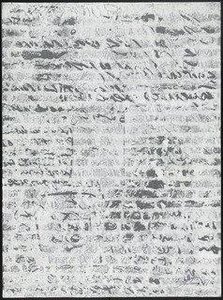
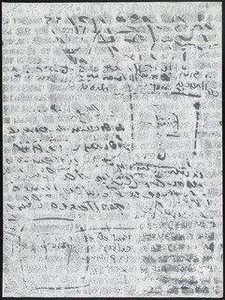
1 Fevr 1984 from Paysages
 Contemporary Realism
 1984
1984 40.0 x 30.0 cm
 Read More
Hand Made Oil Reproduction
Hand-painted oil on canvas in your size and frame, made to order by our artists. ( Buy Print Buy Image)




































Pick from our preset sizes that match the artwork's original proportions.

You may enter your own dimensions to fit a specific frame or space. If your selected size does not match the original image's proportions, we will either crop the artwork or extend the painting with additional hand-painted elements. A digital mockup will be sent for your approval before production begins.
Please note that the on-screen preview does not reflect the actual cropping or extension. Only the mockup will accurately show the final composition.
While custom sizes are available, we recommend selecting a dimension from the predefined list to preserve the original proportions.
After order, ArtsDot.com team will email client for instructions and provide a mockup preview
Worldwide Delivery () in 3/4 weeks instead of standard 5 weeks. (22 August). No compromise on quality.

Free Worldwide Express Shipping

High-Quality Linen Canvas

Full Shipping Insurance

Customs Tax Refund Guarantee

True Color Matching Guarantee

60-Day Return Policy (Defects Only)

100% Money-Back Guarantee

Bulk Discount Offer
 Glass option is only available in size under 110 CM

1 Fevr 1984 from Paysages
Reproduction Medium
Reproduction Size
-


Total Price
$ 263
Related Artworks
Artist Biography
Gerard Duchêne: A Landscape of the Soul
Gerard Duchêne, a name perhaps less familiar than some of his contemporaries, nevertheless represents a quietly powerful voice within 20th-century Belgian and French art. Born in Lille in 1944, Duchêne’s journey to becoming a respected painter was one forged not through formal training but through an intensely personal dedication to observation and the evocative rendering of the natural world. His work isn't about grand pronouncements or revolutionary gestures; it’s a subtle invitation into moments of serene contemplation – landscapes imbued with a profound sense of memory, light, and the enduring spirit of rural life.
Duchêne’s early life was marked by a deliberate avoidance of conventional paths. He initially pursued a career in printing, a craft that instilled within him an appreciation for meticulous detail and the tactile qualities of materials. However, it was his burgeoning passion for painting, nurtured largely through self-study and immersion in the works of masters like Albert Marquet and George Petit, that ultimately defined his artistic trajectory. This autodidactic approach fostered a unique sensibility – one less reliant on academic theory and more attuned to the direct experience of color, form, and atmosphere.
The Language of Light and Color
Duchêne’s paintings are immediately recognizable for their masterful manipulation of light and color. He rarely employs dramatic contrasts or overtly expressive brushstrokes; instead, he builds his landscapes through a delicate layering of hues, creating an illusion of depth and luminosity that feels remarkably immediate. His palette is predominantly muted – browns, greens, blues, and ochres – but these seemingly simple tones are deployed with astonishing precision. Duchêne’s skill lies in capturing the subtle shifts in light throughout the day, from the golden glow of dawn to the hazy warmth of twilight. He meticulously renders the way sunlight filters through trees, reflects off water surfaces, and casts long shadows across fields, transforming ordinary landscapes into scenes of extraordinary beauty.
The influence of Flemish masters is undeniable in Duchêne’s work. Like the Old Masters, he prioritized atmospheric perspective and a sense of realism that transcends mere representation. However, Duchêne's approach isn't simply imitative; he infuses his paintings with a distinctly modern sensibility, capturing not just what he sees but also the emotional resonance of the scenes before him. His landscapes are imbued with a quiet melancholy, a feeling of longing for something lost or unattainable – perhaps a connection to the past, or a deeper understanding of the natural world.
Subjects and Themes
Duchêne’s primary subjects are the rural landscapes of northern France and Belgium – rolling fields, dense forests, meandering rivers, and small villages nestled amongst the hills. These aren't idealized pastoral scenes; they are often weathered and worn, bearing the marks of time and human activity. Duchêne seems particularly drawn to depicting scenes of solitude and quiet contemplation – a lone figure walking through a field, a farmhouse bathed in the evening light, or a stream flowing through a wooded valley.
Beyond the purely visual, Duchêne’s paintings explore themes of memory, loss, and the relationship between humanity and nature. His work suggests a deep respect for the land and a recognition of its enduring power to evoke emotion. There's a sense that each painting is not merely a depiction of a place but also a meditation on time, mortality, and the fleeting beauty of existence.
Recognition and Legacy
Despite his consistent quality and understated brilliance, Duchêne’s work remained largely outside the mainstream until relatively recently. He exhibited sporadically throughout his career, primarily in Belgium, and his paintings were held in private collections for many years. However, in recent decades, there has been a growing appreciation for his unique vision and technical skill. His works are now featured in prominent museums such as the Groeninge Museum in Bruges and the Baron Gérard Museum in Bayeux, testament to their enduring value.
Gerard Duchêne’s legacy lies not in grand pronouncements or revolutionary innovations but in the quiet beauty of his landscapes – paintings that invite viewers to slow down, observe closely, and connect with the natural world on a deeper level. He was an artist who understood that true art is not about imposing one's own vision onto the world but about revealing its inherent poetry.
gérard duchène
1944 - 2014
Quick Facts
- Artistic Movement Or Style: Landscape & Genre Scenes
- Artists Or Movements Influenced By This Artist: ['Flemish Painting']
- Artists Who Influenced This Artist: ['Baron Gérard']
- Date Of Birth: June 26, 1944
- Date Of Death: November 6, 2014
- Full Name: Gérard Duchène
- Nationality: French
- Notable Artworks:
- Various Landscapes
- Diverse Genre scenes
- Place Of Birth: Lille, France
Related Articles
Leonardo da Vinci's Masterpieces: Explore 25 Iconic Artworks for Your Home | ArtsDot
Journey through Leonardo da Vinci's genius with our curated selection of 25 iconic artworks. Explore the stories behind Mona Lisa, The Last Supper & more Renaissance masterpieces. Find museum-quality art reproductions for your home at ArtsDot.com.
Leonardo da Vinci: A Renaissance Master’s Synthesis of Art, Science & Human Observation – Reinterpreted for the Collector
Explore Leonardo da Vinci’s timeless masterpieces with ArtsDot. Discover insights into his art, science, and legacy – trusted expertise for discerning collectors seeking authentic reproductions & investment opportunities.
Renaissance Humanism's Greatest Art: 10 Masterpieces for Your Home
Explore 10 Renaissance Humanism masterpieces by Leonardo da Vinci, Michelangelo & Raphael. Discover the stories behind these iconic paintings & sculptures and bring timeless art into your home with museum-quality reproductions from ArtsDot.com. Explore the full collection online!
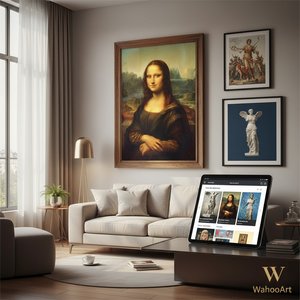
Louvre Masterpieces: Explore the Top 25 Artworks for Your Home | ArtsDot
Journey through the Louvre's 25 most iconic artworks! Explore masterpieces by Leonardo da Vinci, Michelangelo & Delacroix. Discover art history, techniques & find museum-quality reproductions for your home at ArtsDot.com.

Uffizi's 25 Masterpieces: Renaissance Art & Timeless Decor Inspiration
Journey through the Uffizi Gallery's 25 most iconic Renaissance artworks! Explore Botticelli, Leonardo da Vinci & Michelangelo’s masterpieces. Find museum-quality art reproductions and curated decor ideas to bring timeless Italian beauty into your home. Discover all masterpieces on ArtsDot.com