

 Preview
 Send
Send Share
Share
 Details

 Download
 Similars
 X-Ray
X-Ray Diaporama
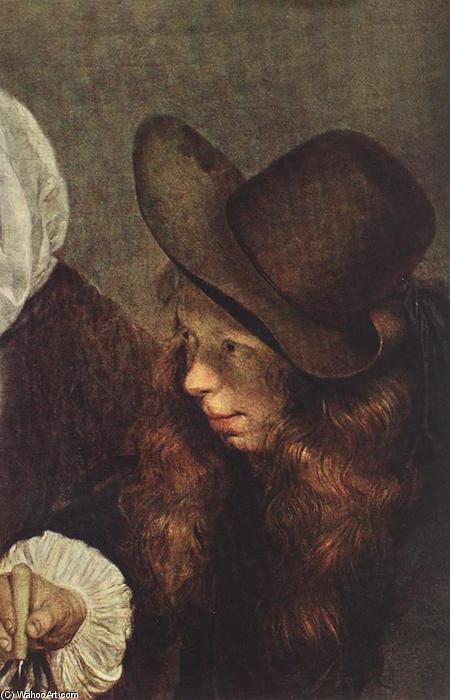
The Glass of Lemonade (detail)


 Read More
Purchase a high-resolution, enhanced digital image, far superior to the online preview.
Each file is meticulously prepared by our in-house specialists using advanced tools and expert manual retouching. We ensure every image has exceptional clarity, precise color accuracy, and fine detail.
The final file is delivered via email within 72 hours, optimized for immediate use in professional, editorial, and print environments. This is the same quality trusted by top-tier design studios, publishers, and galleries.
Digital Image
Download a high-resolution file for personal display, printing, and creative projects. ( Buy Print Buy Hand Made Painting)
Included in Every Digital Image Order
Expert Digital Delivery, Guaranteed
When you choose ArtsDot.com, you're not just getting an image - you're receiving a professionally enhanced digital artwork, crafted with precision and backed by a satisfaction guarantee. Here's everything that comes with your order, automatically:

Fast Email Delivery
Your high-resolution digital image file will be emailed to you within 72 hours of ordering - ready for immediate use.

AI-Enhanced Digital File
Your artwork is professionally optimized using advanced AI tools and manual editing, ensuring maximum detail, clarity, and color accuracy.

Free Lifetime Re-Delivery
Accidentally deleted or lost your file? No worries - we'll resend it to you anytime, free of charge.

No Import Fees - Ever
Enjoy your artwork instantly with zero customs, duties, or delivery fees - digital downloads are always tax-free.

Color Accuracy Guarantee
We ensure your digital image reflects the original colors as closely as possible using professional tools and color management.

60-Day Satisfaction Guarantee
If you're not satisfied with your digital image, we'll revise it or refund 100% within 60 days - no questions asked.

100% Money-Back Guarantee
Not satisfied? Get a full refund within 60 days of receiving your digital file - no questions asked.

Bulk Order Discounts
Buy 3 images, save 10% - Buy 5, save 15% - Buy 10+, save 20%. Great for creative projects, galleries, and agencies.
Collectible Description
A Moment of Quiet Luxury: Examining Gerard Ter Borch’s “The Glass of Lemonade”
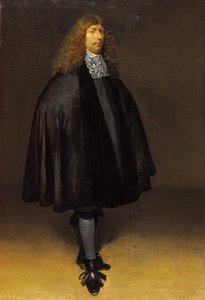
Gerard ter Borch, a true pioneer of Dutch genre painting during the Golden Age, stands as a singular figure in art history. Born in Zwolle in 1617 and tragically passing away on December 8, 1681, his life was dedicated to capturing the subtleties of human experience within domestic scenes—a remarkable achievement that continues to resonate with audiences today. Unlike many of his contemporaries who favored grand historical narratives or mythological allegories, ter Borch focused intently on portraying ordinary individuals engaged in everyday activities, imbuing them with psychological depth and realism previously unseen in Dutch art. His artistic journey began amidst the burgeoning intellectual fervor of the era, influenced by thinkers like René Descartes and Johannes Vermeer—artists who similarly championed observation and meticulous detail as pathways to artistic truth.- The Painting's Subject Matter: “The Glass of Lemonade,” completed in 1655, depicts a solitary gentleman seated at a table, seemingly absorbed in contemplation while holding a glass filled with lemonade. The scene is deliberately understated, prioritizing atmosphere and psychological nuance over dramatic action.
- Baroque Style & Technique: Ter Borch’s masterful execution exemplifies the Baroque style—characterized by its profound use of chiaroscuro (light and shadow)—a technique he honed through extensive study and experimentation. Notice how the artist skillfully manipulates light to sculpt the figure's form, highlighting his face and hat while casting deep shadows across the background, creating a palpable sense of depth and realism.
Historical Context & Artistic Influences
The painting emerged during a period marked by significant social and intellectual transformation in Holland—the Dutch Golden Age. This era witnessed an unprecedented flourishing of artistic creativity fueled by economic prosperity, burgeoning trade routes, and a humanist worldview that celebrated human intellect and emotion. Ter Borch’s work reflects this spirit, aligning with the broader Baroque aesthetic's preoccupation with portraying inner states alongside external appearances. Vermeer’s influence is particularly evident in ter Borch’s meticulous attention to detail and his ability to convey subtle emotions—a hallmark of Vermeer’s distinctive style. Furthermore, Ter Borch’s travels throughout Europe exposed him to artistic traditions from Italy and Spain, enriching his visual vocabulary and informing his compositional choices.Symbolism & Emotional Resonance
Beyond its technical brilliance, “The Glass of Lemonade” possesses a rich symbolic dimension. The gentleman's posture—seated calmly yet intently gazing downwards—suggests introspection and contemplation—themes central to Baroque art’s exploration of human psychology. The glass itself serves as a focal point, symbolizing refreshment and perhaps even fleeting pleasure amidst the complexities of life. The lace collar worn by the figure is not merely decorative; it represents status and refinement—a visual shorthand for the aristocratic ideals prevalent during ter Borch's time. Most importantly, however, the painting captures a moment of quiet dignity—a testament to Ter Borch’s ability to distill profound emotion into deceptively simple imagery.Conclusion: An Enduring Legacy
Gerard ter Borch’s “The Glass of Lemonade” remains an enduring masterpiece—a captivating distillation of Baroque artistry and psychological realism. Its meticulous detail, masterful use of light and shadow, and subtle symbolic resonance continue to inspire admiration and provoke contemplation. Reproductions offered by ArtsDot.com allow viewers to experience the beauty and intellectual depth of this iconic artwork firsthand, preserving its legacy for generations to come.Related Artworks
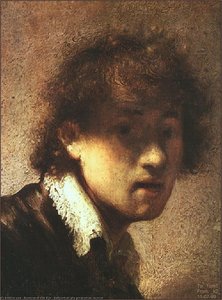

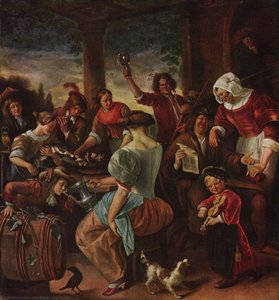

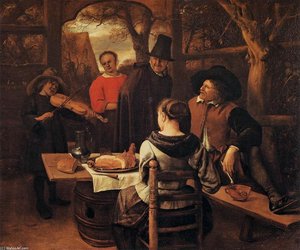
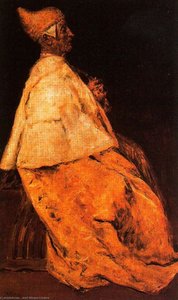

Artist Biography
**a pioneer of dutch genre painting**
gerard ter borch, a prominent figure in the dutch golden age, left an indelible mark on the art world with his genre paintings. born in december 1617 and passing away on december 8, 1681, ter borch's life was a testament to his artistic prowess.**early life and influences**
ter borch's early life is not well-documented, but it is known that he traveled extensively throughout europe, including london, germany, france, spain, and italy. this exposure broadened his artistic horizons, influencing his unique style. his sister, gesina ter borch, also pursued a career in painting, further solidifying the family's artistic inclinations.**notable works and achievements**
- **the letter**: a masterpiece showcasing ter borch's skill in capturing texture and light. - **the gallant conversation**: engraved by johann georg wille, this piece exemplifies the artist's ability to convey nuanced emotions. - **man on horseback (1634)**: an early work demonstrating ter borch's emerging talent. - **adrian pauw's arrival in münster (1646)**: a significant piece that highlights the artist's narrative capabilities.**museums and collections featuring ter borch's work**
- the hermitage: with six of his works, it boasts one of the largest collections. - berlin museum: features six pieces, showcasing ter borch's international appeal. - getty center: three of his paintings are part of this esteemed collection.**legacy and impact**
ter borch's influence on dutch painters like gabriel metsu, gerrit dou, eglon van der neer, and johannes vermeer is well-documented. his innovative approach to genre painting has made him a pivotal figure in the history of art.- for more on ter borch's life and works, visit https://ArtsDot.com/@/gerard-ter-borch
- explore the museum boijmans van beuningen rotterdam, netherlands, featuring some of ter borch's contemporaries at https://ArtsDot.com/@@/a@d3arrk-museum-boijmans-van-beuningen-rotterdam-netherlands
- learn more about the dutch golden age and its notable artists at https://en.wikipedia.org/wiki/dutch_golden_age
Gerard ter Borch
1617 - 1681 , Netherlands
Quick Facts
- Artistic Movement Or Style: Genre painting
- Artists Or Movements Influenced By This Artist: ['Diego Velázquez']
- Artists Who Influenced This Artist:
- Gabriel Metsu
- Gerrit Dou
- Eglon van der Neer
- Johannes Vermeer
- Date Of Birth: December 1617
- Date Of Death: 8 December 1681
- Full Name: Gerard ter Borch
- Nationality: Dutch
- Notable Artworks:
- The Letter
- The Gallant Conversation
- Man on horseback
- Adrian Pauw's arrival in Münster
- Place Of Birth: Zwolle, Netherlands

