

 Preview
 Send
Send Share
Share
 Details

 Download
 Similars
 X-Ray
X-Ray Diaporama
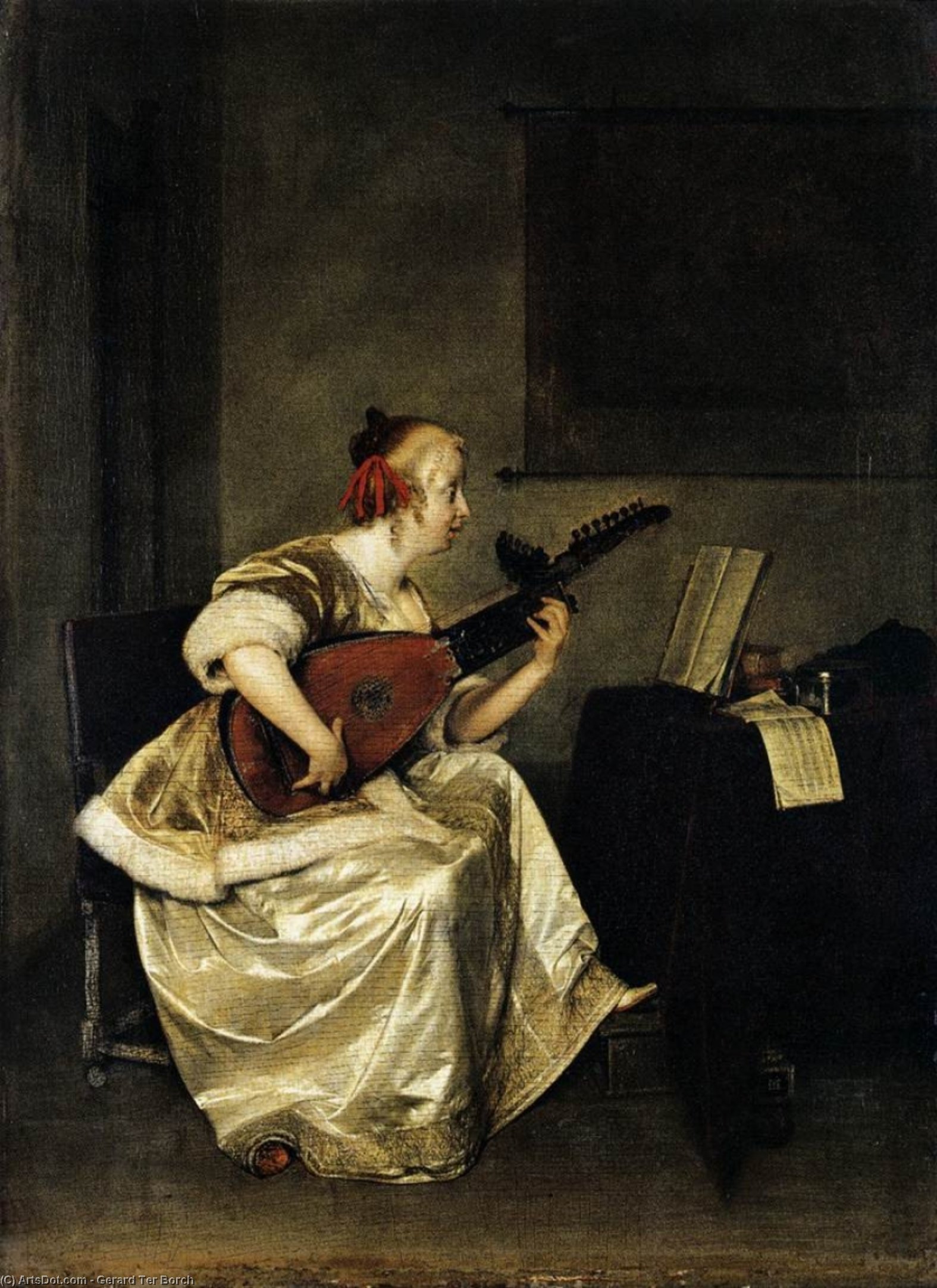
The Lute Player
 Acrylic On Canvas
- WallArt
- Baroque
 1667
1667 53.0 x 39.0 cm
 Staatliche Museen
 Read More
Purchase a high-resolution, enhanced digital image, far superior to the online preview.
Each file is meticulously prepared by our in-house specialists using advanced tools and expert manual retouching. We ensure every image has exceptional clarity, precise color accuracy, and fine detail.
The final file is delivered via email within 72 hours, optimized for immediate use in professional, editorial, and print environments. This is the same quality trusted by top-tier design studios, publishers, and galleries.
Digital Image
Download a high-resolution file for personal display, printing, and creative projects. ( Buy Print Buy Hand Made Painting)
Included in Every Digital Image Order
Expert Digital Delivery, Guaranteed
When you choose ArtsDot.com, you're not just getting an image - you're receiving a professionally enhanced digital artwork, crafted with precision and backed by a satisfaction guarantee. Here's everything that comes with your order, automatically:

Fast Email Delivery
Your high-resolution digital image file will be emailed to you within 72 hours of ordering - ready for immediate use.

AI-Enhanced Digital File
Your artwork is professionally optimized using advanced AI tools and manual editing, ensuring maximum detail, clarity, and color accuracy.

Free Lifetime Re-Delivery
Accidentally deleted or lost your file? No worries - we'll resend it to you anytime, free of charge.

No Import Fees - Ever
Enjoy your artwork instantly with zero customs, duties, or delivery fees - digital downloads are always tax-free.

Color Accuracy Guarantee
We ensure your digital image reflects the original colors as closely as possible using professional tools and color management.

60-Day Satisfaction Guarantee
If you're not satisfied with your digital image, we'll revise it or refund 100% within 60 days - no questions asked.

100% Money-Back Guarantee
Not satisfied? Get a full refund within 60 days of receiving your digital file - no questions asked.

Bulk Order Discounts
Buy 3 images, save 10% - Buy 5, save 15% - Buy 10+, save 20%. Great for creative projects, galleries, and agencies.
Collectible Description
A Window into Dutch Domestic Life: Gerard ter Borch’s “The Lute Player”
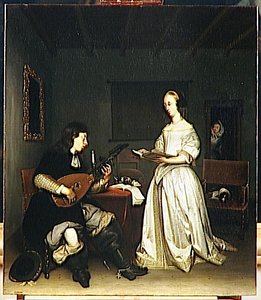
Gerard ter Borch's "The Lutenist," painted in 1667, transcends mere portraiture; it’s a meticulously crafted snapshot of seventeenth-century Dutch bourgeois society—a scene brimming with understated elegance and psychological depth. This captivating artwork resides within the Kunsthistorisches Museum Wien’s collection, offering viewers an unparalleled glimpse into the refined tastes and intellectual pursuits of the era.Subject Matter and Composition
The painting depicts a woman seated comfortably in a chair, accompanied by a lute player. The woman is engrossed in reading a book, while her gaze drifts towards the lute instrument—a gesture that speaks volumes about the importance placed on education and contemplation within Dutch households during this period. Notably, a piano sits discreetly in the background, hinting at the burgeoning musical culture of the time and subtly elevating the domestic setting beyond the ordinary. Ter Borch’s masterful composition utilizes chiaroscuro – dramatic contrasts between light and shadow – to sculpt the figures and create an atmosphere of intimacy and quiet contemplation. The positioning of the chairs emphasizes a sense of relaxed formality, reflecting the values of the upper middle class.Style and Technique: Rembrandt's Legacy
Ter Borch’s artistic style is undeniably influenced by Rembrandt van Rijn, his predecessor and arguably the most celebrated painter of the Dutch Golden Age. Like Rembrandt, ter Borch employed a technique characterized by exceptional realism—a painstaking attention to detail that captures not only physical appearance but also subtle nuances of expression and texture. The artist achieved this remarkable level of accuracy through meticulous layering of glazes – thin translucent coats of paint applied over multiple sessions – resulting in an astonishingly luminous surface. This technique, perfected by Rembrandt himself, allows for the depiction of light as it interacts with surfaces, creating a palpable sense of depth and atmosphere.Historical Context: The Enlightenment’s Quiet Influence
“The Lute Player” emerges from the broader context of the Dutch Enlightenment—a period marked by intellectual curiosity and a fascination with observation and reason. Ter Borch's depiction aligns perfectly with this cultural ethos, portraying a scene that prioritizes intellectuality alongside domestic tranquility. The lute itself symbolizes musical refinement and erudition, reflecting the humanist ideals prevalent during the era. Furthermore, the inclusion of the piano underscores the growing interest in scientific inquiry and artistic innovation—a testament to the dynamism of Dutch culture at the time.Symbolism: Beyond Appearance
Beyond its visual splendor, “The Lute Player” is laden with symbolic significance. The woman’s reading posture represents intellectual engagement and moral virtue – qualities highly valued within Dutch society. Her gaze towards the lute suggests a harmonious balance between contemplation and artistic appreciation. The book symbolizes knowledge and learning, while the lute embodies musical artistry and sophistication. Ter Borch skillfully conveys these ideas through subtle gestures and facial expressions, inviting viewers to contemplate the complexities of human experience.Emotional Impact: A Moment Frozen in Time
Ultimately, “The Lute Player” succeeds in capturing a fleeting moment of domestic serenity—a scene imbued with warmth and understated beauty. The artist’s masterful use of chiaroscuro evokes a profound sense of intimacy, drawing viewers into the quiet contemplation of the figures depicted. It's a painting that speaks to our enduring fascination with human connection and the pursuit of intellectual enrichment—a timeless masterpiece that continues to resonate with audiences centuries after its creation.Related Artworks
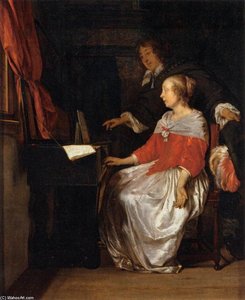

Artist Biography
**a pioneer of dutch genre painting**
gerard ter borch, a prominent figure in the dutch golden age, left an indelible mark on the art world with his genre paintings. born in december 1617 and passing away on december 8, 1681, ter borch's life was a testament to his artistic prowess.**early life and influences**
ter borch's early life is not well-documented, but it is known that he traveled extensively throughout europe, including london, germany, france, spain, and italy. this exposure broadened his artistic horizons, influencing his unique style. his sister, gesina ter borch, also pursued a career in painting, further solidifying the family's artistic inclinations.**notable works and achievements**
- **the letter**: a masterpiece showcasing ter borch's skill in capturing texture and light. - **the gallant conversation**: engraved by johann georg wille, this piece exemplifies the artist's ability to convey nuanced emotions. - **man on horseback (1634)**: an early work demonstrating ter borch's emerging talent. - **adrian pauw's arrival in münster (1646)**: a significant piece that highlights the artist's narrative capabilities.**museums and collections featuring ter borch's work**
- the hermitage: with six of his works, it boasts one of the largest collections. - berlin museum: features six pieces, showcasing ter borch's international appeal. - getty center: three of his paintings are part of this esteemed collection.**legacy and impact**
ter borch's influence on dutch painters like gabriel metsu, gerrit dou, eglon van der neer, and johannes vermeer is well-documented. his innovative approach to genre painting has made him a pivotal figure in the history of art.- for more on ter borch's life and works, visit https://ArtsDot.com/@/gerard-ter-borch
- explore the museum boijmans van beuningen rotterdam, netherlands, featuring some of ter borch's contemporaries at https://ArtsDot.com/@@/a@d3arrk-museum-boijmans-van-beuningen-rotterdam-netherlands
- learn more about the dutch golden age and its notable artists at https://en.wikipedia.org/wiki/dutch_golden_age
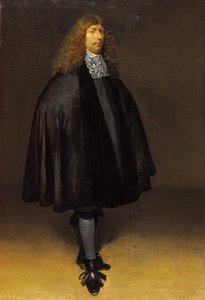
Gerard ter Borch
1617 - 1681 , Netherlands
Quick Facts
- Artistic Movement Or Style: Genre painting
- Artists Or Movements Influenced By This Artist: ['Diego Velázquez']
- Artists Who Influenced This Artist:
- Gabriel Metsu
- Gerrit Dou
- Eglon van der Neer
- Johannes Vermeer
- Date Of Birth: December 1617
- Date Of Death: 8 December 1681
- Full Name: Gerard ter Borch
- Nationality: Dutch
- Notable Artworks:
- The Letter
- The Gallant Conversation
- Man on horseback
- Adrian Pauw's arrival in Münster
- Place Of Birth: Zwolle, Netherlands

