

 Preview
 Send
Send Share
Share
 Details

 Download
 Similars
 X-Ray
X-Ray Diaporama
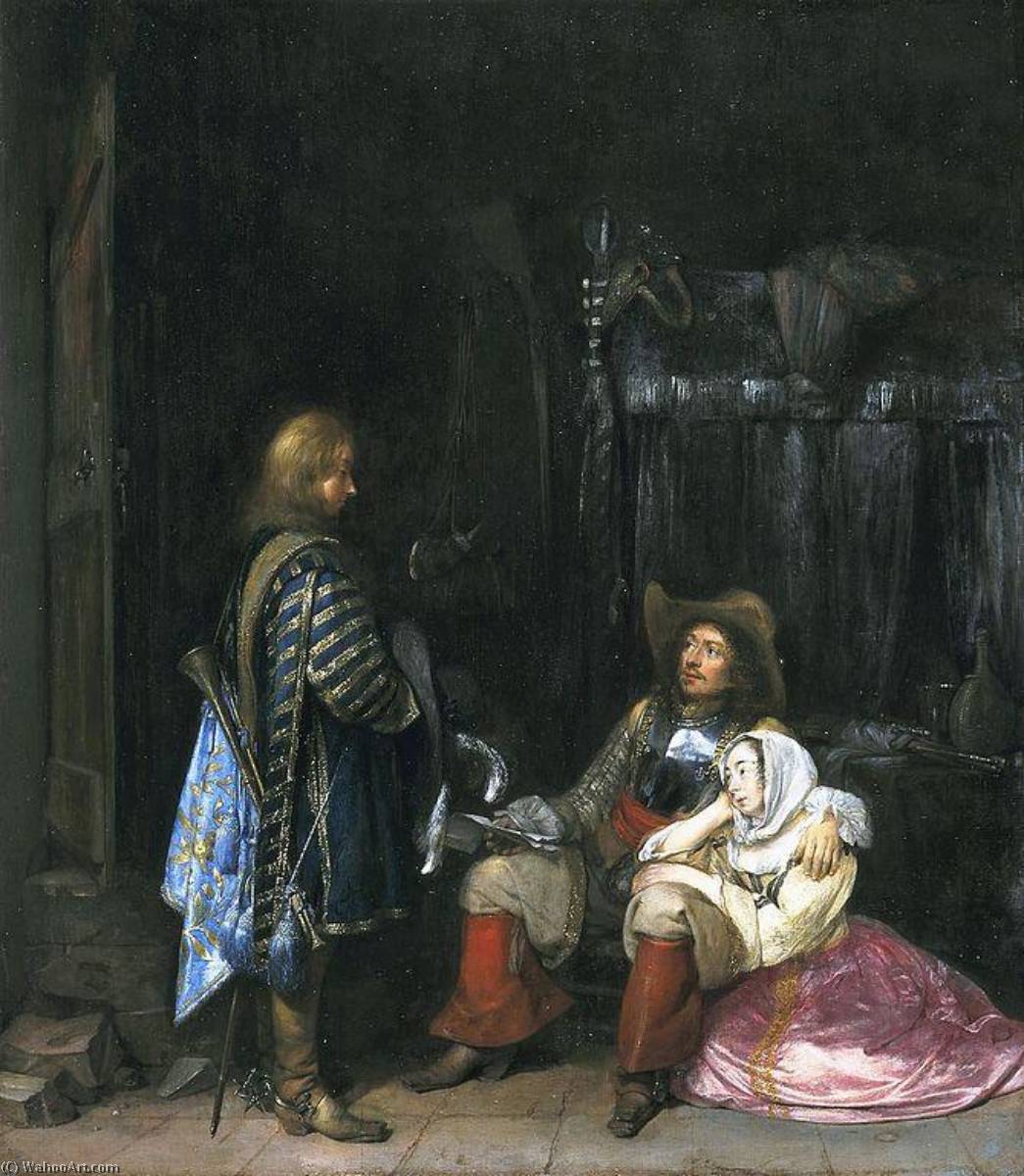
The Messenger (also known as Unwelcome News)


 Read More
Purchase a high-resolution, enhanced digital image, far superior to the online preview.
Each file is meticulously prepared by our in-house specialists using advanced tools and expert manual retouching. We ensure every image has exceptional clarity, precise color accuracy, and fine detail.
The final file is delivered via email within 72 hours, optimized for immediate use in professional, editorial, and print environments. This is the same quality trusted by top-tier design studios, publishers, and galleries.
Digital Image
Download a high-resolution file for personal display, printing, and creative projects. ( Buy Print Buy Hand Made Painting)
Included in Every Digital Image Order
Expert Digital Delivery, Guaranteed
When you choose ArtsDot.com, you're not just getting an image - you're receiving a professionally enhanced digital artwork, crafted with precision and backed by a satisfaction guarantee. Here's everything that comes with your order, automatically:

Fast Email Delivery
Your high-resolution digital image file will be emailed to you within 72 hours of ordering - ready for immediate use.

AI-Enhanced Digital File
Your artwork is professionally optimized using advanced AI tools and manual editing, ensuring maximum detail, clarity, and color accuracy.

Free Lifetime Re-Delivery
Accidentally deleted or lost your file? No worries - we'll resend it to you anytime, free of charge.

No Import Fees - Ever
Enjoy your artwork instantly with zero customs, duties, or delivery fees - digital downloads are always tax-free.

Color Accuracy Guarantee
We ensure your digital image reflects the original colors as closely as possible using professional tools and color management.

60-Day Satisfaction Guarantee
If you're not satisfied with your digital image, we'll revise it or refund 100% within 60 days - no questions asked.

100% Money-Back Guarantee
Not satisfied? Get a full refund within 60 days of receiving your digital file - no questions asked.

Bulk Order Discounts
Buy 3 images, save 10% - Buy 5, save 15% - Buy 10+, save 20%. Great for creative projects, galleries, and agencies.
A Moment Frozen in Time: Gerard ter Borch’s “The Messenger”
Gerard ter Borch's "The Messenger," also known as "Unwelcome News," is not merely a painting; it’s a meticulously crafted tableau of human interaction, steeped in the quiet drama and psychological acuity that defined the Dutch Golden Age. Completed around 1653, this oil on copper masterpiece resides within the Mauritshuis in The Hague, offering a rare glimpse into the domestic sphere of a wealthy family during a period of profound social and political change. More than just a portrait, it’s a study in unspoken tension, a subtle exploration of power dynamics, and a testament to ter Borch's unparalleled ability to capture the fleeting expressions and nuanced gestures that reveal character.
The scene unfolds within a dimly lit room, a space deliberately rendered with a sense of restrained elegance. Three figures dominate the composition: a man in a striking blue coat and red breeches, holding a sword – a symbol of authority and potential conflict; a seated gentleman, clad in brown and red, clutching a letter that clearly holds unwelcome news; and a woman, draped in a delicate pink dress with a white headscarf, positioned on the floor, her posture suggesting both attentiveness and perhaps a touch of apprehension. The artist’s masterful use of light and shadow creates a palpable sense of depth, drawing the viewer into this intimate, almost claustrophobic setting. The muted palette – browns, blues, pinks, and creams – contributes to the painting's overall atmosphere of quiet contemplation.
Decoding Symbolism: Layers of Meaning in a Domestic Scene
“The Messenger” is rich with symbolic detail, inviting multiple interpretations. The man holding the sword immediately establishes a sense of authority and potential threat, suggesting that the news he carries could be disruptive or even dangerous. His stance – alert and poised – hints at readiness for action, while his obscured face adds to the painting’s enigmatic quality. The letter itself is the central catalyst of the scene, representing not just information but also obligation and consequence. The gentleman's expression—a mixture of resignation and concern—suggests that he has received news he desperately wishes to avoid.
The woman on the floor plays a crucial role in interpreting the narrative. Her position suggests a subordinate role, yet her attentive gaze and posture indicate a deep engagement with the unfolding drama. Some scholars believe she represents the family’s confidante or perhaps even a servant privy to sensitive information. The inclusion of the dog further reinforces this sense of domesticity and hints at the complexities of familial relationships. The painting isn't simply about delivering news; it’s about the impact of that news on those who receive it, and the reactions they display.
Technique and Style: A Masterclass in Realism
Ter Borch’s technical skill is immediately apparent in the meticulous detail with which he renders every element of the scene. The fabrics—the man's coat, the woman's dress—are depicted with astonishing realism, capturing their texture and sheen through subtle variations in brushstroke. The artist’s use of chiaroscuro – the dramatic contrast between light and shadow – creates a sense of depth and volume, bringing the figures to life. The copper panel on which the painting was executed allowed for an unprecedented level of detail and precision.
Notably, ter Borch employed a technique that was relatively uncommon at the time—working directly onto the metal support rather than preparing it with gesso. This method resulted in a remarkably smooth surface, ideal for capturing fine details and achieving a luminous quality. The painting’s overall effect is one of quiet intensity, achieved through a masterful combination of realism, psychological insight, and technical virtuosity.
A Window into the Dutch Golden Age: Intimacy and Observation
"The Messenger" offers a poignant glimpse into the lives of wealthy Dutch families during the 17th century. It’s a scene of quiet domesticity, yet one fraught with unspoken tensions and hidden anxieties. Ter Borch's work reflects a shift in artistic focus—away from grand historical narratives and towards intimate portraits of everyday life. He was particularly interested in capturing the psychological nuances of his subjects, revealing their inner thoughts and emotions through subtle gestures and facial expressions.
The painting’s enduring appeal lies in its ability to evoke empathy and invite contemplation. It's a reminder that even within the most seemingly ordinary scenes, there can be profound drama and emotional complexity. “The Messenger” stands as a testament to Gerard ter Borch’s genius—a masterpiece of realism, psychological insight, and artistic skill, offering a timeless window into the heart of the Dutch Golden Age.
Related Artworks

Artist Biography
A Life Illuminated: The World of Gerard ter Borch the Younger
Gerard ter Borch the Younger, a name that resonates with the quiet intimacy and refined realism characteristic of the Dutch Golden Age, was born in Zwolle, Netherlands, in December 1617. He emerged from an artistic family—his father, Gerard ter Borch the Elder, instilled in him foundational draftsmanship skills, while his sister, Gesina, also demonstrated a remarkable talent for painting. This nurturing environment fostered a sensibility attuned to visual detail and the subtle nuances of human interaction, qualities that would come to define his celebrated oeuvre. Ter Borch’s early education extended beyond the studio; formative travels beginning in 1632 took him through Amsterdam, Haarlem under Pieter Molijn, and even London in 1635. These journeys exposed him to diverse artistic currents and broadened his understanding of patronage, laying the groundwork for a career that would capture the essence of domestic life with unparalleled sensitivity. The influence of Willem Cornelisz Duyster is readily apparent in his early works, particularly in their meticulously rendered interiors and atmospheric lighting, hinting at the artist’s developing mastery of light and shadow.The Painter of Everyday Moments
Ter Borch distinguished himself through an unwavering focus on genre painting—scenes depicting everyday life. However, he wasn't merely recording these moments; he was imbuing them with a psychological depth rarely seen in his contemporaries. His paintings aren’t grand historical narratives or dramatic religious scenes, but rather glimpses into the private worlds of Dutch burghers: a woman pausing as she writes a letter, a couple engaged in polite conversation, a soldier on horseback. These seemingly simple subjects become vehicles for exploring human relationships and the quiet dramas that unfold within domestic settings. The Letter, perhaps his most famous work, exemplifies this mastery; it’s not just a depiction of a woman writing, but an exploration of anticipation, longing, and the power of communication. His technique is characterized by meticulous realism—the textures of fabrics are rendered with astonishing accuracy, light falls naturally across surfaces, and facial expressions convey subtle emotions. He possessed an exceptional ability to capture fleeting moments, transforming them into enduring works of art. Beyond his celebrated genre scenes, Ter Borch also gained recognition for his miniature portraits in the 1640s, demonstrating a remarkable skill in capturing likenesses with precision and delicacy. These smaller works showcase the same attention to detail and psychological insight as his larger compositions, solidifying his reputation as a master of observation.Influences and Artistic Development
The artistic journey of Gerard ter Borch was one of continuous evolution, shaped by exposure to diverse influences. Pieter Molijn’s landscape painting undoubtedly impacted his early compositions, while the detailed interiors of Willem Cornelisz Duyster provided a crucial foundation for his meticulous realism. Some scholars suggest a possible visit to Italy, though concrete evidence remains elusive; if he did travel there, it likely exposed him to the techniques and compositional principles of the Italian Renaissance masters. Later in his career, Ter Borch demonstrated an appreciation for the Spanish painter Diego Velázquez, particularly evident in his masterful use of light and shadow—a technique that added depth and drama to his scenes. He was also part of a vibrant circle of Dutch Golden Age painters who shared similar interests in genre painting and detailed realism, including Gabriel Metsu and Gerrit Dou. However, Ter Borch wasn’t simply imitating these artists; he synthesized their influences into a unique style characterized by its psychological insight and refined technique. His ability to capture the subtle nuances of human interaction set him apart from his contemporaries, establishing him as a leading figure in Dutch genre painting.Legacy and Historical Significance
Gerard ter Borch the Younger stands as one of the leading figures of the Dutch Golden Age—a period of unprecedented artistic flourishing in the Netherlands. His innovative approach to genre painting, his focus on psychological realism, and his technical virtuosity profoundly influenced subsequent generations of artists. He elevated everyday life to a subject worthy of serious artistic consideration, paving the way for future explorations of domesticity and human interaction. His works are now held by prestigious museums worldwide, including the Royal Picture Gallery Mauritshuis in The Hague, the National Gallery in London, and the Hermitage Museum in St. Petersburg—testaments to his enduring appeal and historical importance. Adrian Pauw's Arrival in Münster, for example, showcases not only his technical skill but also his ability to capture a significant historical event with an intimate, human perspective. Ter Borch’s legacy extends beyond the canvas; he left behind a body of work that continues to captivate and inspire, offering viewers a glimpse into the lives and emotions of 17th-century Dutch society. He remains a master of observation, a painter who understood the power of quiet moments and the beauty of everyday life. His sister Gesina ter Borch, though less known, also contributed significantly to the artistic landscape of the time, further enriching the family’s legacy within the Dutch Golden Age.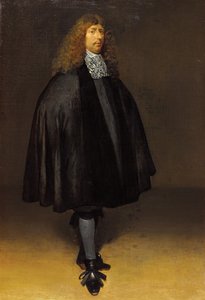
Gerard ter Borch the Younger
1617 - 1681 , Netherlands
Quick Facts
- Artistic Movement Or Style: Dutch Golden Age, Genre painting
- Artists Or Movements Influenced By This Artist:
- Gabriel Metsu
- Gerrit Dou
- Artists Who Influenced This Artist:
- Pieter Molijn
- Willem Cornelisz Duyster
- Diego Velázquez
- Date Of Birth: December 1617
- Date Of Death: 1681
- Full Name: Gerard ter Borch the Younger
- Nationality: Dutch
- Notable Artworks:
- The Letter
- Adrian Pauw's Arrival
- The Gallant Conversation
- Place Of Birth: Zwolle, Netherlands

