

 Preview
 Send
Send Share
Share
 Details

 Download
 Similars
 X-Ray
X-Ray Diaporama
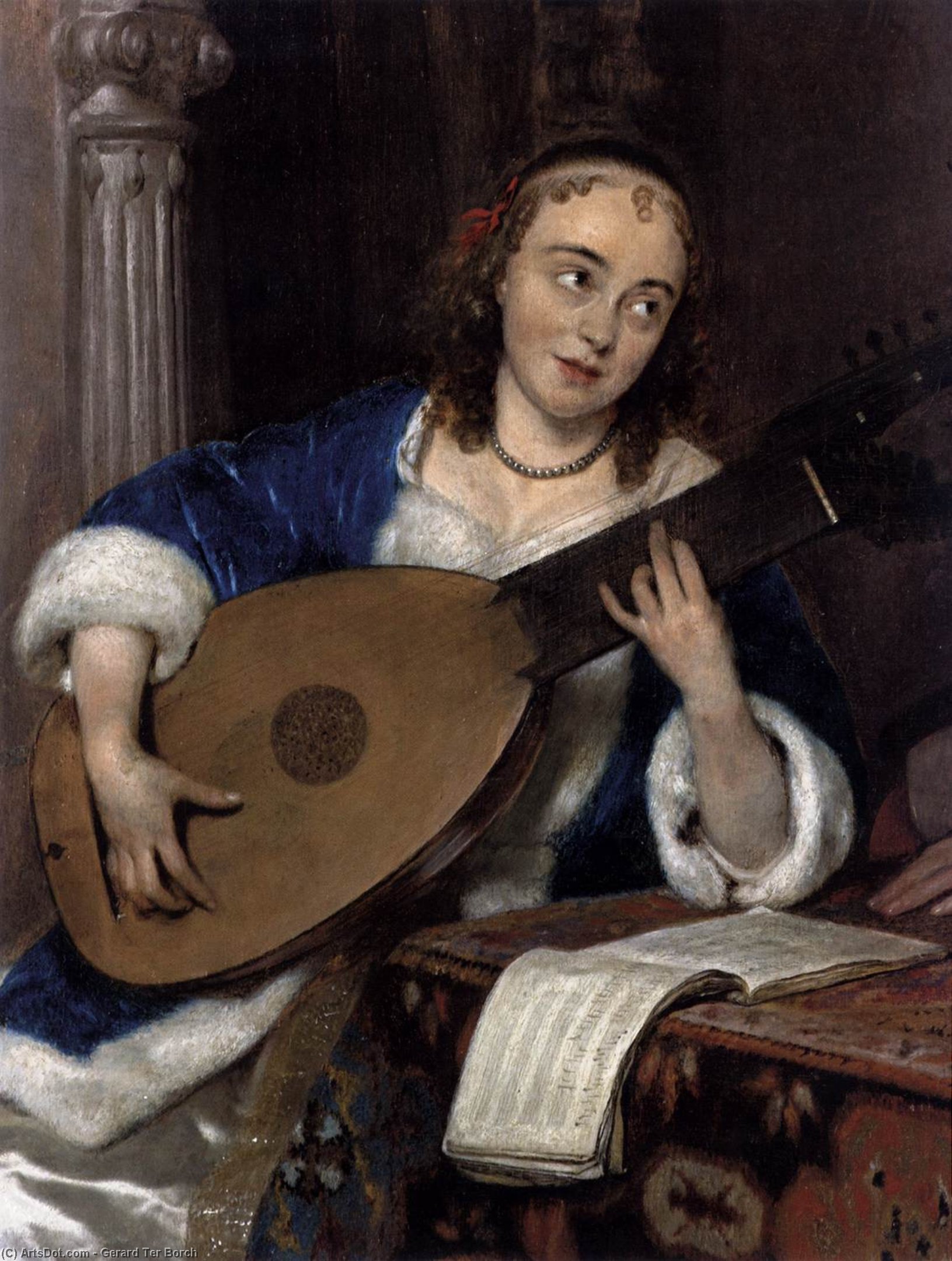
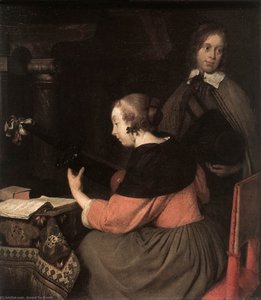
Woman Playing the Theorbo-Lute and a Cavalier (detail)


 Read More
Purchase a high-resolution, enhanced digital image, far superior to the online preview.
Each file is meticulously prepared by our in-house specialists using advanced tools and expert manual retouching. We ensure every image has exceptional clarity, precise color accuracy, and fine detail.
The final file is delivered via email within 72 hours, optimized for immediate use in professional, editorial, and print environments. This is the same quality trusted by top-tier design studios, publishers, and galleries.
Digital Image
Download a high-resolution file for personal display, printing, and creative projects. ( Buy Print Buy Hand Made Painting)
Included in Every Digital Image Order
Expert Digital Delivery, Guaranteed
When you choose ArtsDot.com, you're not just getting an image - you're receiving a professionally enhanced digital artwork, crafted with precision and backed by a satisfaction guarantee. Here's everything that comes with your order, automatically:

Fast Email Delivery
Your high-resolution digital image file will be emailed to you within 72 hours of ordering - ready for immediate use.

AI-Enhanced Digital File
Your artwork is professionally optimized using advanced AI tools and manual editing, ensuring maximum detail, clarity, and color accuracy.

Free Lifetime Re-Delivery
Accidentally deleted or lost your file? No worries - we'll resend it to you anytime, free of charge.

No Import Fees - Ever
Enjoy your artwork instantly with zero customs, duties, or delivery fees - digital downloads are always tax-free.

Color Accuracy Guarantee
We ensure your digital image reflects the original colors as closely as possible using professional tools and color management.

60-Day Satisfaction Guarantee
If you're not satisfied with your digital image, we'll revise it or refund 100% within 60 days - no questions asked.

100% Money-Back Guarantee
Not satisfied? Get a full refund within 60 days of receiving your digital file - no questions asked.

Bulk Order Discounts
Buy 3 images, save 10% - Buy 5, save 15% - Buy 10+, save 20%. Great for creative projects, galleries, and agencies.
A Moment Frozen in Time: Gerard ter Borch’s “Woman Playing the Theorbo-Lute and a Cavalier”
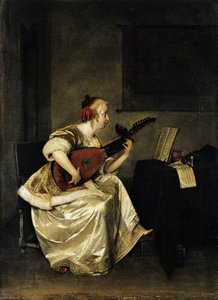
Gerard ter Borch's "Woman Playing the Theorbo-Lute and a Cavalier," painted around 1658, is more than just a portrait; it’s a meticulously crafted tableau of intimacy, ambiguity, and the subtle nuances of Dutch Golden Age life. This remarkable work, now residing within the Metropolitan Museum of Art in New York, offers a rare glimpse into the private world of a wealthy household, revealing a scene brimming with quiet drama and unspoken emotions. Ter Borch, a pioneer of Dutch genre painting, wasn’t interested in grand historical narratives or heroic figures; instead, he focused on capturing the everyday moments—the conversations, the shared glances, the delicate interplay between individuals – that shaped domestic life. His skill lay not just in depicting likenesses but in conveying character and atmosphere with astonishing precision.The Scene Unfolds: Composition and Detail
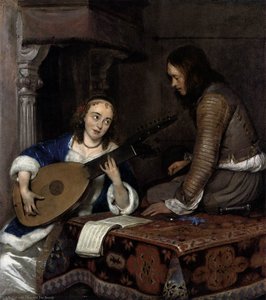
The painting immediately draws the eye to a young woman seated on a bench, completely absorbed in her music. She plays a theorbo-lute – an instrument combining the qualities of a lute and a bass guitar – with graceful hands, seemingly oblivious to the presence of her companion. The man, identified as a cavalier, stands beside her, leaning against a table laden with objects that speak volumes about their social standing. A book lies open, suggesting intellectual pursuits alongside the pleasures of music and companionship; a songbook, a common gift between lovers at the time, rests nearby, hinting at a romantic connection. A watch – a symbol of both wealth and the fleeting nature of time – adds another layer of complexity to the scene. Notice the careful dovetailing of shapes between the woman and man; this technique, reminiscent of Vermeer’s approach around the same period, demonstrates Ter Borch's mastery of composition and his ability to create a harmonious balance within the frame. The artist’s attention to detail is extraordinary – from the texture of the fabrics to the glint of light on the instruments – contributing to the painting’s remarkable realism.Symbolism and Interpretation: A Dance of Ambiguity
“Woman Playing the Theorbo-Lute and a Cavalier” isn't a straightforward depiction of courtship; it’s deliberately ambiguous, inviting multiple interpretations. The woman’s expression is serene yet slightly distant, leaving her true intentions uncertain. Is she a virtuous maiden engaged in a private musical moment, or does she represent a more worldly figure, perhaps a courtesan indulging in a brief respite? The cavalier's posture and gaze suggest attentiveness and admiration, but his presence also hints at the potential for deception or unrequited desire. The inclusion of objects like the songbook and the watch further complicates the narrative, adding layers of meaning to the scene. Ter Borch was known for his ability to infuse his paintings with subtle symbolism, prompting viewers to engage in a dialogue with the artwork and contemplate its hidden depths.Technique and Style: The Master of Light and Texture
Ter Borch’s style is characterized by a remarkable sensitivity to light and texture. He employed a technique known as “chiaroscuro,” skillfully manipulating light and shadow to create a sense of depth and volume, particularly evident in the rendering of fabrics and objects. His brushwork is incredibly fine and detailed, capturing the subtle nuances of surface textures – the folds of clothing, the sheen of polished wood, the delicate strings of the instrument. This meticulous attention to detail, combined with his masterful use of color, results in a painting that feels remarkably tactile and alive. The muted palette—dominated by browns, grays, and ochres—contributes to the painting’s intimate atmosphere, drawing the viewer into the quiet world depicted within the frame.A Legacy of Intimacy: Reproductions for Today
Today, a high-quality reproduction of “Woman Playing the Theorbo-Lute and a Cavalier” offers a captivating window into the past. ArtsDot specializes in meticulously hand-painted reproductions that capture the essence of this iconic work, faithfully recreating Ter Borch’s masterful technique and evocative atmosphere. Whether you're an art enthusiast, a collector seeking to enrich your collection, or simply someone drawn to the beauty and complexity of Dutch Golden Age painting, a ArtsDot reproduction allows you to experience this remarkable artwork in stunning detail, bringing its quiet drama and subtle symbolism into your home or office. Explore our selection today and discover the timeless allure of Gerard ter Borch’s masterpiece.Related Artworks

Artist Biography
**a pioneer of dutch genre painting**
gerard ter borch, a prominent figure in the dutch golden age, left an indelible mark on the art world with his genre paintings. born in december 1617 and passing away on december 8, 1681, ter borch's life was a testament to his artistic prowess.**early life and influences**
ter borch's early life is not well-documented, but it is known that he traveled extensively throughout europe, including london, germany, france, spain, and italy. this exposure broadened his artistic horizons, influencing his unique style. his sister, gesina ter borch, also pursued a career in painting, further solidifying the family's artistic inclinations.**notable works and achievements**
- **the letter**: a masterpiece showcasing ter borch's skill in capturing texture and light. - **the gallant conversation**: engraved by johann georg wille, this piece exemplifies the artist's ability to convey nuanced emotions. - **man on horseback (1634)**: an early work demonstrating ter borch's emerging talent. - **adrian pauw's arrival in münster (1646)**: a significant piece that highlights the artist's narrative capabilities.**museums and collections featuring ter borch's work**
- the hermitage: with six of his works, it boasts one of the largest collections. - berlin museum: features six pieces, showcasing ter borch's international appeal. - getty center: three of his paintings are part of this esteemed collection.**legacy and impact**
ter borch's influence on dutch painters like gabriel metsu, gerrit dou, eglon van der neer, and johannes vermeer is well-documented. his innovative approach to genre painting has made him a pivotal figure in the history of art.- for more on ter borch's life and works, visit https://ArtsDot.com/@/gerard-ter-borch
- explore the museum boijmans van beuningen rotterdam, netherlands, featuring some of ter borch's contemporaries at https://ArtsDot.com/@@/a@d3arrk-museum-boijmans-van-beuningen-rotterdam-netherlands
- learn more about the dutch golden age and its notable artists at https://en.wikipedia.org/wiki/dutch_golden_age
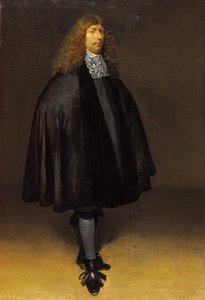
Gerard ter Borch
1617 - 1681 , Netherlands
Quick Facts
- Artistic Movement Or Style: Genre painting
- Artists Or Movements Influenced By This Artist: ['Diego Velázquez']
- Artists Who Influenced This Artist:
- Gabriel Metsu
- Gerrit Dou
- Eglon van der Neer
- Johannes Vermeer
- Date Of Birth: December 1617
- Date Of Death: 8 December 1681
- Full Name: Gerard ter Borch
- Nationality: Dutch
- Notable Artworks:
- The Letter
- The Gallant Conversation
- Man on horseback
- Adrian Pauw's arrival in Münster
- Place Of Birth: Zwolle, Netherlands

