 Preview
 Send
Send Share
Share
 Details

 Download
 Similars
 X-Ray
X-Ray Diaporama
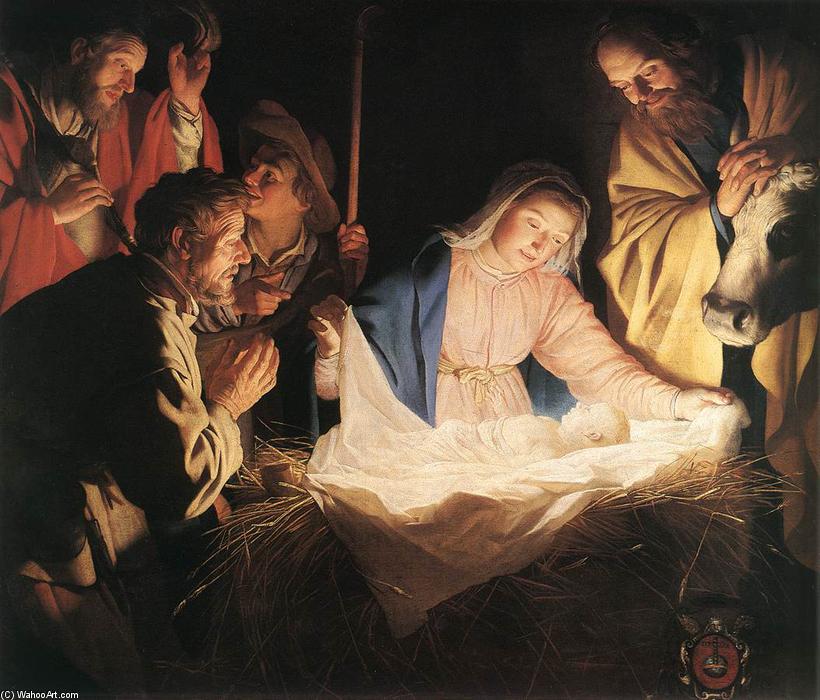
Adoration of the Shepherds
 Acrylic On Canvas
- WallArt
- Baroque
 1622
1622 164.0 x 190.0 cm
 Wallraf-Richartz-Museum
 Read More
Hand Made Oil Reproduction
Hand-painted oil on canvas in your size and frame, made to order by our artists. ( Buy Print Buy Image)




P118B $10

P118H $10

P118W $10

P438Z $10

P508JH $12

P508YH $12

P805H $10

P805Z $10

P919BZ $10

P919G $10

P919XJ $10

P959ZH $10

P968JZ $12

W106C $8

W218G $10

W218JH $8

W218Y $10

W307PJ $10

W316G $10

W316PJ $8

W316Y $10

W398PJ $8

W4111J $10

W500HY $15

W500JH $15

W692G $12

W849H $8

W940BG $15

W953PJ $8




Pick from our preset sizes that match the artwork's original proportions.

You may enter your own dimensions to fit a specific frame or space. If your selected size does not match the original image's proportions, we will either crop the artwork or extend the painting with additional hand-painted elements. A digital mockup will be sent for your approval before production begins.
Please note that the on-screen preview does not reflect the actual cropping or extension. Only the mockup will accurately show the final composition.
While custom sizes are available, we recommend selecting a dimension from the predefined list to preserve the original proportions.
After order, ArtsDot.com team will email client for instructions and provide a mockup preview
Worldwide Delivery () in 3/4 weeks instead of standard 5 weeks. (17 August). No compromise on quality.

Free Worldwide Express Shipping

High-Quality Linen Canvas

Full Shipping Insurance

Customs Tax Refund Guarantee

True Color Matching Guarantee

60-Day Return Policy (Defects Only)

100% Money-Back Guarantee

Bulk Discount Offer
 Glass option is only available in size under 110 CM

Adoration of the Shepherds
Reproduction Medium
Reproduction Size
-


Total Price
$ 263
Artwork Description
A Dramatic Tableau: The Adoration of the Shepherds
Gerard van Honthorst’s “Adoration of the Shepherds,” painted in 1622, isn't merely a depiction of a biblical scene; it’s an immersive experience. This canvas breathes with a palpable sense of reverence and earthly devotion, capturing a pivotal moment in the Nativity story – the arrival of shepherds to witness the birth of Christ. Honthorst, a master of light and shadow, expertly employs his signature *tenebrism*, drawing the viewer into a world where divine grace intersects with the humble realities of rural life. The composition is remarkably dynamic; figures aren’t arranged in a static pose but rather engaged in an active exchange of awe and wonder, creating a powerful sense of immediacy.
The scene unfolds within a darkened interior, likely a modest dwelling, emphasizing the vulnerability and intimacy of the event. Mary, radiant in her maternal grace, cradles the infant Jesus – his face serene, bathed in a soft, diffused light that seems to emanate from him alone. Around her gather the shepherds, their expressions ranging from stunned amazement to quiet contemplation. The horse in the upper right corner, an unexpected element, adds a touch of worldly detail, perhaps symbolizing the connection between the divine and the earthly realms. Honthorst’s meticulous attention to detail – the folds of the garments, the textures of the wood, the subtle nuances of facial expressions – elevates this painting beyond a simple illustration; it becomes a carefully constructed narrative.
The Caravaggist Influence: Light and Shadow as Theology
Honthorst’s artistic journey to Rome in his youth profoundly shaped his style. He was deeply influenced by the revolutionary techniques of Michelangelo Merisi da Caravaggio, particularly his dramatic use of *chiaroscuro*. This technique – a stark contrast between light and dark – isn't just an aesthetic choice; it serves as a powerful theological tool. The intense illumination focused on Mary and Jesus draws our attention to their holiness, while the surrounding darkness symbolizes the mystery and the sacredness of the event. It’s a deliberate strategy to evoke a sense of awe and spiritual contemplation.
The painting's composition echoes Caravaggio’s approach – isolating figures against dark backgrounds, creating a heightened sense of drama and emotional intensity. Honthorst masterfully manipulates light to sculpt forms, highlighting the textures of clothing and flesh, and imbuing each figure with a distinct presence. This masterful use of light isn’t merely decorative; it's integral to conveying the painting’s profound spiritual message.
A Master of Dutch Portraiture: Context and Legacy
Gerard van Honthorst was a pivotal figure in the Dutch Golden Age, renowned for his portraits and religious scenes. Born in Utrecht in 1590, he honed his skills under Abraham Bloemaert before embarking on a transformative journey to Rome, where he encountered Caravaggio’s groundbreaking style. Upon returning to the Netherlands, Honthorst established himself as a leading artist, commanding the patronage of royalty and nobility, including Queen Elizabeth of Bohemia. His work reflects both the influence of Italian Baroque masters and the distinctive characteristics of Dutch art – a blend of dramatic intensity and meticulous realism.
His biography reveals a man who was not only an accomplished painter but also a charismatic personality, known for his lively social life and artistic circles. The “Gherardo delle Notti” nickname, bestowed upon him for his mastery of tenebrism, speaks volumes about his innovative approach to painting. Honthorst’s legacy extends beyond individual masterpieces; he helped shape the course of Dutch art, inspiring generations of artists with his dramatic style and profound understanding of light and shadow.
Reproductions & Artistic Inspiration
Today, reproductions of “Adoration of the Shepherds” continue to captivate viewers. The painting’s evocative atmosphere and masterful technique make it a timeless subject for interior design, adding a touch of drama and spiritual depth to any space. Consider how Honthorst's use of light and shadow can be translated into modern lighting schemes, or how the composition can inform the arrangement of furniture and accessories within a room. The painting’s rich symbolism – humility, faith, and the encounter between the divine and the earthly – offers endless opportunities for artistic interpretation and creative expression.
Related Artworks
Artist Biography
A Master of Light and Shadow: The Life and Art of Gerard van Honthorst
Gerard van Honthorst emerged from Utrecht in 1592, a pivotal figure poised to illuminate the Dutch Golden Age with his dramatic artistry. Initially guided by his father, a decorative painter, young Gerard’s talent blossomed under the tutelage of Abraham Bloemaert, establishing a solid foundation in draftsmanship and composition. However, it was a transformative journey to Rome that irrevocably altered the course of his artistic development. There, amidst the fervent energy of the Italian Baroque, he encountered the groundbreaking work of Caravaggio – an encounter that would define his signature style and earn him the evocative nickname “Gherardo delle Notti,” or Gerard of the Nights. The dramatic use of tenebrism, a technique employing stark contrasts between light and dark, became Honthorst’s hallmark, imbuing his canvases with a palpable sense of drama and emotional intensity. He wasn't merely imitating Caravaggio; he was translating the Italian master’s innovations into a distinctly Dutch sensibility, focusing on intimate scenes illuminated by artificial light sources – candles, lamps, and fires – creating an atmosphere both realistic and deeply theatrical. This mastery over light wasn’t simply technical skill; it was a means of revealing character, of drawing the viewer into the emotional core of each scene.From Roman Acclaim to Dutch Mastery
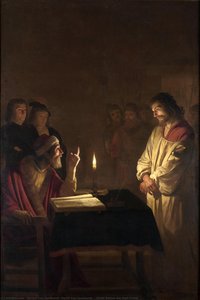
Honthorst's time in Rome was marked by considerable success and patronage. He found favor amongst the city’s elite, including Vincenzo Giustiniani, for whom he created the powerful “Christ Before the High Priest,” a work that exemplifies his masterful command of light and shadow. This painting, now residing in London’s National Gallery, showcases not only his technical skill but also his ability to convey profound psychological depth within his figures. He further solidified his reputation by working for Cosimo II de' Medici, Grand Duke of Tuscany, demonstrating an adaptability and versatility that would serve him well throughout his career. Upon returning to Utrecht around 1620, Honthorst quickly established himself as a leading portrait painter in the Dutch Republic. His ability to capture not just physical likeness but also the character and social standing of his sitters made him highly sought after by wealthy merchants, nobles, and even royalty. He became president of the Guild of St. Luke in Utrecht in 1623, a testament to his growing influence within the artistic community. This period saw a flourishing of commissions, allowing Honthorst to refine his style and establish a distinctive voice within Dutch painting.A Courtly Artist: Commissions and Collaborations
The reach of Honthorst’s talent extended beyond the Netherlands. His work attracted the attention of Sir Dudley Carleton, who enthusiastically recommended him to prominent English aristocrats like the Earl of Arundel and Lord Dorchester. This led to commissions from Queen Elizabeth of Bohemia, sister of Charles I, who employed him as both a painter and drawing master for her children. These royal connections culminated in significant works such as the allegorical depiction of Charles and Henrietta Maria as Diana and Apollo, now housed at Hampton Court Palace. Honthorst’s willingness to collaborate with other artists also speaks to his open-mindedness and artistic generosity. He famously hosted Peter Paul Rubens during a visit to Utrecht, even painting him in a playful scene depicting Diogenes searching for an honest man – a testament to the mutual respect between these two Baroque giants. While some collaborative works, like “The Taking of Christ,” were initially attributed solely to Honthorst, modern scholarship has revealed the contributions of other artists, highlighting the complex dynamics of artistic production during this period. These collaborations weren’t simply about sharing workload; they were intellectual exchanges that enriched the artistic landscape.Legacy and the Utrecht Caravaggisti
Gerard van Honthorst’s influence resonated far beyond his lifetime. He was a key figure in the *Utrecht Caravaggisti* movement – a group of Dutch painters who embraced Caravaggio's dramatic realism and tenebrism. Alongside artists like Hendrick ter Brugghen and Dirck van Baburen, he helped to establish a distinctly Dutch interpretation of Italian Baroque style. His emphasis on genre scenes illuminated by artificial light, his masterful portraits, and his ability to convey emotional depth through skillful use of chiaroscuro left an indelible mark on the development of Dutch Golden Age painting. Even his brother, Willem van Honthorst, followed in his footsteps, though often with works initially misattributed to Gerard due to stylistic similarities.- Honthorst’s paintings continue to captivate audiences today.
- His dramatic beauty and psychological insight are enduring qualities.
- He cemented his place as a pivotal figure in art history.
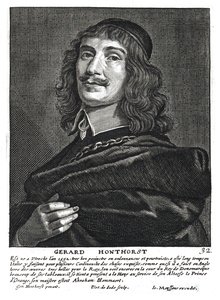
Gerard van Honthorst
1590 - 1656 , Netherlands
Quick Facts
- Artistic Movement Or Style: Baroque, Caravaggism
- Artists Or Movements Influenced By This Artist: ['Utrecht Caravaggisti']
- Artists Who Influenced This Artist: ['Caravaggio']
- Date Of Birth: 1590
- Date Of Death: 1656
- Full Name: Gerard van Honthorst
- Nationality: Dutch
- Notable Artworks:
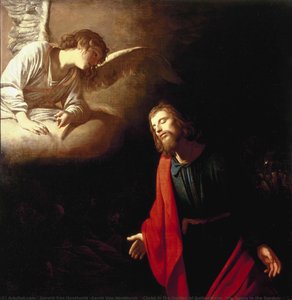
- Christ in the Garden
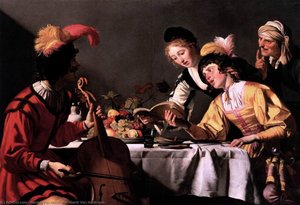
- Supper Party
- Diana and Apollo
- Place Of Birth: Utrecht, Netherlands
Related Articles

Baroque Masterpieces: 10 Paintings That Defined an Era |
Journey through the drama & grandeur of Baroque art! Explore 10 masterpieces by Caravaggio, Rembrandt, Rubens & more. Discover stunning oil paintings, rich colors & timeless stories. Find museum-quality reproductions at .

The Visceral Stage: Exploring Dramatic Narratives & Emotional Intensity in Baroque Art
Explore the dramatic world of Baroque art! Discover iconic masters like Caravaggio & Rembrandt, their techniques, and the movement's lasting impact. Expert insights for collectors & enthusiasts at ArtsDot.
Chiaroscuro & Emotional Resonance: Exploring Dramatic Light in Western Painting
Explore the captivating world of chiaroscuro & tenebrism! Discover Caravaggio's influence, Baroque masters, and the enduring power of dramatic lighting in art history. Learn about these techniques with ArtsDot.

The Dramatic Flourish: Exploring the Baroque Movement's Enduring Legacy in Art History
Explore the dramatic world of Baroque art! Discover iconic artists like Caravaggio & Rubens, defining techniques, and its lasting impact on art history. Expert insights for collectors & enthusiasts at ArtsDot.
Baroque Painting's Greatest Hits: 10 Masterpieces for Your Home | ArtsDot
Journey through Baroque painting's glory! Explore 10 masterpieces by Caravaggio, Rembrandt & Vermeer. Discover dramatic lighting, rich colors & timeless stories. Find museum-quality art reproductions for your home at ArtsDot.com.