 Preview
 Send
Send Share
Share
 Details

 Download
 Similars
 X-Ray
X-Ray Diaporama
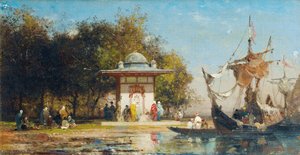
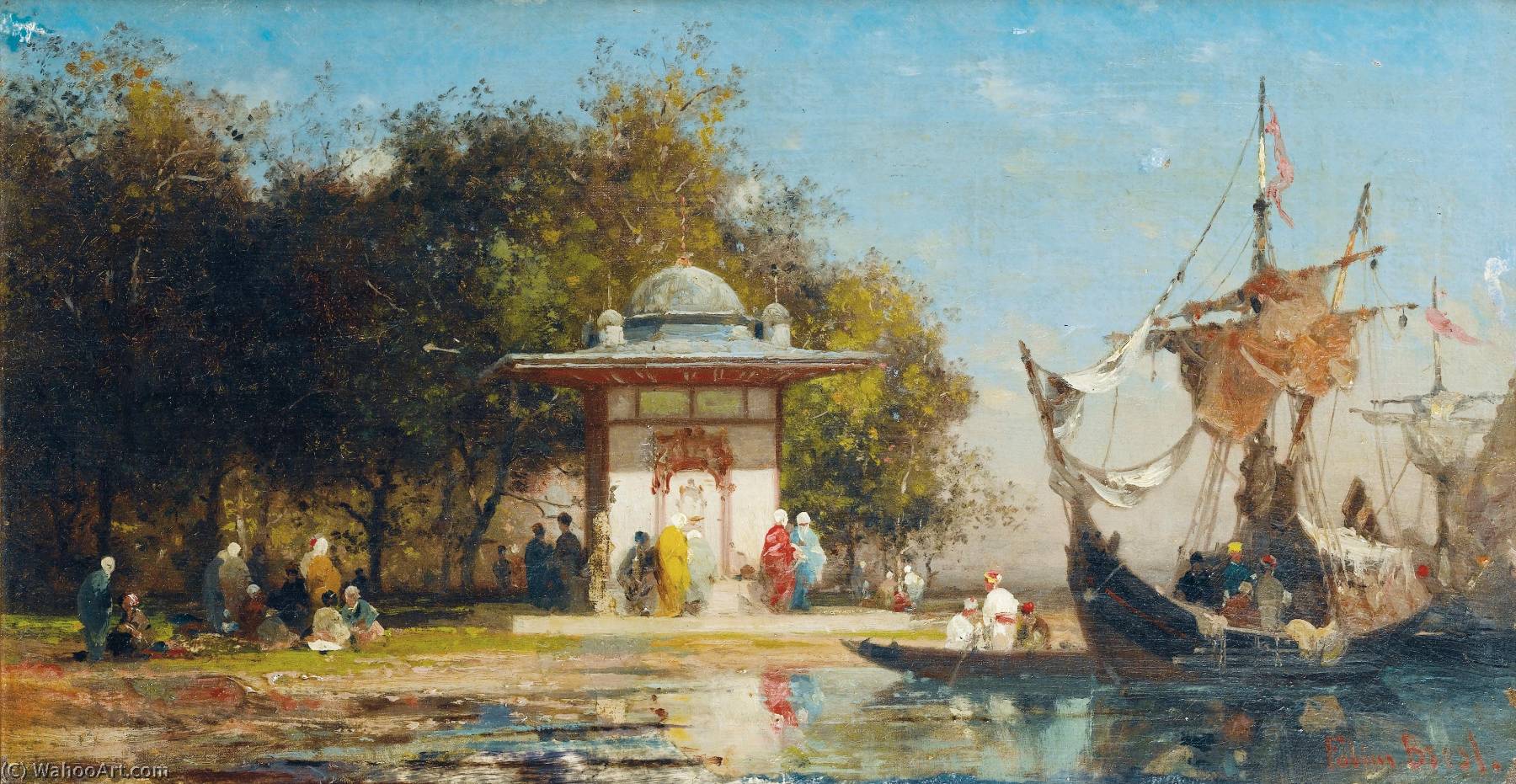
Fontaine au bord de la mer en Turquie
 Read More
Giclée / Art Print
Museum-quality giclée or canvas print with fast production and flexible finish options. ( Buy Hand Made Painting Buy Image)




































Pick from our preset sizes that match the artwork's original proportions.

You may enter your own dimensions to fit a specific frame or space. If your selected size does not match the original image's proportions, we will either crop the artwork or extend the image with a mirrored or solid-fill edge. A digital mockup will be sent for your approval before production begins.
Please note that the on-screen preview does not reflect the actual cropping or extension. Only the mockup will accurately show the final composition.
While custom sizes are available, we recommend selecting a dimension from the predefined list to preserve the original proportions.
Worldwide Delivery () in 2 weeks instead of standard 4/5 weeks. (26 August)

Free Worldwide Express Shipping

High-Quality Linen Canvas

Full Shipping Insurance

Customs Tax Refund Guarantee

True Color Matching Guarantee

60-Day Return Policy (Defects Only)

100% Money-Back Guarantee

Bulk Discount Offer
 Glass option is only available in size under 110 CM

Fontaine au bord de la mer en Turquie
Giclée / Art Print
Reproduction Size
-


Total Price
$ 63
Related Artworks









Artist Biography
A Life Immersed in History and Light: Germain Fabius Brest
Germain Fabius Brest, born in 1823 and passing away in 1900, was a French artist whose work offers a fascinating glimpse into the artistic sensibilities of the 19th century. While not a household name like some of his contemporaries, Brest carved out a unique niche for himself with evocative depictions of Turkey, particularly scenes along the Bosphorus, and a deep fascination with historical themes rooted in Gallo-Roman antiquity. His paintings are characterized by a luminous quality, a delicate handling of light, and a palpable sense of atmosphere that transports the viewer to another time and place.Early Life and Artistic Formation
Details regarding Brest’s early life remain somewhat elusive, a common challenge when researching artists outside the most prominent circles. However, it is known he received formal artistic training in France, likely during the period of Romanticism's waning influence and the rise of Realism. This formative period undoubtedly shaped his approach to subject matter and technique. While not explicitly aligned with any single school, Brest’s work demonstrates a clear understanding of academic principles – particularly in composition and draftsmanship – blended with an emerging interest in capturing the nuances of light and color observed directly from nature. His early works likely focused on traditional landscapes and historical studies, providing him with a solid foundation for his later explorations.The Allure of Turkey: A Defining Focus
Brest’s artistic trajectory took a significant turn with his travels to Turkey. The Ottoman Empire, with its rich cultural heritage, exotic locales, and dramatic landscapes, proved to be a source of endless inspiration. He wasn't merely documenting topography; he was captivated by the *atmosphere* of the region – the bustling harbors, the ancient ruins, the interplay of light on water and stone. His paintings of the Bosphorus are particularly noteworthy, capturing the shimmering beauty of this vital waterway that connects Europe and Asia. These scenes often feature local figures engaged in daily life, adding a human element to the grandeur of the setting. It’s important to note that his depictions were created during a period of increasing European interest in Orientalism, though Brest's work feels less focused on exotic spectacle and more attuned to poetic observation.Historical Echoes: Gallo-Roman Antiquity
Alongside his Turkish landscapes, Brest developed a profound fascination with the remnants of Gallo-Roman civilization in France. He meticulously researched and painted scenes depicting archaeological sites, often focusing on artifacts and architectural fragments. These works weren’t simply historical reconstructions; they were imbued with a sense of reverence for the past and an attempt to connect with the lives of those who came before. His interest aligns with a broader 19th-century revival of classical themes and a growing awareness of national history, particularly evident in the work of artists like Maurice Denis, who similarly sought inspiration in historical narratives. Brest’s paintings often feature detailed depictions of mosaics, sculptures, and architectural elements, demonstrating his commitment to accuracy and scholarly attention.Legacy and Artistic Significance
Germain Fabius Brest's legacy lies in his ability to seamlessly blend meticulous observation with a poetic sensibility. His evocative scenes of Turkey offer a unique perspective on the region during a period of significant cultural exchange, while his historical paintings demonstrate a deep respect for the past. Though perhaps overshadowed by more celebrated contemporaries, Brest’s work continues to resonate with viewers today, offering a captivating glimpse into the artistic and intellectual currents of 19th-century France. His paintings can be found in private collections and museums, including the Prieure museum, providing opportunities to appreciate his delicate technique and atmospheric compositions. He represents a fascinating intersection of Romantic tradition, Realist observation, and a burgeoning interest in both Orientalism and classical history – a testament to the diverse artistic landscape of his time.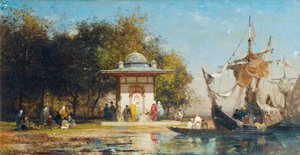
germain fabius brest
1823 - 1900
Quick Facts
- Artistic Movement Or Style: Nabi art
- Date Of Birth: 1823
- Date Of Death: 1900
- Full Name: Germain Fabius Brest
- Nationality: French
- Notable Artworks:
- Scenes of Turkey
- Landscapes
- Bosphorus paintings