

 Preview
 Send
Send Share
Share
 Details

 Download
 Similars
 X-Ray
X-Ray Diaporama
 Stats
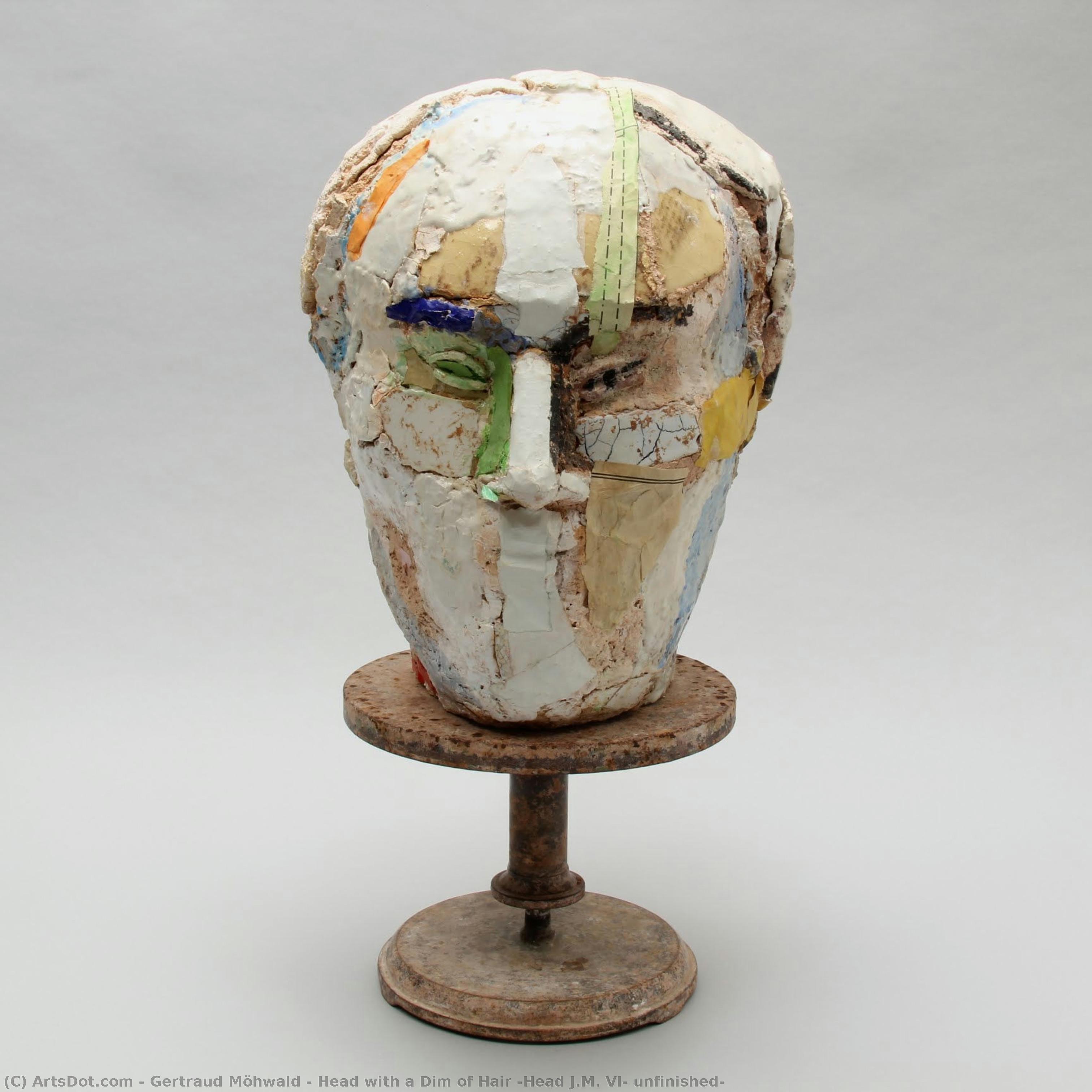
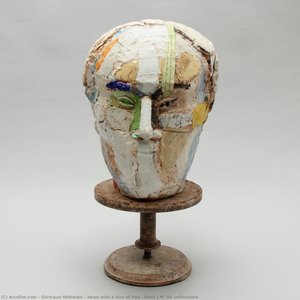
StatsHead with a Dim of Hair (Head J.M. VI, unfinished)
 2002
2002 32.0 x 29.0 cm
 Gardiner Museum of Ceramic Art
 Read More
Giclée / Art Print
Museum-quality giclée or canvas print with fast production and flexible finish options. ( Buy Hand Made Painting Switch to Digital Image)




































Pick from our preset sizes that match the artwork's original proportions.

You may enter your own dimensions to fit a specific frame or space. If your selected size does not match the original image's proportions, we will either crop the artwork or extend the image with a mirrored or solid-fill edge. A digital mockup will be sent for your approval before production begins.
Please note that the on-screen preview does not reflect the actual cropping or extension. Only the mockup will accurately show the final composition.
While custom sizes are available, we recommend selecting a dimension from the predefined list to preserve the original proportions.
Worldwide Delivery () in 2 weeks instead of standard 4/5 weeks. (9 September)

Free Worldwide Express Shipping

High-Quality Linen Canvas

Full Shipping Insurance

Customs Tax Refund Guarantee

True Color Matching Guarantee

100-Day Return Policy (Defects Only)

100% Money-Back Guarantee

Bulk Discount Offer
 Glass option is only available in size under 110 CM

Head with a Dim of Hair (Head J.M. VI, unfinished)
Giclée / Art Print
Reproduction Size
-


Total Price
$ 63
Related Artworks





Artist Biography
The Soul in the Clay: The Legacy of Gertraud Möhwald
In the quiet, tactile world of contemporary ceramics, few names resonate with as much emotional depth as Gertraud Möhwald. Born in Dresden in 1929, Möhwald emerged as a transformative force within the East German artistic landscape, carving out a niche that transcended mere craftsmanship to reach the heights of fine art sculpture. Her life’s work was a profound meditation on the human condition, expressed through the malleable and often fragile medium of clay. To encounter a Möhwald piece is to witness a dialogue between the permanence of ceramic form and the ephemeral nature of memory.
Möhwald’s artistic journey was deeply rooted in the rigorous academic traditions of her homeland. Her formative years were shaped by her studies in Dresden and her subsequent time at the prestigious Burg Giebichenstein University of Art and Design Halle (Saale). This institution, steeped in the legacy of the Bauhaus movement and the teachings of masters like Gerhard Marcks, provided her with a sophisticated understanding of structural integrity and aesthetic vision. Under the influence of mentors such as Marguerite Friedlaender, she learned to balance industrial precision with sculptural experimentation, a duality that would become a hallmark of her mature style.
Fragmented Beauty and the Art of Remembrance
What truly set Möhwald apart from her contemporaries was her rejection of idealized perfection. While many ceramicists sought smooth, flawless surfaces, Möhwald found beauty in the broken and the weathered. She pioneered a unique sculptural language characterized by the use of fragmented materials, incorporating shards and found objects into her compositions. This technique was not merely an aesthetic choice but a philosophical one; she believed that the memory of what has and what has been was essential to the soul of the work. By embracing the inherent vulnerability of clay, she created figures that felt as though they had survived the passage of time themselves.
Her sculptures, often focusing on human heads and torsos, served as vessels for profound narratives. These were not static portraits but living evocations of emotion, loss, and resilience. Through her mastery of texture and form, she could convey a sense of mourning or a flicker of hope within a single clay fissure. Her work resonated deeply within the socio-political landscape of the GDR, offering a poignant reflection on identity and existence that felt both intensely personal and universally human.
A Lasting Impression on Ceramic History
The significance of Gertraud Möhwald extends far beyond the borders of Germany. Her ability to elevate ceramic sculpture to a medium of high expressive power earned her international recognition and placement in esteemed collections. Her legacy is preserved through her inclusion in prominent institutions, such as the Ceramics Museum Westerwald and various galleries across East Germany, where her work continues to inspire new generations of sculptors.
As we reflect on her contributions, several key elements of her impact become clear:
- Innovation in Materiality: Her pioneering use of fragments and found objects redefined the boundaries of figurative ceramic sculpture.
- Emotional Depth: She successfully bridged the gap between decorative craft and profound psychological portraiture.
- Historical Resonance: Her work stands as a vital artistic record of the cultural and emotional complexities of 20th-century Germany.
Gertraud Möhwald remains a singular figure—a sculptor who looked into the cracks of the earth to find the faces of humanity, leaving behind a body of work that is as enduring as the fired clay from which it was born.
gertraud möhwald
1929 - 2002 , Germany
Quick Facts
- Artistic Movement Or Style: Ceramic Sculpture
- Artists Or Movements Influenced By This Artist: ['Bauhaus']
- Artists Who Influenced This Artist:
- George Harold
- Max Roesler
- Date Of Birth: 1929
- Date Of Death: 2002
- Full Name: Gertraud Möhwald
- Nationality: German
- Notable Artworks:
- Head with a Dim of Hair
- Clay Portraits
- Place Of Birth: Germany