 Preview
 Send
Send Share
Share
 Details

 Download
 Similars
 X-Ray
X-Ray Diaporama
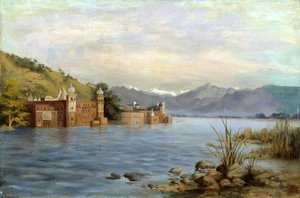
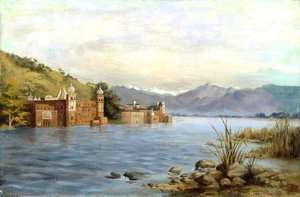
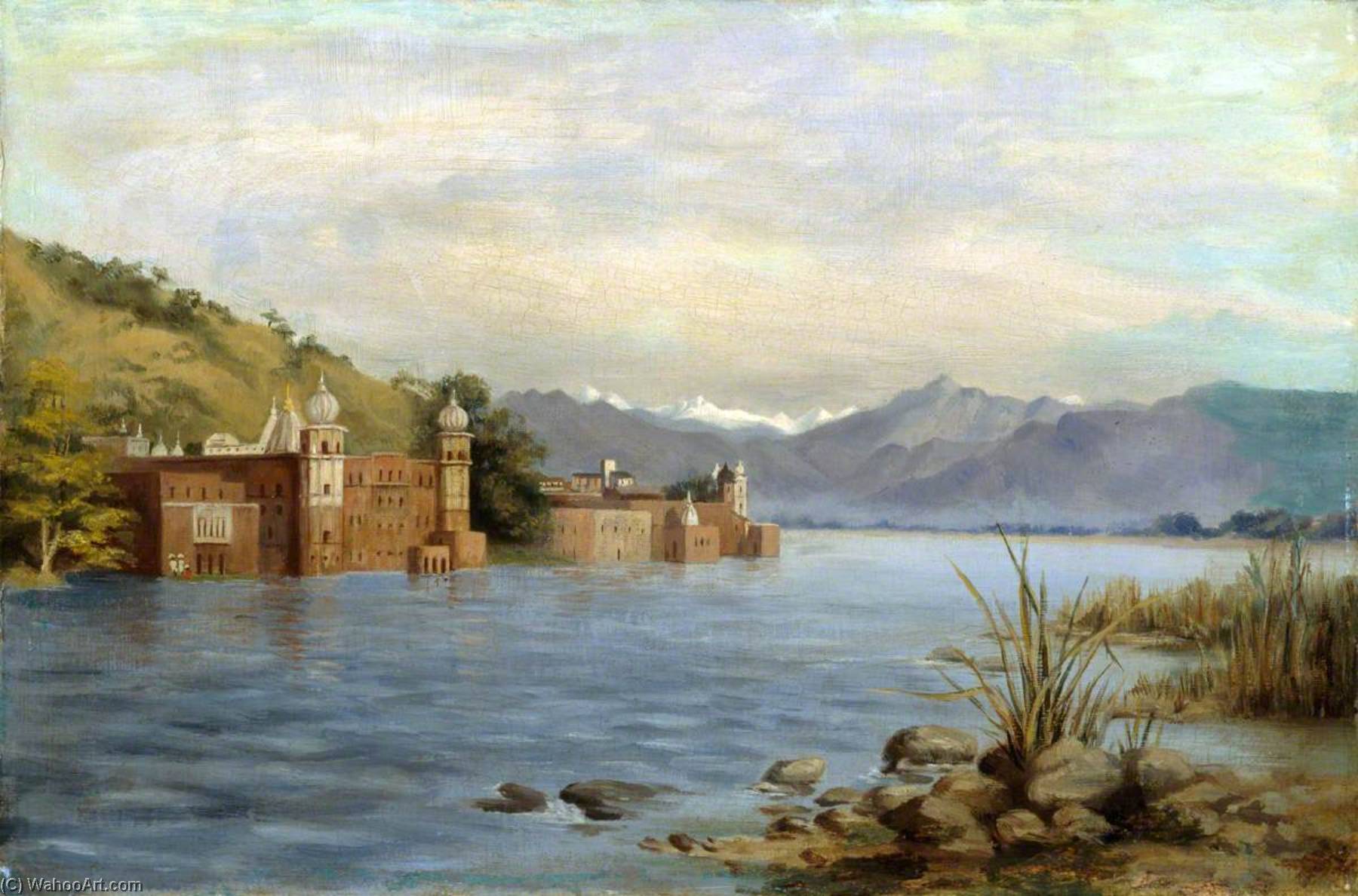
The Ganges at Hardwar (the Himalayan snow peaks of Kedarnath and Badrinath on the distant left, and Nanda Devi on the right)
 1888
1888 30.0 x 46.0 cm
 Read More
Hand Made Oil Reproduction
Hand-painted oil on canvas in your size and frame, made to order by our artists. ( Buy Print Buy Image)




































Pick from our preset sizes that match the artwork's original proportions.

You may enter your own dimensions to fit a specific frame or space. If your selected size does not match the original image's proportions, we will either crop the artwork or extend the painting with additional hand-painted elements. A digital mockup will be sent for your approval before production begins.
Please note that the on-screen preview does not reflect the actual cropping or extension. Only the mockup will accurately show the final composition.
While custom sizes are available, we recommend selecting a dimension from the predefined list to preserve the original proportions.
After order, ArtsDot.com team will email client for instructions and provide a mockup preview
Worldwide Delivery () in 3/4 weeks instead of standard 5 weeks. (27 August). No compromise on quality.

Free Worldwide Express Shipping

High-Quality Linen Canvas

Full Shipping Insurance

Customs Tax Refund Guarantee

True Color Matching Guarantee

60-Day Return Policy (Defects Only)

100% Money-Back Guarantee

Bulk Discount Offer
 Glass option is only available in size under 110 CM

The Ganges at Hardwar (the Himalayan snow peaks of Kedarnath and Badrinath on the distant left, and Nanda Devi on the right)
Reproduction Medium
Reproduction Size
-


Total Price
$ 263
Related Artworks









Artist Biography
The Empathetic Lens of the Himalayas
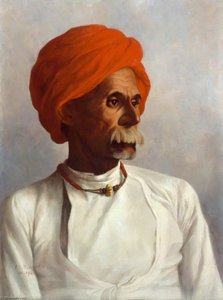
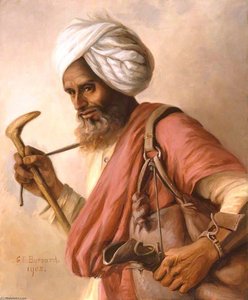
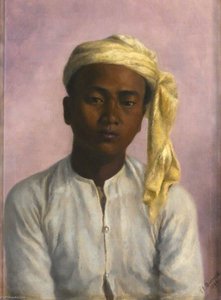
In the vast, sweeping history of British colonial art, few voices resonate with the quiet, profound intimacy found in the works of Gertrude Ellen Burrard. Born in London in 1860, Burrard did not merely observe the edges of the British Empire; she inhabited them, translating the rugged landscapes and diverse faces of India and Tibet into a visual language of deep respect and psychological depth. As the daughter of Sir Sidney Burrard, a prominent figure in the Survey of India, her life was inextricably linked to the scientific and geographical exploration of the subcontinent. Yet, where her father sought to measure the earth through mathematics and triangulation, Gertrude sought to capture its soul through the delicate application of oil on canvas.
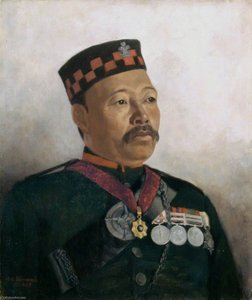
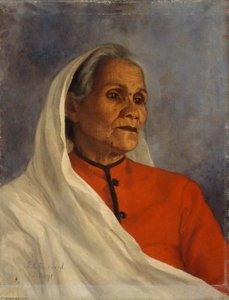
Her artistic journey reached a transformative zenith during her time with the Astronomical Survey Party in Tibet between 1893 and 1894. This period was far more than a mere excursion; it was a profound immersion into a world that remained largely enigmatic to the Western eye. Moving through the harsh, breathtaking terrain of the Himalayas, Burrard undertook extensive fieldwork, documenting the lives of Tibetan villagers with an unwavering dedication to ethnographic truth. Her work transcends the traditional boundaries of colonial documentation, moving past simple caricature to embrace an empathetic gaze that honors the dignity of her subjects.
Technique and the Art of Observation
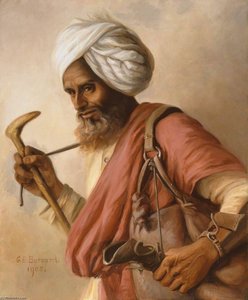
The brilliance of Burrard’s technique lies in her ability to marry rigorous realism with a palpable emotional resonance. Her paintings are masterclasses in the use of light and texture, where every fold of traditional Himalayan clothing and every weathered line on a subject's face tells a story of survival and heritage. By employing oil paints, she achieved a richness of color and a dramatic interplay of light that heightened the atmospheric tension of her compositions. She possessed a rare talent for capturing the subtle nuances of expression—the quiet strength in an elderly man’s eyes or the focused serenity of a woman at work.
Her stylistic development was deeply influenced by the stark, majestic environment of the mountains and the vibrant, often overlooked details of daily life. This is perhaps most evident in her celebrated works, such as:
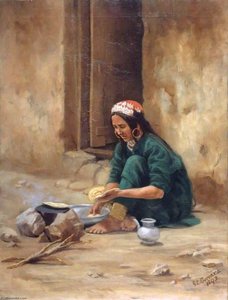
- A Hill Woman from Ladakh, Cooking Her Food: A painting that serves as a window into 1893 Ladakh, rendered with such accuracy that it captures the very essence of domestic ritual amidst a rugged landscape.
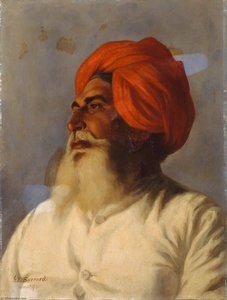
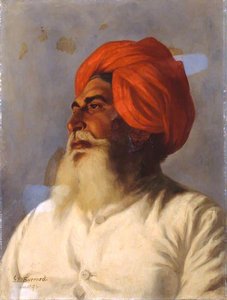
- Gunga, a Hindu from Oudh and a Chaprasi of No.22 Astronomical Survey Party: A portrait that stands as a testament to her ability to bestow profound dignity upon individuals often relegated to the margins of historical records.
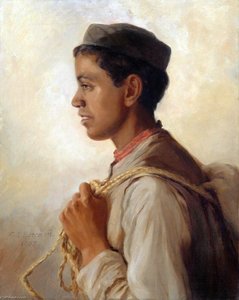
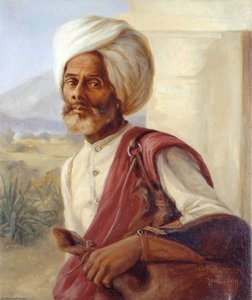
- A Native of Garhwal, in the Attitude of Moving Forward: An evocative piece that captures movement and purpose, reflecting her keen interest in the kinetic energy of human life within the landscape.
Legacy and Historical Significance
The historical significance of Gertrude Ellen Burrard extends far beyond the aesthetic merits of her portraiture. In an era when much colonial art focused on the grandeur of empire or the exoticism of the "other," Burrard offered a different perspective—one rooted in human connection and individual character. She acted as a visual chronicler for the members of the Astronomical Survey Party, preserving the likenesses of those whose lives were part of the great scientific endeavors of the age.
Today, her oeuvre remains a vital resource for understanding the cultural tapestry of the Himalayan regions during the late 19th century. Her ability to blend the precision of an observer with the heart of a storyteller ensures that her work continues to captivate modern audiences. Through her eyes, we do not just see the history of a territory; we encounter the enduring spirit of its people, rendered with a timeless grace that defies the boundaries of time and geography.
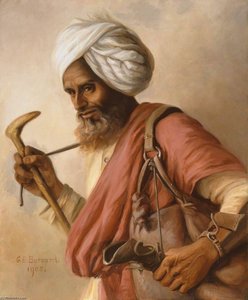
gertrude ellen burrard
1860 - 1928
Quick Facts
- Artistic Movement Or Style: Realism
- Artists Or Movements Influenced By This Artist: ['Impressionism']
- Artists Who Influenced This Artist: ['John Singer Sargent']
- Date Of Birth: 1860
- Date Of Death: 1928
- Full Name: Gertrude Ellen Burrard
- Nationality: British
- Notable Artworks: ['A Hill Woman from Ladakh']
- Place Of Birth: London, England