 Preview
 Send
Send Share
Share
 Details

 Download
 Similars
 X-Ray
X-Ray Diaporama
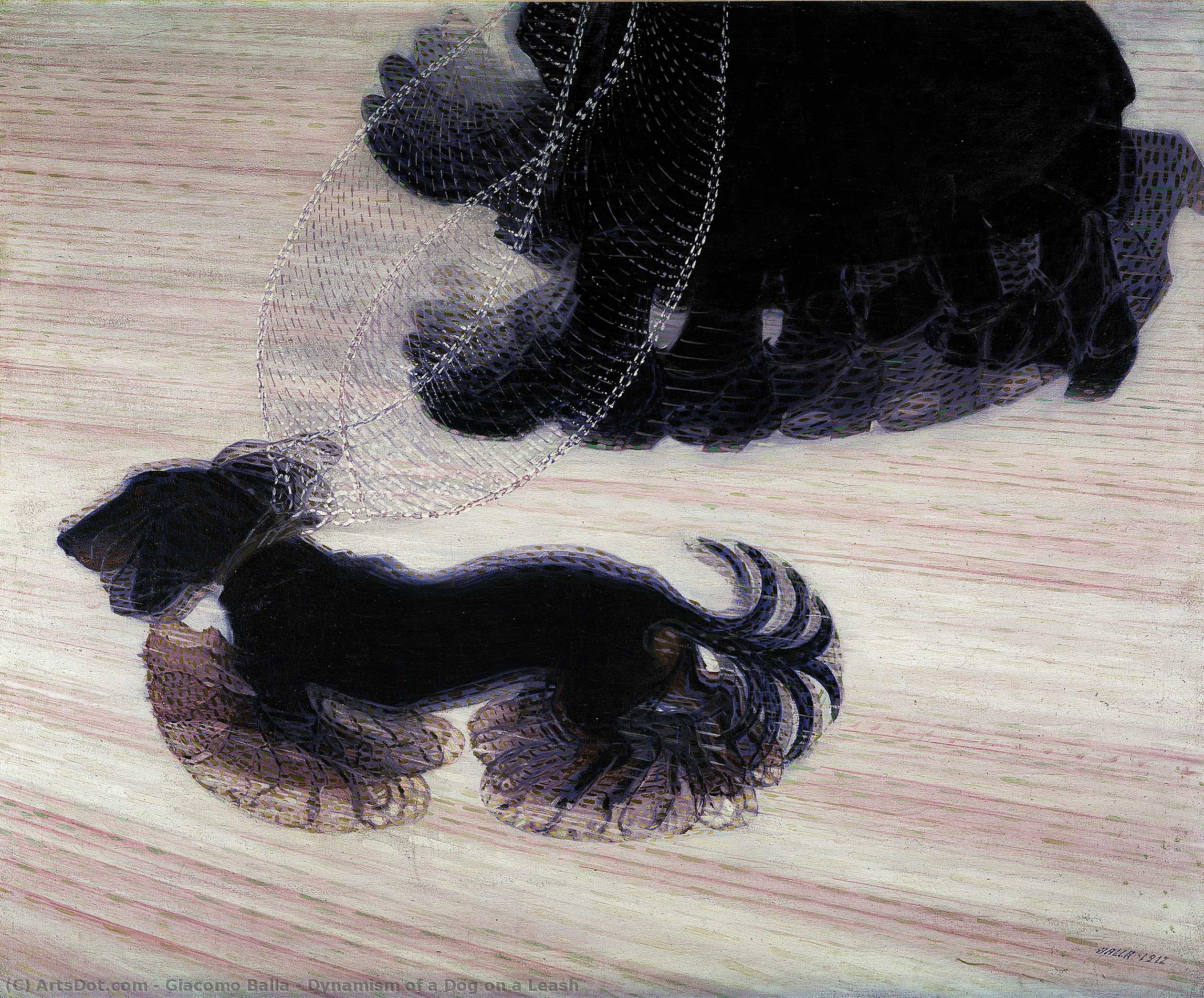
Dynamism of a Dog on a Leash


 Read More
Giclée / Art Print
Museum-quality giclée or canvas print with fast production and flexible finish options. ( Buy Hand Made Painting Buy Image)




































Pick from our preset sizes that match the artwork's original proportions.

You may enter your own dimensions to fit a specific frame or space. If your selected size does not match the original image's proportions, we will either crop the artwork or extend the image with a mirrored or solid-fill edge. A digital mockup will be sent for your approval before production begins.
Please note that the on-screen preview does not reflect the actual cropping or extension. Only the mockup will accurately show the final composition.
While custom sizes are available, we recommend selecting a dimension from the predefined list to preserve the original proportions.
Worldwide Delivery () in 2 weeks instead of standard 4/5 weeks. (17 August)

Free Worldwide Express Shipping

High-Quality Linen Canvas

Full Shipping Insurance

Customs Tax Refund Guarantee

True Color Matching Guarantee

60-Day Return Policy (Defects Only)

100% Money-Back Guarantee

Bulk Discount Offer
 Glass option is only available in size under 110 CM

Dynamism of a Dog on a Leash
Giclée / Art Print
Reproduction Size
-


Total Price
$ 63
Collectible Description
Related Artworks
Artist Biography
Early Life and Training
- Born: Turin, Italy (July 18, 1871)
- Died: 1958
- Giacomo Balla was born into a family with artistic connections; his father was a photographer.
- Initially studied music until the age of nine.
- Following his father's passing, he worked in a lithograph print shop, developing an interest in visual art.
- Studied at local academies and later at the University of Turin.
- Moved to Rome in 1895 where he began working as an illustrator, caricaturist, and portrait painter.
Development and Key Artistic Periods
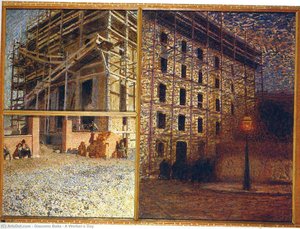
- Divisionism: Early works were influenced by Divisionism, a technique employing small strokes of pure color to create luminosity. This period demonstrated his interest in capturing light effects.
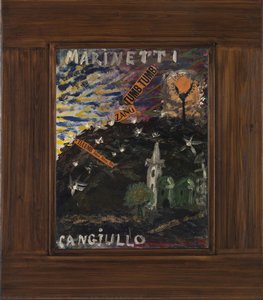
- Futurism: A pivotal moment was his embrace of Futurism after meeting Filippo Tommaso Marinetti. He became a signatory of the Futurist Manifesto in 1910.
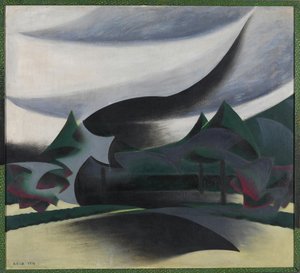
- Futurist Principles: Balla's futurist works focused on depicting light, movement, and speed, often incorporating abstract elements. He extended Futurist principles to furniture design and clothing.
- Later Work: In later years, he distanced himself from the more radical aspects of Futurism, returning to a more traditional figurative style.
Major Works and Artistic Style
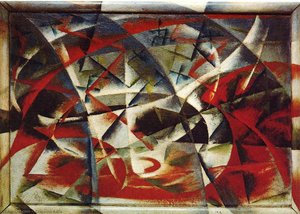
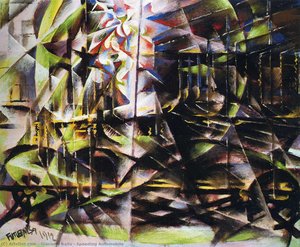
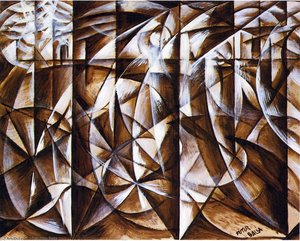
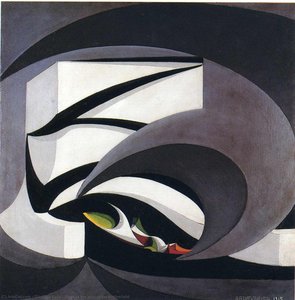
- Abstract Speed + Sound (Velocità Astratta + Rumore): A significant work exploring speed symbolized by an automobile.
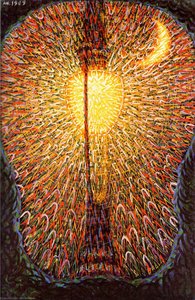
- The Street Light: Exemplifies his exploration of light, atmosphere, and motion.
- Dynamism of a Dog on a Leash: A key piece demonstrating efforts to express movement through painting.
- Boccioni's Fist: Showcases his work as a sculptor within the Futurist movement.
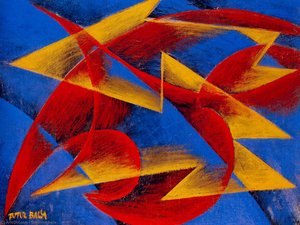
- Style: Balla’s style evolved from Divisionist techniques to dynamic and abstract representations of motion, light, and modern life. He utilized fragmented forms, overlapping planes, and vibrant colors to convey a sense of energy and speed.
Influences and Historical Significance
- Etienne-Jules Marey: Influenced by Marey's chronophotographic experiments which recorded successive stages of movement.
- Filippo Tommaso Marinetti: The Futurist Manifesto and Marinetti’s ideas were crucial in shaping Balla’s artistic direction.
- Historical Significance: As a founding member of the Futurist movement, Balla played a vital role in developing its aesthetic principles and promoting its influence across various art forms. His work helped define early 20th-century modernism and continues to be celebrated for its innovative approach to representing motion and technology.
Legacy and Recognition
- Membership: Became a member of Rome's Accademia di San Luca in 1935.
- Exhibitions: Participated in Documenta 1 in Kassel (1955) and had works exhibited at Documenta 8 (1987).
- Museum Collections: His artworks are held in collections such as the Albright-Knox Art Gallery, the National Academy of Saint Luke in Rome, and the Estorick Collection.
- Balla's legacy lies in his pioneering exploration of movement and dynamism in art, contributing significantly to the development of Futurism and modern artistic expression.
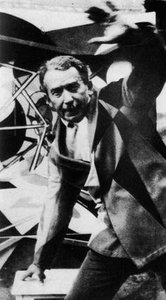
Giacomo Balla
1871 - 1958 , Italy
Quick Facts
- Artistic Movement Or Style: Futurism
- Artists Or Movements Influenced By This Artist:
- Umberto Boccioni
- Gino Severini
- Artists Who Influenced This Artist: ['Etienne-Jules Marey']
- Date Of Birth: July 18, 1871
- Date Of Death: March 1, 1958
- Full Name: Giacomo Balla
- Nationality: Italian
- Notable Artworks:
- Abstract speed + sound
- The street light
- Dynamism of a dog on a leash
- Boccioni's fist
- Nuns and Landscape
- Pessimism and Optimism
- Place Of Birth: Turin, Italy