

 Preview
 Send
Send Share
Share
 Details

 Download
 Similars
 X-Ray
X-Ray Diaporama
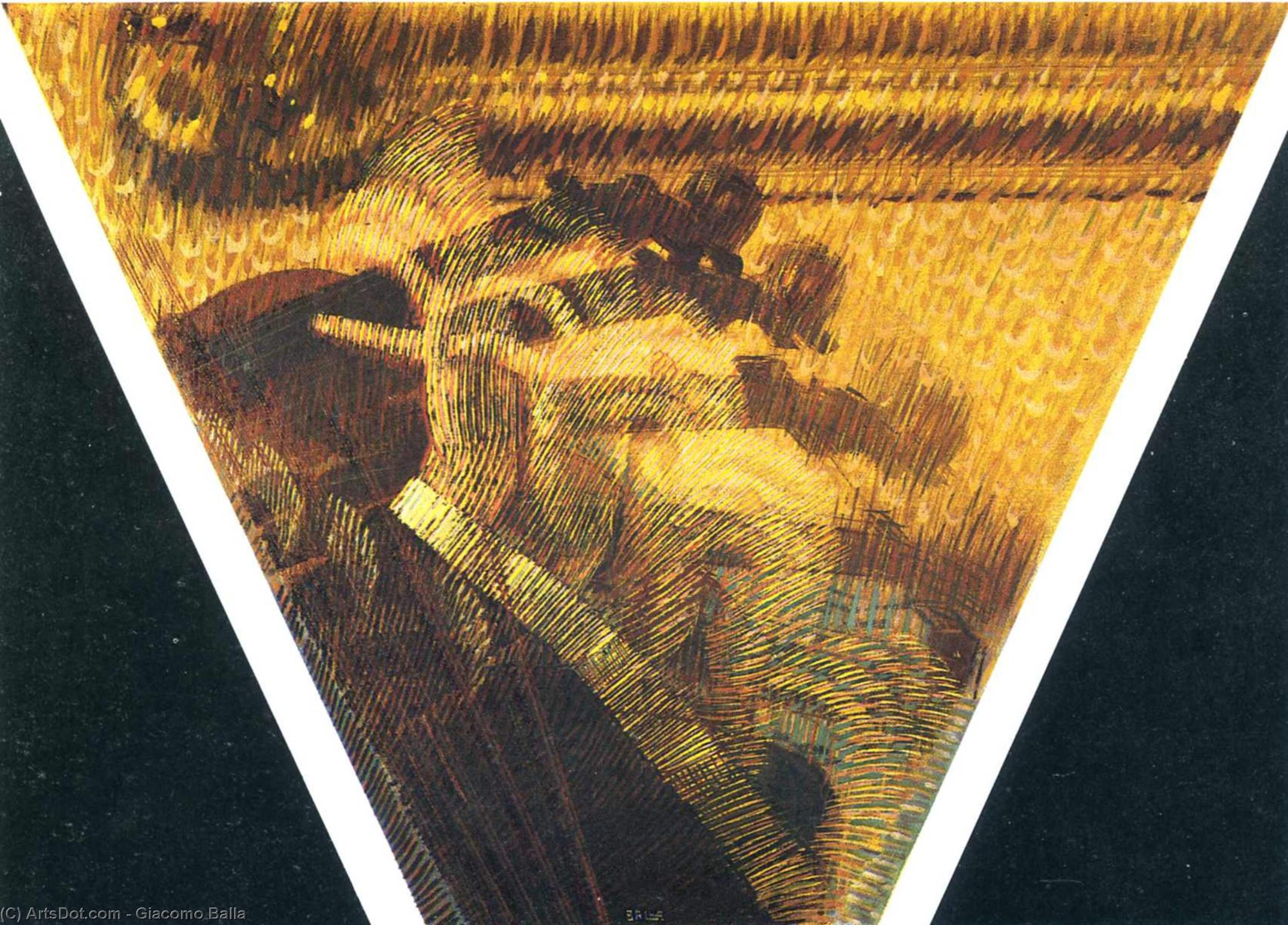
The Hand of the Violinist
 Oil On Canvas
- WallArt
- Futurism
 1912
1912 78.0 x 56.0 cm
 Read More
Purchase a high-resolution, enhanced digital image, far superior to the online preview.
Each file is meticulously prepared by our in-house specialists using advanced tools and expert manual retouching. We ensure every image has exceptional clarity, precise color accuracy, and fine detail.
The final file is delivered via email within 72 hours, optimized for immediate use in professional, editorial, and print environments. This is the same quality trusted by top-tier design studios, publishers, and galleries.
Digital Image
Download a high-resolution file for personal display, printing, and creative projects. ( Buy Print Buy Hand Made Painting)
Included in Every Digital Image Order
Expert Digital Delivery, Guaranteed
When you choose ArtsDot.com, you're not just getting an image - you're receiving a professionally enhanced digital artwork, crafted with precision and backed by a satisfaction guarantee. Here's everything that comes with your order, automatically:

Fast Email Delivery
Your high-resolution digital image file will be emailed to you within 72 hours of ordering - ready for immediate use.

AI-Enhanced Digital File
Your artwork is professionally optimized using advanced AI tools and manual editing, ensuring maximum detail, clarity, and color accuracy.

Free Lifetime Re-Delivery
Accidentally deleted or lost your file? No worries - we'll resend it to you anytime, free of charge.

No Import Fees - Ever
Enjoy your artwork instantly with zero customs, duties, or delivery fees - digital downloads are always tax-free.

Color Accuracy Guarantee
We ensure your digital image reflects the original colors as closely as possible using professional tools and color management.

60-Day Satisfaction Guarantee
If you're not satisfied with your digital image, we'll revise it or refund 100% within 60 days - no questions asked.

100% Money-Back Guarantee
Not satisfied? Get a full refund within 60 days of receiving your digital file - no questions asked.

Bulk Order Discounts
Buy 3 images, save 10% - Buy 5, save 15% - Buy 10+, save 20%. Great for creative projects, galleries, and agencies.
Capturing the Velocity of Being: An Encounter with Balla's Energy
To stand before Giacomo Balla’s The Hand of the Violinist is not merely to observe a painting; it is to experience a sudden, vibrant jolt of kinetic energy. This masterpiece, born in 1912, pulses with the very spirit of its time—the dawn of the twentieth century's relentless march toward modernity. Balla, an artist deeply immersed in the revolutionary fervor of Futurism, did not simply paint what he saw; he painted what he felt: the exhilarating rush of speed, the electric hum of contemporary life. The canvas itself seems to vibrate, pulling the viewer into a dynamic vortex where music and motion become indistinguishable.
The Futurist Vision: Movement Made Visible
As a key proponent of Futurism, Balla was obsessed with capturing dynamism. His work rejects the static contemplation favored by earlier eras, instead embracing the fleeting, fragmented beauty of action. In The Hand of the Violinist, this principle is executed with breathtaking fervor. The composition eschews traditional, solid forms for an exhilarating interplay of lines and suggested vectors. Balla utilized bold colors and sharp geometric suggestions not just as decoration, but as structural components that articulate the very act of playing—the sweep of the bow, the tension in the fingers, the resonance emanating from the instrument itself. It is a visual manifesto celebrating technology, youth, and the unstoppable forward momentum of human endeavor.
Technique and Texture: A Study in Impasto Energy
Examining the surface reveals Balla’s masterful handling of oil paint on canvas. While the overall impression speaks to the sharp angularity characteristic of Futurism, there is an underlying textural richness that grounds the piece. The application of paint suggests a vigorous, almost urgent touch—a technique that allows light and shadow to play across planes defined by pure energy rather than solid mass. This visible brushwork acts as a conduit for the painting's inherent motion, inviting the collector to appreciate the physical labor and intellectual rigor poured into every stroke. It is a testament to an artist who saw paint not just as pigment, but as a medium capable of recording vibration.
Symbolism and Emotional Resonance
Beyond the technical brilliance lies a profound emotional current. The hand itself—the conduit between musician and music—becomes a potent symbol. It represents human connection, disciplined artistry, and the ability to translate an internal, ephemeral emotion into a tangible, audible form. For the modern collector or designer, this piece offers more than mere decoration; it is a conversation starter, a focal point that speaks of passion, intellectual vitality, and an appreciation for art that refuses to be contained by history's dusty conventions. It injects a necessary dose of vibrant, forward-thinking spirit into any space.
Related Artworks


Artist Biography
Early Life and Training
- Born: Turin, Italy (July 18, 1871)
- Died: 1958
- Giacomo Balla was born into a family with artistic connections; his father was a photographer.
- Initially studied music until the age of nine.
- Following his father's passing, he worked in a lithograph print shop, developing an interest in visual art.
- Studied at local academies and later at the University of Turin.
- Moved to Rome in 1895 where he began working as an illustrator, caricaturist, and portrait painter.
Development and Key Artistic Periods
- Divisionism: Early works were influenced by Divisionism, a technique employing small strokes of pure color to create luminosity. This period demonstrated his interest in capturing light effects.
- Futurism: A pivotal moment was his embrace of Futurism after meeting Filippo Tommaso Marinetti. He became a signatory of the Futurist Manifesto in 1910.
- Futurist Principles: Balla's futurist works focused on depicting light, movement, and speed, often incorporating abstract elements. He extended Futurist principles to furniture design and clothing.
- Later Work: In later years, he distanced himself from the more radical aspects of Futurism, returning to a more traditional figurative style.
Major Works and Artistic Style
- Abstract Speed + Sound (Velocità Astratta + Rumore): A significant work exploring speed symbolized by an automobile.
- The Street Light: Exemplifies his exploration of light, atmosphere, and motion.
- Dynamism of a Dog on a Leash: A key piece demonstrating efforts to express movement through painting.
- Boccioni's Fist: Showcases his work as a sculptor within the Futurist movement.
- Style: Balla’s style evolved from Divisionist techniques to dynamic and abstract representations of motion, light, and modern life. He utilized fragmented forms, overlapping planes, and vibrant colors to convey a sense of energy and speed.
Influences and Historical Significance
- Etienne-Jules Marey: Influenced by Marey's chronophotographic experiments which recorded successive stages of movement.
- Filippo Tommaso Marinetti: The Futurist Manifesto and Marinetti’s ideas were crucial in shaping Balla’s artistic direction.
- Historical Significance: As a founding member of the Futurist movement, Balla played a vital role in developing its aesthetic principles and promoting its influence across various art forms. His work helped define early 20th-century modernism and continues to be celebrated for its innovative approach to representing motion and technology.
Legacy and Recognition
- Membership: Became a member of Rome's Accademia di San Luca in 1935.
- Exhibitions: Participated in Documenta 1 in Kassel (1955) and had works exhibited at Documenta 8 (1987).
- Museum Collections: His artworks are held in collections such as the Albright-Knox Art Gallery, the National Academy of Saint Luke in Rome, and the Estorick Collection.
- Balla's legacy lies in his pioneering exploration of movement and dynamism in art, contributing significantly to the development of Futurism and modern artistic expression.
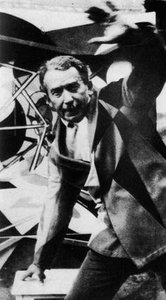
Giacomo Balla
1871 - 1958 , Italy
Quick Facts
- Artistic Movement Or Style: Futurism
- Artists Or Movements Influenced By This Artist:
- Umberto Boccioni
- Gino Severini
- Artists Who Influenced This Artist: ['Etienne-Jules Marey']
- Date Of Birth: July 18, 1871
- Date Of Death: March 1, 1958
- Full Name: Giacomo Balla
- Nationality: Italian
- Notable Artworks:
- Abstract speed + sound
- The street light
- Dynamism of a dog on a leash
- Boccioni's fist
- Nuns and Landscape
- Pessimism and Optimism
- Place Of Birth: Turin, Italy

