 Preview
 Send
Send Share
Share
 Details

 Download
 Similars
 X-Ray
X-Ray Diaporama
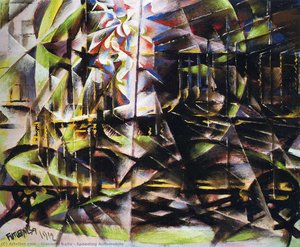
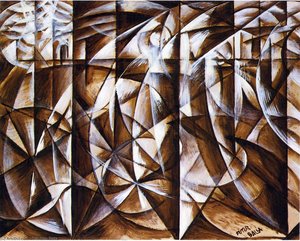
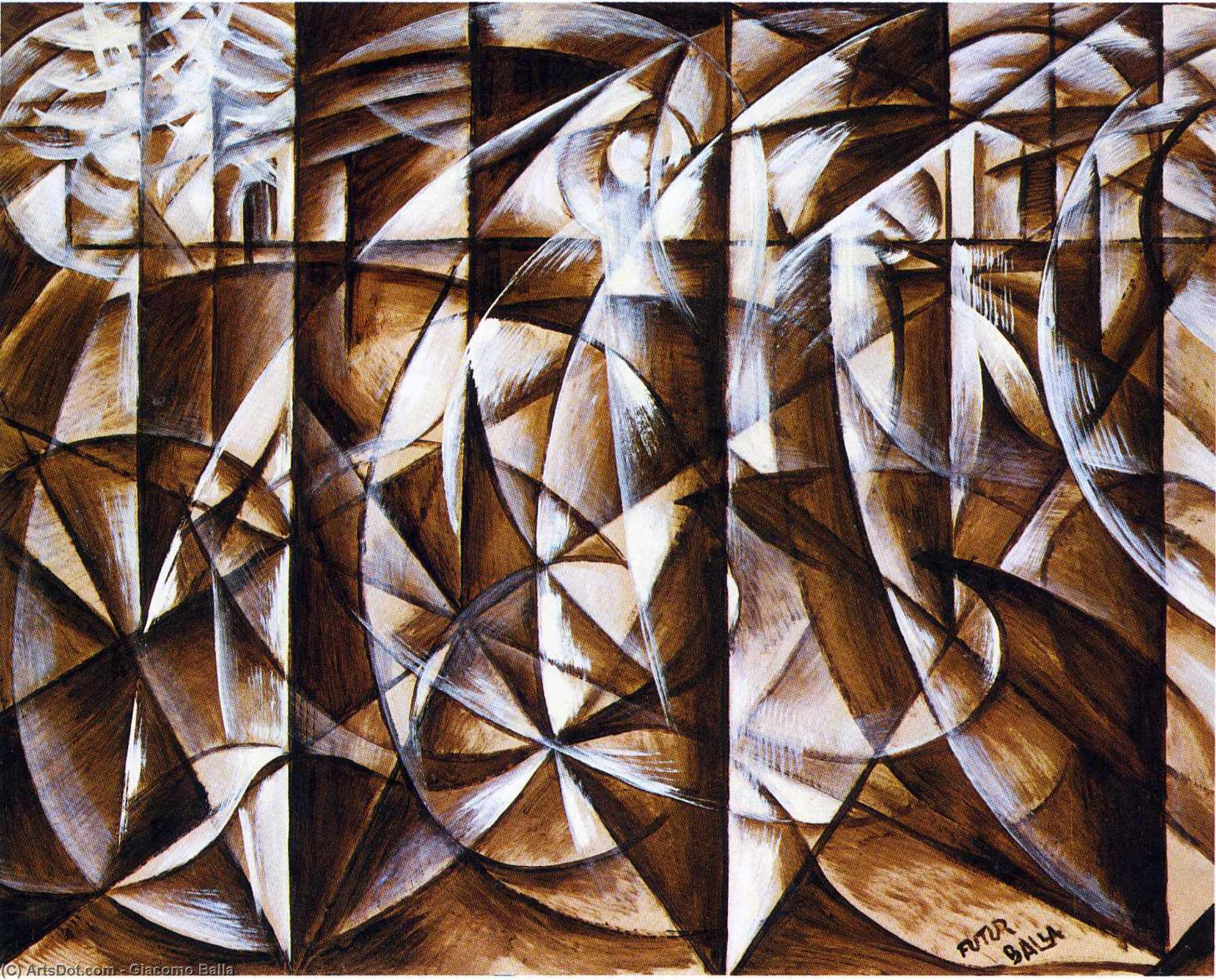
Velocity of Cars and Light
 Oil On Canvas
- WallArt
- Futurism
 1913
1913- Modern
 109.0 x 84.0 cm
 Read More
Giclée / Art Print
Museum-quality giclée or canvas print with fast production and flexible finish options. ( Buy Hand Made Painting Buy Image)




P118B $10

P118H $10

P118W $10

P438Z $10

P508JH $12

P508YH $12

P805H $10

P805Z $10

P919BZ $10

P919G $10

P919XJ $10

P959ZH $10

P968JZ $12

W106C $8

W218G $10

W218JH $8

W218Y $10

W307PJ $10

W316G $10

W316PJ $8

W316Y $10

W398PJ $8

W4111J $10

W500HY $15

W500JH $15

W692G $12

W849H $8

W940BG $15

W953PJ $8




Pick from our preset sizes that match the artwork's original proportions.

You may enter your own dimensions to fit a specific frame or space. If your selected size does not match the original image's proportions, we will either crop the artwork or extend the image with a mirrored or solid-fill edge. A digital mockup will be sent for your approval before production begins.
Please note that the on-screen preview does not reflect the actual cropping or extension. Only the mockup will accurately show the final composition.
While custom sizes are available, we recommend selecting a dimension from the predefined list to preserve the original proportions.
Worldwide Delivery () in 2 weeks instead of standard 4/5 weeks. (27 August)

Free Worldwide Express Shipping

High-Quality Linen Canvas

Full Shipping Insurance

Customs Tax Refund Guarantee

True Color Matching Guarantee

60-Day Return Policy (Defects Only)

100% Money-Back Guarantee

Bulk Discount Offer
 Glass option is only available in size under 110 CM

Velocity of Cars and Light
Giclée / Art Print
Reproduction Size
-


Total Price
$ 63
Collectible Description
The Pulse of Modernity: Capturing Motion in Balla's Vision
In the early twentieth century, as the roar of engines began to redefine the urban landscape, Giacomo Balla captured the very essence of this transformation in his 1913 masterpiece, Velocity of Cars and Light. This painting is not merely a depiction of vehicles; it is a visceral experience of the Futurist movement's obsession with speed, technology, and the relentless forward march of time. Through a masterful application of blurred forms and rhythmic lines, Balla invites the viewer to step into a world where the boundaries between solid objects and pure energy begin to dissolve. The composition vibrates with an inherent restlessness, pulling the eye across the canvas in a dance of light and shadow that mirrors the frantic pace of modern life.
The technique employed here is a profound evolution of Balla's earlier Divisionist roots. While he retains a sensitivity to how light interacts with surfaces, he moves beyond static luminosity to embrace the concept of "dynamic sensation." The cars are rendered not as distinct mechanical entities, but as streaking, ephemeral shapes that bleed into their surroundings. This intentional blurring creates a sense of kinetic energy, making the viewer feel the rush of wind and the vibration of the street. The palette, dominated by earthy, sophisticated shades of brown and sepia, provides a grounded, almost nostalgic warmth that contrasts beautifully with the radical, avant-garde subject matter, lending the piece a timeless, atmospheric quality.
For the discerning collector or interior designer, Velocity of Cars and Light offers a unique opportunity to introduce a sense of historical drama and sophisticated movement into a space. The painting serves as a powerful focal point that commands attention through its complexity and depth. Its ability to evoke both the nostalgia of a bygone era and the excitement of technological progress makes it an ideal centerpiece for contemporary settings, particularly those that value bold, intellectual art. Whether placed in a minimalist gallery-style living room or a refined executive office, this reproduction brings with it the spirit of the Italian Futurists—a celebration of life in constant, beautiful motion.
Related Artworks

Artist Biography
Early Life and Training
- Born: Turin, Italy (July 18, 1871)
- Died: 1958
- Giacomo Balla was born into a family with artistic connections; his father was a photographer.
- Initially studied music until the age of nine.
- Following his father's passing, he worked in a lithograph print shop, developing an interest in visual art.
- Studied at local academies and later at the University of Turin.
- Moved to Rome in 1895 where he began working as an illustrator, caricaturist, and portrait painter.
Development and Key Artistic Periods
- Divisionism: Early works were influenced by Divisionism, a technique employing small strokes of pure color to create luminosity. This period demonstrated his interest in capturing light effects.
- Futurism: A pivotal moment was his embrace of Futurism after meeting Filippo Tommaso Marinetti. He became a signatory of the Futurist Manifesto in 1910.
- Futurist Principles: Balla's futurist works focused on depicting light, movement, and speed, often incorporating abstract elements. He extended Futurist principles to furniture design and clothing.
- Later Work: In later years, he distanced himself from the more radical aspects of Futurism, returning to a more traditional figurative style.
Major Works and Artistic Style
- Abstract Speed + Sound (Velocità Astratta + Rumore): A significant work exploring speed symbolized by an automobile.
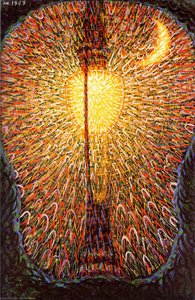
- The Street Light: Exemplifies his exploration of light, atmosphere, and motion.
- Dynamism of a Dog on a Leash: A key piece demonstrating efforts to express movement through painting.
- Boccioni's Fist: Showcases his work as a sculptor within the Futurist movement.
- Style: Balla’s style evolved from Divisionist techniques to dynamic and abstract representations of motion, light, and modern life. He utilized fragmented forms, overlapping planes, and vibrant colors to convey a sense of energy and speed.
Influences and Historical Significance
- Etienne-Jules Marey: Influenced by Marey's chronophotographic experiments which recorded successive stages of movement.
- Filippo Tommaso Marinetti: The Futurist Manifesto and Marinetti’s ideas were crucial in shaping Balla’s artistic direction.
- Historical Significance: As a founding member of the Futurist movement, Balla played a vital role in developing its aesthetic principles and promoting its influence across various art forms. His work helped define early 20th-century modernism and continues to be celebrated for its innovative approach to representing motion and technology.
Legacy and Recognition
- Membership: Became a member of Rome's Accademia di San Luca in 1935.
- Exhibitions: Participated in Documenta 1 in Kassel (1955) and had works exhibited at Documenta 8 (1987).
- Museum Collections: His artworks are held in collections such as the Albright-Knox Art Gallery, the National Academy of Saint Luke in Rome, and the Estorick Collection.
- Balla's legacy lies in his pioneering exploration of movement and dynamism in art, contributing significantly to the development of Futurism and modern artistic expression.
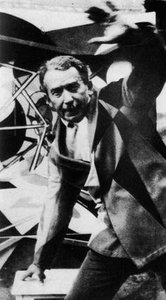
Giacomo Balla
1871 - 1958 , Italy
Quick Facts
- Artistic Movement Or Style: Futurism
- Artists Or Movements Influenced By This Artist:
- Umberto Boccioni
- Gino Severini
- Artists Who Influenced This Artist: ['Etienne-Jules Marey']
- Date Of Birth: July 18, 1871
- Date Of Death: March 1, 1958
- Full Name: Giacomo Balla
- Nationality: Italian
- Notable Artworks:
- Abstract speed + sound
- The street light
- Dynamism of a dog on a leash
- Boccioni's fist
- Nuns and Landscape
- Pessimism and Optimism
- Place Of Birth: Turin, Italy
Related Articles

Earthy Hues & Masterpieces: Top 10 Paintings with 'Mushroom' Tones |
Explore 10 iconic paintings with captivating 'mushroom' tones! Discover Van Gogh, Monet & Rembrandt’s masterpieces—earthy palettes, rich history & artistic techniques. Find museum-quality art reproductions and curated decor ideas at
Rosy Brown Hues: 10 Master Paintings & Timeless Decor Ideas |
Explore 10 iconic paintings bathed in captivating rosy brown tones! From Rembrandt to Titian, discover the stories behind these masterpieces & their warm color palettes. Find museum-quality art reproductions and decor inspiration at .
Sandy Brown Masterpieces: 10 Iconic Paintings & Timeless Decor Ideas
Explore 10 iconic paintings bathed in captivating sandy brown tones! From Rembrandt to Monet, discover the stories behind these timeless masterpieces & find museum-quality art reproductions for your home. Explore the full collection on ArtsDot.com.
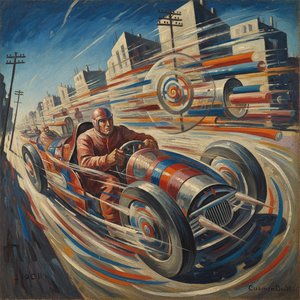
Giacomo Balla: Dynamism, Futurism & the Aesthetic of Speed – A Comprehensive Exploration
Explore the revolutionary art of Giacomo Balla, a key figure in Futurism. Discover his dynamic paintings capturing speed, light & movement. Learn about his techniques, masterpieces & legacy with our comprehensive guide.

John George Brown: Capturing American Life & Sentiment in 19th-Century Genre Painting
Explore the captivating genre paintings of John George Brown, celebrated for his realistic depictions of 19th-century American life. Discover his legacy & find museum-quality reproductions at ArtsDot.