 Preview
 Send
Send Share
Share
 Details

 Download
 Similars
 X-Ray
X-Ray Diaporama
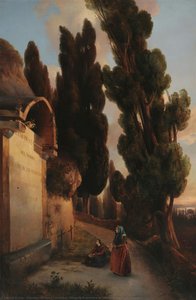
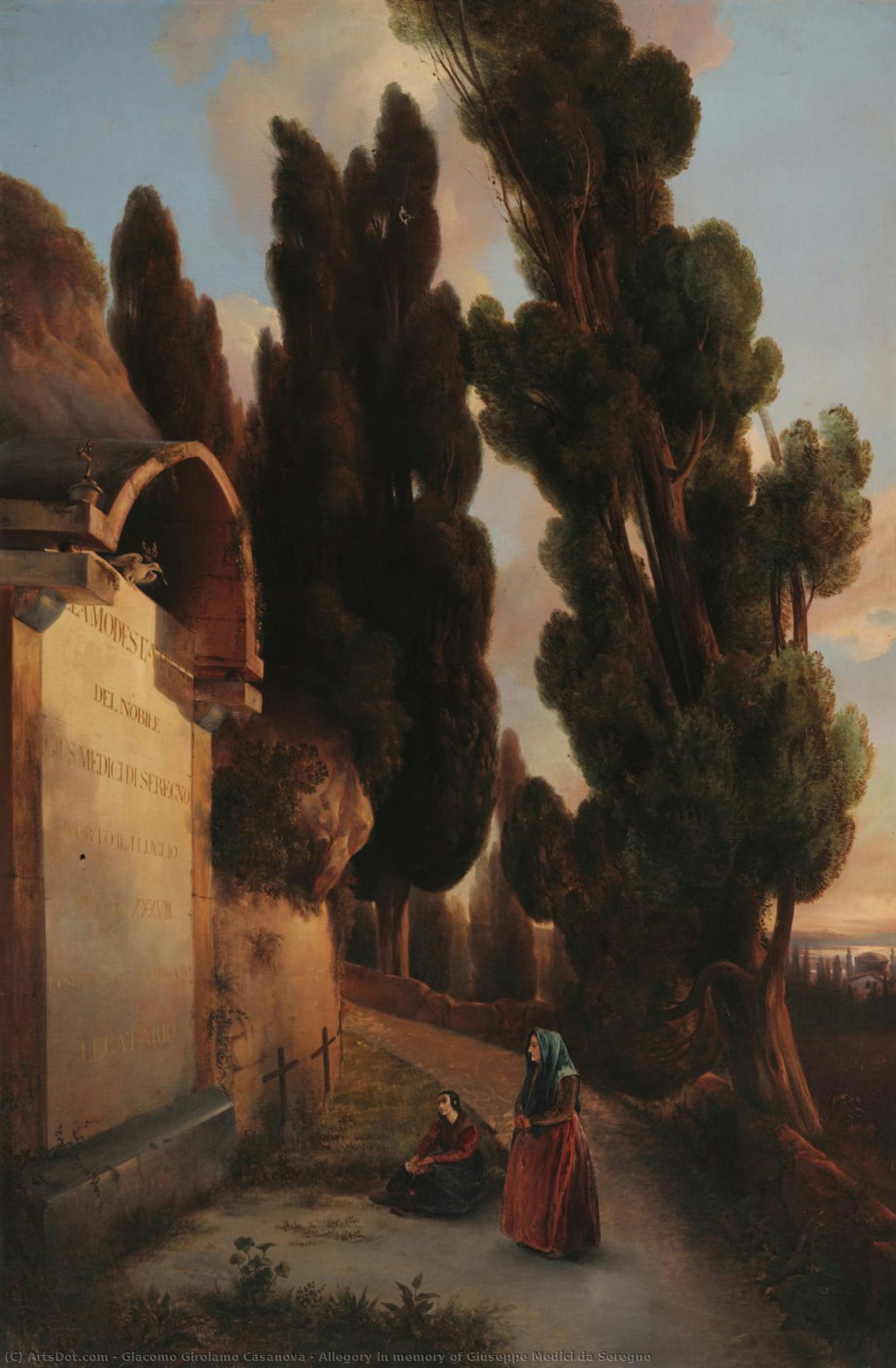
Allegory in memory of Giuseppe Medici da Seregno
 1839
1839 217.0 x 155.0 cm
 Ca’ Granda – Ospedale Maggiore Policlinico
 Read More
Hand Made Oil Reproduction
Hand-painted oil on canvas in your size and frame, made to order by our artists. ( Buy Print Buy Image)




































Pick from our preset sizes that match the artwork's original proportions.

You may enter your own dimensions to fit a specific frame or space. If your selected size does not match the original image's proportions, we will either crop the artwork or extend the painting with additional hand-painted elements. A digital mockup will be sent for your approval before production begins.
Please note that the on-screen preview does not reflect the actual cropping or extension. Only the mockup will accurately show the final composition.
While custom sizes are available, we recommend selecting a dimension from the predefined list to preserve the original proportions.
After order, ArtsDot.com team will email client for instructions and provide a mockup preview
Worldwide Delivery () in 3/4 weeks instead of standard 5 weeks. (2 September). No compromise on quality.

Free Worldwide Express Shipping

High-Quality Linen Canvas

Full Shipping Insurance

Customs Tax Refund Guarantee

True Color Matching Guarantee

60-Day Return Policy (Defects Only)

100% Money-Back Guarantee

Bulk Discount Offer
 Glass option is only available in size under 110 CM

Allegory in memory of Giuseppe Medici da Seregno
Reproduction Medium
Reproduction Size
-


Total Price
$ 263
Related Artworks






Artist Biography
Giacomo Girolamo Casanova: A Venetian Soul Between Light and Shadow
Giacomo Girolamo Casanova (1725–1798) remains one of the most enigmatic figures to emerge from the vibrant, decaying splendor of the Republic of Venice. While history often remembers him through the scandalous lens of his voluminous memoirs, Histoire de ma vie, there exists a profound, more quiet dimension to his life—that of an artist and intellectual deeply embedded in the aesthetic traditions of his homeland. Born into a family where music and performance were the very air they breathed, Casanova was raised in a milieu of sensory richness. His early years were shaped by the rhythmic pulse of Venetian life, a world of masked carnivals, operatic grandeur, and the shimmering reflections of the canals. This upbringing instilled in him an acute sensitivity to beauty, a quality that would later manifest in his pursuit of the visual arts, where he sought to capture the ephemeral magic of light and the dramatic tension of human emotion.The Venetian Legacy and Artistic Foundations
To understand Casanova’s artistic sensibilities, one must look to the giants upon whose shoulders he stood. His training was not merely a matter of technical instruction but an immersion into the Venetian School, a lineage defined by its mastery of color and atmosphere. Influenced heavily by the legacies of Titian, Paolo Veronese, and the subtle tonalism of Giorgione, Casanova’s approach to the canvas was characterized by a deep reverence for chiaroscuro. He possessed a remarkable ability to manipulate the interplay between shadow and illumination, creating works that felt less like static images and more like living, breathing moments captured in time. His brushwork, though rooted in classical precision, often embraced an expressive fluidity that mirrored the restless, itinerant nature of his own life. In his compositions, one can observe a meticulous attention to the textures of Venetian fabrics and the soft, diffused light that defines the Adriatic coast, reflecting a soul that was as much a student of light as it was an adventurer of the world.A Life of Motion and Artistic Expression
Casanova’s life was never stationary; he was a man of constant movement, a wanderer whose path took him from the lecture halls of the University of Padua to the diplomatic courts of Europe. This perpetual state of transition profoundly influenced his creative development. His art was not born in the isolation of a studio but in the observation of a thousand different landscapes and social strata. As he moved through various roles—cleric, soldier, diplomat, and musician—his visual perspective expanded, allowing him to weave a complex tapestry of human experience into his aesthetic vision. The tension between his disciplined academic training and his uninhibited lifestyle created a unique artistic friction. This duality is perhaps the most significant aspect of his legacy: the ability to balance the structured principles of color theory with an almost improvisational spirit that sought to capture the fleeting, often chaotic, essence of 18th-century European life.Historical Significance and Enduring Impression
The historical significance of Giacomo Casanova lies in his role as a living bridge between the grandeur of the Renaissance and the burgeoning complexities of the modern era. While his literary exploits provided a window into the social norms and vices of his time, his artistic contributions offer a visual testament to the enduring power of the Venetian tradition. He remains a symbol of an age where the boundaries between art, life, and legend were perpetually blurred. Through his work, we encounter a man who was simultaneously a participant in the world's most famous dramas and a silent observer of its aesthetic truths. His ability to translate the sensory overload of Venice into the language of paint ensures that his presence is felt not just in the pages of history books, but in the very light and shadow that dance across the canvases of the Venetian masters.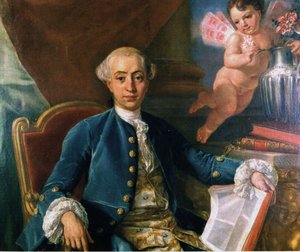
giacomo girolamo casanova
1725 - 1798 , Italy
Quick Facts
- Artistic Movement Or Style: Venetian School
- Artists Or Movements Influenced By This Artist: ['European social life']
- Artists Who Influenced This Artist:
- Titian
- Paolo Veronese
- Date Of Birth: 1725
- Full Name: giacomo girolamo casanova
- Nationality: Italian
- Notable Artworks: ['Allegory in memory of Giuseppe Medici da Seregno']
- Place Of Birth: Venice, Italy