 Preview
 Send
Send Share
Share
 Details

 Download
 Similars
 X-Ray
X-Ray Diaporama
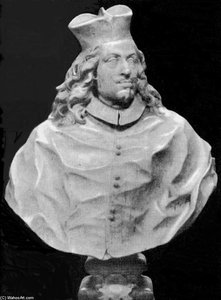
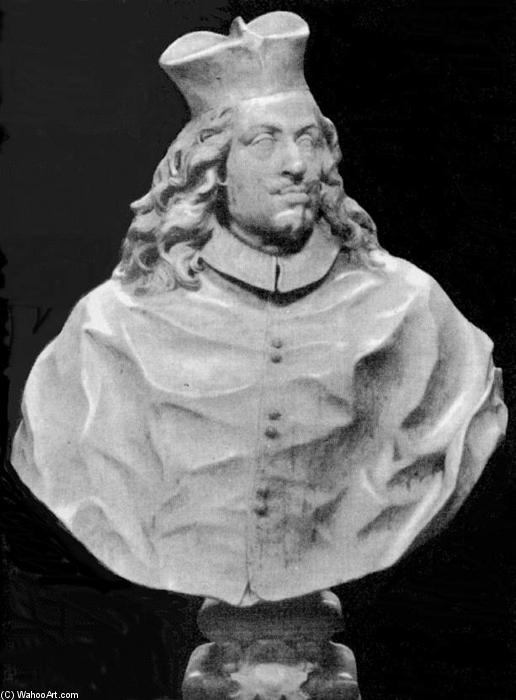
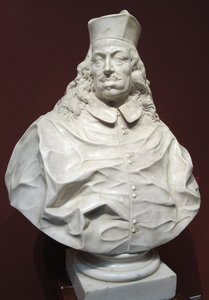
Bust of Cardinal Gian Carlo de' Medici


 Read More
Giclée / Art Print
Museum-quality giclée or canvas print with fast production and flexible finish options. ( Buy Hand Made Painting Buy Image)




P118B $10

P118H $10

P118W $10

P438Z $10

P508JH $12

P508YH $12

P805H $10

P805Z $10

P919BZ $10

P919G $10

P919XJ $10

P959ZH $10

P968JZ $12

W106C $8

W218G $10

W218JH $8

W218Y $10

W307PJ $10

W316G $10

W316PJ $8

W316Y $10

W398PJ $8

W4111J $10

W500HY $15

W500JH $15

W692G $12

W849H $8

W940BG $15

W953PJ $8




Pick from our preset sizes that match the artwork's original proportions.

You may enter your own dimensions to fit a specific frame or space. If your selected size does not match the original image's proportions, we will either crop the artwork or extend the image with a mirrored or solid-fill edge. A digital mockup will be sent for your approval before production begins.
Please note that the on-screen preview does not reflect the actual cropping or extension. Only the mockup will accurately show the final composition.
While custom sizes are available, we recommend selecting a dimension from the predefined list to preserve the original proportions.
Worldwide Delivery () in 2 weeks instead of standard 4/5 weeks. (5 September)

Free Worldwide Express Shipping

High-Quality Linen Canvas

Full Shipping Insurance

Customs Tax Refund Guarantee

True Color Matching Guarantee

60-Day Return Policy (Defects Only)

100% Money-Back Guarantee

Bulk Discount Offer
 Glass option is only available in size under 110 CM

Bust of Cardinal Gian Carlo de' Medici
Giclée / Art Print
Reproduction Size
-


Total Price
$ 63
A Portrait of Dignity and Faith: Giambattista Foggini’s Masterpiece
Giovanni Battista Foggini (1652-1725) stands as a cornerstone of Florentine Baroque sculpture, leaving an indelible mark on architectural embellishment and artistic innovation. Born into a family steeped in artistic heritage—his father was also a sculptor—Foggini's formative years instilled within him a profound appreciation for craftsmanship and aesthetic excellence. Biographical details remain somewhat elusive, yet scholarly research suggests he honed his skills under the tutelage of Alessandro Ludovico Borghese, absorbing techniques and stylistic sensibilities that would characterize his prolific oeuvre.The Sculptor’s Vision: Baroque Influence and Artistic Technique
Foggini's artistic reputation ascended swiftly thanks to his association with Palazzo Pitti and the patronage of Cosimo III de’ Medici, Grand Duke of Tuscany. His sculptural style was profoundly influenced by Bernini’s Roman Baroque, embracing dramatic lighting, meticulous realism, and an unwavering focus on conveying character and status—elements that would permeate his subsequent works. The sculptor employed subtractive sculpting techniques, skillfully removing material from a larger block of marble or stone to reveal the desired form with breathtaking precision. This method ensured not only anatomical accuracy but also captured subtle nuances of texture and drapery, mirroring the grandeur of the Baroque aesthetic.A Medici Legacy: Subject Matter and Symbolic Representation
The subject matter of “Bust of Cardinal Gian Carlo de' Medici” is a portrait commemorating Gian Carlo de’ Medici (1611-1663), son of Cosimo II and brother of Ferdinando II de’ Medici—a figure who initially pursued military ambitions before dedicating himself to the Church. His appointment as cardinal in 1644 signifies his ecclesiastical role, powerfully communicated through the inclusion of the mitre – a tall hat worn by bishops – and flowing clerical robes within the sculpture's composition. These symbols encapsulate not merely religious affiliation but also nobility and authority, reflecting the stature of the Medici family during its zenith.Detailed Examination: Material and Composition
The bust itself is crafted from marble or stone—a testament to Foggini’s mastery of material manipulation. The artist meticulously rendered the subject's facial features with remarkable detail, utilizing directional lighting to accentuate contours and shadows, thereby enhancing the sculpture’s three-dimensionality. Shallow perspective contributes to an immersive experience, prioritizing the bust’s immediate presence against a stark black background that amplifies its form and texture. Lines are predominantly smooth and flowing, delineating folds of clothing and facial expressions with graceful elegance—a hallmark of Baroque sculptural artistry.Historical Significance and Artistic Resonance
“Bust of Cardinal Gian Carlo de' Medici” resides within the broader context of Florentine Baroque sculpture during Cosimo III’s reign, alongside other monumental portraits commissioned to celebrate familial lineage and artistic achievement. The sculpture’s enduring appeal stems from its ability to convey a sense of dignified solemnity—a reflection of the cardinal’s character and spiritual devotion. Furthermore, it serves as an exemplar of Foggini's skill in translating emotion into stone, capturing a subtle introspection that transcends time. Its inclusion in prestigious collections like the Musée du Louvre and The Metropolitan Museum of Art underscores its significance as a masterpiece of Baroque sculpture—a timeless testament to artistic brilliance and humanist ideals.Related Artworks

Artist Biography
The Sculptor of Florentine Grandeur
Giovanni Battista Foggini, a name synonymous with the opulent splendor of the Florentine Baroque, stands as a monumental figure in the history of Italian sculpture. Born in 1652 into a lineage of artisans, his very existence was woven into the fabric of artistic tradition. As the son of a sculptor, the language of form, texture, and medium was his first vernacular. His early training, shaped by the rigorous standards of his family and refined under the guidance of masters like Alessandro Ludovico Borghese, allowed him to absorb the technical precision required for the most demanding commissions. Foggini did not merely practice sculpture; he breathed life into stone and bronze, transforming cold materials into narratives of divine and earthly power.
The trajectory of Foggini’s career was inextricably linked to the illustrious Medici court. This prestigious patronage provided him with an unparalleled stage upon which to display his virtuosity. His ability to navigate the complex social and political landscapes of Florence allowed him to secure works that would define the aesthetic of an era. Through his hands, the architectural spaces of the Medici residences and chapels were transformed into theatrical environments where light and shadow danced across meticulously carved surfaces. His mastery extended beyond the singular figure to the very essence of architectural embellishment, making him a central architect of the Florentine Baroque identity.
Mastery of Form and the Roman Influence
While Foggini’s heart remained rooted in the traditions of Florence, his artistic soul was deeply stirred by the dramatic innovations emerging from Rome. The shadow of Gian Lorenzo Bernini loomed large over the Italian peninsula, and Foggini skillfully integrated this Roman dynamism into his local style. He embraced the theatricality of the Baroque, utilizing contrapposto to instill his figures with a sense of kinetic energy and psychological depth. This infusion of movement allowed his sculptures to transcend static representation, capturing moments of profound emotion and spiritual ecstasy that resonated with the fervor of the Counter-Reformation.
His technical repertoire was as diverse as it was impressive. Whether working in the delicate, translucent medium of marble or the robust, enduring strength of bronze, Foggini demonstrated an uncanny ability to manipulate texture. In his bronze statuary, one can observe a breathtaking attention to detail, where every fold of drapery and every anatomical nuance is rendered with startling realism. This skill is perhaps most evident in his portraiture, such as his Bust of Cardinal Gian Carlo de' Medici, where the artist captures not just the likeness, but the very presence and authority of the subject through expressive detail and masterful modeling.
A Lasting Legacy in Stone and Bronze
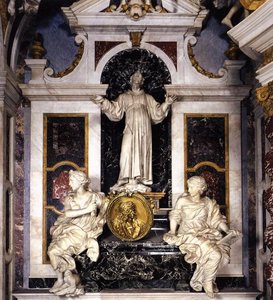
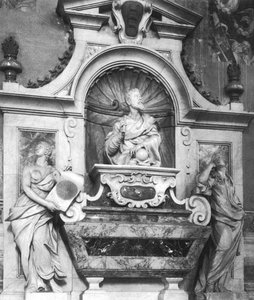
The achievements of Foggini are etched into the very landscape of Florence. His monumental contributions, such as the Tomb of Galileo Galilei and the intricate decorations within the Corsini Chapel, serve as enduring testaments to his ability to marry scientific reverence with religious devotion. In these works, he achieved a rare synthesis of narrative complexity and aesthetic harmony, creating spaces that invite contemplation of both the celestial and the terrestrial.
Beyond individual masterpieces, Foggini’s historical significance lies in his role as the bridge between the late Renaissance traditions of Florence and the exuberant Baroque movement. He revitalized the Florentine sculptural tradition, ensuring it remained a vibrant and competitive force against the Roman school. His legacy is found in:
- The Elevation of Bronze Casting: His ability to push the boundaries of bronze work set new standards for decorative and commemorative sculpture.
- Architectural Integration: His seamless blending of sculptural reliefs with architectural frameworks, as seen in the Decoration of the Feroni Chapel.
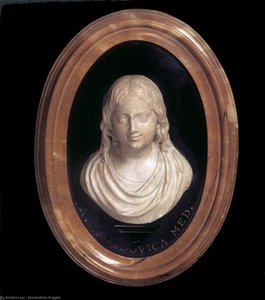
- Portraiture as Narrative: The creation of intimate yet powerful portraits, such as his depiction of Anna Maria Luisa de' Medici as a Child, which captured the human element within the grandiosity of the court.
As we look back upon the life of Giovanni Battista Foggini, we see more than just a skilled craftsman; we see an artist who captured the pulse of an age. His work remains a profound exploration of movement, emotion, and the eternal struggle to immortalize the fleeting beauty of life through the permanence of art.
giambattista foggini
1652 - 1725 , Italy
Quick Facts
- Artistic Movement Or Style: Baroque Sculpture
- Date Of Birth: Florence, Italy (1652)
- Date Of Death: 1725
- Full Name: Giovanni Battista Foggini
- Nationality: Italian
- Notable Artworks:
- Bust of Cardinal Gian Carlo de' Medici
- Tomb of Galileo
- Time Ravishing Beauty
- Place Of Birth: Florence
Related Articles

Bronze Sculptures That Defined Art History | ArtsDot
Journey through art history with our Top 10 bronze sculptures! Explore masterpieces by Rodin, Michelangelo & more. Discover stories behind iconic statues and find museum-quality reproductions for your home decor at ArtsDot.com.

The Enduring Form: Exploring Themes & Techniques in Sculpture Across Historical Periods
Explore the rich history of sculpture from ancient masterpieces to contemporary innovations. Discover key techniques, influential artists & investment potential for discerning art collectors.
The Enduring Form: Sculpture Across History, Technique & Emotional Resonance
Explore the rich history of sculpture with ArtsDot. Discover key techniques, influential artists & investment potential for discerning collectors. Expert insights into valuing and collecting timeless masterpieces.

Bronze Age to Modern Masters: 10 Sculptures That Redefined Art | ArtsDot
Journey through art history with 10 legendary bronze sculptures – from Michelangelo's David to Rodin’s Thinker. Explore the stories, techniques & timeless beauty of these masterpieces. Find museum-quality reproductions & elevate your home decor on ArtsDot.com.
The Enduring Legacy of Bronze Sculpture: History, Techniques & Contemporary Interpretations
Explore the rich history & enduring appeal of bronze sculpture. Learn about casting techniques, iconic artists, collecting tips, & contemporary interpretations. Expert insights for discerning art collectors.