

 Send
Send Share
Share
 Details

 Download
 Similars
 Diaporama
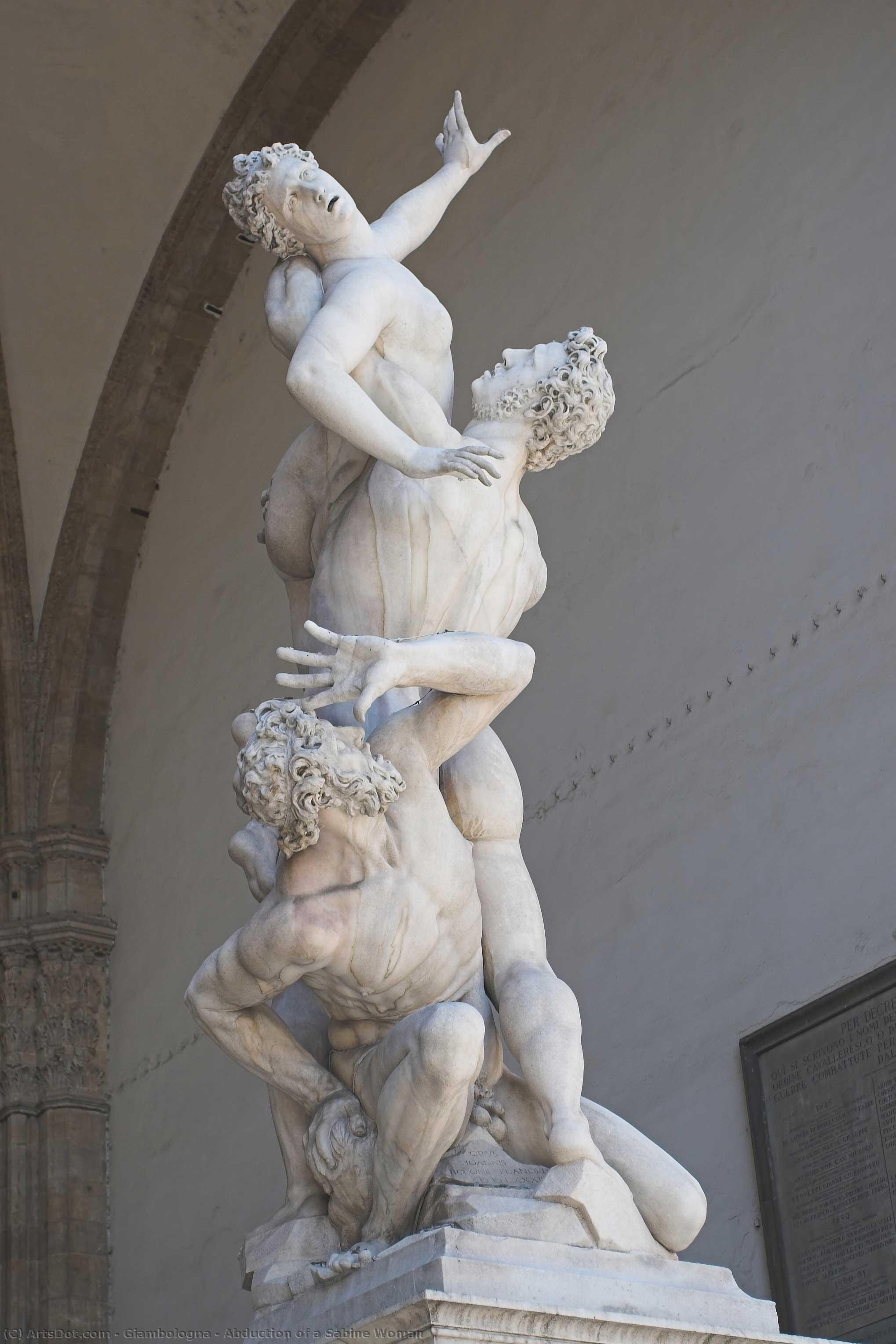
Abduction of a Sabine Woman


 Read More
Purchase a high-resolution, enhanced digital image, far superior to the online preview.
Each file is meticulously prepared by our in-house specialists using advanced tools and expert manual retouching. We ensure every image has exceptional clarity, precise color accuracy, and fine detail.
The final file is delivered via email within 72 hours, optimized for immediate use in professional, editorial, and print environments. This is the same quality trusted by top-tier design studios, publishers, and galleries.
Digital Image
Download a high-resolution file for personal display, printing, and creative projects. ( Buy Print Buy Hand Made Painting)
Included in Every Digital Image Order
Expert Digital Delivery, Guaranteed
When you choose ArtsDot.com, you're not just getting an image - you're receiving a professionally enhanced digital artwork, crafted with precision and backed by a satisfaction guarantee. Here's everything that comes with your order, automatically:

Fast Email Delivery
Your high-resolution digital image file will be emailed to you within 72 hours of ordering - ready for immediate use.

AI-Enhanced Digital File
Your artwork is professionally optimized using advanced AI tools and manual editing, ensuring maximum detail, clarity, and color accuracy.

Free Lifetime Re-Delivery
Accidentally deleted or lost your file? No worries - we'll resend it to you anytime, free of charge.

No Import Fees - Ever
Enjoy your artwork instantly with zero customs, duties, or delivery fees - digital downloads are always tax-free.

Color Accuracy Guarantee
We ensure your digital image reflects the original colors as closely as possible using professional tools and color management.

60-Day Satisfaction Guarantee
If you're not satisfied with your digital image, we'll revise it or refund 100% within 60 days - no questions asked.

100% Money-Back Guarantee
Not satisfied? Get a full refund within 60 days of receiving your digital file - no questions asked.

Bulk Order Discounts
Buy 3 images, save 10% - Buy 5, save 15% - Buy 10+, save 20%. Great for creative projects, galleries, and agencies.
A Moment Frozen in Marble: Giambologna’s Dramatic Narrative
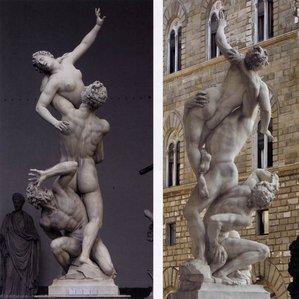
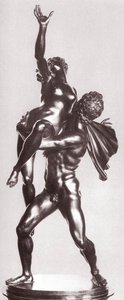
Giambologna's Abduction of a Sabine Woman, completed between 1579 and 1583 for the Medici court in Florence, isn’t merely a sculpture; it’s a meticulously crafted tableau vivant – a scene plucked from ancient Roman legend rendered with breathtaking dynamism and psychological depth. More than just depicting an event, Giambologna captures a potent confluence of power, desire, and resistance, all swirling within a single, exquisitely sculpted form. The work immediately commands attention, not through overt grandeur, but through the sheer intensity of its narrative thrust. It’s a scene brimming with unspoken drama, inviting viewers to contemplate the complexities of human interaction and the enduring fascination with tales of conquest and abduction.

The sculpture’s genesis lies within the turbulent political landscape of Renaissance Florence, a city ruled by the powerful Medici family. Commissioned for Francesco I de' Medici, Grand Duke of Tuscany, it served as both a personal indulgence and a calculated display of wealth and influence – a testament to the Medicis’ patronage of the arts and their ambition to emulate the glory of ancient Rome. Giambologna, already a celebrated sculptor known for his refined style and mastery of marble, was tasked with creating an artwork that would not only showcase his technical skill but also embody the ideals of power, beauty, and civic pride.
The Dance of Figures: Mannerist Composition and Movement
Giambologna’s genius lies in his ability to imbue a static medium – marble – with an astonishing sense of movement. This is achieved through a masterful manipulation of composition, drawing heavily on the principles of the Mannerist style that dominated Italian art during this period. The sculpture isn't arranged in a straightforward, linear fashion; instead, it’s built around a complex, spiraling arrangement of three figures. The central figure, a young man, is caught mid-action, his arm raised as if to grasp or control the woman below him. His posture exudes both aggression and a hint of vulnerability, while the woman's expression – a mixture of terror, defiance, and resignation – speaks volumes about her plight. The older man, positioned between them, embodies the resistance to this forceful intrusion, his stance conveying a sense of desperate protection.
The figures are not rendered as idealized representations of beauty; rather, they possess a raw, almost brutal quality. Giambologna deliberately exaggerates musculature and gestures, creating a heightened sense of drama and emotional intensity. The flowing drapery, meticulously sculpted to suggest movement and texture, further contributes to the sculpture’s dynamic effect. The diagonal lines created by limbs and poses converge towards a central point, drawing the viewer's eye into the heart of the scene.
Crafted from Stone: Technique and Materials
Giambologna’s technical prowess is immediately apparent in the sculpture’s flawless execution. Carved from a single block of pristine white marble – a notoriously challenging feat – it demonstrates an extraordinary level of skill and precision. The surface finish is remarkably smooth, yet subtly textured to reveal the inherent qualities of the stone. The sculptor skillfully employed techniques such as *spaccatura* (a method of creating dramatic cracks in the marble) to enhance the sense of movement and create visual interest. The sheer scale of the sculpture – approximately 4 meters tall – further emphasizes its monumental impact, commanding attention and demanding close observation.
Symbolism and Enduring Resonance
The story depicted in *Abduction of a Sabine Woman* is rooted in Roman mythology, recounting the legendary abduction of the Sabine women by Roman soldiers during the founding of Rome. This event served as a powerful metaphor for the subjugation of foreign cultures and the establishment of Roman dominance. However, Giambologna’s sculpture transcends mere historical narrative; it explores universal themes of power, violence, desire, and resistance. The scene is not simply a depiction of abduction but a complex meditation on the dynamics of control, the struggle for autonomy, and the enduring consequences of conflict. The sculpture continues to resonate with viewers today, prompting reflection on issues of gender, power, and cultural identity.
Related Artworks

Artist Biography
Giambologna: The Sculptor Who Defined Mannerism
Jean Boulogne, later known as Giambologna (1529 – 1608), stands as one of the most influential sculptors of the Italian Renaissance and Baroque periods. Born in Douai, Flanders—now France—his artistic journey began with formative studies under Jacques Du Broeucq in Antwerp before he embarked on a transformative relocation to Rome in 1550, where he immersed himself in the legacy of classical sculpture and absorbed the stylistic innovations championed by Michelangelo. This immersion profoundly shaped his distinctive Mannerist style, characterized by an exquisite sensitivity to surface texture, refined elegance, and a deliberate departure from the emotional fervor prevalent in earlier Renaissance art.- Early Life & Training: Boulogne’s initial artistic inclinations were nurtured in Antwerp's architectural milieu, equipping him with foundational skills that would prove invaluable as he pursued his studies in Rome. His engagement with Michelangelo’s monumental works instilled a deep appreciation for anatomical precision and sculptural dynamism—principles that would become hallmarks of Giambologna’s oeuvre.
- Roman Influence & Patronage: Giambologna's time in Rome coincided with the burgeoning patronage of the Medici family, securing him commissions that propelled his artistic reputation and solidified his position as a leading sculptor of the era. The influence of Michelangelo extended beyond mere stylistic imitation; it fostered a philosophical commitment to achieving idealized beauty through meticulous observation and masterful execution.
The Mannerist Style: A Departure from Tradition
Giambologna’s artistic vision decisively rejected the harmonious balance and emotive grandeur characteristic of High Renaissance sculpture. Instead, he embraced Mannerism—a stylistic movement that prioritized intellectual contemplation over visceral sensation. This approach manifested in several key features: elongated figures with subtly distorted proportions; attenuated drapery conveying a sense of precariousness; and an emphasis on decorative surface treatment—particularly polished marble—that achieved unparalleled luminosity. Giambologna’s sculptures weren't intended to convey immediate emotional impact but rather to provoke reflection upon complex philosophical concepts, mirroring the broader intellectual currents of his time. He skillfully employed *contrapposto*, a pose where the torso tilts slightly away from the viewer, creating an illusion of movement and balance—a technique perfected by Michelangelo and subsequently adopted by Giambologna himself.- Emphasis on Surface Texture: Giambologna’s sculptures are renowned for their extraordinarily refined surface finishes, achieved through painstaking polishing techniques that maximized reflectivity and created a mesmerizing interplay of light and shadow.
- Dynamic Composition & Anatomical Precision: Unlike the idealized forms of Michelangelo, Giambologna's figures possessed an unsettling realism—a deliberate distortion of anatomical proportions designed to heighten expressive tension and convey psychological depth.
Notable Works & Commissions
Giambologna’s prolific output encompassed monumental sculptures for public spaces and intimate portraits alike, cementing his legacy as one of the most celebrated artists of his generation. Among his crowning achievements are:- Neptune Fountain (Bologna): Collaborating with Tommaso Laureti on this ambitious project—the centerpiece of Bologna’s Piazza Nettuno—Giambologna created a colossal bronze sculpture depicting Neptune, god of the sea, surrounded by subsidiary figures embodying various elements of maritime mythology.
- The Rape of Sabine Women (Florence): Completed between 1574 and 1582, this marble masterpiece exemplifies Giambologna’s mastery of Mannerist technique—particularly *contrapposto*—and captures the dramatic narrative of Roman legend with breathtaking precision.
- Mercury Statue (Florence): Giambologna's depiction of Mercury—the messenger god—is celebrated for its graceful pose and luminous surface finish, embodying the spirit of Mannerist elegance and intellectual contemplation.
Legacy & Influence
Giambologna’s influence extended far beyond his lifetime, shaping the artistic sensibilities of subsequent generations and establishing him as a pivotal figure in the transition from Renaissance to Baroque art. His sculptural innovations—particularly his exploration of dynamic movement and psychologically complex figures—provided inspiration for artists such as Bernini and Caravaggio, who embraced Mannerist principles to forge new expressive pathways. Giambologna’s enduring reputation testifies to his unparalleled artistic vision—a testament to his ability to synthesize classical ideals with humanist sensibilities into a singularly compelling aesthetic experience.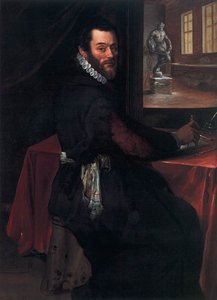
Giambologna
1529 - 1608 , France
Quick Facts
- Artistic Movement Or Style: Mannerist Sculpture
- Artists Or Movements Influenced By This Artist: ['Baroque']
- Artists Who Influenced This Artist: ['Michelangelo']
- Date Of Birth: 1529
- Full Name: Jean Boulogne
- Nationality: Flemish
- Notable Artworks:
- Mercury
- The Rape of the Sabine Women
- Place Of Birth: Douai, France

