 Preview
 Send
Send Share
Share
 Details

 Download
 Similars
 X-Ray
X-Ray Diaporama
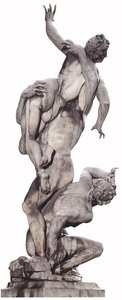
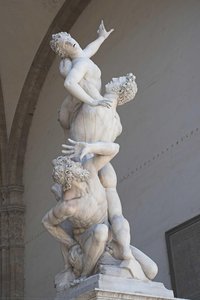
Rape of the Sabines


 Read More
Hand Made Oil Reproduction
Hand-painted oil on canvas in your size and frame, made to order by our artists. ( Buy Print Buy Image)




P118B $10

P118H $10

P118W $10

P438Z $10

P508JH $12

P508YH $12

P805H $10

P805Z $10

P919BZ $10

P919G $10

P919XJ $10

P959ZH $10

P968JZ $12

W106C $8

W218G $10

W218JH $8

W218Y $10

W307PJ $10

W316G $10

W316PJ $8

W316Y $10

W398PJ $8

W4111J $10

W500HY $15

W500JH $15

W692G $12

W849H $8

W940BG $15

W953PJ $8




Pick from our preset sizes that match the artwork's original proportions.

You may enter your own dimensions to fit a specific frame or space. If your selected size does not match the original image's proportions, we will either crop the artwork or extend the painting with additional hand-painted elements. A digital mockup will be sent for your approval before production begins.
Please note that the on-screen preview does not reflect the actual cropping or extension. Only the mockup will accurately show the final composition.
While custom sizes are available, we recommend selecting a dimension from the predefined list to preserve the original proportions.
After order, ArtsDot.com team will email client for instructions and provide a mockup preview
Worldwide Delivery () in 3/4 weeks instead of standard 5 weeks. (17 August). No compromise on quality.

Free Worldwide Express Shipping

High-Quality Linen Canvas

Full Shipping Insurance

Customs Tax Refund Guarantee

True Color Matching Guarantee

60-Day Return Policy (Defects Only)

100% Money-Back Guarantee

Bulk Discount Offer
 Glass option is only available in size under 110 CM

Rape of the Sabines
Reproduction Medium
Reproduction Size
-


Total Price
$ 313
Artwork Description
The Dramatic Narrative of Rape of the Sabines
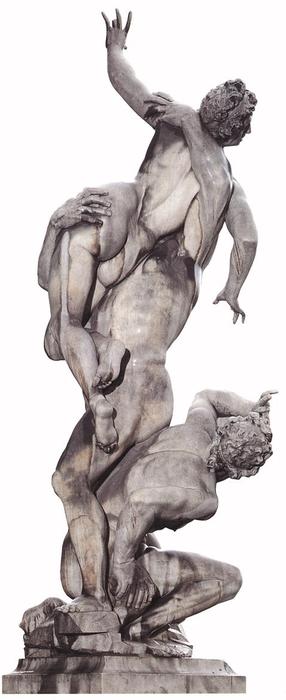
Giambologna’s “Rape of the Sabines,” sculpted in 1581, stands as an emblem of Mannerist art—a stylistic movement that prioritized expressive dynamism and psychological complexity over idealized beauty. Created during Rome's turbulent Baroque era, this monumental sculpture transcends mere depiction; it embodies a profound exploration of violence, desire, and societal upheaval rooted in Roman mythology.
- Historical Context: The abduction of Sabine women by Roman patricians represents a pivotal moment in Roman history—a desperate attempt to solidify alliances and secure the succession. Giambologna’s depiction captures this dramatic tension with meticulous detail, reflecting the anxieties surrounding political instability prevalent at the time.
- Style & Technique: Executed in marble—likely sourced from Carrara—the sculpture exemplifies Mannerist virtuosity through its elongated figures and exaggerated musculature. Giambologna’s masterful carving technique achieves remarkable realism while simultaneously distorting proportions to heighten emotional impact. The subtle patina effect lends a luminous quality to the stone, enhancing its visual allure.
- Composition & Symbolism: The pyramidal composition directs the viewer's gaze upwards towards the central figure—a young Roman man dominating the scene with forceful aggression. The intertwined bodies convey both physical struggle and an underlying psychological drama, symbolizing the clash between masculine dominance and feminine vulnerability. The raised arm of the central figure serves as a visual anchor, emphasizing his unwavering resolve.
- Emotional Impact: “Rape of the Sabines” evokes visceral responses—horror, pity, and fascination—drawing upon Mannerist conventions to unsettle the viewer’s sensibilities. Giambologna skillfully manipulates light and shadow to sculpt dramatic poses that convey intense emotion, capturing the essence of human experience with unparalleled sensitivity.
- Material & Preservation: The sculpture's enduring presence testifies to the exceptional quality of Roman marble craftsmanship. Careful conservation efforts ensure its continued appreciation for generations to come—a testament to Giambologna’s legacy as a sculptor who redefined artistic expression and cemented his place among Rome’s most celebrated artists.
Displayed prominently in Florence's Loggia dei Lanzi, alongside Cellini’s sculptures, “Rape of the Sabines” continues to inspire awe and provoke contemplation. Its masterful execution—a testament to Giambologna’s artistic genius—serves as a cornerstone of Mannerist art history and remains a captivating subject for collectors and interior designers seeking timeless beauty and profound narrative.
Related Artworks
Artist Biography
Giambologna: The Sculptor Who Defined Mannerism
Jean Boulogne, later known as Giambologna (1529 – 1608), stands as one of the most influential sculptors of the Italian Renaissance and Baroque periods. Born in Douai, Flanders—now France—his artistic journey began with formative studies under Jacques Du Broeucq in Antwerp before he embarked on a transformative relocation to Rome in 1550, where he immersed himself in the legacy of classical sculpture and absorbed the stylistic innovations championed by Michelangelo. This immersion profoundly shaped his distinctive Mannerist style, characterized by an exquisite sensitivity to surface texture, refined elegance, and a deliberate departure from the emotional fervor prevalent in earlier Renaissance art.- Early Life & Training: Boulogne’s initial artistic inclinations were nurtured in Antwerp's architectural milieu, equipping him with foundational skills that would prove invaluable as he pursued his studies in Rome. His engagement with Michelangelo’s monumental works instilled a deep appreciation for anatomical precision and sculptural dynamism—principles that would become hallmarks of Giambologna’s oeuvre.
- Roman Influence & Patronage: Giambologna's time in Rome coincided with the burgeoning patronage of the Medici family, securing him commissions that propelled his artistic reputation and solidified his position as a leading sculptor of the era. The influence of Michelangelo extended beyond mere stylistic imitation; it fostered a philosophical commitment to achieving idealized beauty through meticulous observation and masterful execution.
The Mannerist Style: A Departure from Tradition
Giambologna’s artistic vision decisively rejected the harmonious balance and emotive grandeur characteristic of High Renaissance sculpture. Instead, he embraced Mannerism—a stylistic movement that prioritized intellectual contemplation over visceral sensation. This approach manifested in several key features: elongated figures with subtly distorted proportions; attenuated drapery conveying a sense of precariousness; and an emphasis on decorative surface treatment—particularly polished marble—that achieved unparalleled luminosity. Giambologna’s sculptures weren't intended to convey immediate emotional impact but rather to provoke reflection upon complex philosophical concepts, mirroring the broader intellectual currents of his time. He skillfully employed *contrapposto*, a pose where the torso tilts slightly away from the viewer, creating an illusion of movement and balance—a technique perfected by Michelangelo and subsequently adopted by Giambologna himself.- Emphasis on Surface Texture: Giambologna’s sculptures are renowned for their extraordinarily refined surface finishes, achieved through painstaking polishing techniques that maximized reflectivity and created a mesmerizing interplay of light and shadow.
- Dynamic Composition & Anatomical Precision: Unlike the idealized forms of Michelangelo, Giambologna's figures possessed an unsettling realism—a deliberate distortion of anatomical proportions designed to heighten expressive tension and convey psychological depth.
Notable Works & Commissions
Giambologna’s prolific output encompassed monumental sculptures for public spaces and intimate portraits alike, cementing his legacy as one of the most celebrated artists of his generation. Among his crowning achievements are:- Neptune Fountain (Bologna): Collaborating with Tommaso Laureti on this ambitious project—the centerpiece of Bologna’s Piazza Nettuno—Giambologna created a colossal bronze sculpture depicting Neptune, god of the sea, surrounded by subsidiary figures embodying various elements of maritime mythology.
- The Rape of Sabine Women (Florence): Completed between 1574 and 1582, this marble masterpiece exemplifies Giambologna’s mastery of Mannerist technique—particularly *contrapposto*—and captures the dramatic narrative of Roman legend with breathtaking precision.
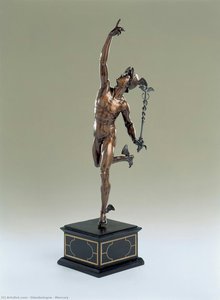
- Mercury Statue (Florence): Giambologna's depiction of Mercury—the messenger god—is celebrated for its graceful pose and luminous surface finish, embodying the spirit of Mannerist elegance and intellectual contemplation.
Legacy & Influence
Giambologna’s influence extended far beyond his lifetime, shaping the artistic sensibilities of subsequent generations and establishing him as a pivotal figure in the transition from Renaissance to Baroque art. His sculptural innovations—particularly his exploration of dynamic movement and psychologically complex figures—provided inspiration for artists such as Bernini and Caravaggio, who embraced Mannerist principles to forge new expressive pathways. Giambologna’s enduring reputation testifies to his unparalleled artistic vision—a testament to his ability to synthesize classical ideals with humanist sensibilities into a singularly compelling aesthetic experience.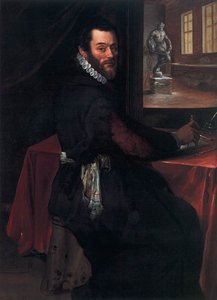
Giambologna
1529 - 1608 , France
Quick Facts
- Artistic Movement Or Style: Mannerist Sculpture
- Artists Or Movements Influenced By This Artist: ['Baroque']
- Artists Who Influenced This Artist: ['Michelangelo']
- Date Of Birth: 1529
- Full Name: Jean Boulogne
- Nationality: Flemish
- Notable Artworks:
- Mercury
- The Rape of the Sabine Women
- Place Of Birth: Douai, France