 Preview
 Send
Send Share
Share
 Details

 Download
 Similars
 X-Ray
X-Ray Diaporama
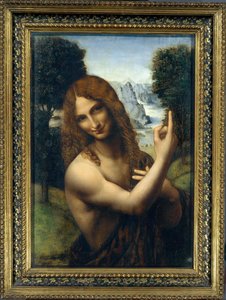
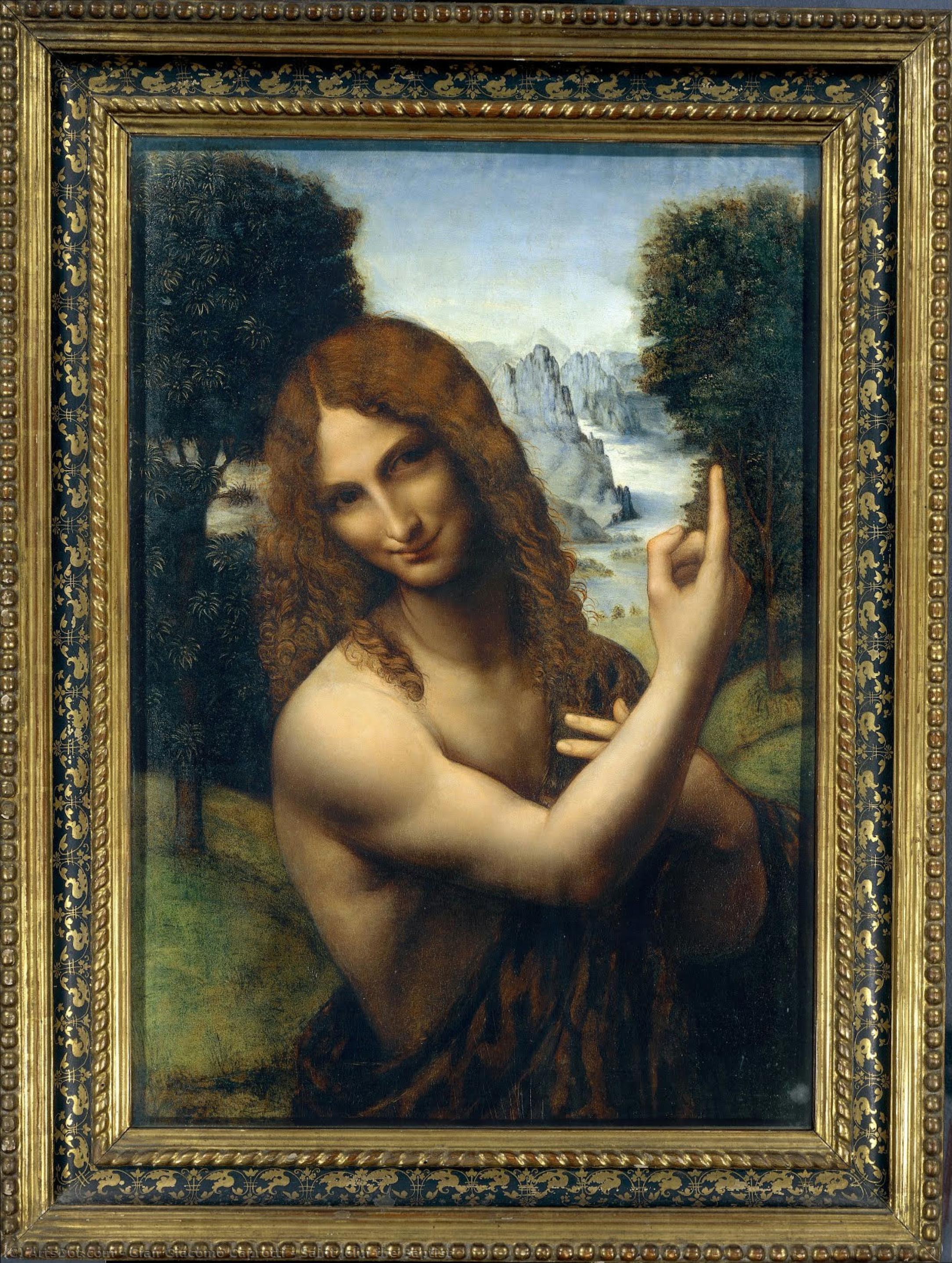
Saint John the Baptist
 1520
1520 73.0 x 50.0 cm
 Read More
Hand Made Oil Reproduction
Hand-painted oil on canvas in your size and frame, made to order by our artists. ( Buy Print Buy Image)




































Pick from our preset sizes that match the artwork's original proportions.

You may enter your own dimensions to fit a specific frame or space. If your selected size does not match the original image's proportions, we will either crop the artwork or extend the painting with additional hand-painted elements. A digital mockup will be sent for your approval before production begins.
Please note that the on-screen preview does not reflect the actual cropping or extension. Only the mockup will accurately show the final composition.
While custom sizes are available, we recommend selecting a dimension from the predefined list to preserve the original proportions.
After order, ArtsDot.com team will email client for instructions and provide a mockup preview
Worldwide Delivery () in 3/4 weeks instead of standard 5 weeks. (17 August). No compromise on quality.

Free Worldwide Express Shipping

High-Quality Linen Canvas

Full Shipping Insurance

Customs Tax Refund Guarantee

True Color Matching Guarantee

60-Day Return Policy (Defects Only)

100% Money-Back Guarantee

Bulk Discount Offer
 Glass option is only available in size under 110 CM

Saint John the Baptist
Reproduction Medium
Reproduction Size
-


Total Price
$ 263
Artwork Description
Related Artworks

Artist Biography
The Shadow of the Master: The Enigmatic Life of Salai
In the golden, amber-hued atmosphere of the Italian Renaissance, few figures cast a shadow as complex or as deeply intertwined with greatness as Gian Giacomo Caprotti. Known to history by the more mischievous moniker Salai, his life was not merely lived alongside Leonardo da Vinci; it was woven into the very fabric of the master’s workshop. Born around 1480 in Oreno, near Milan, Salai entered Leonardo’s household in 1490 as a mere child of ten years. What began as a standard apprenticeship blossomed into a decades-long relationship that defied the traditional boundaries between mentor and pupil, master and servant, and even artist and muse.
To speak of Salai is to encounter a character of profound contradiction. Leonardo’s own private notebooks, those legendary repositories of scientific inquiry and artistic observation, paint a portrait of a youth who was as troublesome as he was beautiful. The master famously described him with biting wit as ladro, bugiardo, ostinato, ghiotto—a thief, a liar, stubborn, and a glutton. Yet, despite the frequent thefts and the petulant temperament that earned him a name reminiscent of a demon, Leonardo never severed the bond. This enduring connection suggests a deep-seated affection and a recognition of a shared creative spirit that transcended the chaotic impulses of a young man’s character.
A Legacy Written in Light and Line
While Salai’s independent artistic corpus remains elusive and often difficult to distinguish from the master's hand, his contribution to the High Renaissance is undeniable. He was far more than a mere observer; he was a vital participant in the workshop ecosystem. As an assistant, he played a crucial role in the logistical and physical execution of monumental projects, including the preparation for the Last Supper. His talent, particularly in the delicate medium of tempera, allowed him to contribute to the subtle textures and luminous skin tones that defined the era's aesthetic.
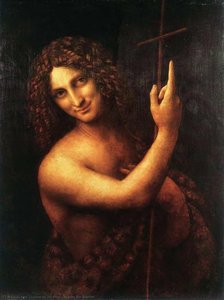
Perhaps his most enduring contribution to art history lies not in what he painted, but in how he was seen. Salai is widely believed to be the primary model for some of Leonardo’s most psychologically profound works. The enigmatic, soft-featured Saint John the Baptist and the spirited Bacchus are thought to capture his likeness, translating his physical grace—described by Vasari as having beautiful, ringleted hair—into eternal icons of divine and earthly beauty. In these works, Salai becomes a vessel for Leonardo’s exploration of human anatomy and the subtle interplay of light and shadow, or sfumato.
The Final Act and Historical Resonance
The trajectory of Salai’s life followed the wandering path of his master. He accompanied Leonardo through the shifting landscapes of Milan, Florence, Mantua, and Venice, eventually following him to France. However, the stability of the workshop was broken by Leonardo's death in 1519. Returning to Milan, Salai found himself navigating a world without its guiding light. His end was as sudden and violent as his early life had been turbulent; he died in 1524, reportedly caught in the crossfire of French soldiers besieging the city.
Today, the significance of Gian Giacomo Caprotti resides in the intersection of biography and art history. He represents the essential, often unseen, human element behind the masterpieces of the Renaissance. His life reminds us that the creation of great art is rarely a solitary endeavor but a communal, often messy, process of shared lives and shared visions. Through his presence in Leonardo's paintings, Salai remains an immortal participant in the dialogue of the High Renaissance, a beautiful, flawed shadow that continues to haunt the halls of art history.
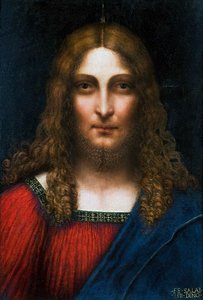
gian giacomo caprotti
1480 - 1524 , Italy
Quick Facts
- Artistic Movement Or Style: Renaissance Art
- Artists Or Movements Influenced By This Artist: ['Raphael']
- Artists Who Influenced This Artist: Leonardo da Vinci
- Date Of Birth: 1480
- Full Name: gian giacomo caprotti
- Nationality: Italian
- Notable Artworks: ['Saint John the Baptist']
- Place Of Birth: Orano, Italy