

 Preview
 Send
Send Share
Share
 Details

 Download
 Similars
 X-Ray
X-Ray Diaporama
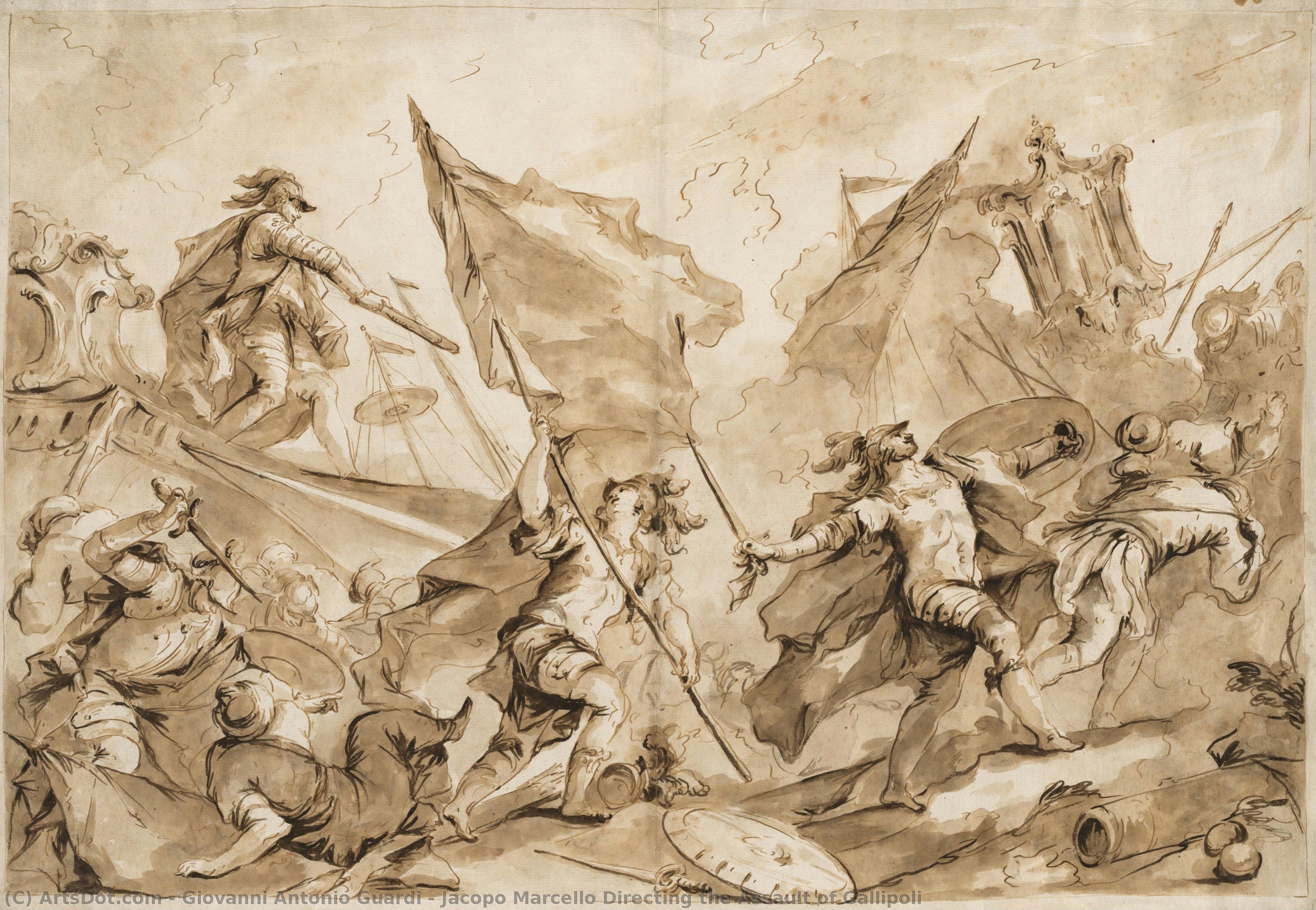
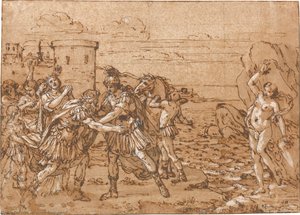
Jacopo Marcello Directing the Assault of Gallipoli
 Drawing
- WallArt
- Baroque
 1760
1760- Early Modern
 53.0 x 77.0 cm
 Cleveland Museum of Art
 Read More
Purchase a high-resolution, enhanced digital image, far superior to the online preview.
Each file is meticulously prepared by our in-house specialists using advanced tools and expert manual retouching. We ensure every image has exceptional clarity, precise color accuracy, and fine detail.
The final file is delivered via email within 72 hours, optimized for immediate use in professional, editorial, and print environments. This is the same quality trusted by top-tier design studios, publishers, and galleries.
Digital Image
Download a high-resolution file for personal display, printing, and creative projects. ( Buy Print Buy Hand Made Painting)
Included in Every Digital Image Order
Expert Digital Delivery, Guaranteed
When you choose ArtsDot.com, you're not just getting an image - you're receiving a professionally enhanced digital artwork, crafted with precision and backed by a satisfaction guarantee. Here's everything that comes with your order, automatically:

Fast Email Delivery
Your high-resolution digital image file will be emailed to you within 72 hours of ordering - ready for immediate use.

AI-Enhanced Digital File
Your artwork is professionally optimized using advanced AI tools and manual editing, ensuring maximum detail, clarity, and color accuracy.

Free Lifetime Re-Delivery
Accidentally deleted or lost your file? No worries - we'll resend it to you anytime, free of charge.

No Import Fees - Ever
Enjoy your artwork instantly with zero customs, duties, or delivery fees - digital downloads are always tax-free.

Color Accuracy Guarantee
We ensure your digital image reflects the original colors as closely as possible using professional tools and color management.

60-Day Satisfaction Guarantee
If you're not satisfied with your digital image, we'll revise it or refund 100% within 60 days - no questions asked.

100% Money-Back Guarantee
Not satisfied? Get a full refund within 60 days of receiving your digital file - no questions asked.

Bulk Order Discounts
Buy 3 images, save 10% - Buy 5, save 15% - Buy 10+, save 20%. Great for creative projects, galleries, and agencies.
A Moment Frozen in Time: The Drama of Gallipoli
In the evocative realm of eighteenth-century artistry, few works capture the tension of historical narrative as poignantly as Gianantonio Guardi’s Jacopo Marcello Directing the Assault of Gallipoli. Though rendered with the delicate precision characteristic of the Venetian Baroque, this piece serves as a window into a moment of profound command and impending conflict. The composition centers on the commanding presence of Jacopo Marcello, whose figure emerges from the shadows of history to direct an assault that feels both immediate and eternal. Through his focused posture and authoritative stance, Guardi invites the viewer to step onto the precipice of battle, where the air is thick with the weight of decision and the spray of the sea.
The scene unfolds against a backdrop of maritime movement, where the presence of boats—one drifting near the periphery and another positioned centrally—suggests a theater of war played out upon the undulating waters. This interplay between the solid, determined figures of the officers and the fluid, unpredictable nature of the sea creates a rhythmic tension that is central to the work's emotional resonance. The artist masterfully utilizes the contrast inherent in his medium to guide the eye through the chaos of the assault, ensuring that amidst the movement of soldiers and vessels, the singular focus remains on the strategic brilliance and the heavy burden of leadership.
Mastery of Line and the Venetian Legacy
As a pivotal figure of the Venetian Baroque, Gianantonio Guardi brought to this work a unique blend of theatrical grandeur and meticulous observation. The technique employed here reflects a sophisticated command over light and shadow, utilizing a monochromatic palette that strips away the distraction of color to reveal the raw, structural essence of the event. This approach allows the viewer to appreciate the fine linework and the subtle gradations of tone that define the textures of military uniforms, the weathered wood of the boats, and the atmospheric haze of the battlefield. It is a testament to Guardi's ability to translate complex human emotions into a visual language of stark, impactful clarity.
For the discerning collector or interior designer, this piece offers more than mere historical documentation; it provides a profound sense of atmosphere. The work possesses an inherent gravity that makes it an extraordinary focal point for a curated space. Whether placed in a formal study, a grand library, or a contemporary gallery setting, the drawing commands attention through its narrative depth and classical elegance. It serves as a sophisticated conversation piece, embodying the spirit of an era where art was used not only to decorate but to immortalize the very pulse of human history and the indomitable will of those who shaped it.
Related Artworks

Artist Biography
The Dramatic Visionary of the Venetian Baroque
Gianantonio Guardi, a name synonymous with the theatrical splendor of the 18th century, stands as a pivotal figure in the evolution of the Venetian Baroque. Born in Vienna in 1699 into a noble family deeply rooted in artistic tradition, his life was shaped by the vibrant cultural currents that flowed between the imperial grandeur of Austria and the shimmering canals of Venice. As the son of the respected painter Domenico Guardi, Giovanni Antonio did not merely learn a craft; he inherited a legacy of meticulous observation and technical mastery. His formative years were spent immersed in an environment where art was both a familial duty and a profound way of interpreting the world, leading him to develop a style that would eventually capture the very soul of Venice.
The development of Guardi’s artistry was deeply intertwined with his family's collaborative spirit. Alongside his brothers, Francesco and Niccolò, he helped establish a studio that became a cornerstone of mid-18th-century Venetian painting. This period of his life was marked by a rigorous pursuit of excellence, further solidified by his involvement in the founding of the Accademia Veneziana. Through this institution, Guardi championed a unique synthesis of scientific accuracy and aesthetic beauty, pushing the boundaries of what Venetian art could achieve. His work moved away from the purely idealized forms of the past, seeking instead to document the pulse of the city with an almost journalistic precision, yet elevated by the dramatic flair characteristic of the Baroque era.
Mastery of Light and the Pulse of Daily Life
To gaze upon a Guardi masterpiece is to witness a masterclass in chiaroscuro. He possessed an unparalleled ability to manipulate the interplay between light and shadow, creating compositions that feel as though they are breathing with life. This dramatic lighting was never used merely for effect; rather, it served to direct the viewer's eye through complex, dynamic landscapes and bustling urban scenes. His brushwork captured the fleeting nature of light reflecting off canal waters or the soft glow of a religious procession moving through a crowded campo.
What truly distinguishes Guardi from his contemporaries was his profound commitment to realism and the celebration of the mundane. While other artists sought the divine in distant, mythological realms, Guardi found it in the streets of Venice. His canvases are populated by the true inhabitants of the Venetian Republic:
- Market vendors engaged in the spirited haggling of daily commerce.
- Gondoliers navigating the intricate labyrinth of the city's waterways.
- Ordinary citizens participating in the grand religious and civic rituals that defined the era.
By focusing on these commonplace activities, Guardi achieved a level of palpable realism that allowed his work to resonate with both spiritual fervor and human connection. He did not just paint scenes; he captured the atmosphere, the noise, and the very texture of 18th-century life.
Legacy and Historical Significance
The historical significance of Gianantonio Guardi lies in his ability to bridge the gap between the grandiosity of the Baroque and a burgeoning interest in the observational realism that would define later centuries. He transformed the cityscape from a mere backdrop into a living, breathing protagonist. His meticulous attention to detail—capturing everything from the weathered stone of the Colleoni Statue to the lively energy of Campo Santi Paolo—ensured that his work serves as a vital historical record of a vanished era.
Today, Guardi is remembered not just as a painter of views, but as a storyteller of the human condition. His legacy persists in the way we perceive the intersection of architecture and life, reminding us that there is profound beauty to be found in the shadows of the everyday. Through his dynamic compositions and emotive use of light, he remains a definitive voice of the Venetian Baroque, leaving behind a visual testament to the enduring spirit of Venice.
gianantonio guardi
1699 - 1760 , Austria
Quick Facts
- Artistic Movement Or Style: Venetian Baroque
- Artists Who Influenced This Artist:
- Francesco Guardi
- Niccolò Guardi
- Date Of Birth: Vienna, Austria (1699)
- Date Of Death: 1760
- Full Name: Giovanni Antonio Guardi
- Nationality: Italian
- Notable Artworks:
- The Angel Appears to Tobias
- Minerva
- Triumph of Diana
- Place Of Birth: Vienna

