 Preview
 Send
Send Share
Share
 Details

 Download
 Similars
 X-Ray
X-Ray Diaporama
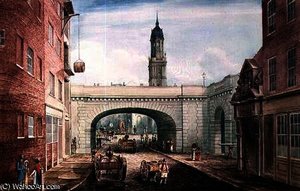
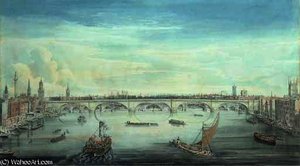
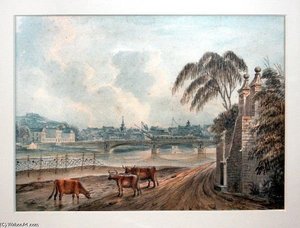
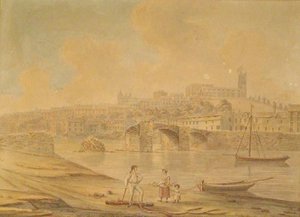
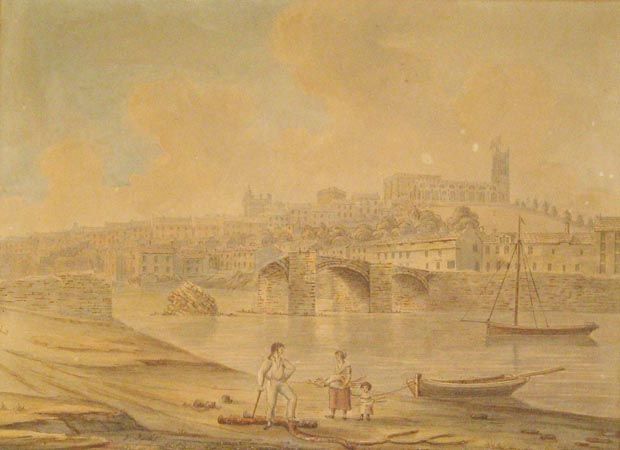
Lancaster Old Bridge
 Read More
Hand Made Oil Reproduction
Hand-painted oil on canvas in your size and frame, made to order by our artists. ( Buy Print Buy Image)




































Pick from our preset sizes that match the artwork's original proportions.

You may enter your own dimensions to fit a specific frame or space. If your selected size does not match the original image's proportions, we will either crop the artwork or extend the painting with additional hand-painted elements. A digital mockup will be sent for your approval before production begins.
Please note that the on-screen preview does not reflect the actual cropping or extension. Only the mockup will accurately show the final composition.
While custom sizes are available, we recommend selecting a dimension from the predefined list to preserve the original proportions.
After order, ArtsDot.com team will email client for instructions and provide a mockup preview
Worldwide Delivery () in 3/4 weeks instead of standard 5 weeks. (18 August). No compromise on quality.

Free Worldwide Express Shipping

High-Quality Linen Canvas

Full Shipping Insurance

Customs Tax Refund Guarantee

True Color Matching Guarantee

60-Day Return Policy (Defects Only)

100% Money-Back Guarantee

Bulk Discount Offer
 Glass option is only available in size under 110 CM

Lancaster Old Bridge
Reproduction Medium
Reproduction Size
-


Total Price
$ 263
Related Artworks
Artist Biography
Gideon Yates: A Quiet Observer of Victorian London
Born in the heart of London in 1790, Gideon Yates emerged as a distinctive and serene voice within the British watercolor landscape movement of the early 19th century. While many of his contemporaries sought to capture the grand narratives of empire or the dramatic, turbulent vistas popularized by the likes of J.M.W. Turner, Yates cultivated a remarkably intimate aesthetic. His work is characterized by an unwavering focus on the subtle nuances of light and atmosphere, finding profound beauty in the quiet corners of a rapidly changing world. Rather than pursuing monumental subjects, he turned his gaze toward the delicate details of London life and the spiritual stillness of biblical landscapes, creating a body of work that serves as both a historical record and a meditative experience.
Yates’ artistic journey unfolded against the backdrop of the burgeoning Industrial Revolution, an era marked by unprecedented urban expansion and social anxiety. Yet, in his renderings, one finds a deliberate resistance to the overtly celebratory depictions of industrial progress. While he was undoubtedly influenced by the Romantic ideals of his time, Yates rejected the emotive, sweeping brushstrokes of the more radical Romantics in favor of a restrained, topographical precision. He meticulously studied architectural plans and topographical drawings, allowing him to recreate the streets, bridges, and buildings of London—particularly in the Bermondsey and Southwark areas—with astonishing accuracy. This dedication to realism was not merely a technical feat; it functioned as a conduit for conveying a sense of enduring peace and harmony amidst the era's growing chaos.
The Topographical Vision and Spiritual Depth
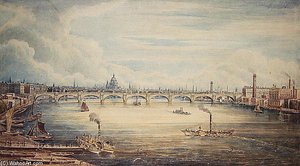
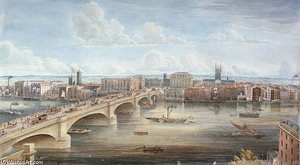
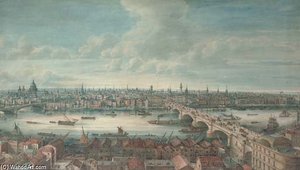
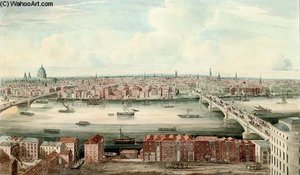
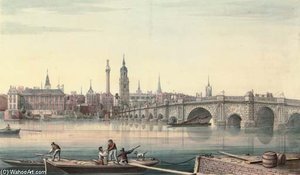
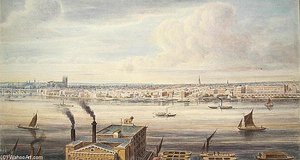
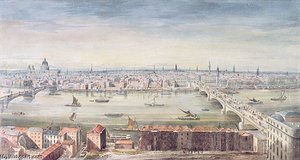
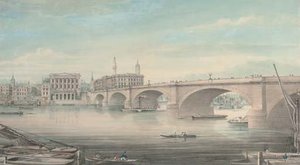
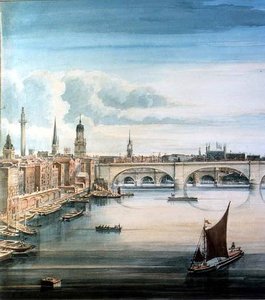
The breadth of Yates’ output is truly remarkable, spanning several decades and encompassing over 300 watercolors that offer invaluable insights into the Victorian cityscape. He was a master of the Thames views, particularly noted for his depictions of London's iconic bridges. His contributions to lithographer R. Martin’s Views of London Bridges around 1830 highlight his importance as a documentarian of the city's structural evolution. Through his eyes, we see the transition between the old and new, capturing the architectural soul of landmarks such as London Bridge with a clarity that feels both immediate and timeless.
Beyond the urban landscape, Yates’ work is deeply imbued with his personal faith. His compositions often transcend mere topography to reach into the realm of spiritual contemplation. In his biblical scenes, he frequently depicted figures such as David and Solomon, using the medium of watercolor to evoke a sense of divine grace. This religious sentiment was woven into his very technique through recurring motifs that acted as silent symbols:
- Lambs: Representing innocence and the gentle nature of his subjects.
- Doves: Serving as emblems of peace and the Holy Spirit.
- Olive Branches: Signifying reconciliation and divine favor.
By blending these sacred symbols with his precise, realistic depictions of the natural and man-made worlds, Yates achieved a unique synthesis of the earthly and the divine. His ability to find the sacred within the mundane—a quiet churchyard or a riverside view—cemented his legacy as an artist who did not just paint what he saw, but what he felt in the profound stillness of observation.
Legacy and Historical Significance
Though his life was relatively short, ending in 1840, the impact of Gideon Yates remains etched in the historical fabric of British art. He stands as a singular figure who provided a necessary counterpoint to the more dramatic movements of the 19th century. His work provides modern historians with a window into a London that was being transformed by industry, yet he chose to preserve its more tranquil, architectural, and spiritual essence. Today, his watercolors are cherished not only for their technical mastery and topographical importance but for the emotional sanctuary they offer—a testament to a man who found greatness in the small, the quiet, and the enduringly beautiful.
gideon yates
1790 - 1840 , United Kingdom
Quick Facts
- Artistic Movement Or Style: Watercolor Landscape Painting
- Artists Or Movements Influenced By This Artist: ['Romanticism']
- Artists Who Influenced This Artist: ['John Constable']
- Date Of Birth: 1790
- Full Name: Gideon Yates
- Nationality: British
- Notable Artworks:
- A Fine View Of London From Westminster Bridge To The Adelphi
- New london bridge,
- London bridge from fishmongers' hall
- Place Of Birth: London, United Kingdom