

 Preview
 Send
Send Share
Share
 Details

 Download
 Similars
 X-Ray
X-Ray Diaporama
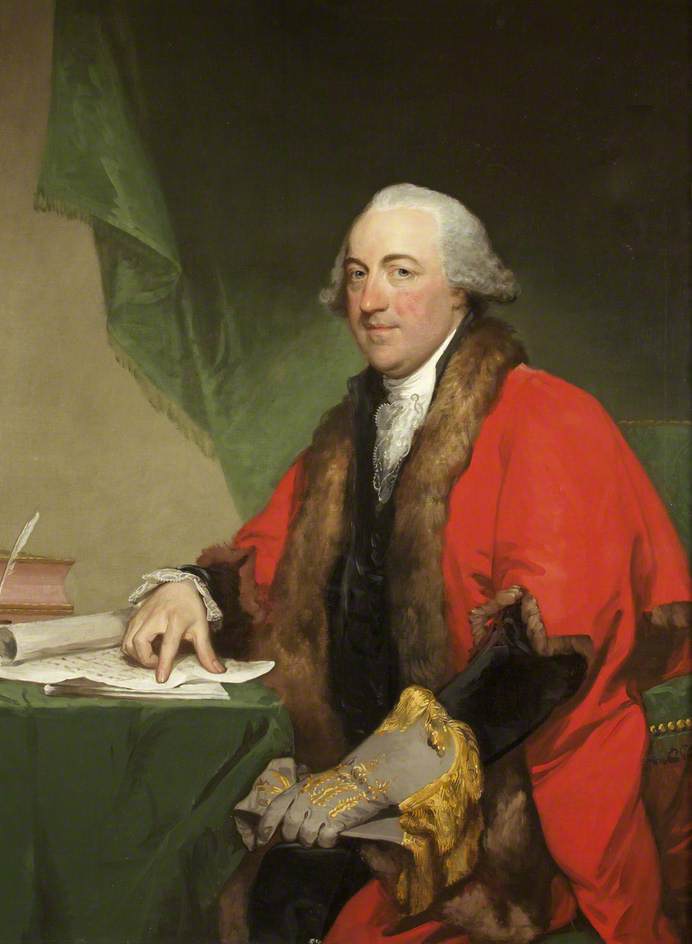
Henry Cruger, of New York, Mayor of Bristol and Master of The Merchant Venturers Society, 1781
 Oil On Canvas
- WallArt
- Neoclassicism
 1781
1781- Early Modern
 126.0 x 96.0 cm
 Bristol Museum - Art Gallery
 Read More
Purchase a high-resolution, enhanced digital image, far superior to the online preview.
Each file is meticulously prepared by our in-house specialists using advanced tools and expert manual retouching. We ensure every image has exceptional clarity, precise color accuracy, and fine detail.
The final file is delivered via email within 72 hours, optimized for immediate use in professional, editorial, and print environments. This is the same quality trusted by top-tier design studios, publishers, and galleries.
Digital Image
Download a high-resolution file for personal display, printing, and creative projects. ( Buy Print Buy Hand Made Painting)
Included in Every Digital Image Order
Expert Digital Delivery, Guaranteed
When you choose ArtsDot.com, you're not just getting an image - you're receiving a professionally enhanced digital artwork, crafted with precision and backed by a satisfaction guarantee. Here's everything that comes with your order, automatically:

Fast Email Delivery
Your high-resolution digital image file will be emailed to you within 72 hours of ordering - ready for immediate use.

AI-Enhanced Digital File
Your artwork is professionally optimized using advanced AI tools and manual editing, ensuring maximum detail, clarity, and color accuracy.

Free Lifetime Re-Delivery
Accidentally deleted or lost your file? No worries - we'll resend it to you anytime, free of charge.

No Import Fees - Ever
Enjoy your artwork instantly with zero customs, duties, or delivery fees - digital downloads are always tax-free.

Color Accuracy Guarantee
We ensure your digital image reflects the original colors as closely as possible using professional tools and color management.

60-Day Satisfaction Guarantee
If you're not satisfied with your digital image, we'll revise it or refund 100% within 60 days - no questions asked.

100% Money-Back Guarantee
Not satisfied? Get a full refund within 60 days of receiving your digital file - no questions asked.

Bulk Order Discounts
Buy 3 images, save 10% - Buy 5, save 15% - Buy 10+, save 20%. Great for creative projects, galleries, and agencies.
A Glimpse Into Bristol’s Golden Age
In the quiet dignity of Gilbert Stuart’s 1781 masterpiece, Henry Cruger, of New York, Mayor of Bristol and Master of The Merchant Venturers Society, we find much more than a mere likeness of a man; we encounter a window into the very soul of eighteenth-century maritime prosperity. As the eye meets the central figure of Cruger, one is immediately struck by the profound sense of authority and composed intellect that Stuart so masterfully conveys. This portrait serves as an enduring emblem of the Enlightenment, capturing a moment when Bristol stood at the pinnacle of global commerce and social refinement. The subject, a titan of the shipping industry, is presented not just as a merchant, but as a pillar of society, embodying the stability and burgeoning wealth that defined his era.
The composition is a masterclass in neoclassical balance, guiding the viewer through a scene of opulent domesticity. Cruger is positioned within a richly ornamented interior—a lavish dining room that whispers of high status and aristocratic patronage. The presence of fine furniture, including a plush couch and elegant chairs, creates a setting of profound sophistication. Even the subtle inclusion of books upon the table suggests a man of deep learning and contemplative thought, bridging the gap between the rugged world of international trade and the refined intellectual pursuits of the age. For the discerning collector or interior designer, this painting offers an unparalleled sense of historical weight and architectural grandeur, making it a commanding centerpiece for any curated space.
The Mastery of Neoclassical Technique
To observe Stuart’s technique is to witness the rigorous application of neoclassical principles. Influenced by his time studying under the legendary Benjamin West, Stuart employed a polished finish that achieved a breathtaking level of clarity and realism. He utilized the sophisticated method of layering thin, translucent glazes over a meticulous underpainting, a process that allows light to penetrate the surface and creates a luminous, lifelike quality in the skin tones and fabrics. This technique lends a remarkable three-dimensionality to the figure, making the heavy textures of his red coat and the delicate gold trim appear almost tactile to the viewer.
The artist’s palette is intentionally subdued, dominated by a harmonious arrangement of deep browns, rich reds, and creamy highlights. This restrained color scheme avoids the distraction of flamboyance, instead fostering a sense of dignified solemnity and permanence. Every brushstroke serves the purpose of meticulous observation; from the anatomical precision of Cruger’s features to the subtle modeling of light and shadow across the room, Stuart ensures that the viewer feels the physical presence of the subject. It is this technical excellence that elevates the work from a simple portrait to a profound psychological study, capturing both the external prestige and the internal character of one of Bristol's most influential figures.
An Enduring Legacy for the Modern Collector
Beyond its historical significance, this portrait resonates with an emotional depth that transcends the centuries. There is a palpable stillness in the scene, a moment of quiet reflection amidst a life of immense responsibility and movement. For those seeking to bring a sense of heritage and timeless elegance into a contemporary home, a high-quality reproduction of this work offers more than just decoration; it provides a connection to the virtues of the past—restraint, clarity, and dignity. Whether placed in a formal study, a grand hallway, or a sophisticated living area, Stuart’s portrait of Henry Cruger acts as an anchor of sophistication, inviting conversation and inspiring awe through its masterful storytelling and exquisite artistry.
Related Artworks
Artist Biography
Gilbert Stuart: A Life in Portraiture
- Born: December 3, 1755, Saunderstown, Rhode Island
- Died: July 9, 1828, Boston, Massachusetts
- Nationality: American
- Movement: Neoclassicism
- Known for: Portraiture, particularly portraits of prominent figures in early American history.
Early Life and Training
- Gilbert Stuart was born into a family with Scottish roots; his father, also named Gilbert, was an inventor who established the first snuff mill in Rhode Island.
- His artistic talent emerged at a young age, demonstrating skill even as a child.
- At 14, he painted "Dr. Hunter's Spaniels," showcasing early promise.
- He traveled to Scotland around 1771 to study under Cosmo Alexander, but returned after Alexander’s death in 1775.
- Further training occurred in London with Benjamin West, a prominent American painter residing in England, from 1775 to 1780. This period was crucial for developing his artistic style and gaining recognition within the Royal Academy.
Artistic Career and Major Works
- Stuart's career faced challenges during the American Revolution, prompting him to relocate to England in 1775.
- He achieved early success with "The Skater" (1782), a portrait that established his reputation.
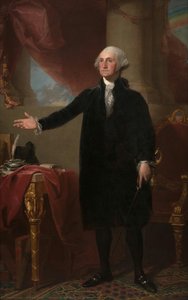
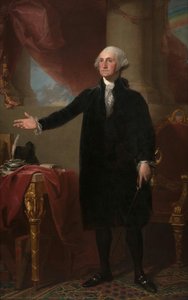
- His most famous work is the unfinished portrait of George Washington, known as the Athenaeum Portrait (begun in 1796). This image has become iconic, appearing on U.S. currency and postage stamps. Stuart produced numerous copies of this portrait for patrons across America and Europe.
- He painted portraits of several other prominent figures including John Adams, Thomas Jefferson, James Madison, and many members of the Federalist elite.
- Stuart’s style was characterized by a Neoclassical approach, emphasizing realism and capturing the likeness and character of his subjects. He often employed a dramatic use of light and shadow to enhance the portraits' impact.
Influences and Development
- Cosmo Alexander provided early training in technique and composition.
- Benjamin West’s influence was significant, shaping Stuart’s understanding of portraiture and artistic principles.
- The Neoclassical movement, with its emphasis on classical forms and ideals, heavily influenced his style.
- Stuart's own observations and interactions with his subjects contributed to the psychological depth and realism in his portraits. He aimed to capture not just a likeness but also the character and personality of those he painted.
Historical Significance and Legacy
- Gilbert Stuart is considered one of America’s foremost portraitists, playing a vital role in documenting the early years of the United States.
- The Athenaeum Portrait of George Washington has become an enduring symbol of American identity and leadership.
- His portraits provide valuable historical insights into the lives and appearances of prominent figures from the late 18th and early 19th centuries.
- Stuart’s work is represented in major museums across the United States and Europe, ensuring his legacy continues to be appreciated by generations.
- He established a distinct American style of portraiture that blended European techniques with uniquely American sensibilities.
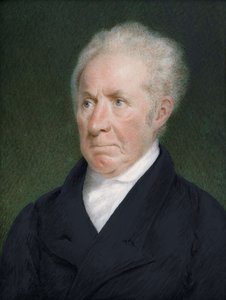
Gilbert Stuart
1755 - 1828 , United Kingdom
Quick Facts
- Artistic Movement Or Style: Neoclassical
- Artists Who Influenced This Artist:
- Cosmo Alexander
- Benjamin West
- Date Of Birth: December 3, 1755
- Date Of Death: July 9, 1828
- Full Name: Gilbert Charles Stuart
- Nationality: American
- Notable Artworks:
- Dr. Hunter's Spaniels
- The Skater
- Athenaeum Portrait of Washington
- Place Of Birth: Saunderstown, United Kingdom

