 Preview
 Send
Send Share
Share
 Details

 Download
 Similars
 X-Ray
X-Ray Diaporama
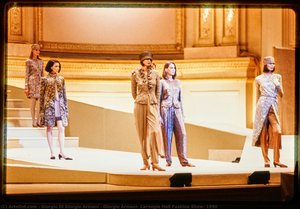
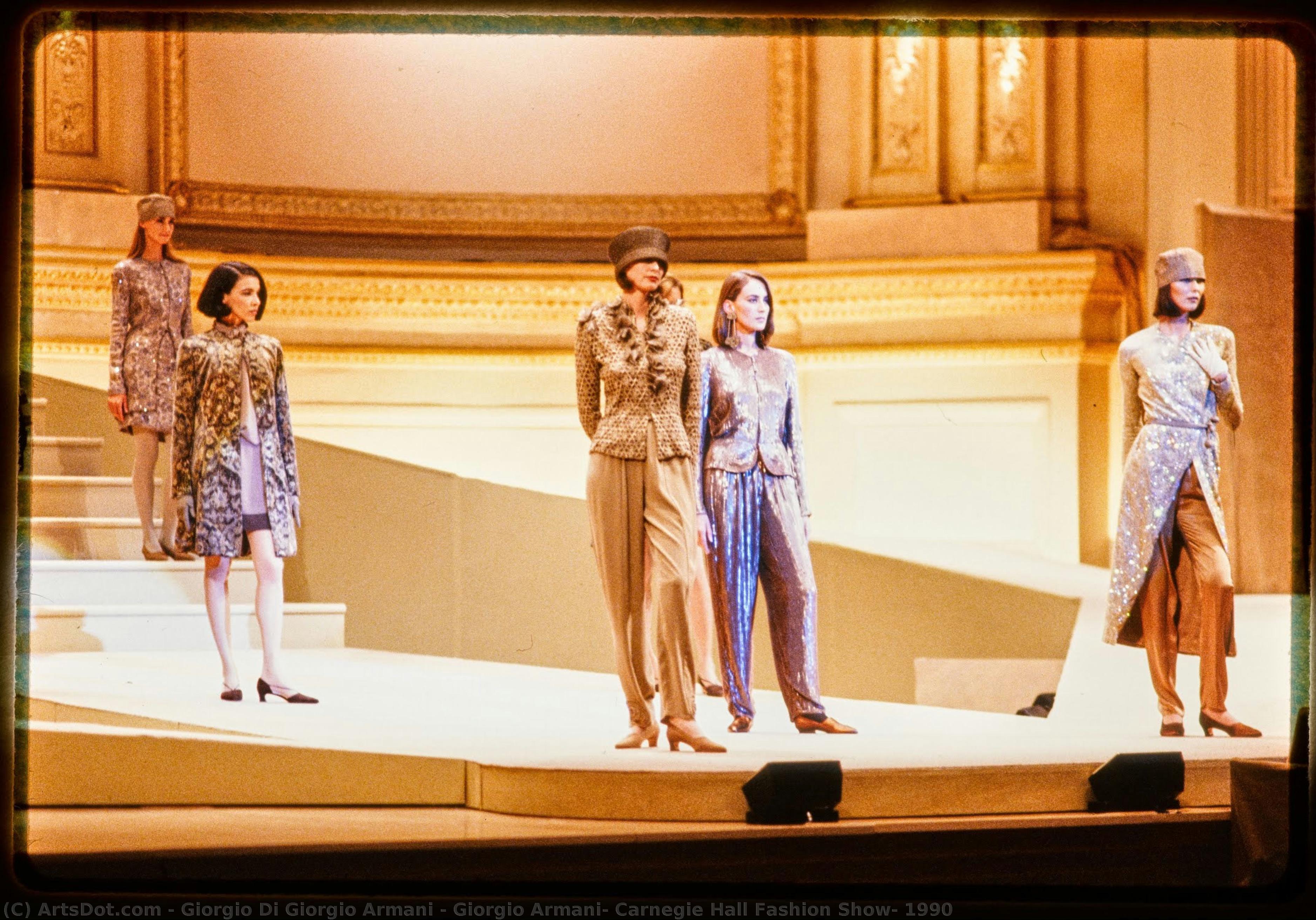
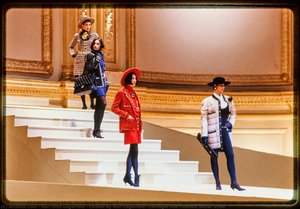
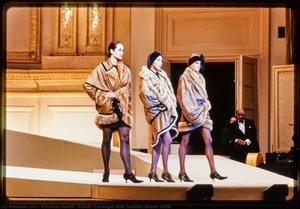
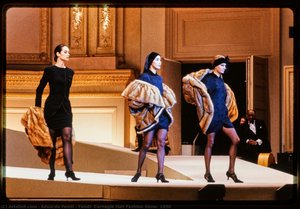
Giorgio Armani, Carnegie Hall Fashion Show, 1990

 Read More
Giclée / Art Print
Museum-quality giclée or canvas print with fast production and flexible finish options. ( Buy Hand Made Painting Buy Image)




































Pick from our preset sizes that match the artwork's original proportions.

You may enter your own dimensions to fit a specific frame or space. If your selected size does not match the original image's proportions, we will either crop the artwork or extend the image with a mirrored or solid-fill edge. A digital mockup will be sent for your approval before production begins.
Please note that the on-screen preview does not reflect the actual cropping or extension. Only the mockup will accurately show the final composition.
While custom sizes are available, we recommend selecting a dimension from the predefined list to preserve the original proportions.
Worldwide Delivery () in 2 weeks instead of standard 4/5 weeks. (6 September)

Free Worldwide Express Shipping

High-Quality Linen Canvas

Full Shipping Insurance

Customs Tax Refund Guarantee

True Color Matching Guarantee

60-Day Return Policy (Defects Only)

100% Money-Back Guarantee

Bulk Discount Offer
 Glass option is only available in size under 110 CM

Giorgio Armani, Carnegie Hall Fashion Show, 1990
Giclée / Art Print
Reproduction Size
-


Total Price
$ 63
Related Artworks






Artist Biography
The Architect of Effortless Elegance
In the grand tapestry of twentieth-century aesthetics, few threads are as luminous or as structurally profound as those woven by Giorgio Armani. Born in the historic Italian city of Piacenza on July 11, 1934, Armani’s early life was shaped by the stark realities of a post-war era—a period that instilled in him a profound understanding that true luxury does not require ostentation. Before he became the titan of Milanese high fashion, his path was far from linear; he pursued medical studies at the University of Milan and served as a medic in the Italian Army. These formative years, marked by discipline and an intimate acquaintance with human vulnerability, would later inform his design philosophy: a dedication to the human form that prioritizes comfort, fluidity, and a quiet, resilient strength.
The transition from medicine to the atelier was catalyzed by a fascination with visual composition. After working as a window dresser for La Rinascente, Armani honed his technical mastery under the mentorship of Nino Cerruti. It was during this period that he began to experiment with the deconstruction of traditional tailoring. He sought to strip away the rigid, restrictive padding and stiff structures that had long defined masculine elegance, replacing them with soft shoulders and draped fabrics that moved in harmony with the wearer. This revolutionary approach reached its zenith in 1975 when he founded his eponymous Maison, introducing a new vocabulary of style characterized by muted tones, neutral palettes, and an unparalleled sense of ease.
A Revolution of Form and Silhouette
Armani’s contribution to the world of design extends far beyond the mere creation of garments; he fundamentally redefined the concept of modern luxury. His breakthrough "Day Suit" became a cultural phenomenon, liberating both men and women from the suffocating constraints of traditional sartorialism. By embracing a minimalist aesthetic, he championed a look that was intellectually sophisticated yet physically unencumbered. This period of innovation was deeply influenced by his appreciation for Surrealist masters such as René Magritte and Salvador Dalí, whose explorations of illusion and the subconscious encouraged Armani to challenge conventional boundaries of beauty and form.
The expansion of his creative empire mirrored the versatility of his artistic vision. As his brand grew, so did the breadth of his influence, moving seamlessly from the high-stakes world of red-carpet fashion—where he became a definitive force in shaping celebrity identity—to more diverse ventures. His ability to translate his signature aesthetic into various mediums was nothing short of extraordinary:
- Cinematic Impact: He achieved international stardom through costume design for iconic films such as The Untouchables and American Gigolo, effectively dressing the cinematic dream of the 1980s.
- Lifestyle Expansion: His vision permeated the realms of beauty through Armani Beauty, the youthful energy of Emporio Armani, and even the sensory luxury of the Bulgari Hotels chain.
- Cultural Integration: From collaborations with Adidas to producing grand musical events featuring artists like Andrea Bocelli, his work became a lifestyle rather than just a wardrobe.
Legacy of a Visionary
The historical significance of Giorgio Armani lies in his ability to remain an anchor of stability and elegance in an ever-changing fashion landscape. While trends often fluctuate between excess and austerity, Armani’s commitment to understated sophistication has remained constant. He was a pioneer who understood that true power resides in subtlety. His work did not merely follow the zeitgeist; it sculpted it, providing a blueprint for contemporary minimalism that continues to inspire designers across the globe.
Even as his career spanned decades of immense commercial success and cultural shifts, Armani remained a dedicated craftsman at heart. He was a man who believed that clothing should be an extension of the self—a protective yet liberating layer that empowers the individual. His legacy is etched into the very fabric of modern luxury, a testament to a life spent perfecting the art of the silhouette and proving that the most enduring beauty is often found in the simplest lines.

giorgio di giorgio armani
1934 - , Italy
Quick Facts
- Artistic Movement Or Style: Minimalist design
- Date Of Birth: July 11, 1934
- Full Name: Giorgio Armani
- Nationality: Italian
- Notable Artworks:
- Day Suit
- Giorgio Armani, Carnegie Hall Fashion Show, 1990
- Place Of Birth: Piacenza, Italy