

 Preview
 Send
Send Share
Share
 Details

 Download
 Similars
 X-Ray
X-Ray Diaporama
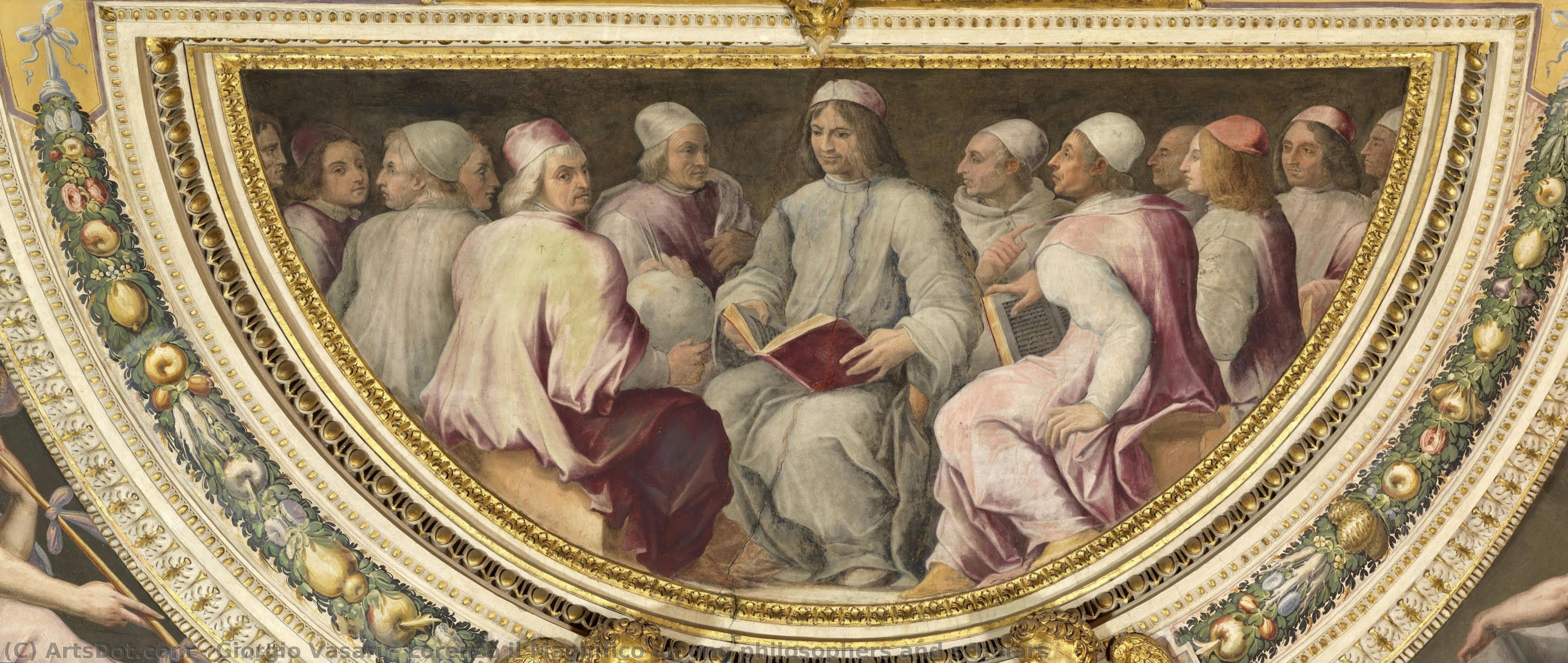
Lorenzo il Magnifico among philosophers and scholars


 Read More
Purchase a high-resolution, enhanced digital image, far superior to the online preview.
Each file is meticulously prepared by our in-house specialists using advanced tools and expert manual retouching. We ensure every image has exceptional clarity, precise color accuracy, and fine detail.
The final file is delivered via email within 72 hours, optimized for immediate use in professional, editorial, and print environments. This is the same quality trusted by top-tier design studios, publishers, and galleries.
Digital Image
Download a high-resolution file for personal display, printing, and creative projects. ( Buy Print Buy Hand Made Painting)
Included in Every Digital Image Order
Expert Digital Delivery, Guaranteed
When you choose ArtsDot.com, you're not just getting an image - you're receiving a professionally enhanced digital artwork, crafted with precision and backed by a satisfaction guarantee. Here's everything that comes with your order, automatically:

Fast Email Delivery
Your high-resolution digital image file will be emailed to you within 72 hours of ordering - ready for immediate use.

AI-Enhanced Digital File
Your artwork is professionally optimized using advanced AI tools and manual editing, ensuring maximum detail, clarity, and color accuracy.

Free Lifetime Re-Delivery
Accidentally deleted or lost your file? No worries - we'll resend it to you anytime, free of charge.

No Import Fees - Ever
Enjoy your artwork instantly with zero customs, duties, or delivery fees - digital downloads are always tax-free.

Color Accuracy Guarantee
We ensure your digital image reflects the original colors as closely as possible using professional tools and color management.

60-Day Satisfaction Guarantee
If you're not satisfied with your digital image, we'll revise it or refund 100% within 60 days - no questions asked.

100% Money-Back Guarantee
Not satisfied? Get a full refund within 60 days of receiving your digital file - no questions asked.

Bulk Order Discounts
Buy 3 images, save 10% - Buy 5, save 15% - Buy 10+, save 20%. Great for creative projects, galleries, and agencies.
Collectible Description
Lorenzo il Magnifico among Philosophers and Scholars – A Window into Florentine Renaissance Thought
- A Gathering of Minds: Giorgio Vasari’s fresco, “Lorenzo il Magnifico among philosophers and scholars,” offers a captivating glimpse into the intellectual heart of 16th-century Florence. Completed in 1558, this vibrant scene depicts Lorenzo de' Medici – ‘il Magnifico’ – surrounded by a diverse group of thinkers, artists, and learned men engaged in animated discussion. The painting isn’t merely a portrait; it’s a meticulously crafted tableau representing the flourishing humanist movement that defined the Florentine Renaissance.
- Vasari's Narrative Technique: Vasari, himself a prolific writer and historian of art, employed his signature narrative style to bring this scene to life. He masterfully uses composition – the figures are arranged in a dynamic pyramid, drawing the viewer’s eye towards Lorenzo at the apex – to convey a sense of movement and engagement. The use of light and shadow, characteristic of High Renaissance painting, adds depth and realism to the depiction of each individual.
- A Portrait of Patronage: Lorenzo de' Medici, known for his patronage of the arts and sciences, is central to this work. His presence signifies Florence’s position as a leading cultural center. The surrounding figures represent the breadth of intellectual pursuits valued during this era – philosophy, literature, architecture, and the visual arts were all considered vital components of a well-rounded education and civic life.
Subject Matter and Composition
- A Richly Layered Scene: The fresco depicts at least thirteen individuals, each rendered with remarkable attention to detail. They are engaged in various activities – some gesturing emphatically, others absorbed in conversation, a few examining books or scrolls. This layering of activity creates a sense of bustling intellectual exchange, capturing the spirit of debate and discovery that was so central to Renaissance thought.
- Spatial Dynamics: Vasari skillfully utilizes spatial relationships to enhance the narrative. The figures are arranged within a richly decorated room, suggesting a private salon or study – a space conducive to philosophical discussion. The use of chairs and tables adds to the sense of intimacy and engagement, while the backdrop of a wall provides depth and context.
Historical Context and Symbolism
- The High Renaissance in Florence: “Lorenzo il Magnifico” was created during the High Renaissance, a period marked by a renewed interest in classical antiquity and a celebration of human potential. The painting reflects this spirit through its emphasis on intellectual discourse, artistic achievement, and the pursuit of knowledge.
- Symbolic Representation: While specific symbolic meanings are open to interpretation, the inclusion of books and scrolls undoubtedly represents learning and scholarship. The diverse range of clothing styles among the figures suggests a cross-section of Florentine society – artists, scholars, and perhaps even members of the nobility.
Artistic Technique and Legacy
- Fresco Technique: Vasari executed this work using the traditional fresco technique, applying pigments to wet plaster. This method ensured that the image was permanently bound to the wall, creating a durable and enduring artwork. The vibrant colors and fine details achieved through fresco demonstrate Vasari’s mastery of this demanding medium.
- Vasari's Influence: “Lorenzo il Magnifico” is significant not only for its artistic merit but also for its role in establishing Giorgio Vasari as a leading art historian. His subsequent writings, including *Lives of the Most Excellent Painters, Sculptors, and Architects*, relied heavily on paintings like this one to illustrate his arguments about the development of Western art.
Related Artworks


Artist Biography
A Life Woven into the Renaissance Fabric
Giorgio Vasari, born in Arezzo, Tuscany, on July 30, 1511, was more than simply a painter; he was a quintessential embodiment of the Italian Renaissance spirit. His life unfolded as a vibrant tapestry woven with threads of artistic creation, architectural innovation, insightful historical writing, and an unwavering dedication to celebrating the masters who came before him. From his earliest training under Guglielmo da Marsiglia, a skilled artisan in stained glass, young Giorgio’s path was steered towards visual artistry. However, it was his move to Florence at sixteen that truly ignited his potential. Immersing himself within the dynamic circle of Andrea del Sarto and absorbing the influences of Rosso Fiorentino and Jacopo Pontormo, Vasari began a journey that would see him become one of the most influential figures of his era. His formative years were also deeply marked by the patronage and friendship of the powerful Medici family, a relationship that would shape both his career and his perspective on art’s role in society.The Artist's Hand and Eye
Vasari’s artistic style is often categorized as Mannerist, reflecting the prevailing aesthetic trends of the mid-16th century. His paintings are characterized by elongated figures, dynamic compositions, and a sophisticated use of color—qualities highly admired during his lifetime. While perhaps not achieving the same level of enduring fame as some of the artists he chronicled, Vasari’s skill was undeniable. Notable works such as The Studio of the Painter, a fresco housed in Casa Vasari in Arezzo, offer a fascinating glimpse into the artistic practices of the time. The sheer scale and ambition of his frescoes for the Palazzo Vecchio in Florence, undertaken between 1555 and 1572, demonstrate his mastery of large-scale decorative schemes. His final monumental undertaking, The Last Judgement, adorning the cupola of Florence Cathedral—completed after his death by Federico Zuccari—stands as a testament to his unwavering commitment to grand artistic visions. Beyond painting, Vasari’s architectural contributions were equally significant. He designed the elegant loggia of the Palazzo degli Uffizi, transforming it into a public piazza and creating a vital link within Florence's urban landscape. Perhaps most famously, he conceived and oversaw the construction of the Vasari Corridor, a secret passageway connecting the Uffizi Gallery with the Palazzo Pitti—a feat of engineering and architectural ingenuity that continues to captivate visitors today.A Historian Forging a Legacy
However, it is arguably as an art historian that Giorgio Vasari secured his most lasting legacy. His monumental work, Lives of the Most Excellent Painters, Sculptors, and Architects, published in 1550 (with a revised edition in 1568), revolutionized the way art was understood and appreciated. This groundbreaking text wasn’t merely a collection of biographies; it established a narrative framework for the development of Italian Renaissance art, tracing its evolution from the early masters like Cimabue and Giotto to his contemporaries Michelangelo and Raphael. Vasari's work introduced the very concept of the “Renaissance” – a rebirth of classical ideals—and laid the foundation for modern art history as a discipline. While acknowledging that Vasari’s accounts are not without their biases and inaccuracies, particularly concerning artists predating his own time, the impact of Lives remains profound. It provided a crucial historical context for artistic creation, elevating the status of artists from skilled craftsmen to intellectual figures worthy of scholarly attention.Influences and Enduring Significance
Vasari’s artistic development was profoundly shaped by his exposure to the works of Renaissance masters. His visit to Rome in 1529, where he studied the art of Raphael and other High Renaissance artists, proved pivotal. He absorbed their principles of composition, anatomical accuracy, and idealized beauty, incorporating them into his own style. Michelangelo, whom Vasari greatly admired, exerted a particularly strong influence on both his painting and architecture. The grandeur and dynamism characteristic of Michelangelo’s work are evident in many of Vasari’s projects. Beyond specific artists, the broader intellectual currents of the Renaissance—humanism, classical learning, and a renewed interest in empirical observation—also informed Vasari's approach to art and history. Giorgio Vasari died on June 27, 1574, in Florence, leaving behind a multifaceted legacy that continues to resonate today. He was not only a talented artist and architect but also a pioneering historian whose writings shaped our understanding of one of the most transformative periods in Western art history. His work remains essential for anyone seeking to explore the rich cultural heritage of the Italian Renaissance.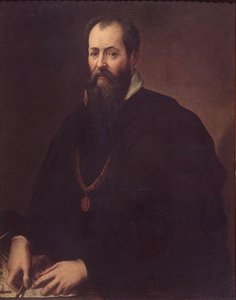
Giorgio Vasari
1511 - 1574 , Italy
Quick Facts
- Artistic Movement Or Style: Mannerism
- Artists Or Movements Influenced By This Artist: ['Renaissance art history']
- Artists Who Influenced This Artist:
- Andrea del Sarto
- Raphael
- Michelangelo
- Date Of Birth: July 30, 1511
- Date Of Death: June 27, 1574
- Full Name: Giorgio Vasari
- Nationality: Italian
- Notable Artworks:
- The Studio of the Painter
- The Last Judgement
- Adoration of the Magi
- Place Of Birth: Arezzo, Italy

