

![Life Of Saint Francis - [02] - Renunciation Of Wordly Goods — Giotto Di Bondone](/media/artworks/images-full/e6/04/e60451006b8fd3113023b8b85a08d666.jpg)
 Preview
 Send
Send Share
Share
 Details

 Download
 Similars
 X-Ray
X-Ray Diaporama
Life of Saint Francis - [02] - Renunciation of Wordly Goods


 Read More
Purchase a high-resolution, enhanced digital image, far superior to the online preview.
Each file is meticulously prepared by our in-house specialists using advanced tools and expert manual retouching. We ensure every image has exceptional clarity, precise color accuracy, and fine detail.
The final file is delivered via email within 72 hours, optimized for immediate use in professional, editorial, and print environments. This is the same quality trusted by top-tier design studios, publishers, and galleries.
Digital Image
Download a high-resolution file for personal display, printing, and creative projects. ( Buy Print Buy Hand Made Painting)
Included in Every Digital Image Order
Expert Digital Delivery, Guaranteed
When you choose ArtsDot.com, you're not just getting an image - you're receiving a professionally enhanced digital artwork, crafted with precision and backed by a satisfaction guarantee. Here's everything that comes with your order, automatically:

Fast Email Delivery
Your high-resolution digital image file will be emailed to you within 72 hours of ordering - ready for immediate use.

AI-Enhanced Digital File
Your artwork is professionally optimized using advanced AI tools and manual editing, ensuring maximum detail, clarity, and color accuracy.

Free Lifetime Re-Delivery
Accidentally deleted or lost your file? No worries - we'll resend it to you anytime, free of charge.

No Import Fees - Ever
Enjoy your artwork instantly with zero customs, duties, or delivery fees - digital downloads are always tax-free.

Color Accuracy Guarantee
We ensure your digital image reflects the original colors as closely as possible using professional tools and color management.

60-Day Satisfaction Guarantee
If you're not satisfied with your digital image, we'll revise it or refund 100% within 60 days - no questions asked.

100% Money-Back Guarantee
Not satisfied? Get a full refund within 60 days of receiving your digital file - no questions asked.

Bulk Order Discounts
Buy 3 images, save 10% - Buy 5, save 15% - Buy 10+, save 20%. Great for creative projects, galleries, and agencies.
The Painting's Significance
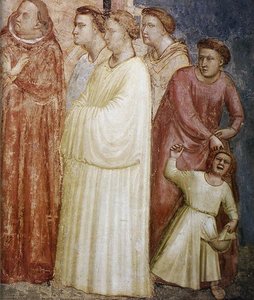
The Renunciation of Wordly Goods is a pivotal moment in the life of Saint Francis, and Giotto's depiction of this scene is both powerful and emotive. The painting showcases the artist's use of naturalism and emotional expression, which were groundbreaking for its time. The composition is well-balanced, with Saint Francis positioned at the center, surrounded by his family and friends who are arranged in a semi-circle around him.Gothic Style and Oil Media
The Renunciation of Wordly Goods is an excellent example of Gothic art, characterized by its emphasis on naturalism, decorative elements, and spiritual themes. The painting features intricate patterns and ornamentation that are typical of the Gothic style. The use of oil as a medium allowed Giotto to create rich and vibrant colors that give the painting a luminous quality. You can learn more about Giotto Di Bondone and his works on https://ArtsDot.com. Key Features of the Painting:- The painting is executed in oil on a wooden panel, which was a common medium during the Gothic period.
- The composition is well-balanced, with Saint Francis positioned at the center.
- The painting features intricate patterns and ornamentation that are typical of the Gothic style.
Conclusion
The Renunciation of Wordly Goods by Giotto Di Bondone is a masterpiece that showcases the artist's innovative use of oil as a medium and his unique style and technique. The painting depicts a powerful spiritual message that resonates with viewers to this day. You can find high-quality reproductions of this iconic work on https://ArtsDot.com. The original painting is part of the collection at the Museum San Felice in Florence, Italy.You can also learn more about the Bardi Chapel and its collections by visiting https://ArtsDot.com.
Related Artworks
![Scrovegni - [12] - Wedding Procession — Giotto Di Bondone, Proto-renaissance](/media/artworks/images-thumb/c6/73/c6736271740d6a4ae45df5c606277c3f.jpg)
![Life Of Saint Francis - [01] - Stigmatization Of Saint Francis — Giotto Di Bondone, Early Renaissance](/media/artworks/images-thumb/fd/6a/fd6ae2a8f5e88e0ace6b86a21d020ded.jpg)
![Legend Of St Francis - [11] - St Francis Before The Sultan (trial By Fire) — Giotto Di Bondone, Proto-renaissance](/media/artworks/images-thumb/0d/32/0d328acfb6c90f7ef32707586e86044b.jpg)
![Legend Of St Francis - [24] - Canonization Of St Francis — Giotto Di Bondone, Gothic](/media/artworks/images-thumb/81/9b/819b5f0656848eb5cb3fcd40fd5756aa.jpg)
Artist Biography
The Shepherd Boy of Florence: Giotto’s Revolutionary Vision
Born around 1267 in the rolling hills near Florence, Italy, Giotto di Bondone emerged from humble beginnings to become arguably the most pivotal figure in the transition from medieval artistic conventions toward the Renaissance. His early life is steeped in legend – a shepherd boy discovered sketching remarkably lifelike sheep on rocks, catching the discerning eye of the Florentine master Cimabue. Whether fact or folklore, this tale encapsulates the essence of Giotto’s genius: an innate ability to capture the natural world with unprecedented realism and emotional depth. Taken as an apprentice by Cimabue, Giotto quickly surpassed his teacher, absorbing technical skills but forging a path distinctly his own. The Byzantine style, dominant at the time, favored stylized figures, flattened perspectives, and lavish gold backgrounds – symbols of spiritual transcendence rather than earthly representation. Giotto, however, yearned to depict humanity not as ethereal icons, but as individuals imbued with feeling, existing within tangible space.
Breaking from Byzantium: A New Naturalism
Giotto’s artistic revolution wasn't a sudden upheaval, but a gradual evolution. His early works already hinted at the shift to come, demonstrating a growing emphasis on volume, weight, and believable anatomy. He began to observe light and shadow not merely as decorative elements, but as tools to sculpt form and create depth. This nascent naturalism is evident in his contributions to the frescoes in the Upper Basilica of Saint Francis of Assisi – though authorship remains debated, many scholars recognize Giotto’s hand in scenes that display a marked departure from prevailing Byzantine aesthetics. He wasn't simply rejecting tradition; he was building upon it, infusing established forms with a newfound sense of humanity and emotional resonance. He understood the power of narrative, crafting compositions that told stories not through rigid symbolism, but through expressive gestures, believable interactions, and carefully constructed settings.
The Scrovegni Chapel: A Masterpiece of Storytelling
Giotto’s masterpiece, and arguably one of the most important works in Western art history, is the fresco cycle adorning the Scrovegni Chapel (also known as the Arena Chapel) in Padua. Completed around 1305, this breathtaking series depicts the life of Christ and the Virgin Mary with a revolutionary level of realism and emotional intensity. Each scene unfolds like a carefully staged drama, populated by figures who are not merely representations of religious archetypes, but fully realized human beings experiencing joy, sorrow, fear, and hope. The *Last Judgment*, dominating one entire wall, is a powerful testament to Giotto’s skill in conveying both divine majesty and the raw vulnerability of humanity facing its ultimate reckoning. The use of perspective, though not mathematically precise by later Renaissance standards, creates a convincing illusion of depth, drawing the viewer into the narrative. The figures are grounded, their bodies possessing weight and volume, and their expressions convey a range of emotions that were previously unseen in religious art.
Beyond Frescoes: Architecture and Lasting Legacy
Giotto’s talents extended beyond painting; he was also a respected architect. In 1334, he was commissioned to design the Campanile – the bell tower – of Florence Cathedral, a project that showcased his innovative approach to architectural form. Though he died before its completion, his designs laid the foundation for this iconic Florentine landmark. His influence on subsequent generations of artists is immeasurable. He bridged the gap between the medieval and Renaissance worlds, paving the way for masters like Masaccio, Leonardo da Vinci, and Michelangelo. Vasari, in his seminal *Lives of the Artists*, credited Giotto with “giving to painting the great art of doing things from life,” a testament to his profound impact on the course of Western art. Giotto didn’t merely depict the world; he sought to understand it, to capture its essence, and to convey that understanding through the power of visual storytelling. His legacy continues to inspire awe and admiration centuries after his death, solidifying his place as one of history's greatest artistic innovators.
Key Achievements & Lasting Influence
- Revolutionized Painting: Moved away from Byzantine stylization towards naturalism and emotional realism.
- Pioneered Perspective: Introduced techniques to create depth and spatial awareness in paintings.
- Masterful Storytelling: Created compelling narratives through fresco cycles, like the Scrovegni Chapel.
- Architectural Contributions: Designed the Campanile of Florence Cathedral, demonstrating architectural skill.
- Foundation for Renaissance Art: His work laid the groundwork for the artistic achievements of the Renaissance period.
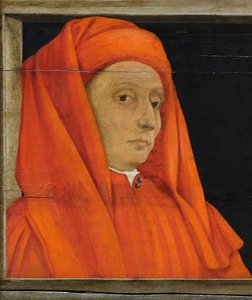
Giotto di Bondone
1267 - 1337 , Italy
Quick Facts
- Artistic Movement Or Style: Proto-Renaissance
- Artists Or Movements Influenced By This Artist:
- Masaccio
- Renaissance art
- Artists Who Influenced This Artist: ['Cimabue']
- Date Of Birth: c. 1267
- Date Of Death: 1337
- Full Name: Giotto di Bondone
- Nationality: Italian
- Notable Artworks:
- Scrovegni Chapel
- Ognissanti Madonna
- Campanile
- Place Of Birth: Florence, Italy

