 Preview
 Send
Send Share
Share
 Details

 Download
 Similars
 X-Ray
X-Ray Diaporama
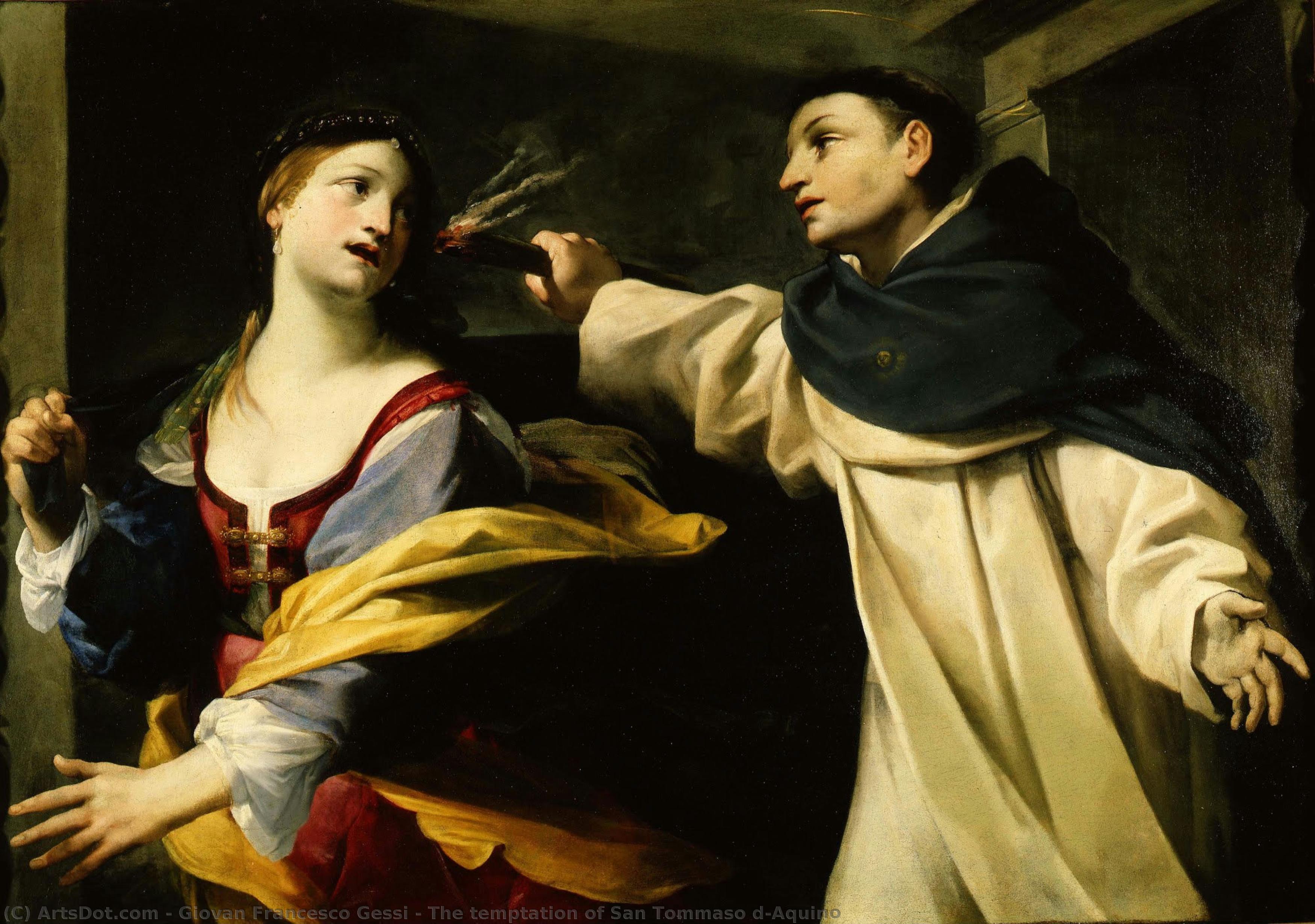
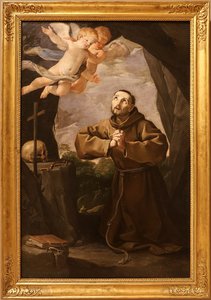
The temptation of San Tommaso d’Aquino
 132.0 x 93.0 cm
 Civic Museums of Reggio Emilia
 Read More
Hand Made Oil Reproduction
Hand-painted oil on canvas in your size and frame, made to order by our artists. ( Buy Print Buy Image)




































Pick from our preset sizes that match the artwork's original proportions.

You may enter your own dimensions to fit a specific frame or space. If your selected size does not match the original image's proportions, we will either crop the artwork or extend the painting with additional hand-painted elements. A digital mockup will be sent for your approval before production begins.
Please note that the on-screen preview does not reflect the actual cropping or extension. Only the mockup will accurately show the final composition.
While custom sizes are available, we recommend selecting a dimension from the predefined list to preserve the original proportions.
After order, ArtsDot.com team will email client for instructions and provide a mockup preview
Worldwide Delivery () in 3/4 weeks instead of standard 5 weeks. (29 August). No compromise on quality.

Free Worldwide Express Shipping

High-Quality Linen Canvas

Full Shipping Insurance

Customs Tax Refund Guarantee

True Color Matching Guarantee

60-Day Return Policy (Defects Only)

100% Money-Back Guarantee

Bulk Discount Offer
 Glass option is only available in size under 110 CM

The temptation of San Tommaso d’Aquino
Reproduction Medium
Reproduction Size
-


Total Price
$ 263
Related Artworks








Artist Biography
Paolo Veronese: The Master of Venetian Splendor
Paolo Veronese, born Paolo Caliari in Verona in 1528 and tragically dying in Venice in 1588, stands as a towering figure in the history of Renaissance art. More than simply a painter, he was a master orchestrator of visual spectacle, a devotee of opulent grandeur, and a pivotal link between the High Renaissance ideals of Rome and the distinctive Venetian style that would define an era. His legacy isn’t one of profound emotional depth or introspective portraiture – though he excelled in those areas as well – but rather of breathtaking scale, dazzling color, and a remarkable ability to capture the vibrant energy and material wealth of 16th-century Venice. His nickname, “Veronese,” derived from his birthplace, belies the immense impact he had on Venetian art and beyond.
Veronese’s early artistic training was rooted in the classical traditions of Verona, fostered by his mentor, Antonio Badile, whose daughter he married. However, a crucial period followed where he served as an assistant to Giovanni Battista Caroto, a key figure in establishing the foundations for Veronese's distinctive style – a synthesis of Central and Northern Italian influences that blended the formality of Raphael with the dynamism of Titian. This formative experience laid the groundwork for his later success, shaping his approach to composition, narrative, and, crucially, his masterful use of color.
The Venetian School and Artistic Influences
Veronese’s arrival in Venice marked a turning point in his career and profoundly influenced the development of the city's artistic landscape. He became inextricably linked with the other giants of the Venetian School – Titian, Tintoretto, and Paolo Bellini – forming a powerful trio that dominated the art scene for decades. While he shared stylistic affinities with these masters, particularly Titian’s emphasis on color and narrative, Veronese forged his own unique path, characterized by an unparalleled sense of scale and a meticulous attention to detail.
The influence of Correggio and Parmigianino is readily apparent in Veronese's early works, evident in the flowing lines, dynamic compositions, and sophisticated use of perspective. However, he skillfully integrated these influences with the classical ideals championed by Raphael, creating a harmonious blend that reflected the spirit of Renaissance Venice. Furthermore, his work demonstrates an awareness of the antique architecture and sculpture prevalent in Verona, subtly imbuing his paintings with a sense of timeless grandeur.
Grand Scale and Theatrical Spectacle
What truly distinguishes Veronese is his extraordinary ability to create monumental compositions that overwhelm the viewer. His most celebrated works – the ceiling frescoes for the Doges’ Palace, the refectories of monasteries, and the villas of wealthy patrons – are not merely paintings; they are immersive theatrical experiences. He meticulously crafted elaborate settings filled with a teeming throng of figures, each rendered with exquisite detail and vibrant color. These scenes aren't simply depictions of biblical events or mythological tales; they’re celebrations of wealth, power, and human ambition.
Consider his “Wedding at Cana” (1563) and the “Feast in the House of Levi” (1573). Both paintings are vast, complex narratives teeming with hundreds of figures. The sheer scale is astonishing, but it’s not merely a matter of size; Veronese masterfully orchestrates the composition, guiding the viewer's eye through the crowded scene and creating a sense of dynamic movement. The use of light and shadow further enhances the dramatic effect, highlighting key figures and adding depth to the elaborate settings.
Major Works and Historical Significance
Throughout his career, Veronese produced an astonishingly diverse body of work, encompassing altarpieces, portraits, mythological scenes, and secular commissions. His decoration of the Venetian church of S. Sebastiano (1555–70) remains a remarkable achievement, showcasing his mastery of fresco technique and his ability to create complex, layered compositions. The ceiling frescoes in the library of S. Marco (1556–57), commissioned for the Ducal Palace, are equally impressive, demonstrating his skill in illusionistic architecture and his understanding of Venetian grandeur.
However, Veronese’s career was not without controversy. His lavish depictions of feasts, particularly the “Last Supper” painted for a Dominican friar in 1573, provoked outrage from the Inquisition due to their perceived irreverence and inclusion of seemingly trivial details. The painting was subsequently retitled "Supper in the House of Levi," a clever maneuver that allowed Veronese to preserve his masterpiece while avoiding censure. This incident highlights both the artistic brilliance and the potential for conflict inherent in Veronese’s work – a testament to his willingness to push boundaries and challenge conventional notions of propriety.
Despite the controversy, Paolo Veronese remains one of the most celebrated artists of the High Renaissance and a defining figure in Venetian art. His legacy endures not only through his magnificent paintings but also as a symbol of Venice’s golden age – an era of unparalleled wealth, artistic innovation, and cultural splendor.
giovan francesco gessi
1588 - 1649 , Italy
Quick Facts
- Artistic Movement Or Style:
- Renaissance
- Mannerism
- Venetian School
- Artists Or Movements Influenced By This Artist:
- Rubens
- Watteau
- Tiepolo
- Artists Who Influenced This Artist:
- Titian
- Parmigianino
- Raphael
- Date Of Birth: 1528
- Date Of Death: 1588
- Full Name: Paolo Veronese”
- Nationality: Italian
- Notable Artworks:
- The Wedding at Cana
- Feast in the House of Levi
- Triumph of Venice
- Place Of Birth: Verona, Italy