 Preview
 Send
Send Share
Share
 Details

 Download
 Similars
 X-Ray
X-Ray Diaporama
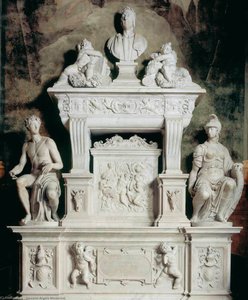
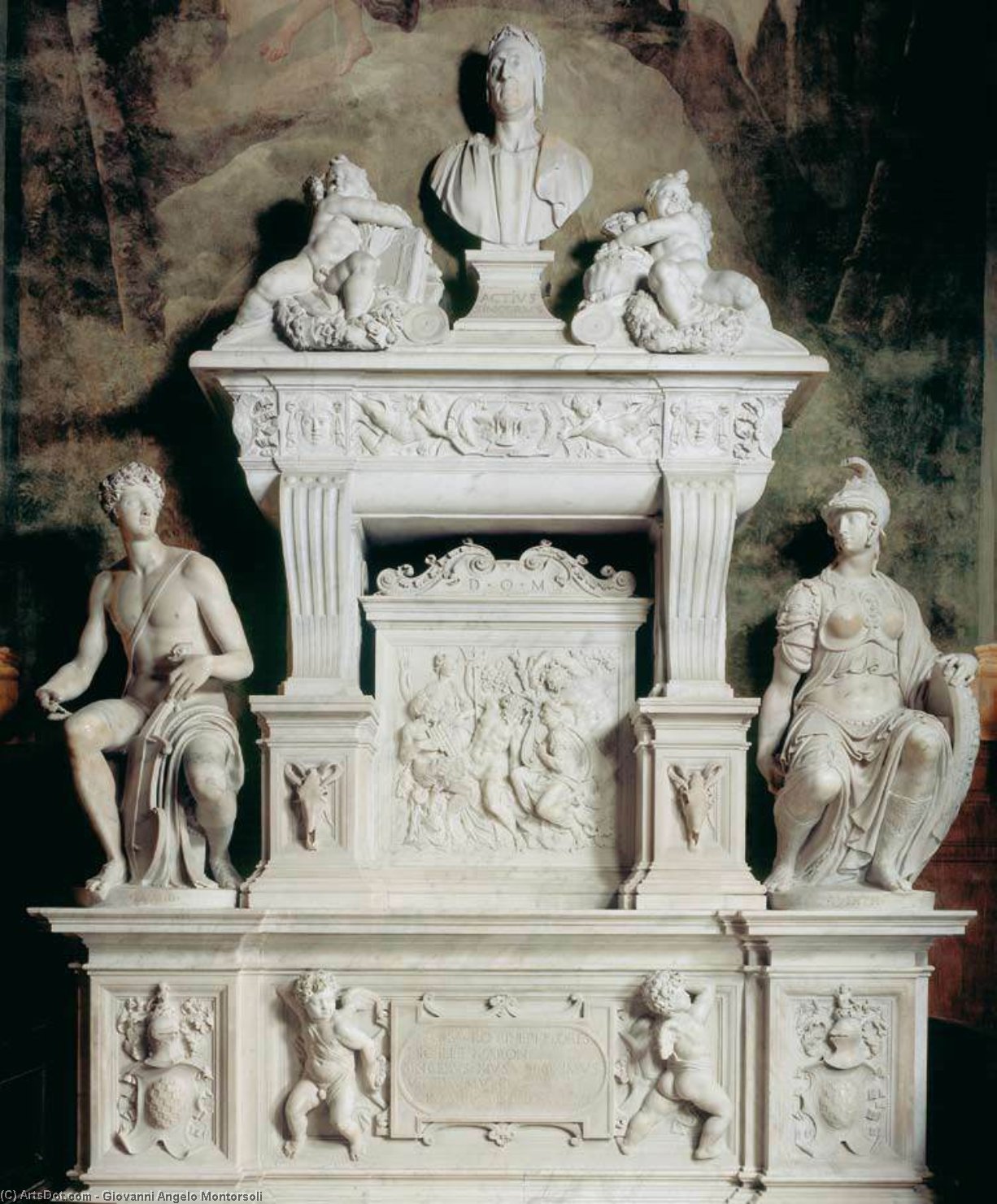
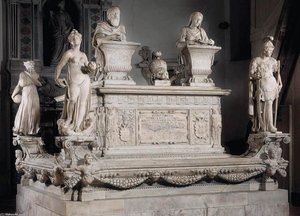
Tomb of Jacopo Sannazaro


 Read More
Giclée / Art Print
Museum-quality giclée or canvas print with fast production and flexible finish options. ( Buy Hand Made Painting Buy Image)




































Pick from our preset sizes that match the artwork's original proportions.

You may enter your own dimensions to fit a specific frame or space. If your selected size does not match the original image's proportions, we will either crop the artwork or extend the image with a mirrored or solid-fill edge. A digital mockup will be sent for your approval before production begins.
Please note that the on-screen preview does not reflect the actual cropping or extension. Only the mockup will accurately show the final composition.
While custom sizes are available, we recommend selecting a dimension from the predefined list to preserve the original proportions.
Worldwide Delivery () in 2 weeks instead of standard 4/5 weeks. (30 August)

Free Worldwide Express Shipping

High-Quality Linen Canvas

Full Shipping Insurance

Customs Tax Refund Guarantee

True Color Matching Guarantee

60-Day Return Policy (Defects Only)

100% Money-Back Guarantee

Bulk Discount Offer
 Glass option is only available in size under 110 CM

Tomb of Jacopo Sannazaro
Giclée / Art Print
Reproduction Size
-


Total Price
$ 63
Related Artworks




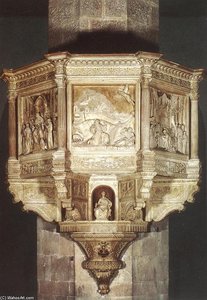
Artist Biography
A Florentine Sculptor Bridging Renaissance and Antiquity
Giovanni Angelo Montorsoli, born in the small Tuscan village of Montorsolo near Florence in 1507, occupies a fascinating, if sometimes overlooked, position within the landscape of 16th-century Italian art. He wasn’t merely a sculptor; he was a conduit between the High Renaissance ideals championed by Michelangelo and the emerging stylistic currents of Mannerism, all while navigating a unique spiritual path as a Servite friar. His life story is one of artistic dedication interwoven with religious devotion, restoration work that shaped our understanding of classical antiquity, and innovative public art projects that left an indelible mark on Sicily.Early Training and the Shadow of Michelangelo
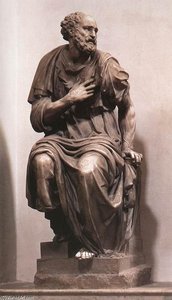
Montorsoli’s artistic journey began in Florence around 1521, apprenticing under Andrea di Piero Ferrucci, a local sculptor who instilled in him foundational skills. However, it was his subsequent association with the towering figure of Michelangelo Buonarroti that truly defined the trajectory of his career. From 1534 onwards, Montorsoli served as an assistant to Michelangelo, participating in the monumental projects at the Medici Chapel (Sacrestia Nuova) and the Biblioteca Medicea Laurenziana within the Basilica of San Lorenzo. This period was formative, exposing him to Michelangelo’s relentless pursuit of anatomical accuracy, dramatic composition, and emotional intensity. He collaborated with Raffaello da Montelupo on *St. Cosmas*, a testament to his growing skill and ability to contribute to projects under the master's guidance. The influence of Michelangelo is palpable in Montorsoli’s early works – a striving for monumental form and expressive power that would remain a hallmark of his style, even as he developed his own distinct voice.Restorer of Antiquity and Spiritual Devotion
A pivotal turn in Montorsoli's life came with his entry into the Servite Order, becoming a friar while continuing to practice his art. This dual existence—artist and religious—was not uncommon during the Renaissance but highlights the complex interplay between faith and creativity in that era. His skills soon attracted papal attention. In 1532, Pope Clement VII summoned him to Rome for the crucial task of restoring antique sculptures within the Belvedere courtyard. This wasn’t simply a matter of conservation as we understand it today; contemporary restoration practices often involved significant alterations based on prevailing aesthetic preferences. Montorsoli became intimately involved with iconic works like the *Laocoön and His Sons* group and the *Belvedere Apollo*. Perhaps most famously, he provided a new right arm to the Laocoön, an addition that dramatically altered the sculpture’s impact for centuries—and sparked considerable debate when the original limb was rediscovered in 1905. While modern conservation ethics would frown upon such interventions, Montorsoli's work undeniably contributed to the sculptures’ fame and his own burgeoning reputation.Fountains of Messina: Innovation and Legacy
In 1547, Montorsoli relocated to Messina, Sicily, marking a new chapter in his career defined by ambitious public commissions. He received prestigious contracts for monumental fountains that would become the defining achievements of his artistic life. The *Fountain of Orion*, completed in 1553, stands as a testament to his ingenuity and mastery of sculptural design. It was, at the time, the tallest and largest fountain ever constructed, showcasing a candelabrum structure reminiscent of Tribolo’s work but evolving beyond it with polygonal basins, deeply carved relief sculptures depicting mythical creatures, and statues of river gods accompanied by inscriptions from the scientist-humanist Francesco Maurolico. The fountain wasn't merely decorative; it was imbued with Neoplatonic and alchemical symbolism, reflecting the intellectual currents of the Renaissance. His *Fountain of Neptune*, completed in 1557, represented an even more radical departure from traditional fountain design. Prior to this, fountains typically featured a small figure within a basin or a wall-mounted structure. Montorsoli boldly conceived of a single, dominant central figure—Neptune himself—a concept previously only envisioned in Benvenuto Cellini’s unrealized plans for Fontainebleau. The dramatic contrast between Neptune's classical pose and the writhing figures of Scylla and Charybdis, representing the perils of the Sicilian Strait, created a dynamic and visually arresting composition that profoundly influenced subsequent fountain designs, including Ammanati’s *Neptune Fountain* in Florence’s Piazza della Signoria.A Lasting Impression
Giovanni Angelo Montorsoli died in Florence in 1563, leaving behind a legacy as an artist who skillfully bridged the gap between Renaissance ideals and classical antiquity. His work embodies a unique synthesis of spiritual devotion, technical prowess, and innovative design. While his restoration practices may be viewed with critical eyes today, they played a significant role in preserving and popularizing important ancient sculptures. His monumental fountains in Messina remain enduring testaments to his creativity and vision, solidifying his place as a pioneer in public art and a compelling figure within the rich tapestry of Italian Renaissance sculpture. He was an artist who not only created beauty but also actively shaped how we perceive and understand the artistic heritage of the past.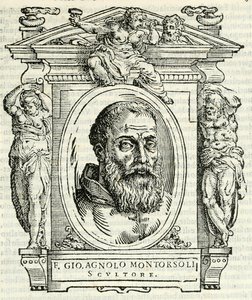
Giovanni Angelo Montorsoli
1507 - 1563 , Italy
Quick Facts
- Artistic Movement Or Style: Mannerism
- Artists Or Movements Influenced By This Artist: ['Ammanati']
- Artists Who Influenced This Artist: ['Michelangelo']
- Date Of Birth: 1507
- Date Of Death: 1563
- Full Name: Giovanni Angelo Montorsoli
- Nationality: Italian
- Notable Artworks:
- Fountain of Orion
- Fountain of Neptune
- Tomb of Sannazaro
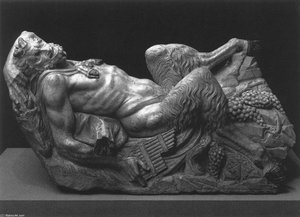
- Drunken Satyr
- St. Cosmas
- Place Of Birth: Montorsolo, Italy