

 Preview
 Send
Send Share
Share
 Details

 Download
 Similars
 X-Ray
X-Ray Diaporama
 Stats
StatsEntrance of the Grand Canal - from the West End of the Molo

 Read More
Purchase a high-resolution, enhanced digital image, far superior to the online preview.
Each file is meticulously prepared by our in-house specialists using advanced tools and expert manual retouching. We ensure every image has exceptional clarity, precise color accuracy, and fine detail.
The final file is delivered via email within 72 hours, optimized for immediate use in professional, editorial, and print environments. This is the same quality trusted by top-tier design studios, publishers, and galleries.
Digital Image
Download a high-resolution file for personal display, printing, and creative projects. ( Switch to Print Buy Hand Made Painting)
Included in Every Digital Image Order
Expert Digital Delivery, Guaranteed
When you choose ArtsDot.com, you're not just getting an image - you're receiving a professionally enhanced digital artwork, crafted with precision and backed by a satisfaction guarantee. Here's everything that comes with your order, automatically:

Fast Email Delivery
Your high-resolution digital image file will be emailed to you within 72 hours of ordering - ready for immediate use.

AI-Enhanced Digital File
Your artwork is professionally optimized using advanced AI tools and manual editing, ensuring maximum detail, clarity, and color accuracy.

Free Lifetime Re-Delivery
Accidentally deleted or lost your file? No worries - we'll resend it to you anytime, free of charge.

No Import Fees - Ever
Enjoy your artwork instantly with zero customs, duties, or delivery fees - digital downloads are always tax-free.

Color Accuracy Guarantee
We ensure your digital image reflects the original colors as closely as possible using professional tools and color management.

100-Day Satisfaction Guarantee
If you're not satisfied with your digital image, we'll revise it or refund 100% within 100 days - no questions asked.

100% Money-Back Guarantee
Not satisfied? Get a full refund within 100 days of receiving your digital file - no questions asked.

Bulk Order Discounts
Buy 3 images, save 10% - Buy 5, save 15% - Buy 10+, save 20%. Great for creative projects, galleries, and agencies.
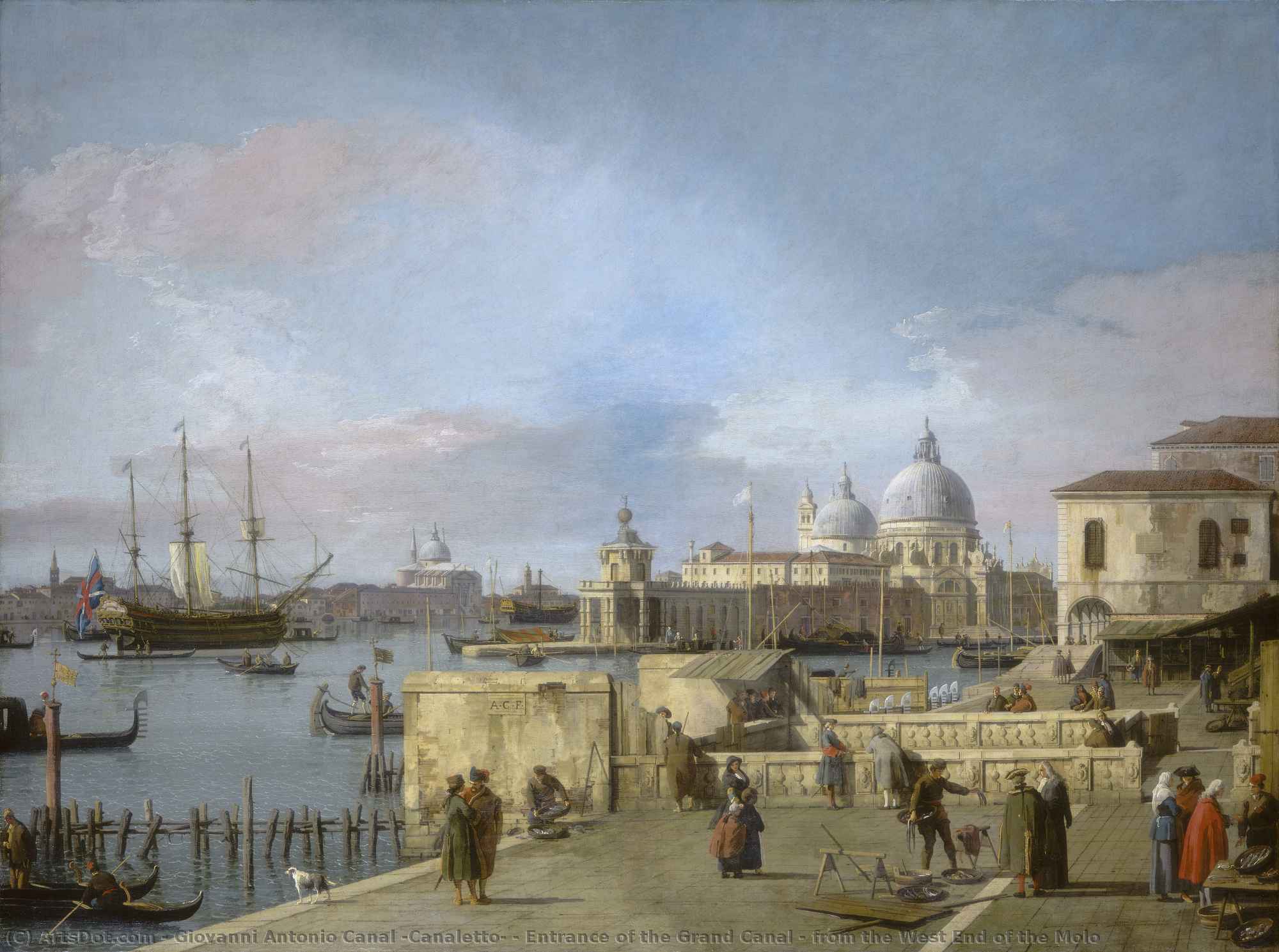
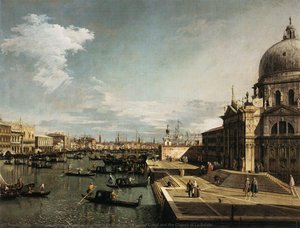
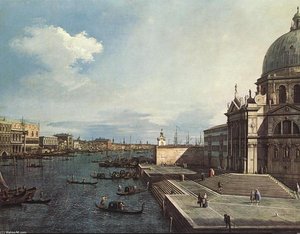
A Window on Venetian Splendor: Canaletto's "Entrance of the Grand Canal – from the West End of the Molo"
Giovanni Antonio Canal, universally known as Canaletto, possessed a singular gift: he captured not just the appearance of Venice, but its very soul. “Entrance of the Grand Canal – from the West End of the Molo” is a testament to this extraordinary ability, offering an immersive glimpse into the heart of the city’s vibrant life during the 18th century. This meticulously rendered scene, painted in the Rococo style, invites us to step directly onto the bustling waters of the Grand Canal, experiencing its energy and grandeur firsthand.
- Subject Matter: The painting focuses on a pivotal moment within the city’s daily rhythm – the movement of boats along the Grand Canal. A prominent foreground vessel commands attention, while smaller craft navigate the waterway behind, creating a dynamic composition that speaks to Venice's role as a vital commercial hub.
- Rococo Influence: Characteristic of the Rococo period, Canaletto employs a delicate palette dominated by blues and greens, complemented by warm ochres and browns in the buildings. This restrained use of color, combined with meticulous detail, creates an atmosphere of refined elegance rather than opulent display.
- Architectural Precision: The artist’s dedication to accuracy is immediately apparent in the depiction of the canal's architecture. Buildings are rendered with painstaking precision, reflecting Venice’s rich history and cultural heritage – a testament to Canaletto’s role as a chronicler of his beloved city.
The Artist's Vision: Technique and Context
Canaletto’s technique was rooted in observation and a profound understanding of perspective. He employed aerial perspective, subtly blurring details in the distance to create a convincing illusion of depth – a crucial element for depicting a vast urban landscape. His use of light is masterful, illuminating the scene with a soft glow that enhances its realism and evokes a sense of tranquility amidst the activity. Born in Venice in 1697, Canaletto’s early training under his father, a theatrical scene painter, instilled in him a meticulous eye for detail and an appreciation for capturing fleeting moments. His travels to Rome, where he worked on opera scenery, further honed his skills and broadened his artistic horizons.
- Oil on Canvas: The painting is executed in oil on canvas, a medium that allowed Canaletto to achieve the smooth gradations of tone and color essential for his topographical style.
- Topographical Style: Canaletto’s work is defined by its “topographical” style – a precise and detailed representation of cities and landscapes. This approach was revolutionary at the time, elevating landscape painting to a new level of artistic significance.
Symbolism and Emotional Impact
Beyond mere documentation, "Entrance of the Grand Canal" resonates with deeper symbolic meaning. The scene captures not just the physical appearance of Venice but also its spirit – a blend of commerce, leisure, and cultural richness. The gathering of people along the canal suggests a shared appreciation for beauty and a sense of community. The painting’s enduring appeal lies in its ability to transport us back to a bygone era, offering a poignant reminder of Venice's historical significance and artistic legacy. Canaletto’s work has been widely admired for its accuracy and beauty, and his paintings often featured famous landmarks in Venice.
A Legacy of Venetian Art
Canaletto’s influence extends far beyond the confines of his own time. His meticulous approach to landscape painting paved the way for future generations of artists, while his detailed depictions of Venice continue to captivate viewers today. His work stands as a cornerstone of Venetian painting and a testament to the enduring power of observation and artistic skill.
Related Artworks
Artist Biography
early life and training
giovanni antonio canal, commonly known as canaletto, was born on october 18, 1697, in venice, italy. he was the son of bernardo canal, a painter of theatrical scene settings, and artemisia barbieri. canaletto's early training in painting began with his father, who taught him the fundamentals of art.
the making of a master
in 1718, canaletto traveled to rome, where he worked on producing scenery for two operas by alessandro scarlatti. this experience had a profound impact on his development as an artist. upon returning to venice, canaletto began painting in his signature topographical style, which would eventually make him famous.
notable works and collaborations
some of canaletto's most notable works include:
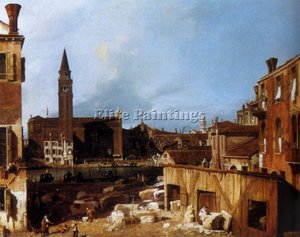
- the stonemason's yard (c. 1725), a masterpiece showcasing his early skill.
- regatta on the grand canal, a vivid depiction of venetian public ceremonies.
- eton college (1746-1756), a testament to his influence in england. collaboration with his nephew bellotto, who became an accomplished artist in his own right.
artistic style and technique
canaletto's use of precise perspective and meticulous preparatory drawings has led some experts to believe he may have employed a camera obscura for topographical accuracy. however, his primary concern remained the compositional design, ensuring his works were not merely accurate recordings but also visually stunning.
legacy and collections
canaletto's work can be found in various museums, including the national gallery, london, which showcases his influence on 18th-century art. his legacy extends to the numerous artists he inspired, cementing his place as a master of venetian landscapes.
- view canaletto's works at https://ArtsDot.com/@/giovanni-antonio-canal
- explore more about canaletto on wikipedia
- discover the beauty of venetian art at the palumbo-fossati collection (venice, italy)
key dates
- october 18, 1697: born in venice, italy
- 1718: traveled to rome
- 1725: painted the stonemason's yard
- 1746-1756: visited england, painting notable works like eton college
- april 19, 1768: passed away in venice, italy
remember to explore the world of art at https://ArtsDot.com for more biographies and artworks.
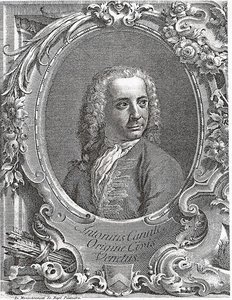
Canaletto
1697 - 1768 , Italy
Quick Facts
- Artistic Movement Or Style: Vedute Venice
- Artists Or Movements Influenced By This Artist: ['Tintoretto']
- Artists Who Influenced This Artist: ['Giovanni Paolo Pannini']
- Date Of Birth: October 18, 1697
- Date Of Death: April 19, 1768
- Full Name: Giovanni Antonio Canal
- Nationality: Italian
- Notable Artworks:
- The Stonemason's Yard
- Regatta on the Grand Canal
- Eton College
- Place Of Birth: Venice, Italy