

 Preview
 Send
Send Share
Share
 Details

 Download
 Similars
 X-Ray
X-Ray Diaporama
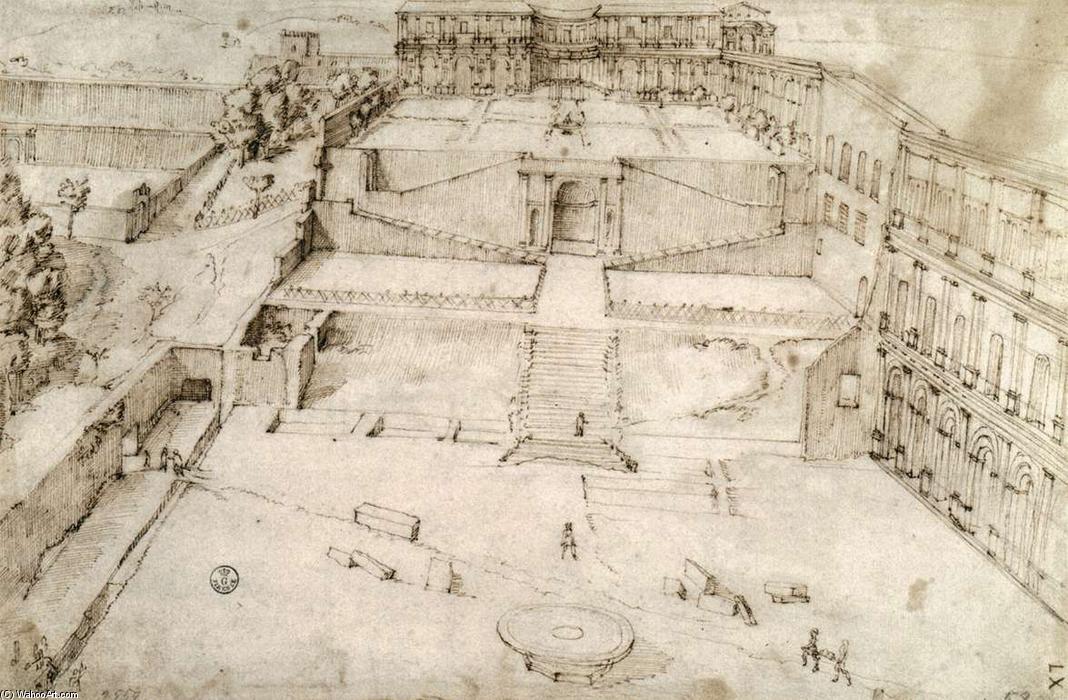
Belvedere Courtyard in the Vatican Palace


 Read More
Purchase a high-resolution, enhanced digital image, far superior to the online preview.
Each file is meticulously prepared by our in-house specialists using advanced tools and expert manual retouching. We ensure every image has exceptional clarity, precise color accuracy, and fine detail.
The final file is delivered via email within 72 hours, optimized for immediate use in professional, editorial, and print environments. This is the same quality trusted by top-tier design studios, publishers, and galleries.
Digital Image
Download a high-resolution file for personal display, printing, and creative projects. ( Buy Print Buy Hand Made Painting)
Included in Every Digital Image Order
Expert Digital Delivery, Guaranteed
When you choose ArtsDot.com, you're not just getting an image - you're receiving a professionally enhanced digital artwork, crafted with precision and backed by a satisfaction guarantee. Here's everything that comes with your order, automatically:

Fast Email Delivery
Your high-resolution digital image file will be emailed to you within 72 hours of ordering - ready for immediate use.

AI-Enhanced Digital File
Your artwork is professionally optimized using advanced AI tools and manual editing, ensuring maximum detail, clarity, and color accuracy.

Free Lifetime Re-Delivery
Accidentally deleted or lost your file? No worries - we'll resend it to you anytime, free of charge.

No Import Fees - Ever
Enjoy your artwork instantly with zero customs, duties, or delivery fees - digital downloads are always tax-free.

Color Accuracy Guarantee
We ensure your digital image reflects the original colors as closely as possible using professional tools and color management.

60-Day Satisfaction Guarantee
If you're not satisfied with your digital image, we'll revise it or refund 100% within 60 days - no questions asked.

100% Money-Back Guarantee
Not satisfied? Get a full refund within 60 days of receiving your digital file - no questions asked.

Bulk Order Discounts
Buy 3 images, save 10% - Buy 5, save 15% - Buy 10+, save 20%. Great for creative projects, galleries, and agencies.
Related Artworks








Artist Biography
Hans Holbein the Younger: A Master of Portraiture and Political Intrigue
Born in Augsburg, Germany, around 1497/98 – though the exact date remains uncertain – Hans Holbein the Younger emerged as one of the most significant artists of the Northern Renaissance. His career spanned decades, marked by a remarkable versatility that encompassed painting, drawing, and design, but he is primarily celebrated for his profoundly realistic and psychologically astute portraits. Unlike his father, Hans Holbein the Elder, who favored a more traditional, somewhat conservative style, younger Holbein embraced innovation, incorporating Italian influences into his work while retaining a distinctly German sensibility. His journey took him from Basel to London, where he ultimately served as court painter to Henry VIII, becoming deeply intertwined with the political and religious upheavals of the era.
- Early Years & Training: Holbein’s artistic foundation began under his father, who instilled in him a solid grounding in late Gothic techniques. However, he also benefited from exposure to the work of other artists in Basel, including Albrecht Dürer and Matthias Grünewald, fostering a broader understanding of artistic styles.
- Italian Influence: A pivotal moment in Holbein’s development occurred during his travels to Italy between 1518 and 1519. He immersed himself in the vibrant art scene of Florence and Venice, absorbing the innovations of Leonardo da Vinci, Raphael, and other masters. This exposure profoundly influenced his technique, particularly his use of light, color, and perspective.
- Return to Basel & Early Works: Upon returning to Basel, Holbein produced a diverse body of work, including religious paintings, portraits, and illustrations for printed books. These early works demonstrate his growing mastery of detail, composition, and psychological realism.
The Ambassador’s Double Portrait: A Window into 16th-Century Europe
"The Ambassadors," painted in 1533, stands as Holbein's most iconic achievement – a complex and layered masterpiece that transcends the simple depiction of two diplomats. The painting is not merely a portrait; it’s a meticulously constructed allegory reflecting the political, religious, and intellectual currents of its time. Jean de Dinteville, representing France, and Georges de Selve, his companion, are presented as symbols of diplomacy and learning. However, the seemingly harmonious scene is subtly disrupted by carefully placed details that hint at underlying tensions and anxieties.
- Symbolic Objects: The painting’s richness lies in its abundance of symbolic objects. The arithmetic book, open to a page on division, suggests the complexities of international trade and finance. The globe represents the expanding world and the pursuit of knowledge. The lute, with its broken string, is often interpreted as a symbol of discord or the fragility of peace.
- The Skull: A particularly intriguing detail is the faint image of a skull visible between the men’s feet – a subtle reminder of mortality and the transience of earthly power. This hidden element adds a layer of profound meaning to the portrait.
- Compositional Mastery: Holbein's masterful use of perspective, light, and shadow creates a sense of depth and realism that is unparalleled. The meticulous rendering of textures – from the velvet of the clothing to the sheen of the globe – further enhances the painting’s visual impact.
Holbein’s Court Painter: Portraits of Power and Influence
Following his success with “The Ambassadors,” Holbein secured a prestigious position as court painter to Henry VIII in 1537. He produced a prolific series of portraits of the king, his wives, and other prominent figures, capturing their personalities and status with remarkable accuracy. These portraits not only served as visual records but also became powerful symbols of royal authority and legitimacy.
- Henry VIII Portraits: Holbein’s portraits of Henry VIII are particularly noteworthy for their psychological depth. He skillfully captured the king's evolving moods, ambitions, and insecurities, offering a nuanced portrayal of one of England’s most controversial monarchs.
- Royal Commissions: Beyond portraiture, Holbein undertook various commissions for the court, including designing tapestries, illuminated manuscripts, and decorative panels. His work adorned royal palaces and churches, reflecting the wealth and power of the Tudor dynasty.
- Influence on Portraiture: Holbein’s influence extended far beyond his own lifetime. He established a new standard for portrait painting, setting a precedent for future generations of artists to emulate.
Legacy and Historical Significance
Hans Holbein the Younger died in London in 1543, leaving behind a remarkably diverse and influential body of work. His portraits are celebrated for their realism, psychological insight, and technical brilliance. “The Ambassadors” remains one of the most studied and admired paintings in art history, offering a fascinating glimpse into the political, religious, and intellectual landscape of 16th-century Europe. Holbein’s legacy endures as a testament to his artistic genius and his profound understanding of human nature – a master who captured not just appearances but also the essence of his subjects.
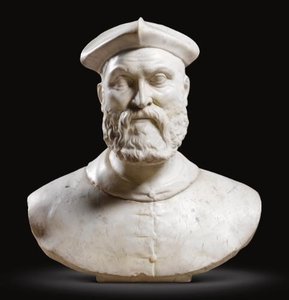
giovanni antonio dosio
1533 - 1611 , Italy
Quick Facts
- Artistic Movement Or Style: Northern Renaissance
- Artists Or Movements Influenced By This Artist:
- Lucas Cranach the Elder
- Renaissance portraiture
- Artists Who Influenced This Artist:
- Hans Holbein the Elder
- Albrecht Dürer
- Date Of Birth: 1497/98, Augsburg
- Date Of Death: 1543, London
- Full Name: Hans Holbein the Younger
- Nationality: German
- Notable Artworks:
- The Ambassadors
- Portrait of Henry VIII
- Place Of Birth: Augsburg, Germany

