 Preview
 Send
Send Share
Share
 Details

 Download
 Similars
 X-Ray
X-Ray Diaporama
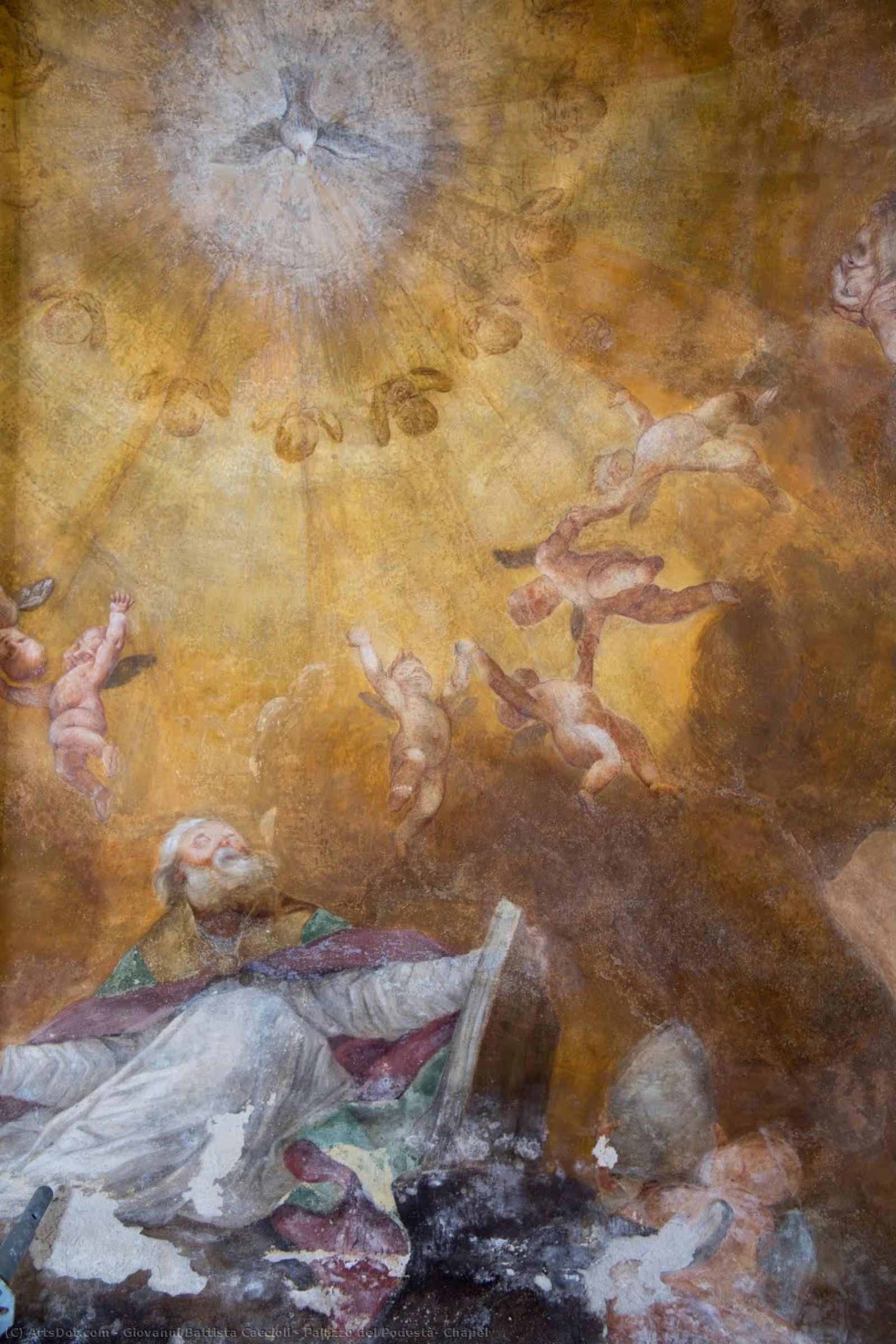
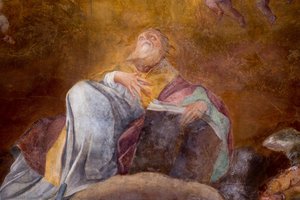
Palazzo del Podestà, Chapel

 Read More
Hand Made Oil Reproduction
Hand-painted oil on canvas in your size and frame, made to order by our artists. ( Buy Print Buy Image)




































Pick from our preset sizes that match the artwork's original proportions.

You may enter your own dimensions to fit a specific frame or space. If your selected size does not match the original image's proportions, we will either crop the artwork or extend the painting with additional hand-painted elements. A digital mockup will be sent for your approval before production begins.
Please note that the on-screen preview does not reflect the actual cropping or extension. Only the mockup will accurately show the final composition.
While custom sizes are available, we recommend selecting a dimension from the predefined list to preserve the original proportions.
After order, ArtsDot.com team will email client for instructions and provide a mockup preview
Worldwide Delivery () in 3/4 weeks instead of standard 5 weeks. (25 August). No compromise on quality.

Free Worldwide Express Shipping

High-Quality Linen Canvas

Full Shipping Insurance

Customs Tax Refund Guarantee

True Color Matching Guarantee

60-Day Return Policy (Defects Only)

100% Money-Back Guarantee

Bulk Discount Offer
 Glass option is only available in size under 110 CM

Palazzo del Podestà, Chapel
Reproduction Medium
Reproduction Size
-


Total Price
$ 263
Related Artworks








Artist Biography
The Luminous Legacy of Giovanni Battista Caccioli
In the vibrant, theatrical heart of the Italian Baroque, few artists captured the delicate balance between architectural illusion and human emotion as gracefully as Giovanni Battista Caccioli. Born in 1623 in the quiet town of Budrio, near the illustrious city of Bologna, Caccioli emerged from a landscape steeped in the traditions of disegno—the rigorous Italian pursuit of anatomical precision and structural clarity. His life, though spanning only five decades until his death in 1675, serves as a profound testament to the collaborative spirit that defined the Seicento, an era where individual genius often merged with collective vision to transform ceilings and walls into windows to the divine.
Caccioli’s artistic journey was shaped by the masters of his age. His formative years were spent under the watchful eye of Domenico Maria Canuti, a master of fresco work whose ability to animate sacred spaces provided Cacciulate with a foundational understanding of large-scale narrative painting. However, it was the influence of Carlo Cignani that truly ignited his creative spirit. From Cignani, Caccioli inherited a more dramatic visual vocabulary, learning to employ expressive coloration and dynamic compositions that could command the attention of even the most vast and daunting architectural settings. This synthesis of Bolognese discipline and Cignani’s emotive grandeur became the hallmark of his developing style.
Mastery of Illusion and Collaborative Grandeur
The true brilliance of Caccioli’s career lies in his mastery of quadratura—the sophisticated art of illusionistic ceiling painting designed to dissolve the physical boundaries of a room. He was not merely a painter of figures, but a vital component of monumental decorative schemes. Working alongside the architectural virtuosos Giovanni Giacomo Monti and Baldassare Bianchi, Caccioli breathed life into their complex perspective designs. While Monti and Bianchi constructed the deceptive architectural frameworks that seemed to extend toward the heavens, it was Caccioli who populated these ethereal realms with flesh, blood, and spirit.
His ability to integrate human figures seamlessly into these dizzying perspectives required an extraordinary command of spatial representation. To witness a Caccioli figure is to see a body that exists not just on a flat surface, but within a three-dimensional drama. His work extended far beyond the borders of Bologna, reaching into the prestigious courts and sacred chapels of Parma, Piacenza, Modena, and Mantua. One of his most notable achievements includes his contributions to the Chapel of the Palazzo del Podestà in Rome, where his ability to execute delicate figure painting within a grander decorative context helped solidify his reputation as a premier collaborator of the Baroque era.
A Lasting Impression on the Baroque Canvas
Though much of Caccioli’s original output has been lost to the ravages of time or destroyed during historical upheavals, his significance remains etched in the history of Italian art. He represents a crucial link in the chain of Bolognese tradition, bridging the gap between the classical rigor of the Renaissance and the exuberant, emotive theatricality of the late Baroque. His life was a pursuit of harmony—between the painted figure and the painted architecture, and between the earthly viewer and the celestial vision.
The legacy of Caccioli is also found in the continuation of his lineage, as his son Giuseppe Antonio Caccioli followed in his footsteps, ensuring that the family name remained synonymous with painterly excellence. Today, when we study the grand decorative cycles of the 17th century, we see the fingerprints of Caccioli in every figure that seems to float weightlessly above our heads, reminding us that the greatness of the Baroque was found not just in the scale of its monuments, but in the exquisite skill of the hands that brought them to life.
Giovanni Battista Caccioli
1623 - 1675 , Italy
Quick Facts
- Artistic Movement Or Style: Baroque
- Artists Or Movements Influenced By This Artist: Carlo Cignani
- Artists Who Influenced This Artist: Domenico Maria Canuti
- Date Of Birth: November 28, 1623
- Date Of Death: November 25, 1675
- Full Name: Giovanni Battista Caccioli
- Nationality: Italian
- Notable Artworks: ['Palazzo del Podestà Chapel']
- Place Of Birth: Budrio, Italy