 Preview
 Send
Send Share
Share
 Details

 Download
 Similars
 X-Ray
X-Ray Diaporama
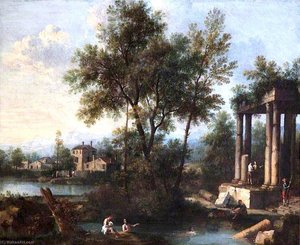
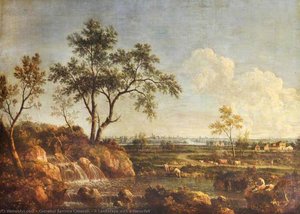
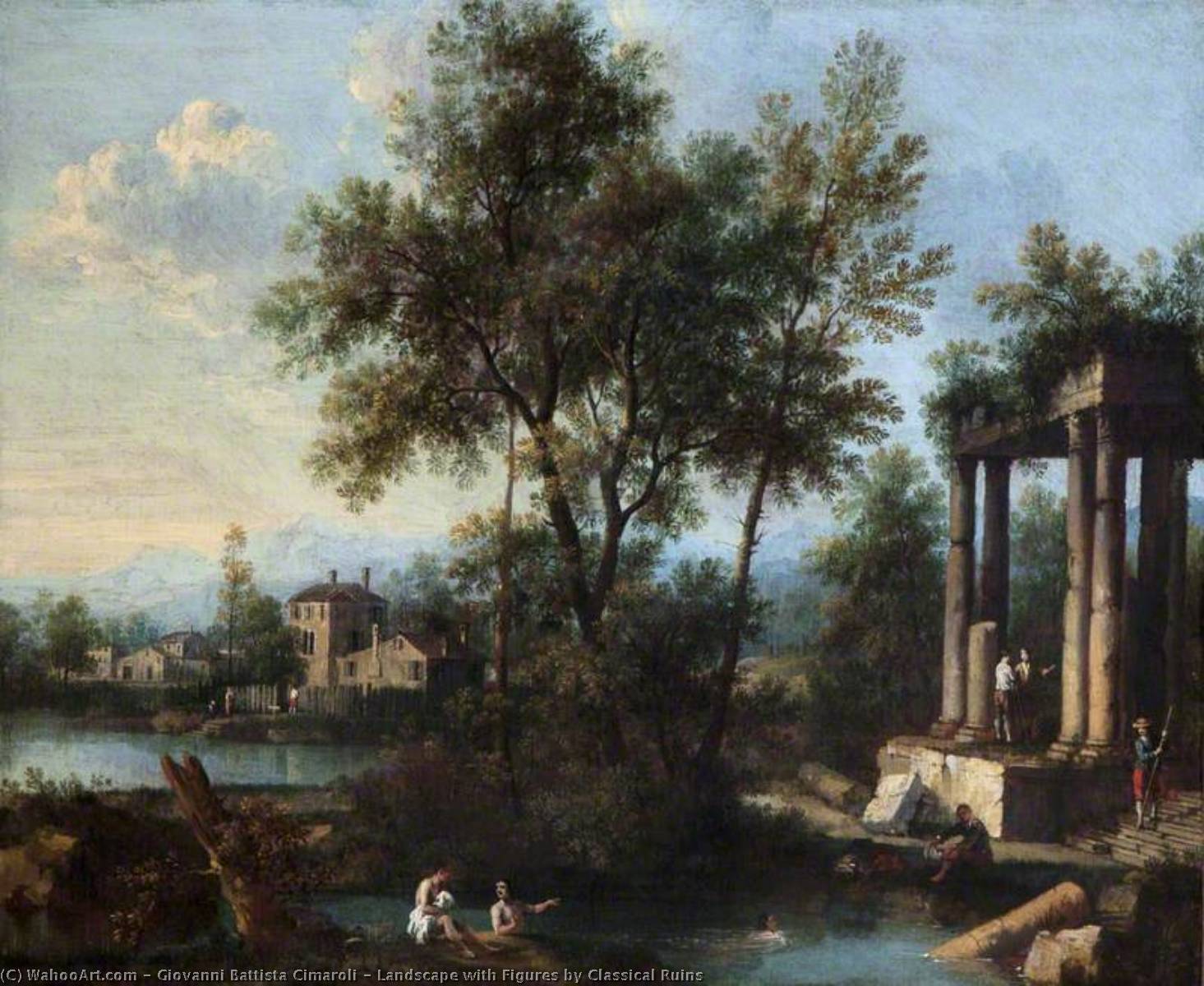
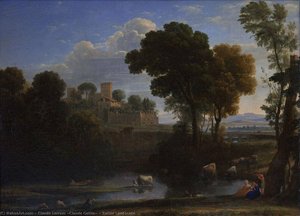
Landscape with Figures by Classical Ruins
 1761
1761 55.0 x 71.0 cm
 National Trust
 Read More
Hand Made Oil Reproduction
Hand-painted oil on canvas in your size and frame, made to order by our artists. ( Buy Print Buy Image)




































Pick from our preset sizes that match the artwork's original proportions.

You may enter your own dimensions to fit a specific frame or space. If your selected size does not match the original image's proportions, we will either crop the artwork or extend the painting with additional hand-painted elements. A digital mockup will be sent for your approval before production begins.
Please note that the on-screen preview does not reflect the actual cropping or extension. Only the mockup will accurately show the final composition.
While custom sizes are available, we recommend selecting a dimension from the predefined list to preserve the original proportions.
After order, ArtsDot.com team will email client for instructions and provide a mockup preview
Worldwide Delivery () in 3/4 weeks instead of standard 5 weeks. (25 August). No compromise on quality.

Free Worldwide Express Shipping

High-Quality Linen Canvas

Full Shipping Insurance

Customs Tax Refund Guarantee

True Color Matching Guarantee

60-Day Return Policy (Defects Only)

100% Money-Back Guarantee

Bulk Discount Offer
 Glass option is only available in size under 110 CM

Landscape with Figures by Classical Ruins
Reproduction Medium
Reproduction Size
-


Total Price
$ 263
Related Artworks








Artist Biography
The Serene Vision of Giovanni Battista Cimaroli
In the golden age of the Venetian Republic, amidst the shimmering canals and the sprawling pastoral beauty of the Veneto, lived an artist whose brush captured the very soul of the Italian landscape. Giovanni Battista Cimaroli (1687–1771) was not merely a painter of scenery, but a chronicler of tranquility. Born in Salò, on the scenic shores of Lake Garda, Cimaroli emerged from a lineage of artistic discipline; his father was a sculptor, a fact that likely instilled in him a profound respect for form and structure. His early training under Antonio Aureggio provided a rigorous foundation in disegno, while his subsequent journey to Bologna to study with Antonio Calza refined his ability to manipulate light and perspective. By the time he established himself in Venice around 1713, Cimaroli had developed a voice that was uniquely his own—a blend of meticulous observation and an idealized, Arcadian grace.
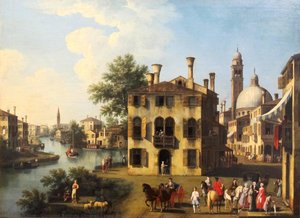
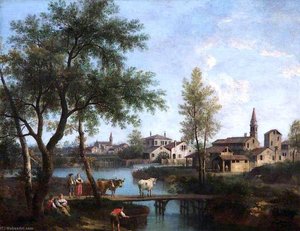
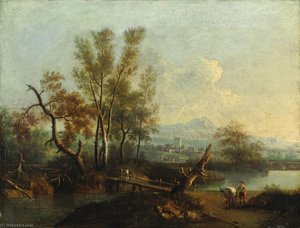
Cimaroli’s work serves as a window into an era defined by the pursuit of pastoral perfection. His compositions often feature the rustic charm of the Venetian countryside, populated by graceful figures, wandering cattle, and the weathered ruins of antiquity. He was deeply influenced by the masters of his time, most notably Francesco Zuccarelli and Canaletto. From Zuccarelli, he inherited a penchant for the Arcadian ideal—the creation of landscapes that felt both natural and poetically composed. From Canaletto, he drew an appreciation for topographical accuracy and the subtle atmospheric effects that define the Venetian sky. This synthesis allowed him to create scenes that were simultaneously grounded in reality and elevated by a sense of timelessness.
Mastery of Light and the Brenta Series
The technical brilliance of Cimaroli lies in his ability to evoke atmosphere through texture and tone. He was a master of thick impasto, using a heavy layering of paint to breathe life into the foliage of trees and the rugged surfaces of stone ruins. This tactile approach creates a palpable sense of physicality, making the lush greenery and flowing waters of his landscapes feel almost touchable. His ability to modulate light allowed him to capture the fleeting moments of a Venetian afternoon—the way sunlight filters through a canopy or reflects off the surface of a quiet canal.
One of his most significant artistic achievements was his involvement in the Brenta Landscape Series (c. 1723-1726). Created at the invitation of Canaletto, this ambitious project offered panoramic views of the Brenta River near Dolo. These works represent a pinnacle of Venetian topographical painting, showcasing Cimaroli’s ability to document the dynamism of the region—from horses hauling carts to boats navigating the river—while maintaining a sense of profound peace. Through these vistas, he captured a world of everyday life that, while vibrant, remained anchored in a serene, almost dreamlike state.
A Legacy of Venetian Tranquility
Though history has sometimes overlooked Cimaroli in favor of his more famous contemporaries, his significance within the Italian Baroque and Rococo traditions remains undeniable. His reputation for meticulous rendering earned him the patronage of influential figures such as Marshal Schulenberg and Count Tessin. Perhaps most telling of his skill was his collaboration with Canaletto on the ambitious tomb series for Owen McSwiney, a project intended to honor British statesmen through the lens of Italian mastery.
Today, Cimaroli’s oeuvre stands as a testament to the enduring allure of the Veneto landscape. His paintings are more than mere depictions of farms, villas, and ruins; they are emotional landscapes that invite the viewer to step into a world of harmony and balance. As we look upon his sweeping riverbanks and quiet pastoral scenes, we find a lasting legacy of beauty that continues to resonate with the human desire for peace and the eternal charm of the natural world.
giovanni battista cimaroli
1687 - 1771
Quick Facts
- Artistic Movement Or Style: Rustic Venetian Landscape
- Artists Or Movements Influenced By This Artist: ['Francesco Zuccarelli']
- Artists Who Influenced This Artist:
- Antonio Aureggio
- Antonio Canaletto
- Date Of Birth: 1687
- Date Of Death: 1771
- Full Name: Giovanni Battista Cimaroli
- Nationality: Italian
- Notable Artworks:
- View of the Brenta, near Dolo
- A landscape at the outskirts of a town with a peasant driving his cattle along a river bank
- A landscape with elegant figures on horseback, before a riverside town
- Place Of Birth: Salò, Lombardy