

 Preview
 Send
Send Share
Share
 Details

 Download
 Similars
 X-Ray
X-Ray Diaporama
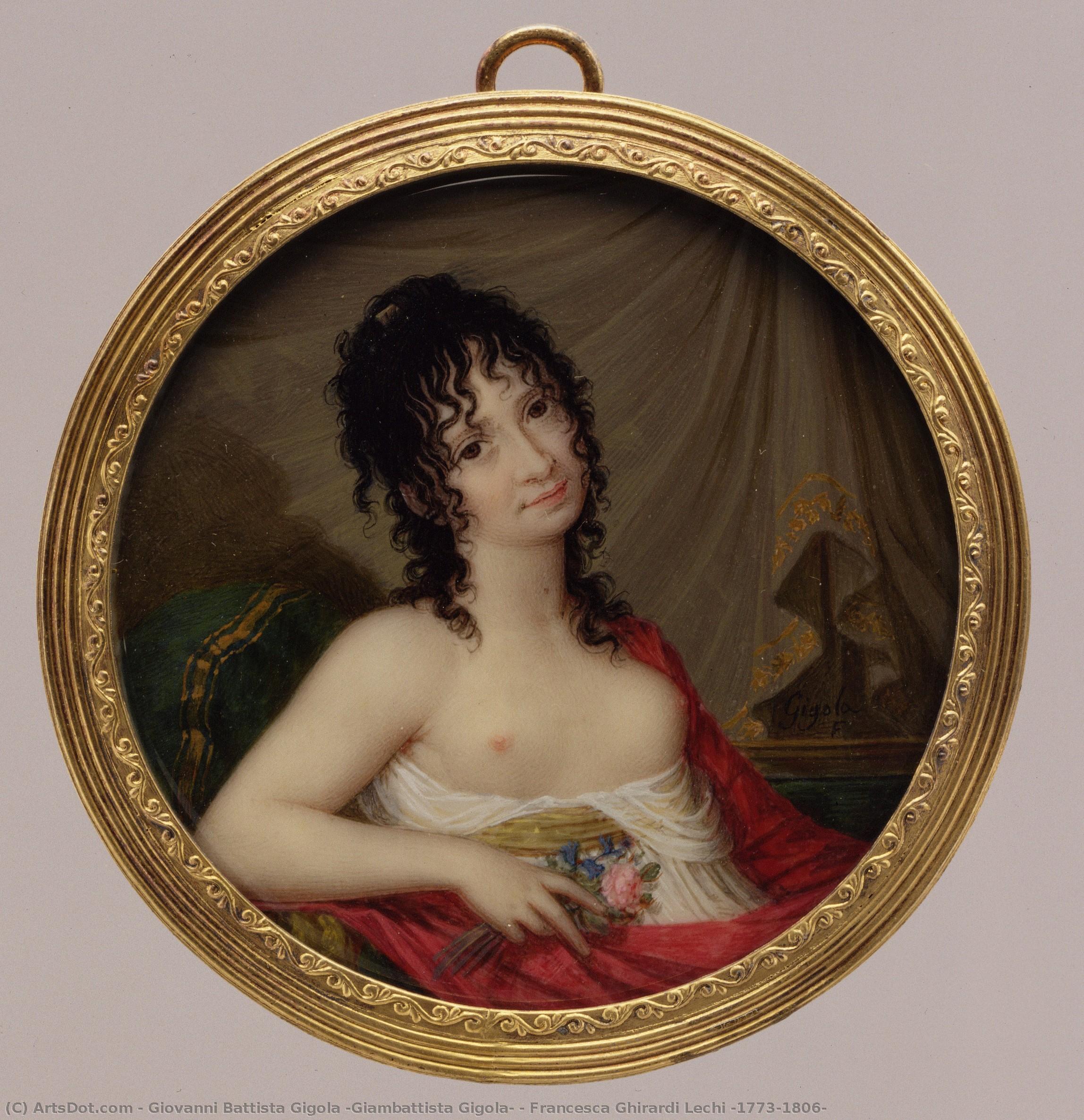
Francesca Ghirardi Lechi (1773–1806)
 Read More
Purchase a high-resolution, enhanced digital image, far superior to the online preview.
Each file is meticulously prepared by our in-house specialists using advanced tools and expert manual retouching. We ensure every image has exceptional clarity, precise color accuracy, and fine detail.
The final file is delivered via email within 72 hours, optimized for immediate use in professional, editorial, and print environments. This is the same quality trusted by top-tier design studios, publishers, and galleries.
Digital Image
Download a high-resolution file for personal display, printing, and creative projects. ( Buy Print Buy Hand Made Painting)
Included in Every Digital Image Order
Expert Digital Delivery, Guaranteed
When you choose ArtsDot.com, you're not just getting an image - you're receiving a professionally enhanced digital artwork, crafted with precision and backed by a satisfaction guarantee. Here's everything that comes with your order, automatically:

Fast Email Delivery
Your high-resolution digital image file will be emailed to you within 72 hours of ordering - ready for immediate use.

AI-Enhanced Digital File
Your artwork is professionally optimized using advanced AI tools and manual editing, ensuring maximum detail, clarity, and color accuracy.

Free Lifetime Re-Delivery
Accidentally deleted or lost your file? No worries - we'll resend it to you anytime, free of charge.

No Import Fees - Ever
Enjoy your artwork instantly with zero customs, duties, or delivery fees - digital downloads are always tax-free.

Color Accuracy Guarantee
We ensure your digital image reflects the original colors as closely as possible using professional tools and color management.

60-Day Satisfaction Guarantee
If you're not satisfied with your digital image, we'll revise it or refund 100% within 60 days - no questions asked.

100% Money-Back Guarantee
Not satisfied? Get a full refund within 60 days of receiving your digital file - no questions asked.

Bulk Order Discounts
Buy 3 images, save 10% - Buy 5, save 15% - Buy 10+, save 20%. Great for creative projects, galleries, and agencies.
Related Artworks









Artist Biography
The Luminescent Legacy of Giovanni Battista Gigola
In the grand tapestry of early nineteenth-century European art, certain names flicker with a unique, concentrated brilliance, much like the very medium that defined their careers. Giovanni Battista Gigola, an Italian master whose life spanned the transformative years from 1769 to 1841, remains one such luminous figure. Born in Brescia, Italy, Gigola’s early existence was marked by a profound tension between tradition and burgeoning talent. While his father initially envisioned a life of letters for him, the young Giambattista found himself irresistibly drawn to the tactile world of pigments and precision. This innate inclination toward the fine details of drawing would eventually lead him away from the scholarly pursuits of his youth and toward the prestigious studios of Europe, where he would carve out a niche as a premier miniaturist and a pioneer of forgotten crafts.
The trajectory of Gigola’s artistry was irrevocately altered by his journey to Paris around the turn of the century. It was in this epicenter of intellectual and artistic fervor that he entered the studio of Jean-Baptiste Isabey, one of the most celebrated portraitists of the era. This period of apprenticeship exposed him to the sophisticated trends of the French Neoclassical and Romantic movements, providing him with a cosmopolitan perspective that would later distinguish his work from his Italian contemporaries. Yet, remarkably, while he absorbed the elegance of the Parisian style, Gigola did not merely mimic it. Instead, he infused his practice with a distinctly Italian sensibility, often utilizing gouache backgrounds and a subtle, muted color palette that favored character and intimacy over mere decorative flair.
A Revival of Enamel and the Art of the Miniature
Perhaps the most significant contribution Gigola made to the history of art was his role as a restorer of lost traditions. At a time when many artistic techniques were being swept away by the tide of industrial change, Gigola undertook the painstaking task of reintroducing enamel painting to Italy. This was no small feat; the craft had largely vanished from Italian production, requiring a profound mastery of heat, minerals, and chemistry. Through his dedication, he achieved a level of luminosity and intricate detail that breathed new life into the medium, making him a vital link between the classical past and the modern era. His ability to manipulate light through enamel allowed for a depth of color that few could replicate.
Parallel to his mastery of enamel, Gigola became a celebrated miniaturist, working primarily on ivory—a surface that demands unparalleled delicacy. These miniature portraits were highly sought after by the aristocratic circles of Milan and beyond. His work often captured the quiet dignity of his subjects, ranging from intimate self-portations to grander historical depictions. Notable among his repertoire are works such as:
- Portrait of the Daughters of Gian Giacomo Trivulzio: A testament to his ability to capture familial grace and social standing.
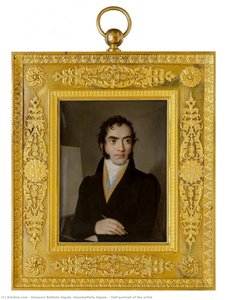
- Self-portrait of the artist: An evocative window into the creator's own identity and technical prowess.
- Francesca Ghirardi Lechi: A delicate study showcasing his command over the subtle nuances of skin tones and texture.
Patronage and Historical Significance
The success of Gigola’s career was significantly bolstered by the patronage of the highest echelons of society. His relationship with Eugène de Beauharnais, the Duke of Leuchtenberg, provided him with the stability and social access necessary to flourish within Milanese aristocratic circles. Under such influential protection, Gigola was able to experiment and innovate, ensuring that his revival of enamel painting reached the eyes of those who could truly appreciate its complexity. This period of patronage allowed him to bridge the gap between the local Italian tradition and the broader European stage, making him a figure of international relevance.
Ultimately, the significance of Giovanni Battista Gigola lies in his role as a guardian of technique. He was an artist who looked backward to preserve the beauty of the past while looking forward to refine it for a new generation. Through his exquisite miniatures and his resurrected enamels, he ensured that the delicate, luminous traditions of the 18th century would not be lost to the shadows of history. His legacy remains etched in the fine lines of his portraits and the enduring glow of his enamel masterpieces, serving as a reminder of the power of artistic devotion to sustain beauty across the centuries.
giovanni battista gigola (giambattista gigola)
1769 - 1841 , Italy
Quick Facts
- Artistic Movement Or Style: Baroque Art
- Artists Who Influenced This Artist: [Isabey]
- Date Of Birth: 1769 Brescia Italy
- Date Of Death: 1841
- Full Name: Giovanni Battista Gigola
- Nationality: Italian
- Notable Artworks: ['Daughters of Trivulzio']
- Place Of Birth: Brescia Italy

