 Preview
 Send
Send Share
Share
 Details

 Download
 Similars
 X-Ray
X-Ray Diaporama
Mystic Marriage of S Catherine
 Etching
- WallArt
- Baroque
 1547
1547- Renaissance
 84.0 x 100.0 cm
 National Museum of Western Art
 Read More
Hand Made Oil Reproduction
Hand-painted oil on canvas in your size and frame, made to order by our artists. ( Buy Print Buy Image)




P118B $10

P118H $10

P118W $10

P438Z $10

P508JH $12

P508YH $12

P805H $10

P805Z $10

P919BZ $10

P919G $10

P919XJ $10

P959ZH $10

P968JZ $12

W106C $8

W218G $10

W218JH $8

W218Y $10

W307PJ $10

W316G $10

W316PJ $8

W316Y $10

W398PJ $8

W4111J $10

W500HY $15

W500JH $15

W692G $12

W849H $8

W940BG $15

W953PJ $8




Pick from our preset sizes that match the artwork's original proportions.

You may enter your own dimensions to fit a specific frame or space. If your selected size does not match the original image's proportions, we will either crop the artwork or extend the painting with additional hand-painted elements. A digital mockup will be sent for your approval before production begins.
Please note that the on-screen preview does not reflect the actual cropping or extension. Only the mockup will accurately show the final composition.
While custom sizes are available, we recommend selecting a dimension from the predefined list to preserve the original proportions.
After order, ArtsDot.com team will email client for instructions and provide a mockup preview
Worldwide Delivery () in 3/4 weeks instead of standard 5 weeks. (16 August). No compromise on quality.

Free Worldwide Express Shipping

High-Quality Linen Canvas

Full Shipping Insurance

Customs Tax Refund Guarantee

True Color Matching Guarantee

60-Day Return Policy (Defects Only)

100% Money-Back Guarantee

Bulk Discount Offer
 Glass option is only available in size under 110 CM

Mystic Marriage of S Catherine
Reproduction Medium
Reproduction Size
-


Total Price
$ 263
Artwork Description
A Glimpse into Ruin and Reflection: Giovanni Battista Zelotti's "Mystic Marriage of S Catherine"
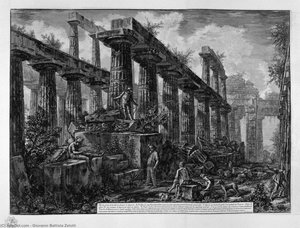
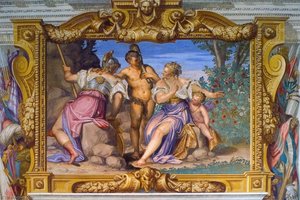
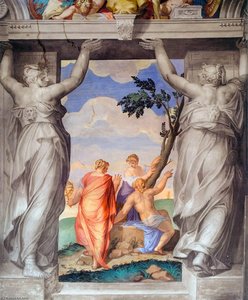
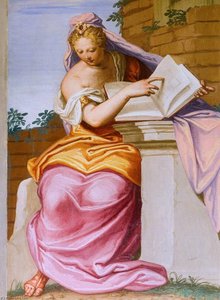
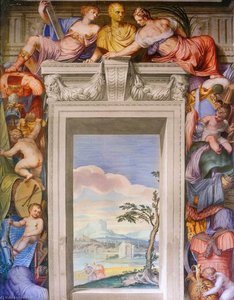
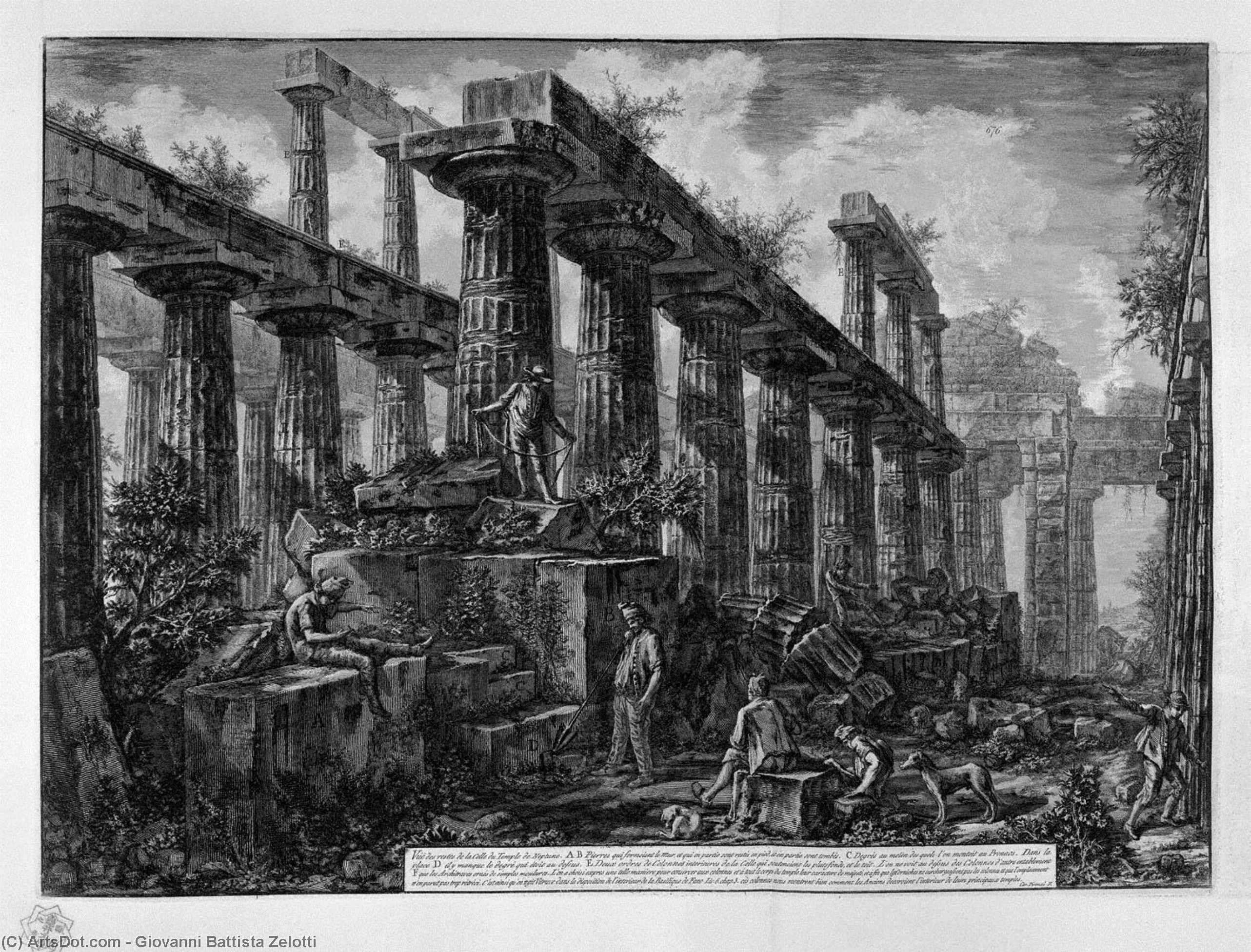
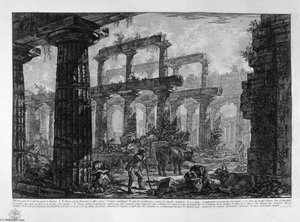
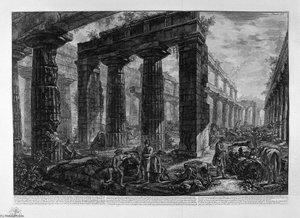
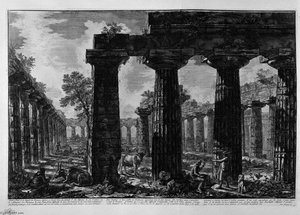
Giovanni Battista Zelotti’s “Mystic Marriage of S Catherine,” etched in 1547, is more than a depiction of ancient ruins; it’s a profound meditation on the passage of time, the fragility of human endeavor, and the enduring power of faith. This intricate engraving transports us to a dramatic scene—the skeletal remains of what was once a grand Roman temple or structure. The composition explodes with a controlled chaos: towering columns stand fractured against crumbling walls, while figures move amidst the debris, their actions both purposeful and dwarfed by the scale of destruction surrounding them. Zelotti masterfully employs the Baroque style, characterized by stark contrasts between light and shadow, dynamic movement captured in every line, and a theatrical quality that draws the viewer into the heart of this evocative landscape. The perspective, though slightly distorted, amplifies the sense of grandeur and depth, creating an immersive experience for the observer.The Dance of Decay and Human Activity
The foreground teems with life amidst the desolation. Figures are engaged in a variety of tasks – clearing rubble, examining fragments of the past, seemingly interacting with a monumental statue that crowns the remaining columns. This statue, likely representing a deity or heroic figure, stands as a silent witness to the ruin and a possible symbol of enduring spiritual power. The architecture itself is a poignant testament to decay; broken columns lie scattered, walls have collapsed, and vegetation—trees and foliage—begins its relentless reclamation of the site. This natural encroachment serves as a powerful visual metaphor for nature’s triumph over human creation, highlighting the impermanence of even the most impressive civilizations. The engraving's monochromatic palette, achieved through meticulous ink work on paper, enhances the mood of melancholy and reflection, allowing the intricate details of stone, rubble, and clothing to take center stage.Zelotti's Technique: A Baroque Masterpiece in Engraving
The technical skill displayed in “Mystic Marriage of S Catherine” is remarkable. Zelotti’s mastery of engraving shines through in the fine detail and subtle tonal variations achieved solely through line work. The strong diagonal created by the fallen columns guides the viewer's eye through the scene, emphasizing a sense of instability and movement. Light and shadow are strategically employed to enhance the drama, creating a three-dimensional effect that breathes life into the ruins. Notice how the scale of the ruins is emphasized by the inclusion of small figures within this vast architectural landscape—a deliberate choice that underscores the insignificance of human ambition in the face of time's relentless march. The use of lines isn’t merely decorative; it actively contributes to the narrative, conveying a sense of both fragility and resilience.Historical Context and Symbolic Resonance
Giovanni Battista Zelotti (1526-1578), born in Verona, was a pivotal figure within the Venetian Renaissance. His work reflects the artistic spirit of his region, drawing inspiration from masters like Titian and Veronese while forging his own distinct style. The engraving’s subject matter—the intersection of human endeavor and the passage of time—resonates with broader themes prevalent during the Renaissance, a period marked by renewed interest in classical antiquity and a growing awareness of humanity's place within the cosmos. The coat of arms visible in the image suggests a connection to the wedding of Anna della Torre and Giambattista Pindemonte in Verona in 1547, lending a personal dimension to this grand exploration of history and faith. Ultimately, Zelotti’s “Mystic Marriage of S Catherine” is an enduring testament to the power of art to capture the complexities of human experience—our triumphs, our failures, and our eternal quest for meaning amidst the ruins of time.Related Artworks
Artist Biography
The Veronese Echo: The Life and Legacy of Giovanni Battista Zelotti
In the vibrant tapestry of the Venetian Renaissance, few threads are as intricately woven into the architectural grandeur of Italy as those spun by Giovanni Battista Zelotti. Born in Verona in 1526, a city then flourishing under the dominion of Venice, Zelotti emerged not merely as a painter, but as a master of atmosphere and narrative scale. His early years were shaped by the rigorous traditions of masters such as Antonio Badile and Domenico Riccio, and his artistic lineage suggests a profound connection to the legendary Titian. This formative period instilled in him a command over color and light that would later allow him to transform static walls into breathing, mythological landscapes.
Zelotti’s journey through the artistic hubs of Padua and Venice allowed him to absorb the evolving stylistic cues of his era. While often viewed as a contemporary and collaborator of Paolo Veronese, Zelotti possessed a unique ability to blend the classical ideals of the High Renaissance with an emerging sense of drama. His work became a bridge between the balanced compositions of the past and the more opulent, emotive qualities that would eventually characterize the Baroque period. This evolution is most evident in his mastery of fresco, a medium that required both immense physical stamina and a sophisticated understanding of how light interacts with plaster and pigment.
Architectural Symbiosis and the Palladian Connection
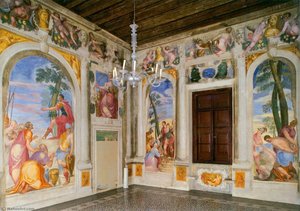
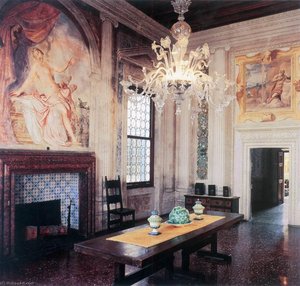
One of the most enduring aspects of Zelotti’s career was his profound synergy with architecture, most notably through his collaborations with the visionary Andrea Palladio. The relationship between painter and architect reached its zenith in the decoration of magnificent villas, such as Villa Emo and Villa Foscari. In these spaces, Zelotti did not merely decorate; he expanded the architectural boundaries. Alongside fellow artists like Bernardino India and Battista Franco, he injected a sense of movement and mythological depth into Palladio’s structured, classical designs.
His frescoes served to animate the stone and marble, bringing the heavens and ancient legends down to the earthly realm of the Venetian nobility. This ability to harmonize with monumental structures ensured that his work became an inseparable part of the Italian landscape. Whether decorating a private villa or a public monument, Zelotti’s hand was always present to provide the narrative soul to Palladio's structural bones.
A Monumental Presence in Venice and Beyond
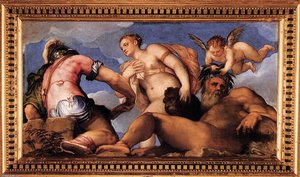
The true scale of Zelotti’s ambition is perhaps best witnessed in his contributions to the most prestigious institutions of the Venetian Republic. The Doge’s Palace, a symbol of Venetian power and splendor, holds within its ceilings the masterful work of Zelotti, specifically his depiction of “Santi Giovanni e Paolo.” Here, his use of intricate detail and masterful perspective creates an illusion of infinite height, a testament to his skill in managing large-scale compositions. His work in the Biblioteca Marciana further solidified his reputation as a scholar-painter, as he utilized classical mythology to celebrate the humanist ideals that defined the age.
Beyond the borders of Venice, Zelotti’s influence traveled to Mantua, where he engaged with the prestigious Palazzo Gonzaga, continuing the rich Veronese tradition in new territories. His stylistic hallmarks—characterized by:
- Dramatic Lighting: A precursor to the Baroque, using shadow to create depth and emotion.
- Opulent Ornamentation: A lushness of detail that reflected the wealth and prestige of his patrons.
- Mythological Narrative: The seamless integration of Greco-Roman legends into contemporary settings.
Though history sometimes shadows him in the wake of Veronese, Giovanni Battista Zelotti remains an indispensable figure. He was a painter who understood that art is not merely something to be viewed, but something to be inhabited, turning the very walls of Italy's greatest palaces into windows onto the divine and the ancient.

Giovanni Battista Zelotti
1526 - 1578 , Italy
Quick Facts
- Artistic Movement Or Style: Late Renaissance
- Artists Or Movements Influenced By This Artist: ['Andrea Palladio']
- Artists Who Influenced This Artist:
- Antonio Badile
- Domenico Riccio
- Titian
- Date Of Birth: 1526 Verona Italy
- Date Of Death: 1578 Mantova Italy
- Full Name: Giovanni Battista Zelotti
- Nationality: Italian
- Notable Artworks:
- View of the Room of Sofonisba
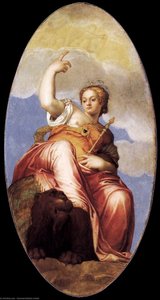
- Venice Seated upon the Globe and upon a Lion
- Place Of Birth: Verona Italy
Related Articles
Engraving's Golden Age: 10 Masterpieces That Redefined Art | ArtsDot
Journey through art history with our Top 10 Legendary Engravings! Explore masterpieces by Dürer, Rembrandt & Goya. Discover the stories behind these iconic prints and find museum-quality reproductions for your home at ArtsDot.com.
Engraving: A Historical Survey of Technique, Artistic Expression & Enduring Legacy
Explore the rich history of engraving with ArtsDot. Discover techniques, iconic artists like Dürer & Callot, collecting tips, and expert guidance for preserving your art investment. Learn about intaglio printing & more!

The Intricate World of Engraving: A Historical Survey of Technique, Artistic Expression & Enduring Legacy
Explore the rich history of engraving with ArtsDot. Discover techniques, iconic artists like Dürer & Callot, collecting tips, and expert guidance for preserving your art investment. Learn about intaglio printing & more!

Baroque Drama: Bringing Opulence & Emotion into Contemporary Interiors
Explore the opulent world of Baroque interior design! Discover key elements, modern applications & how to bring dramatic elegance into your home with 's authentic reproductions.

The Dramatic Flourish: Exploring the Baroque Movement's Enduring Legacy in Art History
Explore the dramatic world of Baroque art! Discover iconic artists like Caravaggio & Rubens, defining techniques, and its lasting impact on art history. Expert insights for collectors & enthusiasts at ArtsDot.